Rebuilding after displacement
In Shasha, UNICEF helps restart essential social services for children

- Français
- English
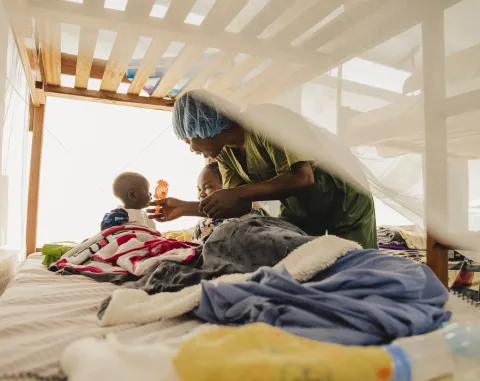
Huguette sleeps peacefully in her mother’s arms. The calm of this moment at the Shasha health centre contrasts sharply with the reality faced by thousands of families since the latest escalation of violence in eastern Democratic Republic of the Congo (DRC).
Located in the heart of Masisi territory in North Kivu, Shasha was cut off for a long time because of fighting. In early 2024, violence escalated, forcing thousands to flee. Clarice, Huguette’s mother, was among the displaced people who sought refuge in Goma.
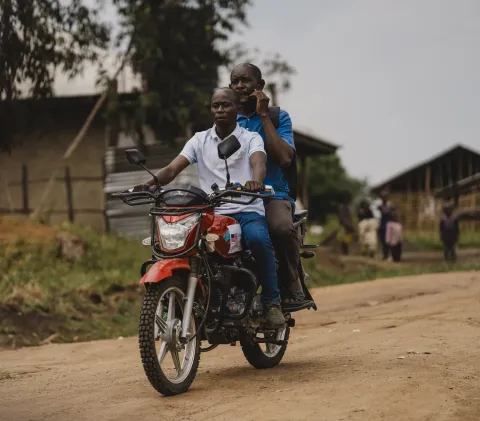
In February 2025, the displacement sites around Goma were dismantled. Around 700,000 people had to flee again, either joining host families in Goma or returning to their home villages.
Clarice returned to Masisi without knowing what she would find. When she arrived, only looted houses remained, and basic social services had to be rebuilt from scratch.

“When we got back to our village, we found the [health centre] destroyed,” says Clarice softly as she rocks Huguette. She came from Kiluku village to get care at Shasha health centre, where services are provided free of charge.
Closed for a year, the Shasha health centre reopened in February 2025 with support from UNICEF’s Rapid Response programme (UniRR). Working with local health authorities, medical supplies and equipment were delivered, basic repairs were completed, and medical staff were mobilised to strengthen the overstretched teams. Water is drawn from the nearby lake and treated on-site so that it is safe to drink.
Nearly 6,000 people have received primary health care since the centre reopened, including about 2,000 children and over 100 women who gave birth safely.


Rachel, who is pregnant, regularly attends prenatal visits at the centre. She also received a kit designed for expectant mothers, which includes a blanket, a piece of fabric, a bucket, soap and reusable sanitary pads.
“I returned to my village after leaving Goma. We were told to evacuate the displacement site urgently, and I couldn’t take much with me. This kit will really help me as I prepare to give birth,” says Rachel.
For more complex cases, patients are referred to Kirotshe General Hospital, also supported by UNICEF through the Rapid Response mechanism as well as other health, water and sanitation programmes.
Children are paying a high price for this crisis and needs go beyond health. UNICEF is also responding by providing nutrition, education and child protection services as well as clean water.
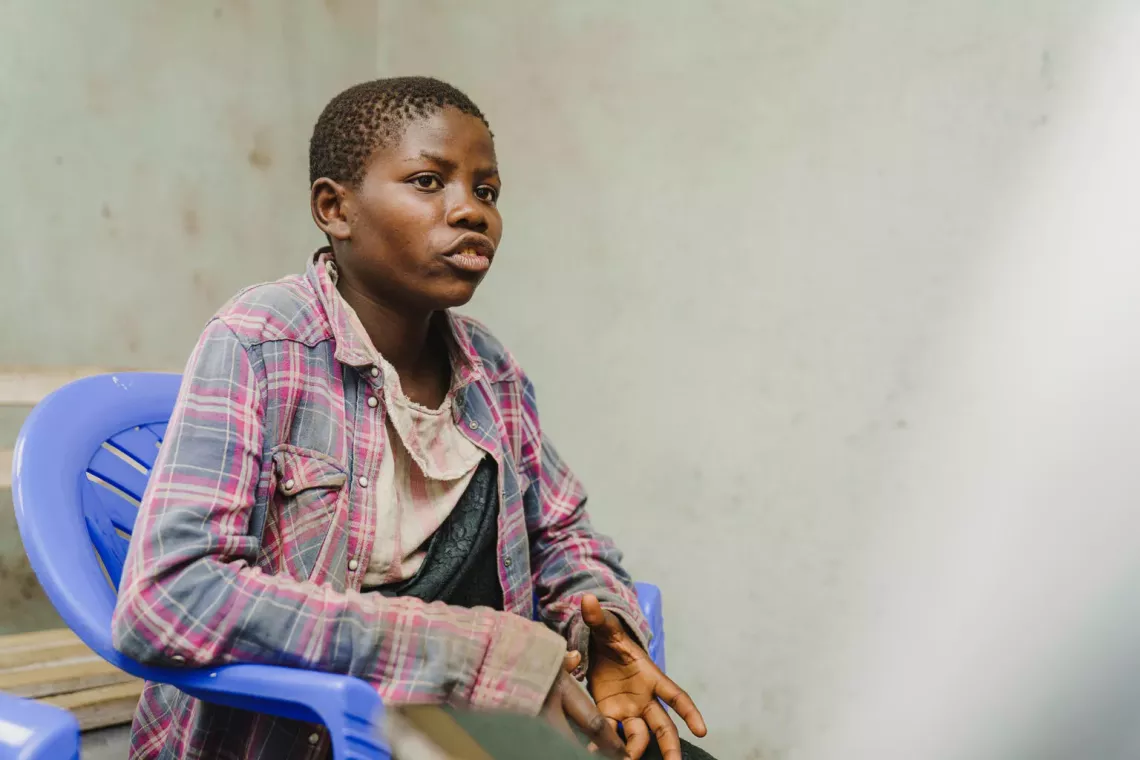
Daniella, 13, had to stop going to school because of conflict and displacement. “Being here and not studying is really hard,” she says at a listening space supported by UNICEF. “I was already in the first year of secondary school and supposed to take an exam to move to the next grade.”
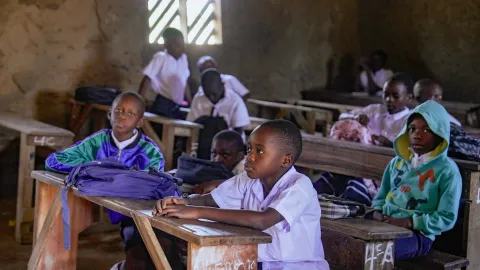
UNICEF is working to help children like Daniella resume their learning in areas where people are returning in Noth Kivu. Around 10,000 school kits are being distributed in Shasha, along with menstrual hygiene kits for adolescent girls and recreational kits to support play and wellbeing.
Community outreach teams are also raising awareness about the importance of education, encouraging girls to stay in school and promoting the inclusion of children with disabilities.

To improve children’s health and help them succeed in school, a deworming campaign will soon be launched in schools. UNICEF is also supporting catch-up classes and remote learning initiatives.
At the same time, UNICEF is working with community workers to make sure children separated from their families, survivors of sexual violence and other children affected by conflict receive the support they need – being reunited with their families, obtaining psychosocial and medical care, or being reintegrated into their communities.
Daniella's listening point is one of three spaces for children set up by UNICEF across Masisi territory. to offer children a safe place to express themselves, laugh and begin to rebuild after the traumas of conflict and displacement. More than 1,000 children visit every month.

Each centre is staffed by psychologists and para-social workers who help families recover emotionally, access services and build a stronger future.
“I love coming here because I can see my friends again – friends I hadn’t seen since we fled the fighting,” says 8-year-old Consolatrice as she plays with a ball.
Since families returned to Shasha, suspected cholera cases have been on the rise. Rapid response teams were sent to stop the spread. These teams are visiting homes, identifying cases, disinfecting houses, distributing water treatment supplies and teaching families safe hygiene habits.


Sixteen water chlorination points have been installed to help keep water safe. Thanks to these efforts, nearly 100,000 people have been protected from cholera.
All these interventions are made possible thanks to support from many partners, including USAID’s Bureau for Humanitarian Assistance (BHA), the Central Emergency Response Fund (CERF), the Foreign, Commonwealth & Development Office (FCDO), the European Union, Education Cannot Wait, and the governments of Korea, Germany and Sweden.

Their valuable support enables UNICEF to respond to urgent needs in return areas in eastern DRC, while also helping communities rebuild for the long term.
As Huguette sleeps quietly in her mother’s arms, the people of Masisi are slowly recovering and rebuilding their future.