Peace dividend allows villagers to grow their own food
Capitalizing on the return to agricultural activities, UNICEF and partners launched the Community Food Resilience Project as one of multiple nexus interventions to re-ignite economic activity, reduce poverty and promote better nutrition
- Français
- English
Two years ago, the village of Djuma Mbil, which lies 15km east of Tanganyika’s provincial capital Kalemie, was deserted and the surrounding fields lay empty.
A mass exodus from the village following violent conflict between the Bantu and Twa communities had brought all agricultural work to a halt.
Today, however, matters could not be more different following the pilot implementation of the so-called nexus approach combining humanitarian, development and peacebuilding efforts.
Initially, peace negotiations then confidence-building measures facilitated by the UNICEF-supported Cohesive Leadership Initiative helped restore trust between the two communities.
Then, community action plans were developed to identify key social services that were needed and to ensure the equitable participation of all villagers, with the goal of reducing poverty and improving social cohesion
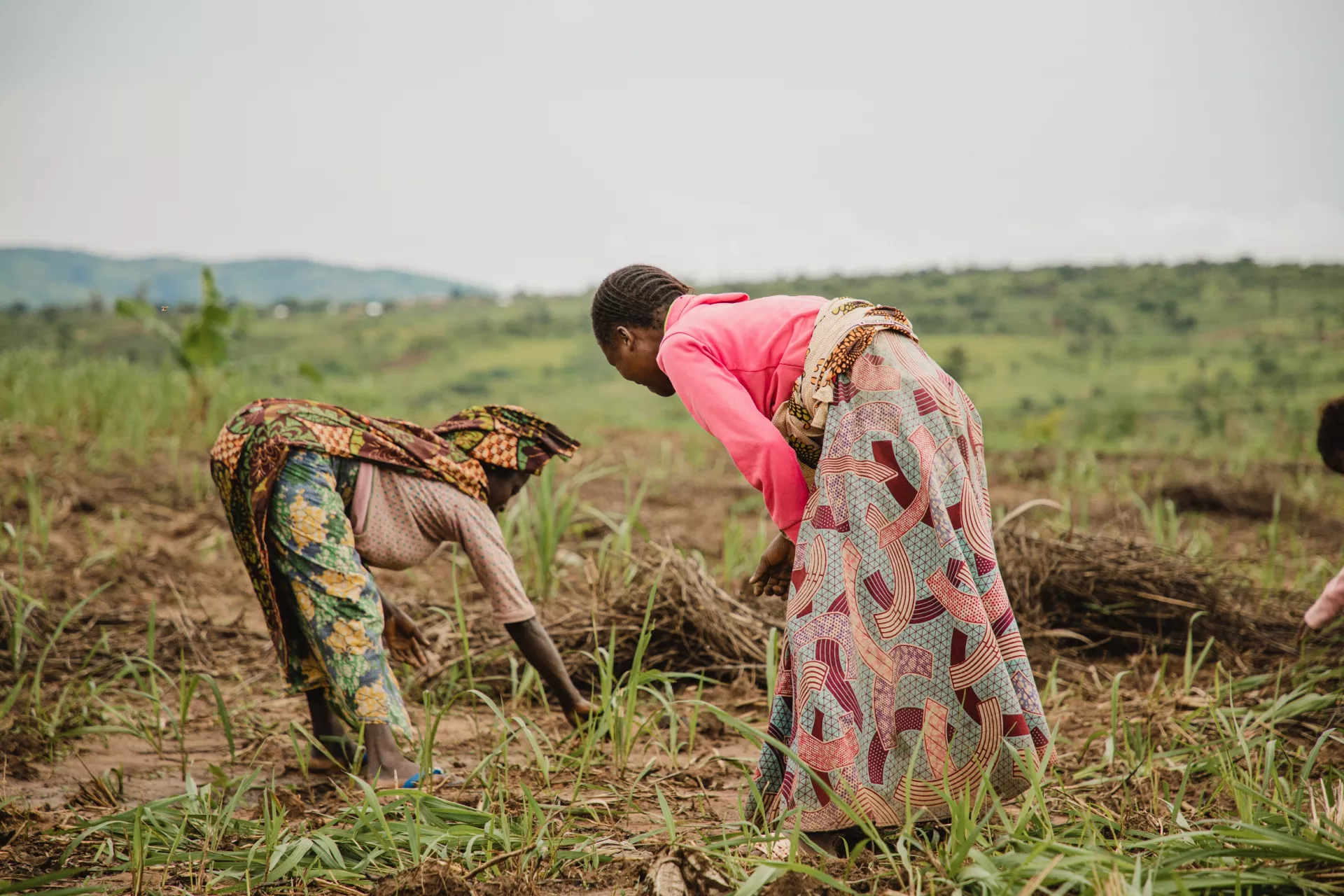
Hopeful that the foundations of durable peace were in place, members of both communities in the village – which is 52 percent Twa and 48 percent Bantu – returned to their homes and now work together in the fields.

This means that crops including soya, maize, and sorghum and wheat, which had been neglected for several years, are being cultivated again with workers toiling in the fields from early morning to late into the night.
Better nutrition
“Before there was outright hostility between the two communities but now our situation is much better as we become more and more self-sufficient,” says village chief Alain Bitariho Bahati.
Capitalizing on the return to agricultural activities, UNICEF and other local and international partners launched the Community Food Resilience Project as one of multiple nexus interventions to re-ignite economic activity in Kalemie, reduce poverty and promote better nutrition.
Produce from Djuma Mbil village and five other villages close is being taken for processing at a newly built plant constructed with UNICEF funding on the outskirts of Kalemie.


The new plant is the first of its kind in the city; up until now food has been processed further afield.
The new venture is run by six women, led by Sister Kongolo Senga Therese of the Centre Socio-Educatif l'Espérance Compagnie de Marie Notre Dame (CSEEC).
Sister Therese said that the plant has recently begun to grind wheat into flour and will soon be processing other food including maize, soybeans and sweet potatoes.
The flour is either returned to the villages or sold as surplus.

What is particularly notable is that the wheat flour is fortified during processing meaning important nutrients are added which improve the diet of the population.
Women’s groups – including mother’s co-operatives – are benefitting from multiple types of mutually reinforcing support under the Community Food Resilience Project and the wider nexus approach with multiple organizations working together to provide joined-up assistance, says UNICEF’s Kalemie-based planning specialist Zinaha Rajaonarison.

With UNICEF funding, the Food and Agriculture Organization (FAO) provided training related to harvesting as well as agricultural supplies and materials to improve crop yields. All interventions are in line with the government’s Pronanut national nutrition programme.
“Food security and good nutrition are vital part of the overall nexus approach,” he says. “The idea is that we work with local communities to promote peace-sensitive practises such as the eradication of malnutrition and the promotion of infant and young child breast feeding to make otherwise vulnerable communities more resilient.”