A new line of defense against malaria
The rollout of the malaria vaccine marks a major breakthrough in protecting children’s lives in DR Congo

- Français
- English
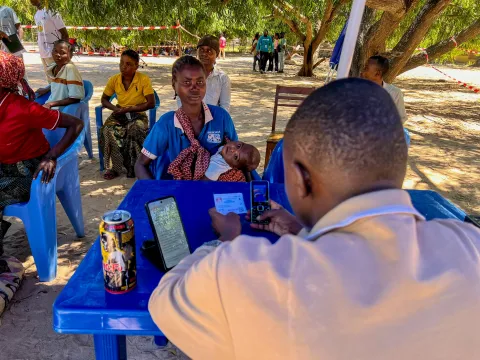
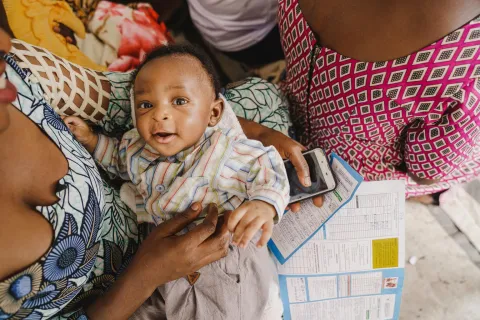
At the Mission Health Centre in Kisantu, a town in Kongo-Central province, Merveille Tumwenekiese gently rocks her six-month-old son, Yureck, in her arms. She has just had him vaccinated against malaria—a simple decision to make for this devoted mother.
"I had Yureck vaccinated to protect him from this deadly disease,” says Merveille. “Malaria causes so many problems, and I don’t want to take any risks."
A nurse by profession, Merveille has seen too many children suffer from easily preventable childhood diseases – and, in some cases, even lose their lives. In the Democratic Republic of the Congo (DRC), children under five account for nearly half of all malaria cases and around 70 per cent of deaths linked to the disease.


On 31 October 2024, the Ministry of Public Health, Hygiene and Disease Prevention integrated the malaria vaccine into the country’s routine immunization schedule. Administered in four doses starting at six months of age, the vaccine is shown to help prevent more than half of malaria cases in the first year after vaccination.
It was nurse Mambo Ndombele who gave Yureck the vaccine. He has been working at the Mission Health Centre for nearly 10 years and sees this vaccine as a breakthrough for child survival.
"Today alone, I’ve already vaccinated 18 children,” he says. “Everything is going well, and families are very happy.”
In June 2024, the DRC received its first batch of 693,500 doses of the R21/Matrix-M malaria vaccine—a safe and effective tool to prevent malaria in children. UNICEF supported the transport and storage of these vaccines under optimal conditions.

"We take the vaccine from the refrigerator, place it in the cold box, and then receive mothers one by one to vaccinate their children," explains nurse Mambo Ndombele.
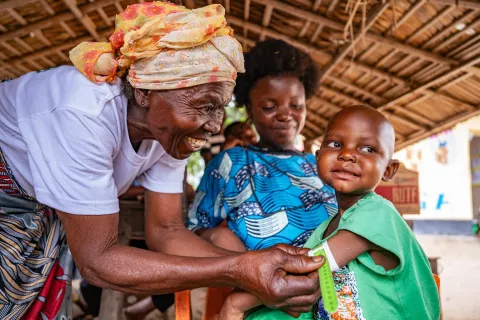
With support from Gavi, the Vaccine Alliance, UNICEF and its partners are strengthening the capacities of health workers, developing management tools, and implementing effective communication strategies to encourage parents to vaccinate their children.
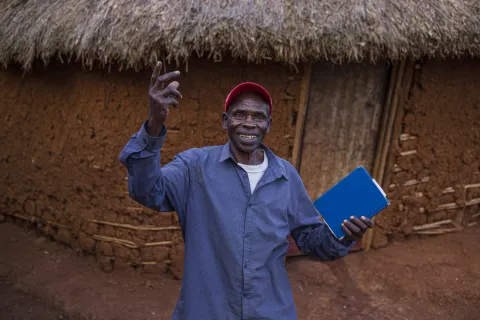
Out in the streets of Kisantu, Mitterrand Viti Kabo, a UNICEF-supported community worker, goes from house to house raising awareness among families.
"I talk to parents about the importance of the malaria vaccine,” Mitterrand says. “Some listen, others are reluctant, but the more we talk, the more they begin to understand its importance."


At 45, Mitterrand has always been passionate about health. "I studied nursing at university, but I wasn’t able complete my studies," he confides. Working as a community mobilizer allows him to contribute to children's health every day and make a real impact.
The introduction of malaria vaccination is a major milestone in the DRC’s fight against the disease.
It complements other preventive measures, including sanitation, the use of insecticide-treated mosquito nets, giving preventive malaria medicine at regular intervals, and spraying insecticide inside homes.
More than 44,000 children have already received their first dose of the vaccine since the campaign was launched in Kongo-Central province. In the coming months, the vaccine will be rolled out nationwide to ensure every child has access to this vital protection as part of the routine immunization schedule.
"I want to remind parents who are hesitant that malaria kills. We now have vaccines—let’s use them to protect our children," Mitterrand concludes.