UNICEF launches new Digital Education Strategy - a collaboration with Finland and global partners
The strategy leverages AI, digital tools and other innovative approaches to strengthen education systems and improve learning outcomes for millions of girls and boys
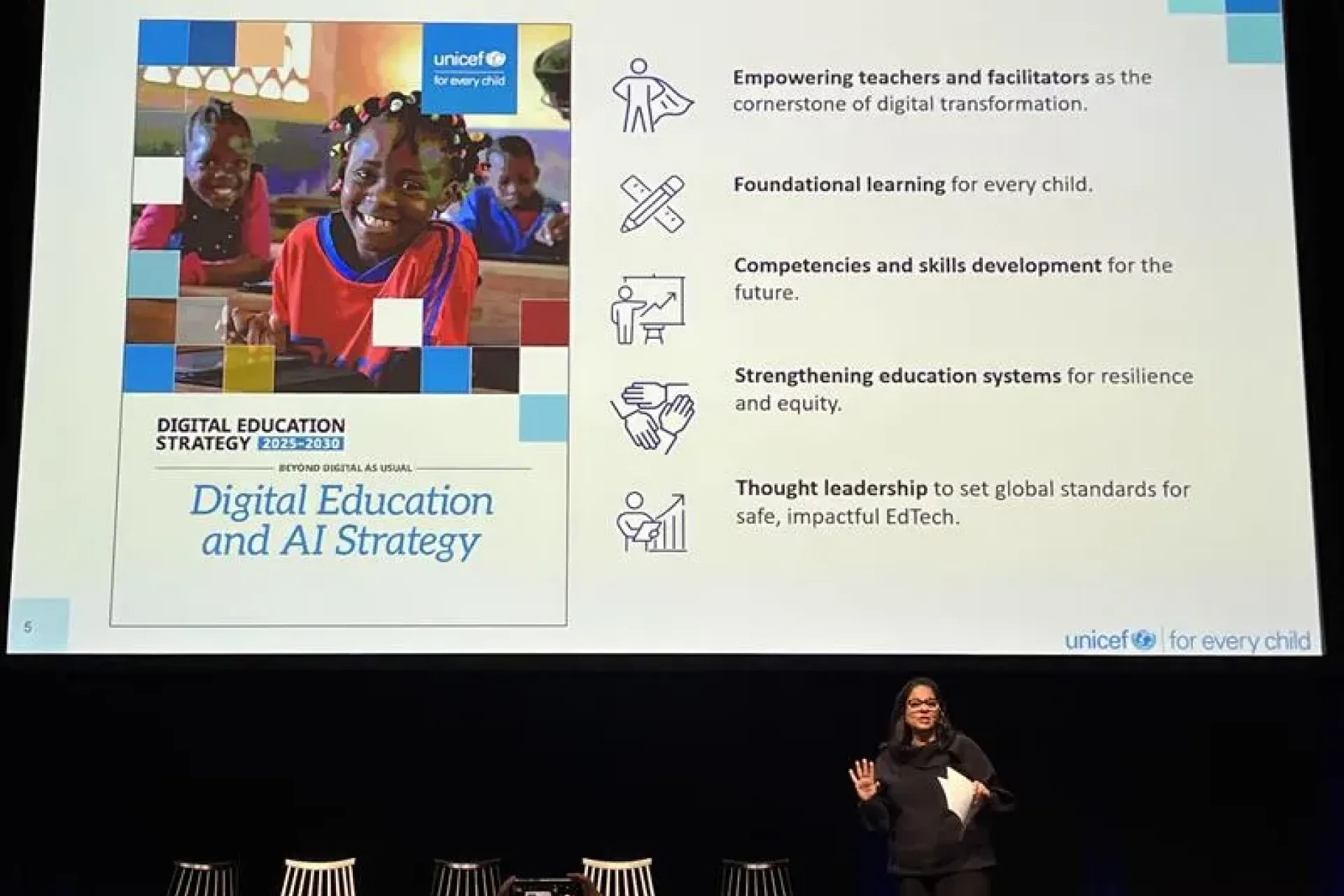
UNICEF launched its new Digital Education Strategy on 24 January in Helsinki. The central pillars of the strategy were shared by UNICEF, Finland and other key partners as part of the International Day of Education sessions at Educa, Finland’s largest education and training event.
The initial phase of the strategy will scale innovative, AI-enabled teaching and learning programmes across 18 countries. It builds on lessons learned and operational experience from UNICEF’s digital education work in over 100 countries worldwide. As a cornerstone of this effort, the Government of Finland has just renewed its partnership with UNICEF to advance learning innovation, research and evidence generation. UNICEF and partners from both the public and private sector are providing resources and support, including access to cutting-edge AI tools and technologies.
The first phase of funding will be delivered over the next three years in close coordination with governments, UN agencies, the private sector and civil society partners in Benin, Bolivia, Brazil, Chad, Côte d’Ivoire, Egypt, Ghana, Guinea, India, Jordan, Kenya, Kyrgyzstan, Lao PDR, Pakistan, Philippines, Sudan, Tanzania and Ukraine. The strategy is supported by UNICEF's Global Education team anchored in the organization's new Centre of Excellence, including the Helsinki-based Global Learning Innovation Hub.
"Our investment in these innovative learning programmes reflects our strong belief in education as a driver of equity and sustainable development, and it will provide children and youth with the skills they need to thrive in the 21st century. Together with UNICEF and partners around the world, we are tapping the power of AI and digital learning to deliver on the promises outlined in the Sustainable Development Goals, including our commitment to education for all,” said Juha Savolainen, Director General, Department for Development Policy, Ministry for Foreign Affairs of Finland.
Responding to the global learning crisis with innovation and partnerships
There are more than a quarter of a billion children out of school today. With a decline in traditional Official Development Assistance, this number could rise by 6 million by the end of 2026. Even when they are in school, many children struggle to learn the basics and are falling behind in reading and math.
“Together as a global community, we can ensure every child, everywhere, can learn, grow and thrive. By embracing new technologies, AI and innovative solutions in a responsible and coordinated manner, by bringing together partners across the public and private sector, and by putting children first in everything we do, we have the opportunity to transform learning and build a better world for generations to come,” said UNICEF’s Global Director of Education Pia Rebello Britto.
To address these interconnected challenges, UNICEF’s new Digital Education Strategy seeks to accelerate inclusive learning and overcome equity barriers by going “beyond digital as usual.” It focuses on areas where EdTech demonstrably adds value and addresses critical bottlenecks in national education systems. It is designed to disrupt the one-size-fits-all approach to education by placing children and teachers at the centre and by enhancing government capacities to advance the safe, sustainable and inclusive digital transformation of education systems. With a focus on outcomes and impact, the implementation of the strategy will generate contextualized evidence to support countries to embed and scale up promising digital tools and services that address national education challenges.