

Foundational learning
Scaling adaptive, self-paced, and personalised digital learning tools
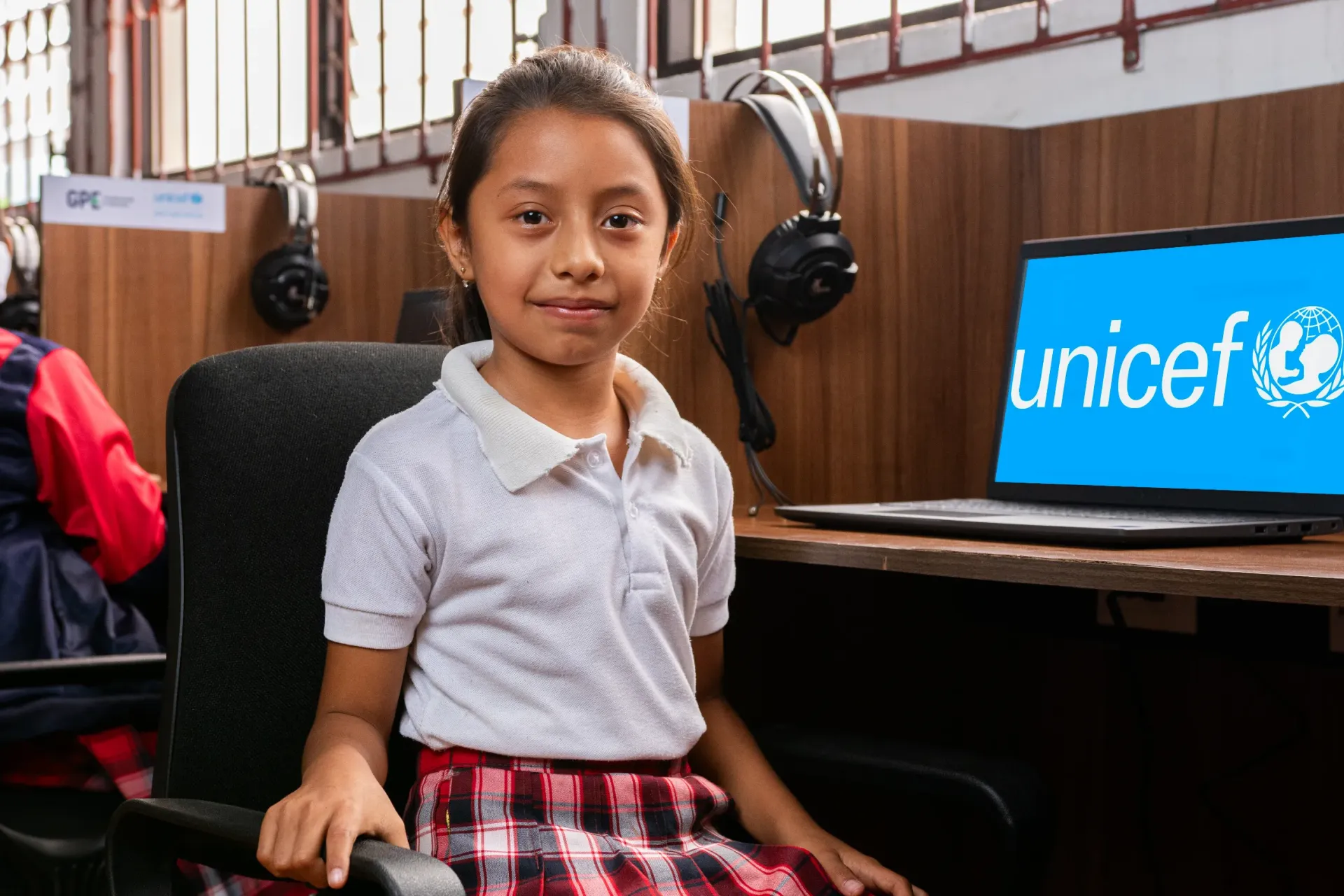
Two-thirds of 10-year-olds globally cannot read with comprehension – even though most are in school. And 273 million children are out of school entirely. UNICEF focuses on adaptive and personalised learning and accessible learning to meet every child where they are – at the right level, in the right language, on any device, from anywhere.
Mismatches between teaching instruction and content and students' actual learning levels or language proficiencies block effective literacy acquisition. This is especially critical at early stages of literacy, where instruction must be precisely calibrated to each child's starting point and linguistic context.
Children who are out of school, in non-formal education settings, or experiencing disrupted education lack access to appropriate and effective foundational learning opportunities. Existing approaches rarely reach them at the right level or in the right language.
Focus areas
- Scaling adaptive, self-paced, and personalised digital learning tools that use AI to continuously tailor content to individual learner levels and needs
- Delivering accessible digital textbooks for all, including content in local languages, with sign language, narration, mother-tongue translation and other interactive elements
- Offering flexible delivery methods to reach learners in low-connectivity and emergency contexts
- Supporting out-of-school and non-formal learners
- Using blended learning approaches that combine face-to-face teaching with digital platforms, ensuring teachers remain central while technology fills gaps in time, space, and specialisation
- Providing parents and caregivers with resources to create enabling home learning environments, especially in emergencies and remote settings where home-based foundational learning is essential