Building a predictive early warning system for school dropout in India
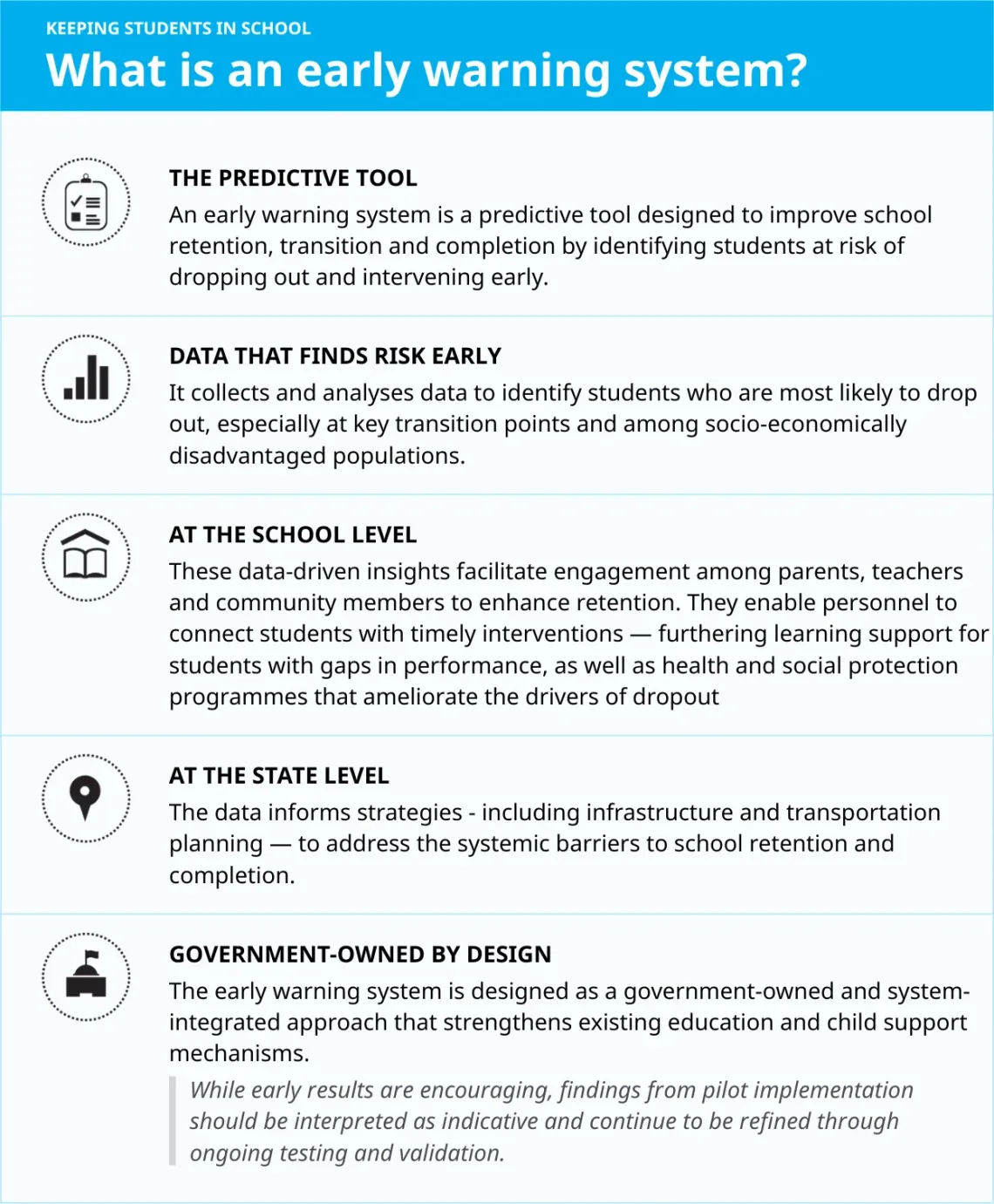
UNICEF is working with government partners in India to pilot systems that leverage artificial intelligence to reach children through education, health and social protection systems before they drop out.
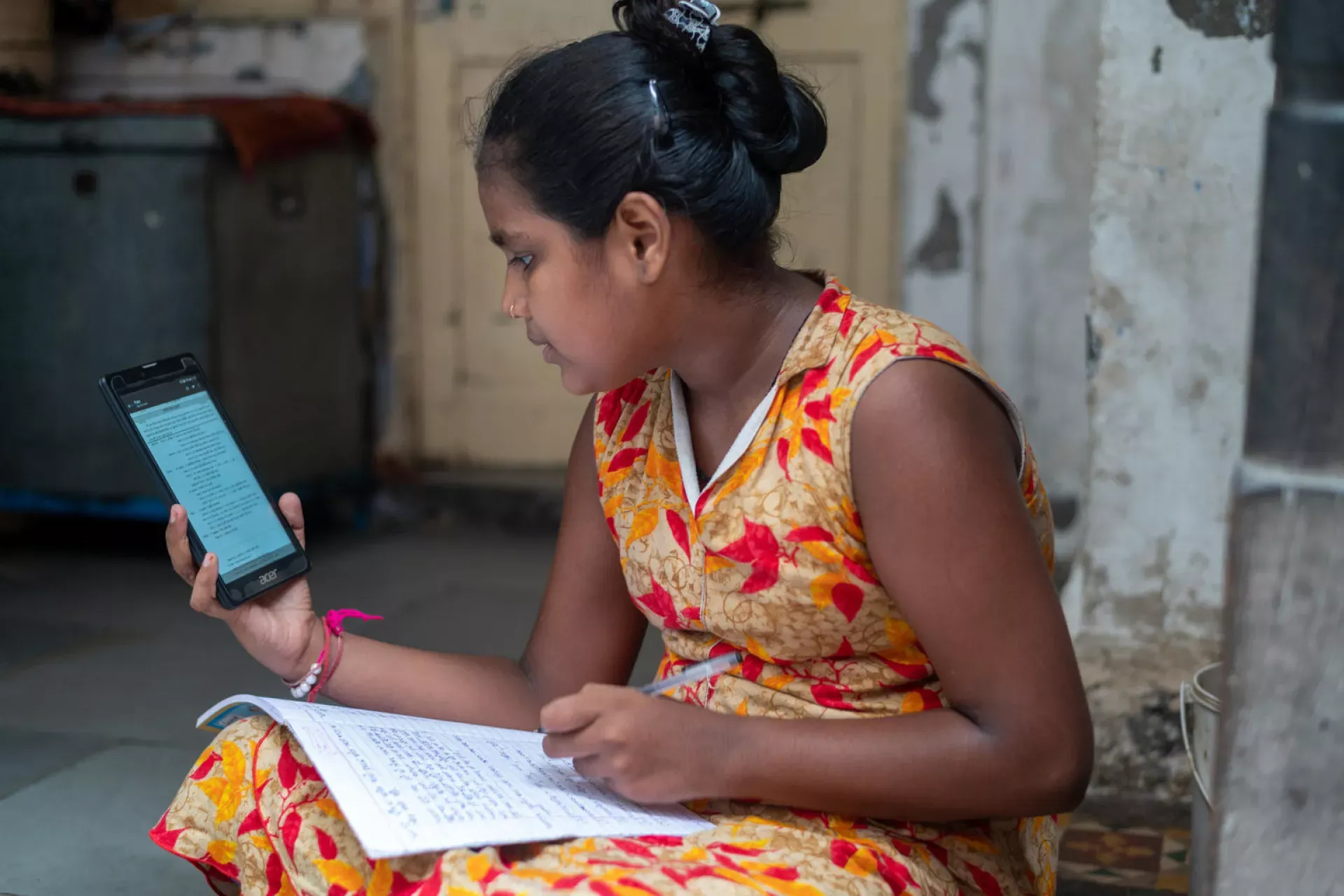
Countless interconnected factors can cause a girl or boy to drop out of school. Poverty, climate shocks that disrupt livelihoods, gender norms, poor education performance, disability-related barriers, overcrowded classrooms, the distance to school, teacher absenteeism… the list goes on. Whatever the cause, the consequences are often the same. When a child drops out of school, their future prospects are limited.
In India, school dropout continues to be a significant challenge, making it harder for children to access quality education and build the skills they need for the future. Nationwide, 9 out of 10 children transition from primary to upper primary school, according to government data. The numbers drop as students progress. About 83 per cent transition to secondary school and 71 per cent to upper secondary. To put these numbers in perspective, many developed countries have net enrolment rates above 98 per cent for higher secondary education.
Early warning systems that identify students at risk of dropping out have been in place for some time. However, many earlier systems faced limitations in addressing disparities in dropout among socioeconomically challenged adolescents - with limited understanding and tracking of the push-and-pull factors that drive students to dropout.
To address these challenges, UNICEF is working with the state government authorities in India to pilot sustainable and impactful early warning systems at scale. State Departments of Education have developed these systems in Gujarat and Uttar Pradesh, with testing and development ongoing in seven more states.
Uttar Pradesh is India’s most populous state, with over 240 million people. Early warning systems have expanded from 100 schools to over 8,300, with plans to scale statewide. The decision to expand is based on promising early results, including an increase in attendance in pilot schools from 48.8 to 62.8 per cent in Uttar Pradesh.
AI-enabled analytics and comprehensive teacher support systems are helping to improve the effectiveness of identifying students at risk of dropout. In Gujarat, the AI-based model predicted dropout risk with a 72 per cent accuracy. The model is based on attendance, learning data and basic demographic data.
The integrated programmes are empowering teachers to act on red flags that might indicate a child is at risk of dropping out, and tiered response models are being established to create a comprehensive system and multisectoral responsive strategies to ensure retention of children. These response models are being established to connect children and families with appropriate support through education, health, and social protection systems. Depending on the child's needs, schools can provide direct support - such as follow-up with families, attendance support and remedial learning - or refer children to health, nutrition, child protection and social protection services where additional support is needed.
The approach emphasizes the responsible and ethical use of data, with teachers and education authorities leading decision-making and interventions to support at-risk students.
As UNICEF continues to support India in reducing dropout and ensuring every child receives 12 years of continuous, quality education, early warning systems are helping schools identify at-risk students and provide the support they need to stay in school.