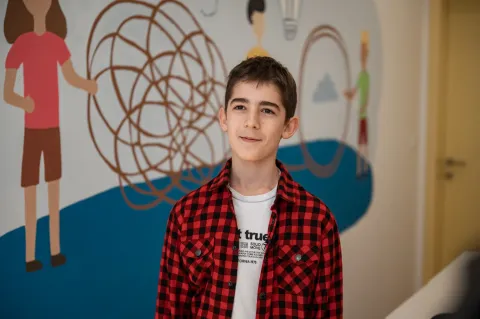
Children build creativity and confidence through technology
Through UNICEF’s Tinkering with Tech and AI initiative, students in Montenegro are using technology and artificial intelligence to explore, collaborate and develop 21st century skills
- Crnogorski
- English
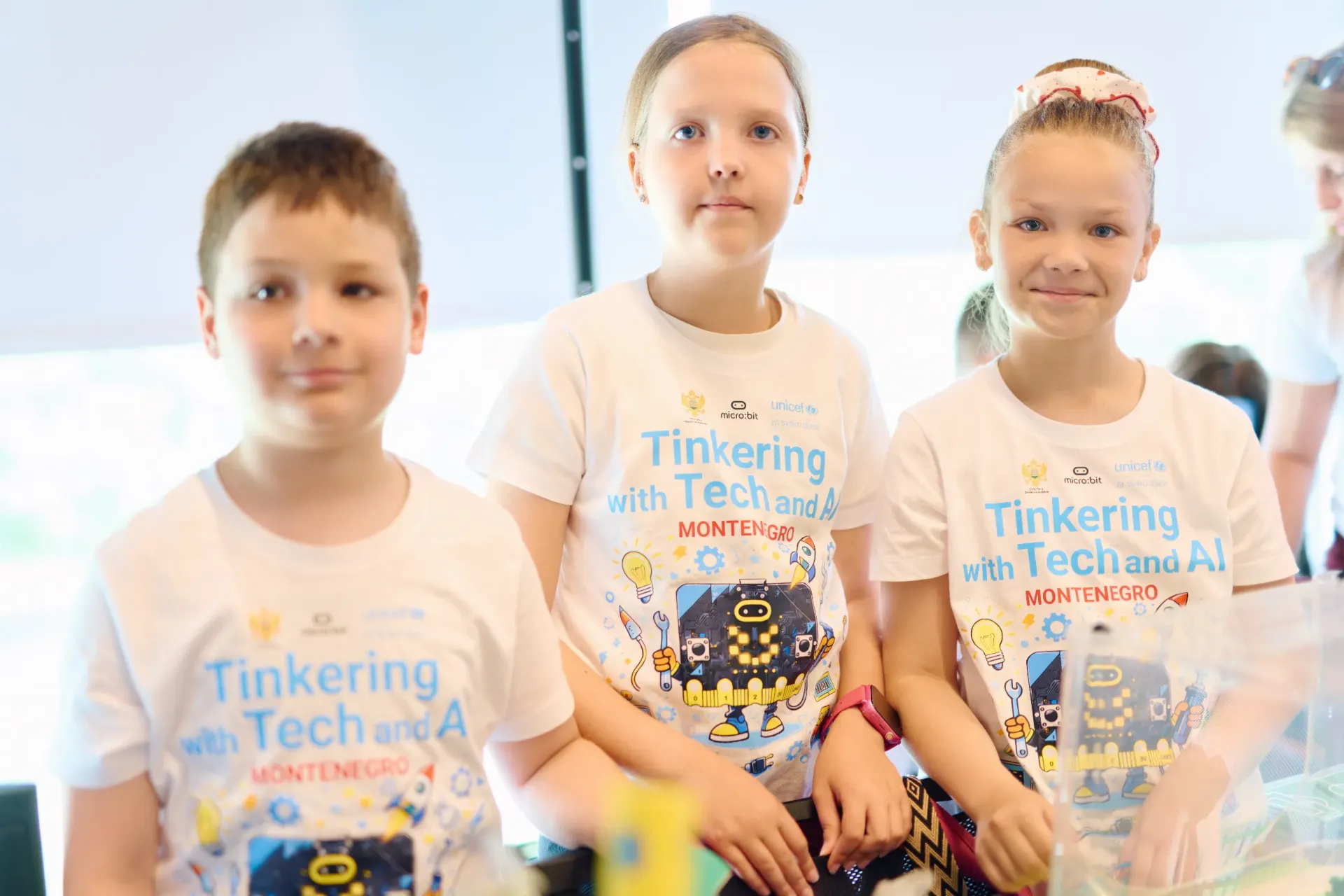
PODGORICA, 2 JUNE 2026 – When 9-year-old Jana was first introduced to the easily programmable micro:bit device through UNICEF’s Tinkering with Tech and AI initiative, she wasn’t just learning about technology, she was learning to identify problems, come up with solutions, work together as a team, and find novel ways to build and test real-world applications Put simply she was learning through play.
“I realized that my ideas can be useful, that I should not give up and that I should try again,” said Jana Nenezić, a fourth-grade student at Mirko Srzentić Primary School in Petrovac.
For children growing up in a digital world, it is no longer enough to know how to use technology. They also need to understand it, question it and use it responsibly. As artificial intelligence (AI) becomes part of everyday life and education, schools can help children develop creativity, critical thinking, collaboration, communication and problem-solving skills.
This is the foundation of UNICEF’s Tinkering with Tech and AI initiative. The global initiative is supported through Arm and the Ministry for Foreign Affairs of Finland. In Montenegro, the Bureau for Education piloted the initiative from December 2025 to June 2026, with support from UNICEF in partnership with the Micro:bit Educational Foundation.
The micro:bit is a small digital device that children can easily programme – for example, to respond to movement, light, temperature, touch or radio signals. By working with it, students discover how digital tools can be used not only for play, but also for exploration, testing ideas and creating simple solutions.
The value of the initiative lies not only in the prototypes students created, but also in the process they went through: observing problems, asking questions, exchanging ideas and learning from mistakes.
“What I liked most was that by working together, we solved many problems. We learned how to cooperate and not to give up when something does not work the first time,” said Pavle Kićović, a fourth-grade student at Bajo Jojić Primary School in Andrijevica.
During the 2025/2026 school year, 1,266 students from 23 schools and 63 classes across Montenegro took part in the programme. Regional presentations in Berane, Podgorica, Petrovac and Nikšić gave students the opportunity to explain not only what they had created, but also how they worked together, how access to the new technology impacted their lives, and what they learned along the way.
According to accompanying research, around 83 per cent of students said they had created something interesting using micro:bit devices, while 90 per cent said they enjoyed using them during lessons.


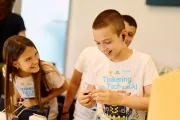
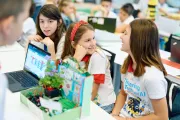
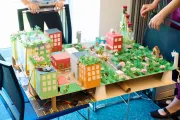
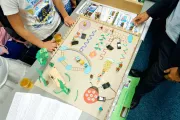
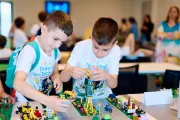
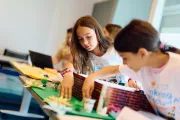
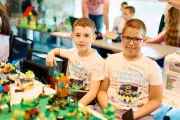
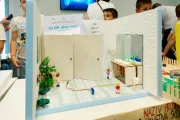
The experience was new not only for children, but teachers also encountered new tools and a different way of working. Together with their students, they explored, tested ideas and found solutions.
“The children showed much more independence than we expected. It was wonderful to see how mistakes and new attempts led to solutions, and how both the children and we [teachers] overcame challenges together. We are very proud of what we achieved,” said Ina Keković, a teacher at Vuko Jovović Primary School in Danilovgrad.
Tinkering with Tech and AI is part of UNICEF’s global vision to support governments, teachers and students to use technology not only as a tool, but also as a way to explore, create and solve problems in their communities.
“When children use technology to explore a problem, work in a team, test their ideas and improve their solutions, they develop much more than digital skills. They develop confidence, creativity and the mindset they need for the future,” said Leotes Helin, Education Manager, UNICEF Digital Education and Global Learning Innovation Hub.
This approach can become part of regular teaching, including with younger students, through a guided, practical and child-friendly process. For Jana, the most important lesson did not remain only in the classroom.
“Technology can help people. We developed our imagination and learned how to be a team, and now it is easier for me, and I have more confidence when I need to present my ideas and share them with others,” she said.
By integrating this approach into regular teaching, every child – regardless of where they live or which school they attend – would have the opportunity to develop digital and AI literacy in a safe and responsible way. As we build a vision to go “beyond digital as usual,” digital tools in education should be used in a way that empowers children to explore, create and develop the skills they need for the future.