MICS: Data for better child policies and targeted investments for every child
New data show progress in health care and early childhood development, but also challenges in child protection and certain areas of education, as well as disparities between the general population and Roma settlements

- Crnogorski
- English
PODGORICA, 21 September 2026 – In the general population, the proportion of children who, one year before the official age of entry into primary school, attended kindergarten or had already started school increased from 67% to 79%. Among children living in Roma settlements, however, this proportion declined from 36% to 16% over the past seven years.
On the other hand, 16% of young people aged 20–23 living in Roma settlements have completed secondary education, compared with 3% in 2018.
The proportion of children aged 1–14 who experienced physical punishment and/or psychological aggression by adult household members during the month preceding the survey increased from 66% to 69% in the general population, and from 64% to 86% in Roma settlements.
These are among the key findings of the new national Multiple Indicator Cluster Survey (MICS) on the situation of women’s and children’s rights in Montenegro, conducted during 2025 and 2026 among a sample of 6,720 households from the general population and 1,189 households in Roma settlements. Comparison with the previous survey, conducted in 2018, shows that progress has not been equal across all areas or for all children.
Progress was recorded in several indicators related to health and early childhood development. The proportion of newborns breastfed within the first hour after birth increased from 24% to 41% in the general population and from 41% to 54% in Roma settlements. In Roma settlements, the proportion of infants exclusively breastfed during the first six months of life also increased, from 14% to 41%.
In the general population, 83% of children aged 2–4 are developmentally on track for their age in the areas of health, learning and socio-emotional development. Among children living in Roma settlements, this proportion stands at 56%.
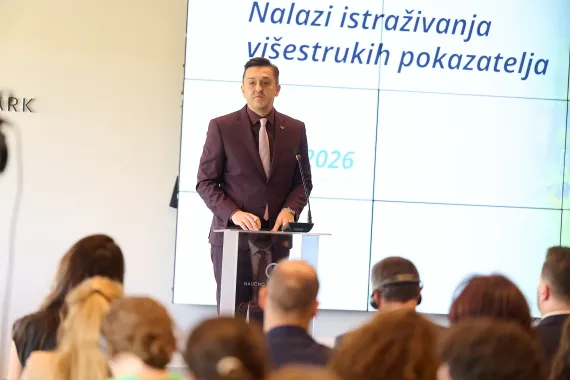
“These findings call on institutions to ensure that quality education, health services, social and child protection, as well as support for families, are accessible to every child, with additional efforts needed to reach children from Roma communities. Violence must not be accepted as a way of disciplining children, while quality early childhood education, particularly for the most vulnerable children, must be ensured. This is precisely why the MICS survey is of invaluable importance to Montenegro, especially at such a crucial junction, as this EU accession phase. It helps pave the way for the adoption and implementation of better policies and for directing budget allocations in a way that ensures the equal realization of the rights of every child,” said Michele Servadei, Representative to UNICEF Montenegro.












According to mothers or children’s primary caregivers, one in ten children aged 5–17 has difficulties in at least one area of functioning, such as learning, communication, self-care, vision, hearing, mobility, behaviour control or anxiety. Among adolescents aged 15–17 in the general population, 8% were reported to experience anxiety, nervousness or worry on a daily basis.
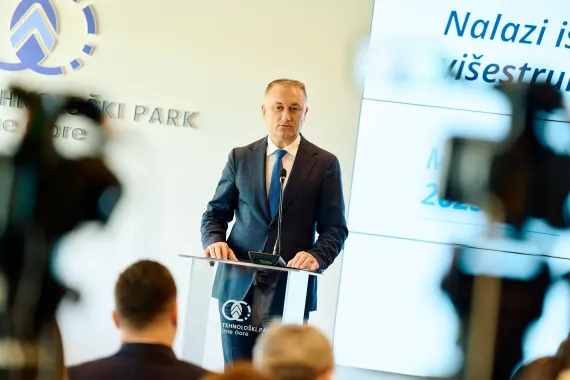
“Our responsibility is to turn these data into concrete policies and measures. That is why we continue to develop the social and child protection system so that it becomes more accessible, more efficient and more responsive to the needs of every child and family. However, child protection is not the responsibility of a single institution and requires coordinated action across all systems – social and child protection, health, education, the judiciary, the police, local governments, civil society and international partners. We must continue working together to build a system in which children’s needs are identified in a timely manner,” said Damir Gutić, Minister of Social Welfare, Family Care and Demography.
The data also point out concerning changes in the supervision of the youngest children. During the week preceding the survey, 12% of children under the age of five in the general population and 19% of children in Roma settlements were left alone, or in the care of another child under the age of 10, for more than one hour on at least one occasion.
“The value of the MICS survey lies in the fact that, two decades after the first survey was conducted in Montenegro, it allows us to use comparable data to assess where progress has been made and where challenges still remain. The role of official statistics is not only to record changes, but also to make them visible through reliable and clearly presented data. Their true value is realised when institutions translate those data into concrete measures and decisions that bring measurable improvements to the lives of children and families,” said Miroslav Pejović, Director of the Statistical Office.
Minister of Finance Novica Vuković emphasized that managing public finances entails a responsibility to ensure that every euro of public money is directed where it can achieve the greatest impact.
“MICS provides us with a basis for making better and more responsible decisions grounded in the real needs of citizens. This is why we see investing in children as an investment in the strength of the state, in our human capital and in Montenegro’s European future. Today, we invest in data; tomorrow, in better policies; and our ultimate goal is a better life for every citizen,” he said.
MICS is an internationally comparable household survey developed by UNICEF. MICS has been conducted in Montenegro since 2006, and the 2025–2026 survey is the sixth survey carried out in the country, as part of the seventh global MICS cycle. The survey was conducted by the Statistical Office of Montenegro, with technical support from UNICEF Montenegro and financial support from UNICEF and the Government of Montenegro.