Learn how to respond to violence
The Mídete campaign compiled solutions to bullying situations offered by adolescents in secondary education and professional technical education in Havana and Granma
- Español
- English
Searching for solutions is a daring, changing, provocative way of responding to a problem, of bringing it face to face with its end, of ceasing to avoid it or beat around the bush, of wiping it off the map once and for all.
How wonderful it would be to do it with bullying! How much peace children, adolescents, families and teachers would have if we could put an end to bullying!
It seems utopian, and it might be; but we feel closer to that horizon when we begin to take some steps. In the case of violence, tackling it head on means investigating how it is recognized, how it is expressed, how we react to it... and, finally, how we should react to it.
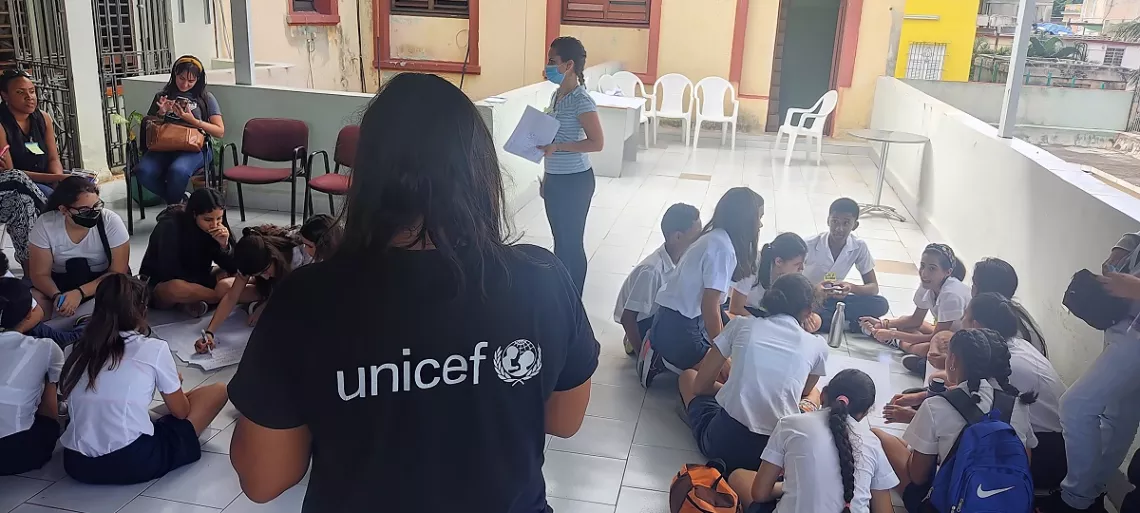
In order to draw up a repertoire of ideal responses to school bullying, the Mídete por la no violencia en la niñez y la adolescencia (Mídete for non-violence in childhood and adolescence) campaign embarked on this path: that of not beating around the bush and discovering, from the root, how to transform bullying. To this end, it selected 72 adolescents from the provinces of La Habana and Granma, belonging to basic secondary and technical-professional schools.
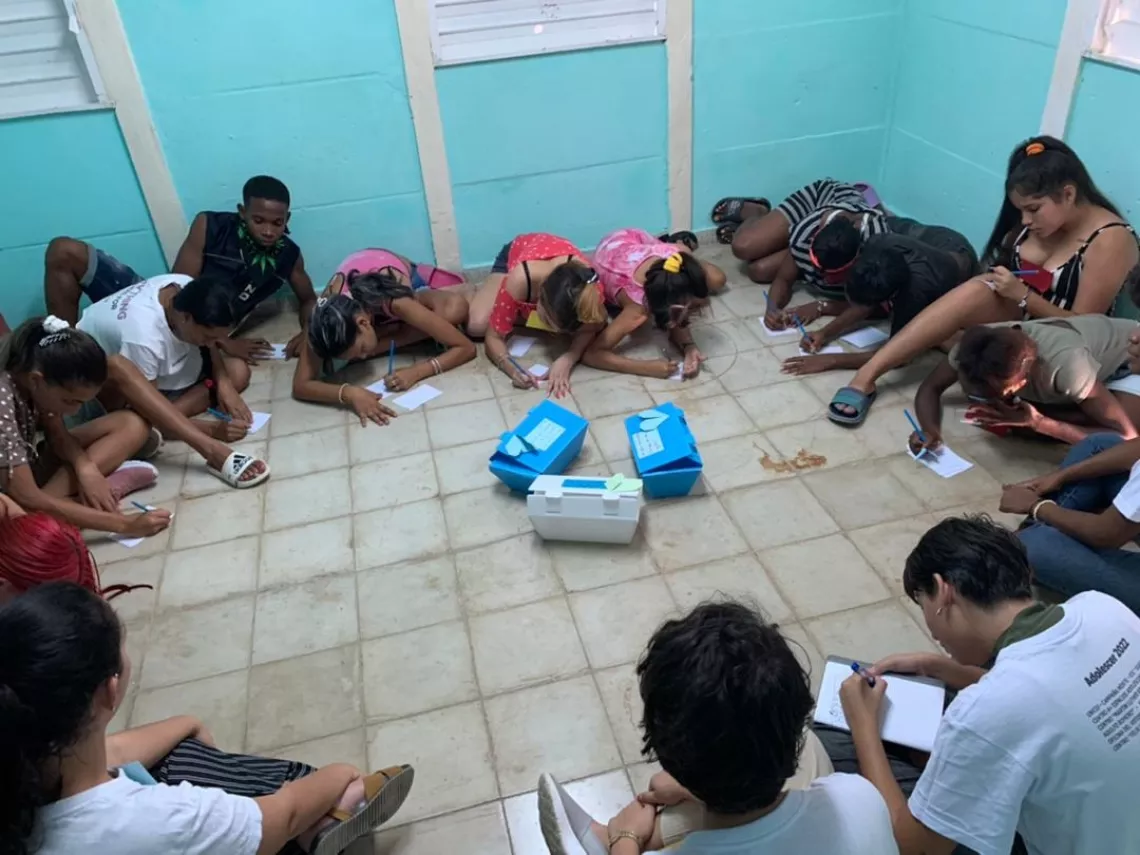
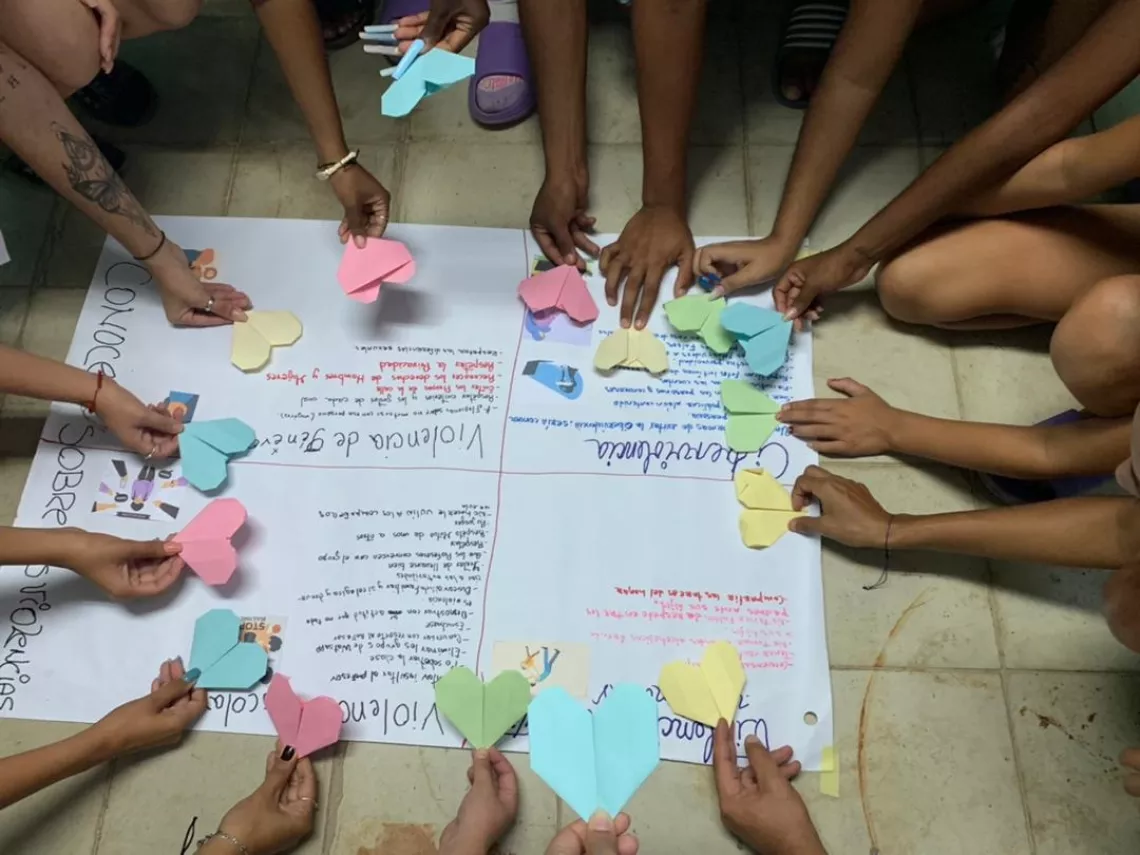
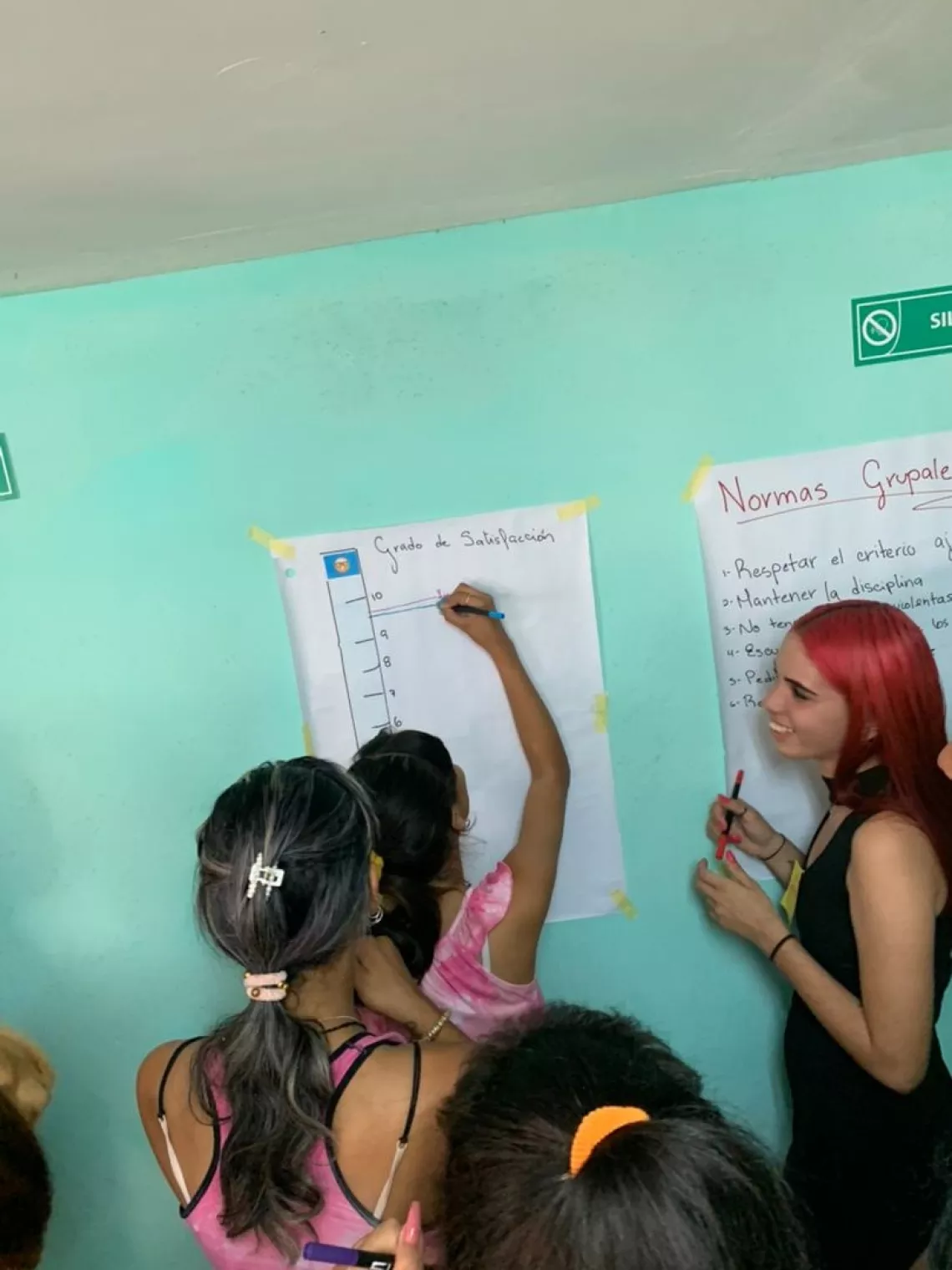
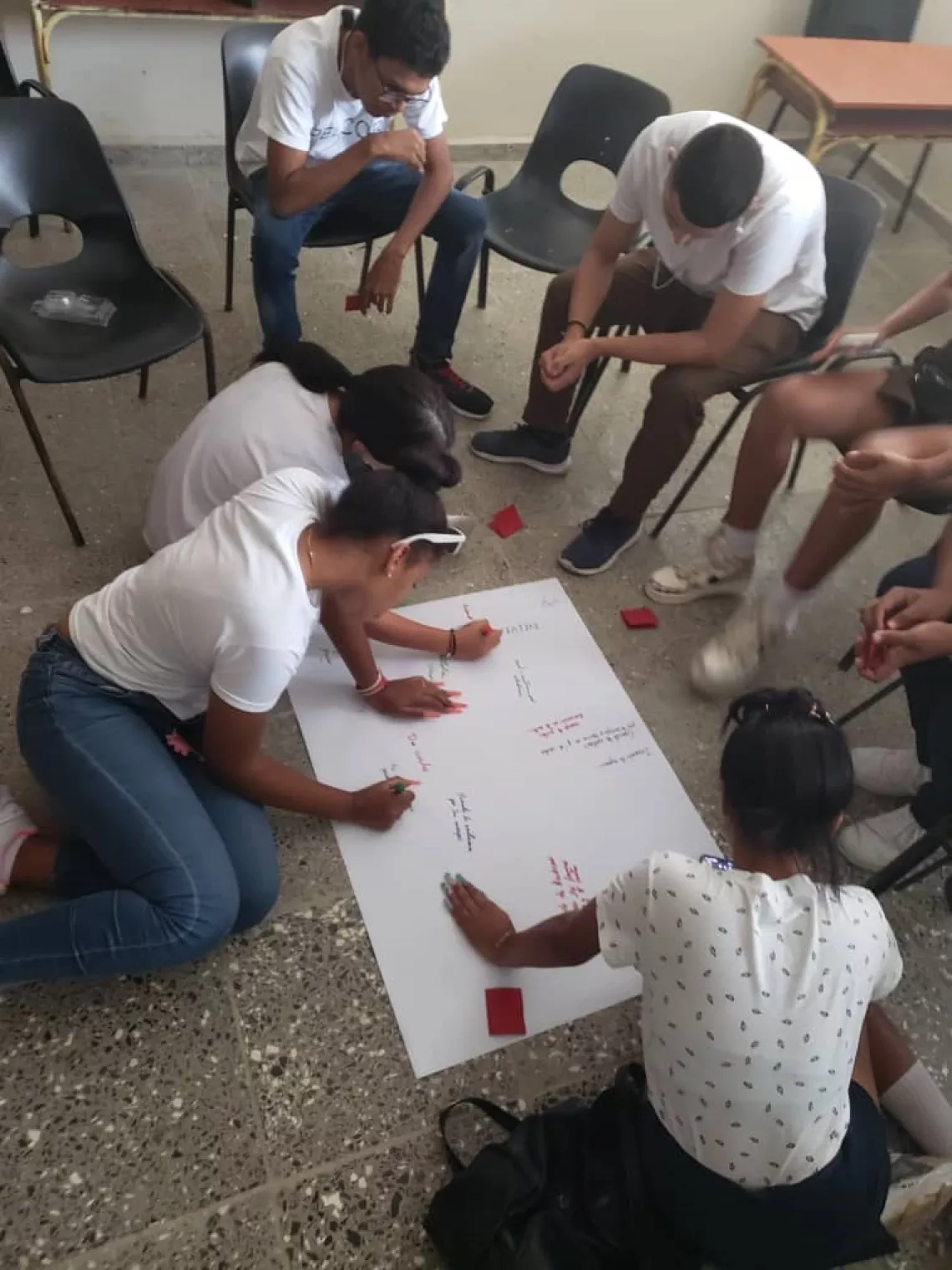
Through four participatory workshops, responses were obtained that project ways in which adolescents practice, experience, suffer or wish to act in the face of manifestations of violence in the educational context.
Displays of violence practiced by adolescents in the school environment
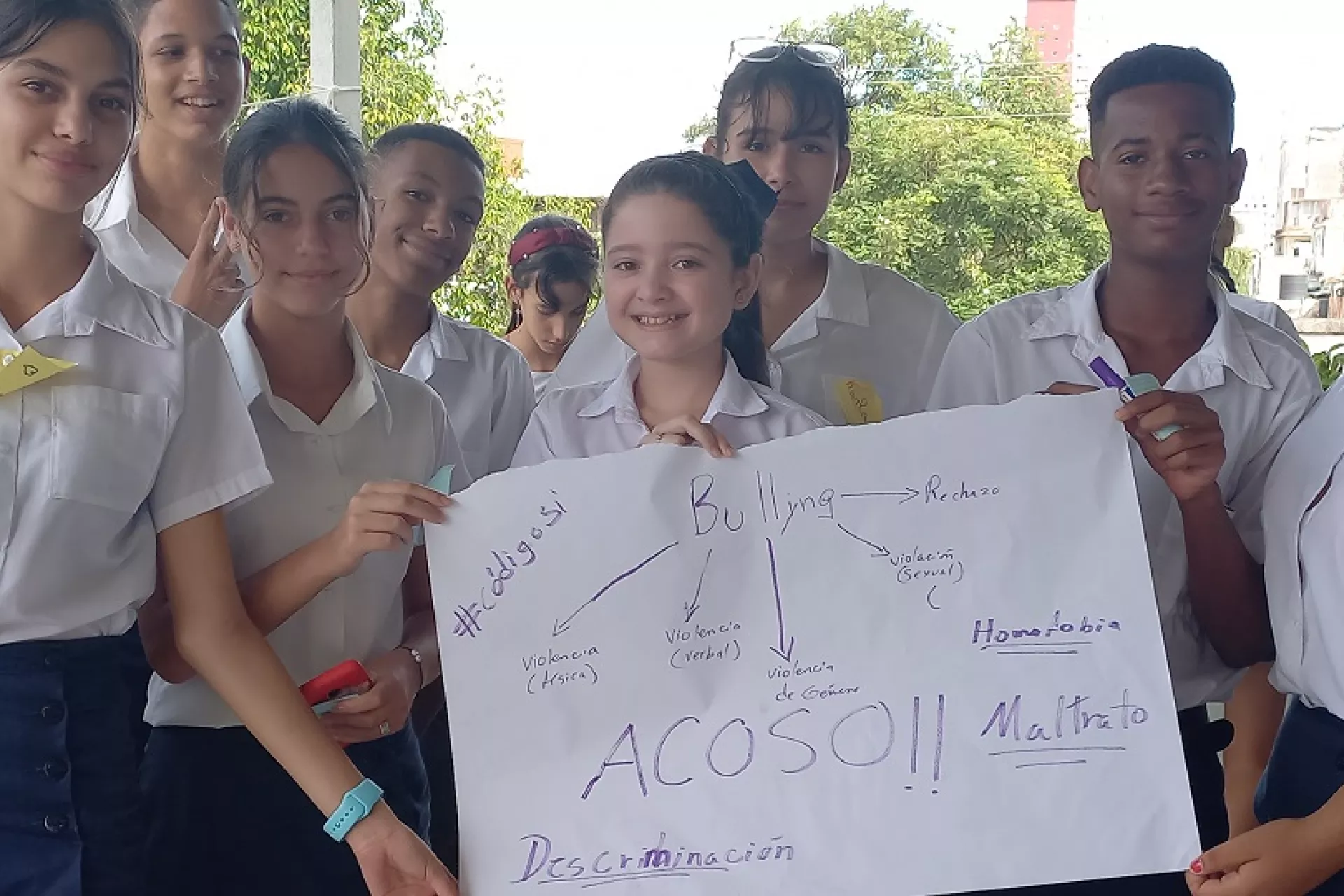
The first observation in the approach to these adolescents revealed that, although bullying is the English word used for school harassment exercised by peers or teachers, which encompasses dimensions such as physical, psychological, technological and sexual, in Cuba the term is used to refer to teasing, humiliation and mockery, known in Cuban slang as chucho or quemadera.
We found that adolescents between 13 and 18 years of age in basic secondary schools and technological schools in La Habana and Granma recognize the existence of displays of violence in the school environment, even when they do not suffer or practice it directly.
Along with bullying, they give importance to the violence they know or experience in their families, communities and other public spaces. It is the girls who report suffering street harassment with great intensity. One of the technology school students warned: “you could be a broomstick in a skirt and they’ll still pick on you, they call you names.”
The researched group gives greater preeminence to teasing among peers, public humiliation or teasing, discrimination based on religion, abuse by teachers and exclusion or mockery based on economic conditions.
One boy argued, “some people out there think they are the best in the street or at school because they dress well or because they have more... and they look down on those below them.”
Violence based on sexual orientation and gender identity surfaced in the four workshops conducted, which shows the concern of adolescents about the issue, as well as some discriminatory attitudes that proliferate in the educational environment.
A young woman from Granma mentioned that in her school a teacher instills (almost forces) the girls not to hang out with one of the other girls in the classroom, because she presumes she may be a lesbian.
In addition, stereotypes surfaced about what is feminine and masculine and how not complying with them makes you a target of this harassment. “Stereotypes are deeply rooted in people at school: for wearing baggy clothes, for hanging out with gay women or for not wearing makeup, they call you names, yell at you, humiliate you and make you stay and feel alone, until you make up a character for yourself and stop being who you really are,” said a girl from technology school.
The impact of technology on bullying, meanwhile, is marked by the use of WhatsApp and is observed with more emphasis in students in La Habana and in older students. “Leaving someone out of a WhatsApp group or blocking them; creating groups to speak ill of someone, manipulating photos or videos where that person appears, sending messages on behalf of that person to ridicule them,” are some of the situations they shared.
School harassment or bullying is a continuous behavior of malicious actions aimed at one or more people. It is sustained over time with the interest of discrediting, undervaluing, intimidating, denigrating or frightening. It occurs in the school context among peers or from teachers towards students.
Adolescents in Havana shared their experiences of abuse of power by some teachers. Although it is not a continuous fact, as the definition of harassment requires, it raises alarms that must be addressed so that schools do not lose their status as protective environments for children and adolescents.
“A high school physical education teacher did not believe that a student who is a friend of mine was not feeling well and made her stand in the sun. The girl fainted within 10 minutes of this punishment,” recounted a high school girl.
“The teachers who want to abuse the students, the girls trying to seduce a teacher to get a grade, one teacher wanted to force me to write with my right hand when I am left-handed”... were stories they shared in the workshops.
Regarding the daily chucho (teasing), they identified situations such as making fun of those who have a disability or special learning needs, of those who “dress differently, wear a long skirt, or are not fashionable”. Although teasing, humiliation, and other aspects that sustain psychological harassment at school emerged in each case, boys and girls naturalize these behaviors and downplay their importance; they live it as something “normal”.
How they react to violence and how they would like to respond
When faced with an action/reaction exercise in situations of violence at school, the adolescents responded, almost in their entirety, with an aggressive gesture. If they hit me, I hit back; if they yell at me, I yell; if they laugh at me, I punch them; if they make fun of me in front of people, I yell insults at them.
One of the adolescent girls from the Havana community of El Husillo shared a story, in which they made fun of her for wearing a long skirt, and she picked up a book to attack them and they began to fight.
From Granma came stories such as the one of two friends who, when they began to be made fun of, laughed to enrage the aggressor, which unleashed physical violence to which both responded.
Several students from Plaza de la Revolución and Arroyo Naranjo, in Havana, described their reaction through similar experiences: “they slapped me and I slapped back; I have acted, without thinking, in the same way; I have yelled louder; I have looked for that person’s defects and even for those of his family to laugh back as a response...”
Very few adolescents in the four workshops responded nonviolently when asked to put themselves in a situation in which they received an aggression: “I stay still; I leave; I avoid approaching that person again; I tell my family so they can go to school to resolve it.”
However, most of them changed their minds after reading their answers aloud, and reflecting as a group on what would happen if rather than responding to that aggression they thought of the best course of action, something that would avoid more problems, of not repeating the same thing and cut the chain of violence.
In Jiguaní, Granma, despite recognizing that the first instinct is almost always to respond with the same action, in the end all agreed that violence never ends the situation. “On the contrary, it fuels revenge, or the victim even has to leave school or gets sick,” someone explained.
Another confessed: "I used to be violent; I hurt other people both physically and with teasing... But starting to talk about these issues has made me improve. And I feel that I have also done so because there’s less fighting in my home and because I have gained more confidence in myself.”
Another adolescent girl from Havana pointed out: “most people who make fun of others do it because they don’t want the attention to be turned on them, because they think that way they won’t see their defects.” From El Husillo, in Marianao, a response was well received by the participating group: “violence is what you see the most right now and it is important to break with that, because as they say, harassment makes you a backward person.”
It is striking that many of the answers or solutions offered by the adolescents of Arroyo Naranjo, in Havana, had to do with the legal course: “to take the aggressors to jail; that all possible measures be taken to put an end to this”. These suggestions show that the participants demand greater responsibility for violence on the part of the State and institutions, and that in addition to the situations that occur in the school environment, they consider what happens outside of it.
Other solutions suggested in the four workshops:
- Communicating better in order to avoid a violent situation, or finding ways for aggressors and their victims to talk and understand each other.
- Helping aggressors to change, to reflect on the harm they cause to others, to put themselves in the place of others, of those who are the victims of this violence.
- Remaining calm and in control of our emotions and reactions: not letting ourselves get into that zone of annoyance or anger and breathing before responding to violence with more violence.
It is noticeable that there is an interest or desire on the part of adolescents to stop experiencing situations of violence at school and elsewhere. Most of them are aware of tools or responses that could stop these aggressions, but they do not know how to put them into practice or lose their temper before thinking about them.
It would be advisable to prepare teachers further in the education and promotion of the rights of children and adolescents. It would also be advisable to include content related to inclusion, non-discrimination and respect for diversity and the free choice of people, so that they can complement the curricular subjects with such values.
Families and teachers also need more information and training so that they can determine when adolescents are being the victims of bullying and know how to support them in this situation, as well as to encourage them to make it visible and not accept it as something natural.
This Inventory of solutions to violence from the perspective and experiences of adolescents is an invitation to reflecting on realities that limit their well-being and full development. Recognizing the problem, identifying alternatives for action and transforming these realities should be a commitment of those of us who are dedicated to the education and protection of children and adolescents. But, above all, it is an opportunity for them to be the protagonists of change.