“They’re not just foster parents to me – we are family”
How weekend foster care changes the lives of unaccompanied and separated children
- Hrvatski
- English
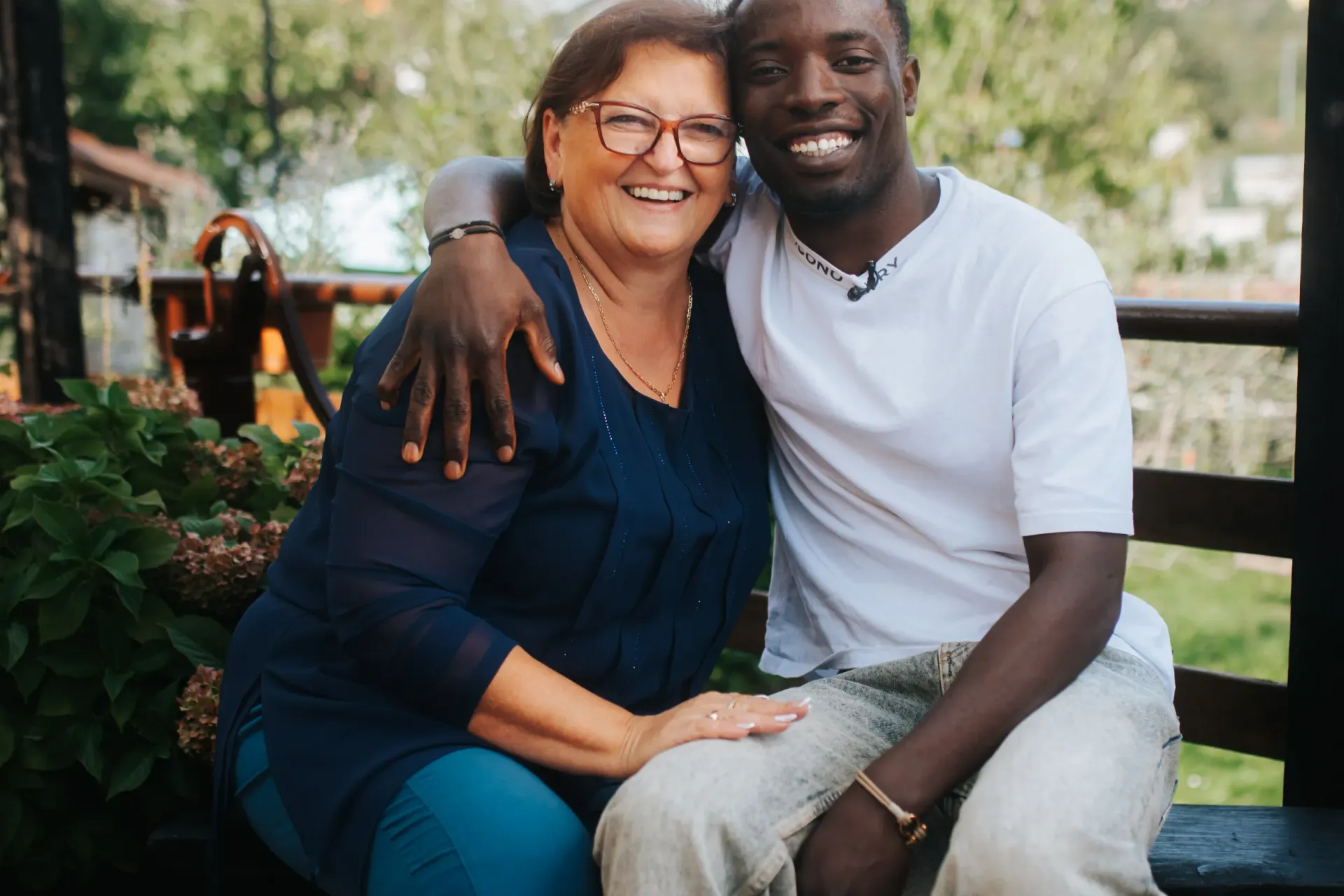
“Nakupenda. That means ‘I love you, mother’ in Swahili”, begins Alain, now a nineteen-year-old from Congo. For him, Claudia Juranić Klarić is not just a foster parent. She’s someone who calls and checks on him when things get tough, who taught him how to bake a cake, who blesses him at the end of every conversation. Someone who gave him back what he had lost – the feeling of home. She is family.
One phone call that changed everything
Claudia Juranić Klarić from Matulji has been foster parent for almost two decades with her husband and three children. “Giving yourself – that’s what we wanted from foster care", she says. At first, that meant opening a home to children from Croatia. Then came a call she will never forget.
“A colleague called and said there’s a boy from Congo. All the kids from the children’s home were going away for summer, and he had no one to go to. That really touched me, deeply. I always imagine my own kids – what if my child was somewhere alone, with no one? I said: send him to me.”
That’s how Alain, then seventeen, first came for an afternoon visit. “He looked like a Rijeka football player”, Claudia laughs. “With dyed hair and a blue headband. We said – he’s perfect for our home, he’s ours.”
For Alain, that first day was a bit awkward. “I met a lot of people I didn’t know. But then I saw everything was fine, how we hung out. We went swimming, watched a match… Slowly I opened up because I felt like I was at home. I call Claudia ‘mother.’ She’s not a foster parent anymore – she’s like my mother.”
The sea means a lot to him. “Where I was born, in a city called Vira, we have the second largest lake in the world – Tanganyika. When I’m here by the sea, I feel like I’m home.”
Laughter, tears and everyday stories
Their bond grew day by day, through laughter, conversations and little rituals. “We built that relationship slowly, every moment through different experiences”, says Claudia. “Physical distance means nothing. We have a warm relationship and we’re close. We can talk for an hour, laugh, share worries. Every conversation ends with a blessing – for him, just like for my kids.” Alain agrees: “Claudia is in Rijeka, I’m in Zagreb, but in our hearts we’re always close. I’m so happy I’m not alone.”
Claudia is not just someone who opened her home to Alain, but her heart too. She taught him how to cope with sadness, celebrate small victories, trust people.
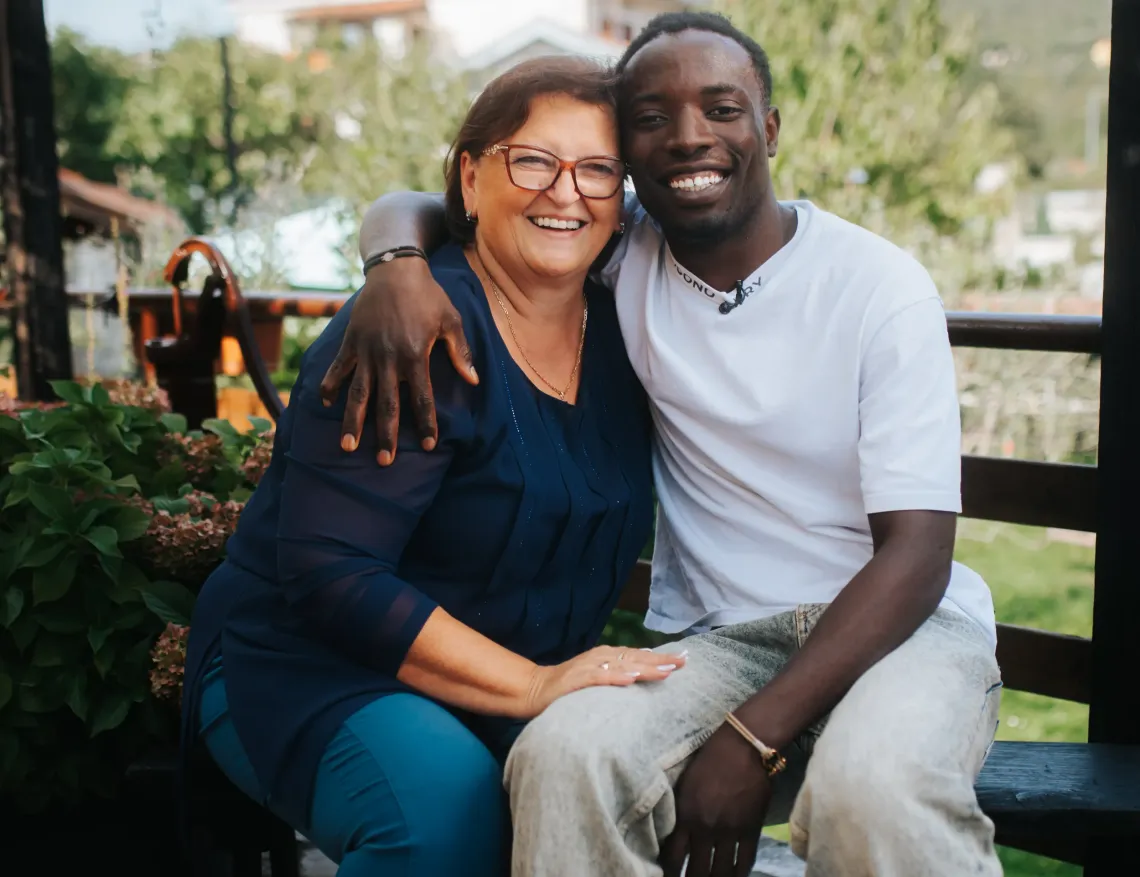
“They’re not just foster parents to me. We are family”, says Alain. “When I came to Croatia, I didn’t know anyone. I was alone. Claudia gave me the feeling that I belong, that I have someone who calls me, asks how I am, teaches me how to live. When I got bad news from Congo, we always talked. She was always there, trying to show me she was close. The next day she’d call to ask how I was. That helped me because I felt better”, he recalls.
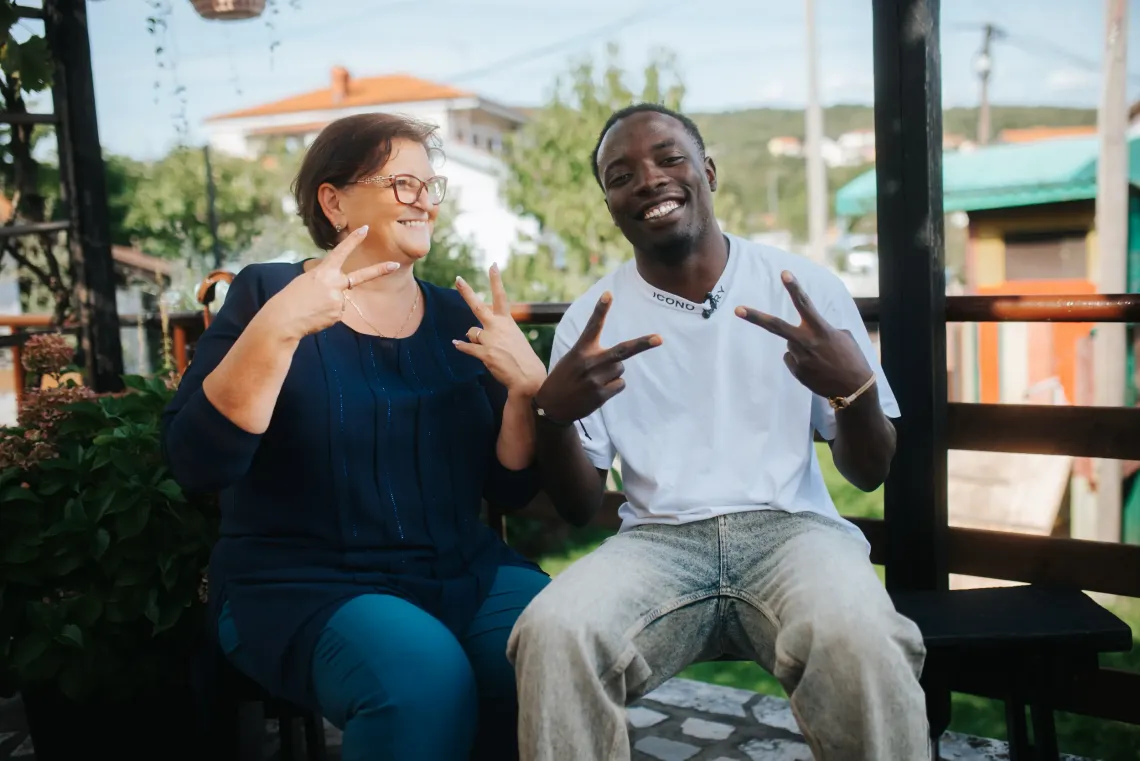
There were funny moments too. “At the beach, swimming for the first time together, Alain calls me: mom, mom! The whole beach looks in our direction – me with fair skin, him dark-skinned – and he asks if I’ll put sunscreen on him, so he doesn’t burn. Everyone laughed because they didn’t expect a dark-skinned kid could burn. But he can – and I put sunscreen on him every day.”
One tram story still makes him laugh: “I’m sitting there, people come and scan their cards with their phones. I think they’re taking pictures of me, so I pose. Only later I realized it was the ticket machine!”
Claudia learned how important it is to respect the child’s culture. “One thing I learned is how crucial it is for a child to show and practice something from their culture. Alain cooked for us – ugali, pilao, chapati. We learned from him, learned the names of dishes. It brought us closer.”
Alain smiles: “The table was full of food, Swahili food, and they didn’t know what it was called. We all learned together.”
And Alain worked hard to learn Croatian. “When I arrived here, I spoke French, Swahili and English, but Claudia and everyone said – no English. If I want to live here, I must learn Croatian. I’m happy I managed to learn enough to talk and hang out with people.”
Foster care changes lives
Claudia looks back with pride. “I’m happy when I see kids who grew up with me – people who don’t depend on the system, who are independent, polite, and hardworking. My kids are rich kids because they have brothers, foster brothers at the table and in life.”
“Just imagine if we were somewhere in the middle of Africa, in an unfamiliar place, with an unfamiliar language. How much would it mean if someone offered us a hand, a refuge? If someone wants to leave a mark in someone’s life, they should foster.”
Unaccompanied and separated children especially need a caring family to give them stability and support. UNICEF, together with partners, promotes fostering and provides support to foster parents. Claudia, who is also president of the DamDom Association, emphasizes: “Support and supervision are key. We’re the only ones in Croatia who have continuous supervision, every third Tuesday of the month, for more than ten years.”
Weekend foster care gives children a chance to experience family life and emotional stability, even if it's just for a short time. “It’s not just about short-term experiences – it’s a chance to give a child back their smile, hope and faith in people", says Claudia.
Alain’s path to independence
Today Alain lives in a organized housing, preparing for independent life. “It’s good because you learn how to live after school. When I leave that place, I know there won’t be a caregiver to manage finances with me”, he says. He works at a company in Zagreb and has big plans – to enroll in university, start his own business, visit siblings now living in the United States. “Croatia is my home. I’d love to get Croatian citizenship. I hope it all works out. Step by step, and it’ll be great.”
Alain quickly fell in love with Croatia. “I like that Croatia is a peaceful country. In Zagreb, I can walk all night without worry”, he says. The food won him over – stuffed peppers, burek and sarma are his favorites, and he learned that “there’s only one burek – the one with meat.” He’s thrilled with the people too: “They’re open, they love to talk. I have lots of friends, play basketball, go to the gym.” Music is his constant companion – he listens to everything and even learned local songs.
“People sometimes ask me: did you know anything about Croatia before?” Alain smiles and continues, “Yes, I knew about Dinamo. In the Champions League they sometimes played against other clubs. And then the World Cup – Croatia against France. We speak French in Congo, so everyone expected us to cheer for France, but some friends and I decided we’d cheer for Croatia.”
Football was his first connection to Croatia, and later a way to bond with Claudia and her family. “We watched matches together, cheered for Rijeka. They all bought me a Rijeka jersey. I once wore it in Zagreb when Rijeka played against Dinamo – people looked at me funny. Only later did I realize why!”
“I noticed that many Croatian national team players have surnames ending in ‘ić’ – Luka Modrić, Perišić, Mandžukić. So, I said: if I get citizenship, I’ll change my surname to Malelić. I’ll be Mr. Malelić!”
Support to development foster care of unaccompanied and separated children is at the heart of activities that UNICEF, in cooperation with Switzerland, carries out across Croatia as part of the programme “Supporting protection and integration of children and families in migration in Croatia" funded by the Second Swiss Contribution to selected EU member states.


©UNICEF, 2025 “The information and views set out in this page are those of the author(s) and do not necessarily reflect the official opinion of the Schweizerische Eidgenossenschaft, or UNICEF. Neither the Schweizerische Eidgenossenschaft, or UNICEF nor any person acting on their behalf may be held responsible for the use which may be made of the information contained therein.”