Foster care for unaccompanied children: listening with our hearts matters most
Every child deserves the warmth, safety, and support of a family environment

- Hrvatski
- English
Unaccompanied children, those forced to leave their home and family because of war, poverty, disaster, or other difficult circumstances, are among the most vulnerable in our society. Their journey is often marked by fear, insecurity, and trauma, and arriving in a new country means facing a new language, an unfamiliar culture, and the absence of trusted loved ones. That’s why every unaccompanied child needs support, the warmth of a family home, safety, and someone who will listen and understand them.
In Croatia, as in many other countries, the number of unaccompanied children is growing, and foster families are becoming an important refuge for these children. Each foster parent’s story is unique, but all testify to the strength and importance of foster care:
“Unaccompanied children come with a language we may not understand, but we all understand the need for acceptance, warmth, and safety.”
One such story is that of Natalija Medak, who has been fostering children for over 20 years and this year received a lifetime achievement award for outstanding success in promoting and practicing foster care. When we visited her last year, she emphasized: “Whenever we were told a child needed a family, we never asked about their nationality.” Laughter always echoes in their home, and children, regardless of their background, are given the chance for a happier childhood, support, and love.
“With an open heart and open doors, we can positively impact children’s lives!” says the Mikulić family, who opened their home for six months to Sergej, a young boy from Ukraine. He is now reunited with his family, and his mother, Eugenia, will forever be grateful to the Mikulić family for providing her son with safety, support, and love when she, due to the circumstances of war, could not..
Experts agree that nationality or language should not be obstacles when deciding to foster. Edita Šafranko from the Community Services Center Zagreb-Dugave tells us:
“There is no difference in fostering children from Croatia and unaccompanied children. A child is a child, regardless of origin, race, or gender... Especially when it comes to a child in need."
Yet, both experts and foster parents agree on another point: foster care is not always easy. Children, especially unaccompanied children, have often experienced stressful life events, and foster parents face challenges of adjustment, language and cultural differences, and the need for additional support. At such times, it is most important to provide a sense of safety and stability, to be patient and open. Fortunately, support exists. “The staff at the Dugave Center are always ready to cooperate and help, whether by visiting Dugave, by phone, or by email. We have a counseling center, professionals, and goodwill”, says Edita Šafranko, adding: “It is necessary to further inform and strengthen foster parents’ belief in the success of their intentions. We are all ready to support them. Connecting with foster parents for practical advice and sharing experiences shows that it’s not always easy, but every act of giving fulfills and enriches a person.”
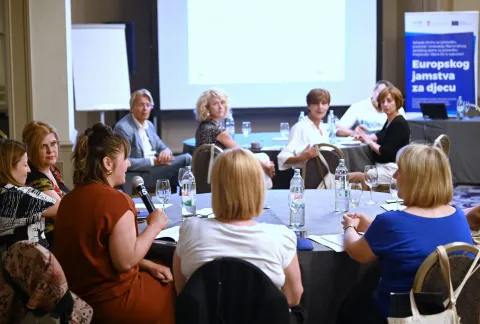
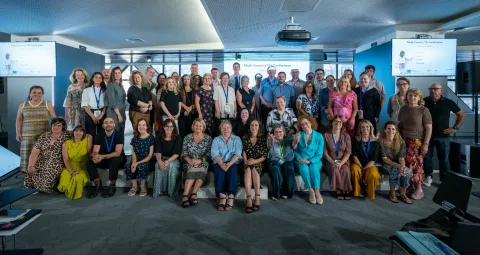
UNICEF, the Community Services Center Zagreb-Dugave, and the Croatian Institute for Social Work recognize the importance of foster care for unaccompanied children, as well as the need to support current and potential foster parents. As part of the "Supporting protection and integration of children and families in migration in Croatia" programme, funded by the Government of the Swiss Confederation, they promote foster care for unaccompanied children, including weekend and holiday fostering, organize workshops for potential and current foster parents, and provide support to foster carers of unaccompanied children. This is an opportunity for interested individuals and families to learn more, receive support, and perhaps decide to change someone’s world.
The story of foster parent Jadranka and her family, which she shared at a workshop, powerfully demonstrates how support, perseverance, and an open heart can completely change a child’s life. A child with hearing loss came into their home in silence, and they listened with their hearts. Through daily dedication, patience, and unconditional support, she witnessed how love and understanding can help overcome communication barriers and enable a child to reach their full potential. This experience is a strong reminder of the importance of inclusion, understanding, and equal opportunities for all children. Foster care, especially for unaccompanied children, is a key link in ensuring safety, belonging, and equal opportunities for everyone.
“Foster care is not just providing a roof over someone’s head; it is an opportunity for a new beginning, for the warmth of a family environment, and for the stability that children desperately need for healthy development”, emphasize the members of the foster care team at the Croatian Institute for Social Work
Although there are still not enough foster families for unaccompanied children in Croatia, every new story of acceptance sends a powerful message: unaccompanied children are not just numbers or statistics. They are children with hopes, dreams, and a need for love, safety, and support. Foster families, with their open hearts and homes, change their lives—and in doing so, enrich the entire society.
Because, as foster families say from experience: it doesn’t matter what language we speak, what matters is that we listen with our hearts.
©UNICEF, 2025 “The information and views set out in this page are those of the author(s) and do not necessarily reflect the official opinion of the Schweizerische Eidgenossenschaft, Swiss-Europe Rapid Response Fund or UNICEF. Neither the Schweizerische Eidgenossenschaft, Swiss-Europe Rapid Response Fund or UNICEF nor any person acting on their behalf may be held responsible for the use which may be made of the information contained therein."