"Whenever we were told that a child needed a family, we never asked about their nationality."
The Medak family has been fostering children for over 20 years, and their home is always filled with laughter—regardless of nationality, age...

"Whenever we were told that a child needed a family, we never asked about their nationality. Never. Hungarians, Serbs, Croats, Roma, Ukrainians—we never made any distinctions. We're all human," begins the story of her family, Natalija Medak, a foster parent who came to Vukovar from Ukraine over 20 years ago.
During these 20 years, Natalija and her husband have opened their home and hearts to more than twenty children, of whom they unanimously say, "They are all wonderful, honest, and kind. They all work, and we are proud of every one of them." Currently, the Medak household is bustling, as they are fostering six children aged 8 to 15. Laughing, Natalia shares, "We feel younger with them. We're middle-aged, but when we average out all the ages, we feel young too!"

"In the beginning, we didn't even know it was possible to be foster parents. It all started spontaneously, in a conversation with a social worker, Dubravka, who was a huge support to us initially," recalls Natalija. It was this need for mutual support and sharing experiences that led her to establish the Foster Parents Association in Vukovar, which now brings together 20 families and more than fifty children.
"What we need most is support, to be there for each other. Someone has an experience and shares it with others, someone has been through something... And we show the children that there are others like them, that they are not alone", explains Natalija, discussing the reasons for starting the association, which is very active. The members often socialize, travel a lot, and celebrate various important events and anniversaries together.
Through the association and her own example, Natalija wants to encourage current and future foster parents to consider opening their homes to unaccompanied children. In the fostering process, there are no distinctions, and Natalija emphasizes that
"an unaccompanied child is the same as a child from Croatia and has the same rights."
Unaccompanied children are those children forced to leave their homes and families due to extreme poverty, earthquakes, floods, war destruction, and other crisis situations, growing up outside their homeland.
Currently, her family includes Danijel, a fourteen-year-old from Ukraine who arrived in Croatia in June 2023.

"When I came in June, I wasn't attending school yet. I started school in September. The teachers helped me learn the language", Danijel recalls his first months in Croatia, where he now enjoys having many friends and big plans.
"I want to be a chef", he shares proudly, explaining how, with Natalia's help, he has also taught other children the basics of the Ukrainian language.
"From the beginning, everything was great. The children learned another foreign language, which is good for them. Now, they're getting ready to visit Ukraine and see it for themselves", adds Natalia, who has since become Danijel's guardian.
"When you are a guardian, everything becomes much easier and simpler, especially in urgent situations or important decisions. As a guardian, I am responsible for all decisions and guidance for the child, making processes much simpler. I don't have to ask for approval for everything; I can decide what's best for the child", Natalia explains. This is not her first experience with guardianship, and she emphasizes that the process is not complicated and that foster parents shouldn't be afraid of it.


The importance of guardianship in protecting unaccompanied children is highlighted by Prof. Dr. Irena Majstorović from the Faculty of Law at the University of Zagreb:
"The guardianship is essential; it is one of the fundamental family law instruments designed to replace parental care for children. For a child found on the territory of the Republic of Croatia, whether a foreign national or stateless, without parents or a guardian, we appoint a so-called special guardian to ensure their rights are protected. We aim to guarantee and fulfill a range of rights provided to Croatian citizens, thus to all children on our territory. In this sense, guardianship is crucial because appointing a guardian is just the beginning of protection. It is then necessary to ensure healthcare, inclusion in the educational system, and generally promote the integration of children, as is the case with children who have come from Ukraine."
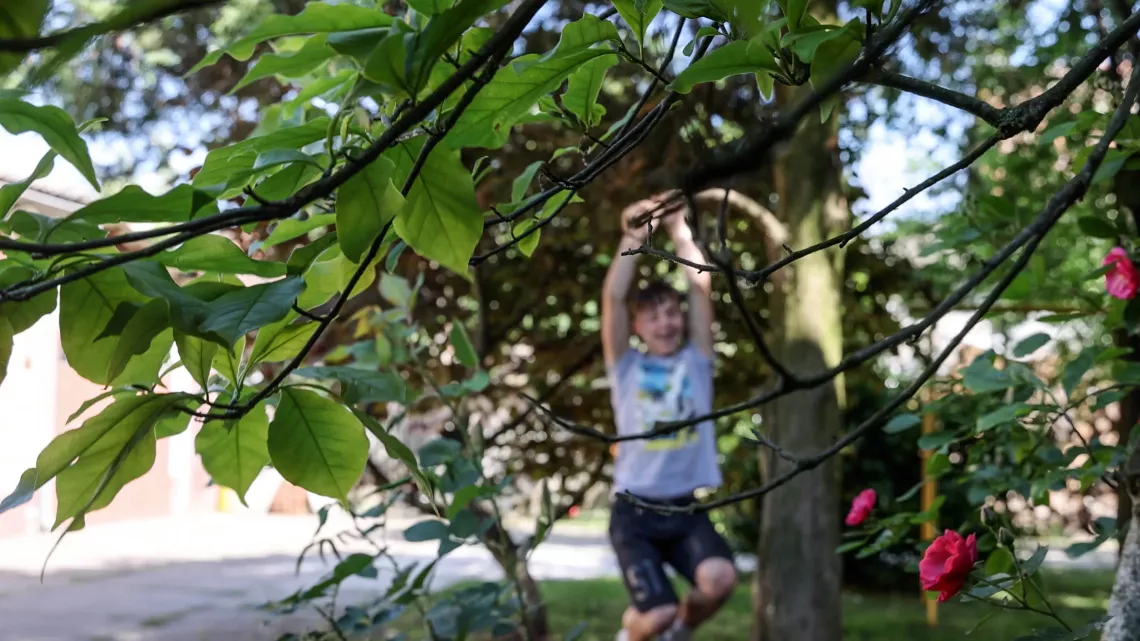
"I want everyone to know how happy we are as foster parents. Once they decide to foster a child, the only regret they'll have is not doing it sooner", concludes Natalija Medak, as she contemplates the many summer activities and trips in which the whole family will participate.
© UNICEF, 2024
The information and views set out in this page are those of the author(s) and do not necessarily reflect the official opinion of the Swiss Confederation or UNICEF. Neither the Swiss Confederation or UNICEF nor any person acting on their behalf may be held responsible for the use which may be made of the information contained therein.