

“We had no choice”: Sudanese refugees in Adré speak out about sexual violence
Sudanese refugees in Adré speak out about sexual violence
- English
- Français
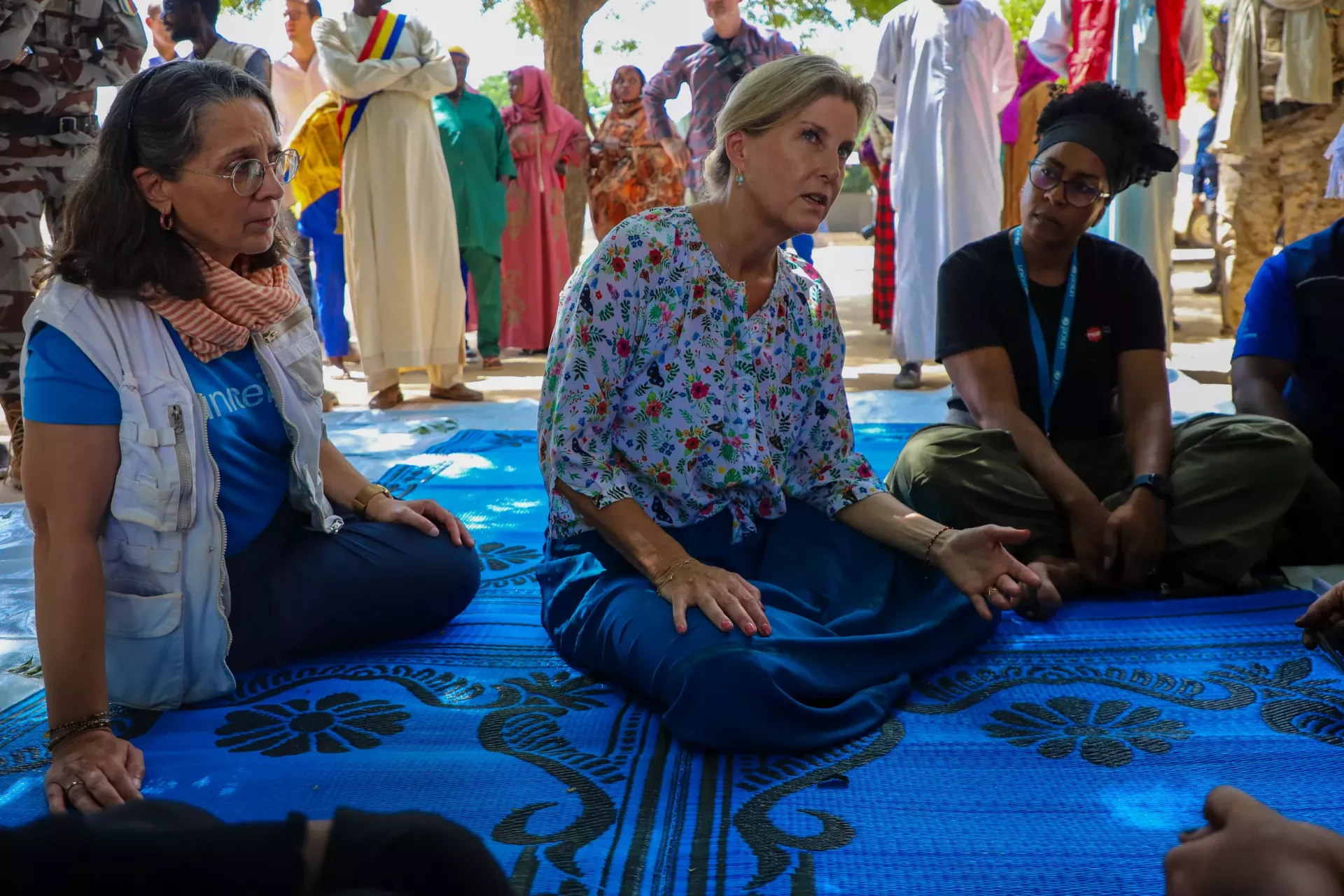
During a recent visit by Her Royal Highness, The Duchess of Edinburgh, to the border between Chad and Sudan, UNICEF Chad Deputy Representative Dr Sophie Léonard met refugee women who are survivors of sexual violence linked to the conflict in Sudan. During a confidential interview, these women shared their life stories to draw the attention of the international community to the atrocities they have seen and experienced - and which are still happening in Sudan today.
"We want people to know what we have been through; the armed men entered El Geneina, they took everything from us, they took the men and young boys away and we don't know where they took them to. They raped us women and beat those who refused, all in front of our daughters. Even our little girls were raped."
said an angry refugee woman who had come to take refuge in the town of Adré. With her head bowed down, another woman added that in the town of El Geneina, women who went out to look for food were expected to engage in sexual activities with these men. She explained, 'We had to go out to be able to feed our children who were locked up at home, we had no choice'. Another woman spoke up and said:
"Eight months ago, we were forced to flee El Geneina. On our journey, we encountered armed men who demanded that we stop. They told the women and children to jump into the river, and those who raised their heads to breathe were shot." The woman sitting next to her added: ‘I saw bodies piled up on the road."
These women, who are victims or witnesses of abduction, rape, sexual assault and exploitation, and other forms of violence in Sudan and during their journey to Chad, are survivors. Most of these women arrived in Adré, the first town on the border on the route from El Geneina, alone with their children, in search of refuge. They do not know where their husbands and sons are, all of them have lost family members and they report that entire families have been wiped out.
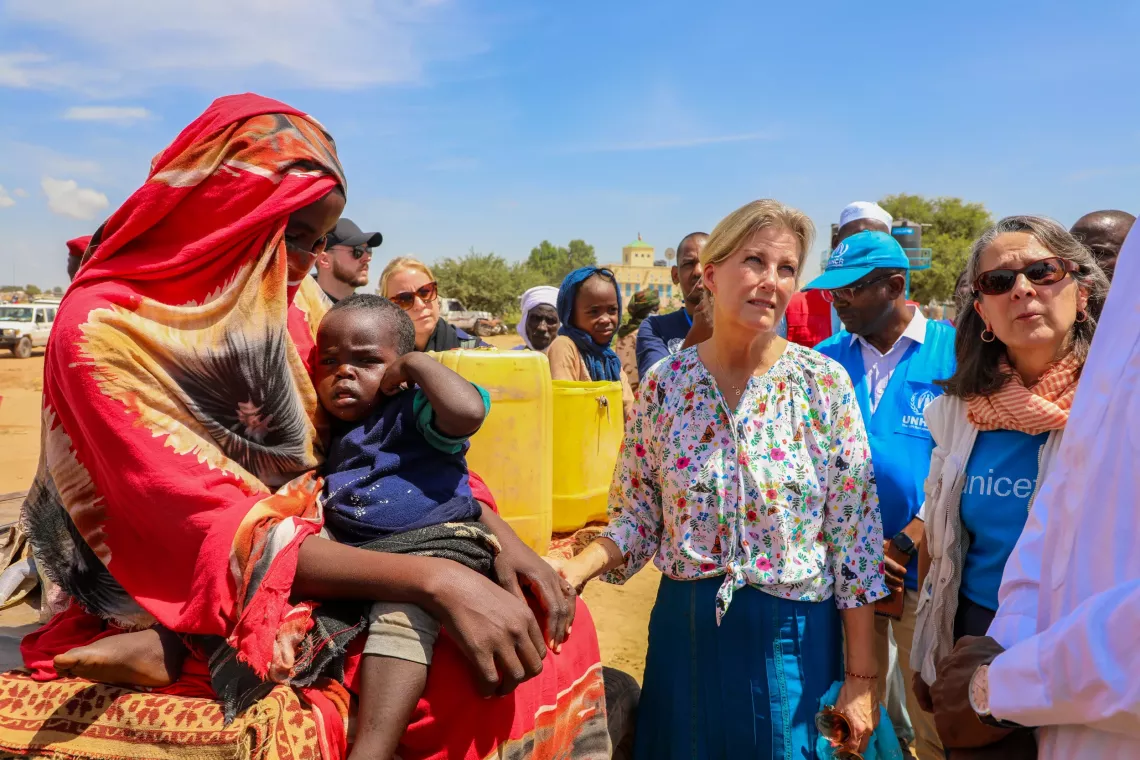
"An average of 400 refugees cross the border every day, with peaks of up to 1,000 people a day," explains Dr Sophie Léonard.
"Refugees from Sudan gather here in Adré in makeshift shelters. More than 200,000 of them are currently waiting to be relocated to a camp. Up until recently, UNICEF's response has focused on life-saving interventions: provision of water, treatment of malnutrition, family reunification, etc. We are proud to have now been able to open an integrated multi-sectoral service centre within the Adré district hospital to provide support for victims of gender-based violence. In this center the survivors can receive medical, psychological, social and legal care".

It was in this integrated multi-sectoral services centre that the survivors shared their testimonies during the visit of Her Royal Highness, The Duchess of Edinburgh. The centre was rehabilitated and equipped by UNICEF and provides holistic care for survivors of gender-based violence in a humanitarian crisis zone. It represents a joint effort by the Ministry for Women and Early Childhood and United Nations agencies (UNICEF, UNFPA, UNDP, WHO).


