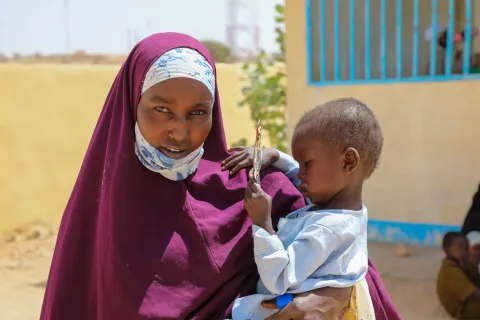
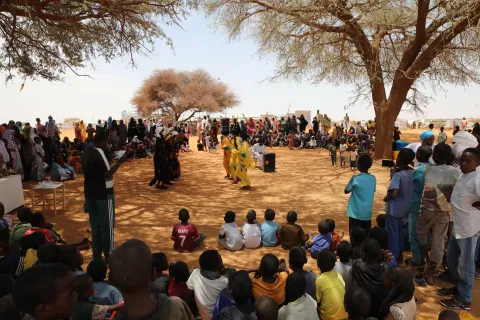
Sudanese crisis: Responding to the nutrition emergency to save children's lives in Wadi Fira, Chad
Sudan Crisis: Nutrition response for children in Chad

- English
- Français
Following attacks around El Fasher targeting the internally displaced persons camps of Zamzam and Abou Shouk in North Darfur, Sudan, in April 2025, thousands of new Sudanese refugees crossed the border into Chad. The majority entered through border crossing points in the towns of Tiné and Birak in Wadi Fira province, as well as Ouré Cassoni in Ennedi Est province.
Nearly nine out of ten refugees (87 percent) are women and children who cross the Chadian border after several days of exhausting travel on foot, many of them without food or water—a situation that severely affects their health.
At the district hospital in Iriba, a town located 74 kilometers from the Sudanese border, three women share the hardships they have endured and the hope they have for their children's care.
Mariam – “We hope everything will get better.”

Mariam Mahamaden Ali, 29, fled the Zamzam displaced persons camp in North Darfur after surviving months of siege and bombing.
“We had been surrounded in Zamzam camp for over six months. Every day, they fired projectiles at us,”
she recalls.
When fighting broke out inside the camp itself, she fled on foot with her five children, leaving her husband behind. After three grueling days of walking, she reached the Chadian town of Tiné at the border—exhausted and empty-handed.
It was there that the health of her son Mourshid, 2 years and 3 months old, already weakened by the lack of care in Sudan, began to deteriorate.
“He started vomiting, had a swollen belly, and diarrhea— he couldn’t even stand anymore.”
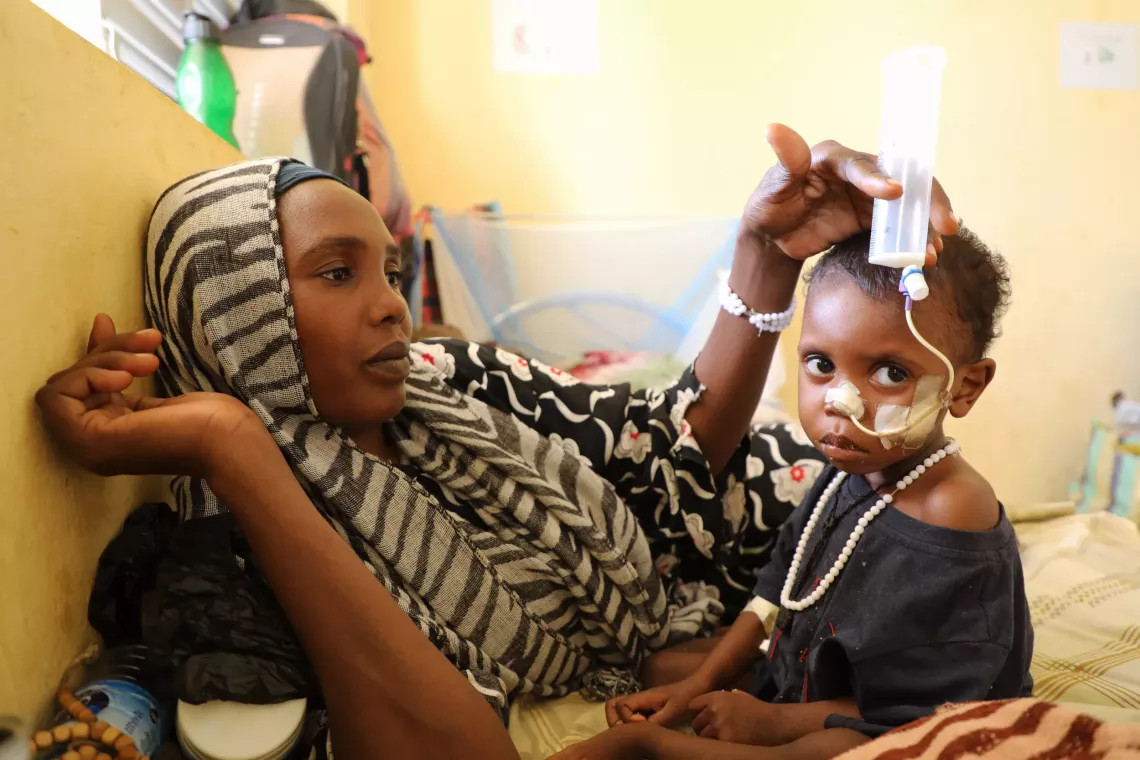
Mourshid was transferred to the hospital in Iriba, where he was diagnosed with severe acute malnutrition with complications. Since his admission, he has been receiving intensive treatment. On his 16th day of care, he began eating by himself again, after having been fed through a feeding tube.
"Often in the evening, my children and I have nightmares… We hope that everything will get better. We arrived with nothing."
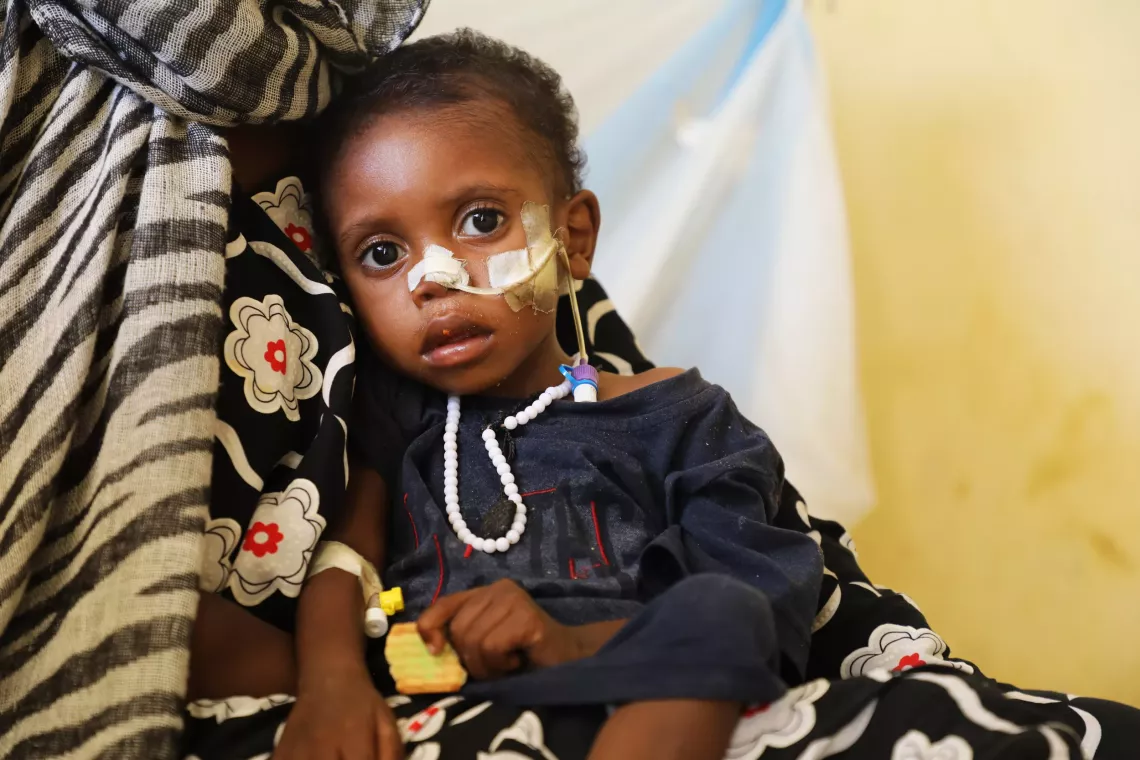
Marwa – “We are at peace… but we lack everything.”

Twenty-one-year-old Marwa Mahamat Moussa Abdallah had just enrolled at university when the conflict in Sudan broke out in 2023. She took refuge at the Aboushok camp near the city of El Fasher, but recent attacks forced her to flee again.
She crossed the border into Chad with her one-year-old daughter Baraha, her uncle, and some relatives. Now relocated to the Iridimi refugee camp in Wadi Fira province, she lives separated from part of her family who remain in Sudan.
Her daughter Baraha was admitted to the Therapeutic Nutrition Unit at the district hospital in Iriba three days ago. Malnourished, the little girl has also suffered from vision and hearing problems since birth.

"I hope my daughter will recover quickly,”
Despite a safer environment, living conditions in Iridimi remain extremely difficult for Marwa and her family.
“We are at peace in Iridimi, but we lack everything. Right now, we don’t even have proper shelter.”
Amira – “I hope there will be peace in Sudan.”
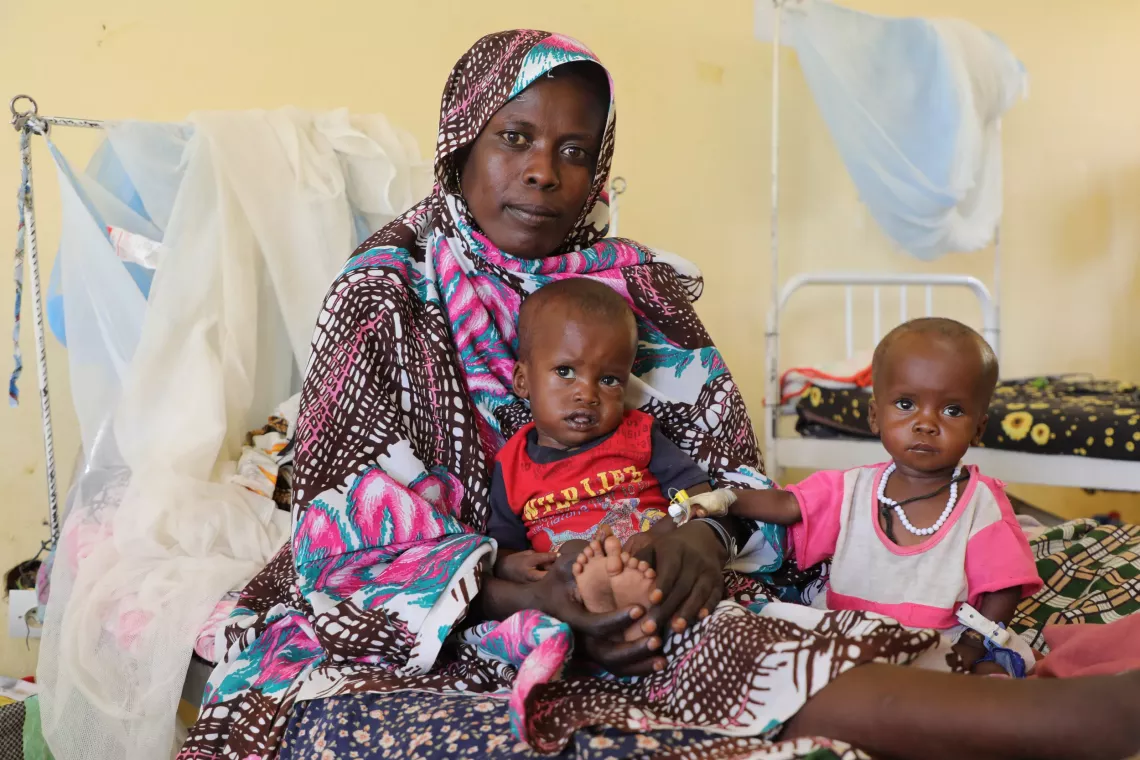
Like Mariam, Amira Ali Amir, 25, lived in the Zamzam camp before it was attacked. She fled with her four children and her mother, while her husband remained in Sudan.
“On the way to Chad, everything we had was taken from us,”
she says.
After several days of walking, she arrived in Iridimi and is currently living in a makeshift shelter. Three days ago, Amira came to the district hospital in Iriba with her daughter Toma, who was admitted to the Therapeutic Nutrition Unit for severe acute malnutrition. Her twin brother, Tom, is healthy. Thanks to the care she is receiving, Toma is improving and has started eating again.
“I hope there will be peace in Sudan so we can return home,”
Amira says.

In response to the current humanitarian crisis, UNICEF supports the efforts of the Chadian Government by strengthening malnutrition treatment in the main refugee arrival areas. In Tiné, a border town, a temporary unit for treating severe acute malnutrition has been established, while at the hospital in Iriba, also in Wadi Fira province, support includes the provision of equipment, nutritional supplies, and essential medicines.
UNICEF Chad is grateful for the support received from key partners for the nutrition emergency response, including European Union Humanitarian Aid, the Government of the United States of America, the United Nations Central Emergency Response Fund (CERF), Global Affairs Canada through the Child Nutrition Fund, and the Church of Jesus Christ of Latter-day Saints and other donors.