As families flee the war in Sudan, the refugee crisis deepens in Chad
Sudanese refugee children and families in eastern Chad need urgent help!

As if the staggering influx of more than 975,000 Sudanese refugees and returnees Chadians over the past two years of conflict weren’t enough, the humanitarian crisis in eastern Chad is now deepening into an even dire catastrophe.
Since the surge of violence in Sudan in late April 2025, thousands of families have crossed the border into Chad each day, traumatized, and burdened with the scars of war. Most are women and children, fleeing intense fighting in El Fasher, North Darfur. In just a few days, this massive wave of displacement has further strained an already dire humanitarian situation.
Tiné, a border town with Sudan, has become the main entry point for this flood of desperate souls—mothers carrying babies, exhausted and starving children, families clinging to hope amid devastation.
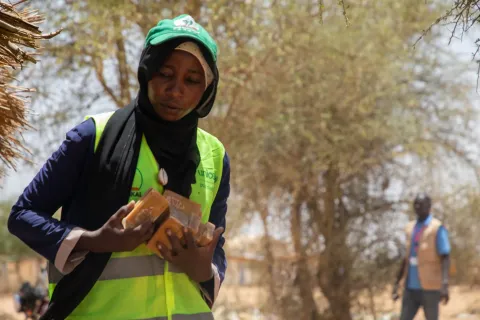
UNICEF and its partners are on the ground, responding swiftly by delivering life-saving aid: clean water, child protection, emergency supplies, and psychosocial support.
But the scale of the needs is huge!
Much more support is urgently needed to prevent further suffering.


Travelling on carts, tricycles, donkeys, in vehicles, and even on foot, thousands of children and their families continue to cross the border every day. Under the blistering sun and sweltering heat, they first gather at the border post, exhausted from their journey. Shortly after, in large groups, they are loaded onto massive trucks and transported to a transit site located about 5 km away.


With no safe place to shelter upon arrival, children and families huddle beneath or alongside the stifling shade of large trucks, waiting for transport to the transit site. Temperatures soar to 43 degrees, turning the wait into an ordeal. Their faces reflect despair, uncertainty, and the deep trauma of what they have endured.

Fleeing the violence in El-Fasher, Alimé and her two children—Asmao, 2, and Zackaria, just 7 months old began their journey on foot. Hours of walking under the unforgiving sun led them to join a group traveling by cart, eventually reaching Tiné, at the Chadian border.
Their belongings? Just a mat and a few pieces of cloth, the only things they could carry.
"I crossed the border with my children, but my husband was taken by armed men. I have no news from him. What will happen to us here? I don’t know!"

Kaltouma, 15 months old, and her mother are sharing a gaze filled with doubt and fear.
Weary from their journey and trapped in desperate conditions, many children arrive with visible signs of malnutrition: hollow eyes, frail limbs, and weakened bodies. With nothing to eat and nowhere safe to rest, their health deteriorates rapidly.
"My child Kaltouma is sick. She has diarrhea and is losing weight day by day. I’m really worried. I pray that she holds on, but I see her getting weaker and weaker. I don’t know what to do."

Hawa, a young girl, lost her father and older brother in the recent clashes in El Fasher. The memory of that day lingers painfully—a day filled with chaos, terror, and the frantic scramble to escape. Now, she finds herself alone in Tiné, away from home, burdened by grief and overwhelmed by trauma.

"What I experienced, I wouldn't wish on anyone. Some women were raped in front of their husbands and children, others were beaten while trying to stop the killing of their husbands. Our belongings, taken or destroyed. I don’t know what we did to deserve such fate."

Like many families at the Tiné transit site, 15-year-old Zenab, her mother, and her grandmother have taken shelter under the sparse shade of a tree. Behind them lie the few belongings they managed to bring with them during their escape. For the past four days, this improvised refuge has been their home, a place where they sleep, enduring the dust, the scorching sun, and the constant sting of mosquitoes and insects.
At the heart of the transit site, UNICEF has set up a child-friendly space: a haven where children receive psychological support to overcome the traumas of war, while also having the chance to play and interact with their peers.


One of the most urgent needs has been access to clean drinking water; one of the population's most pressing needs. UNICEF and its partners have set up water points, but the demand remains high, and the needs are far from being met. Now more than ever, we need support to continue providing life-saving water and essential services to those who need it the most.
"Access to safe drinking water has brought us tremendous relief. Now, we don't have to worry about waterborne diseases, and our children can drink and bathe without fear. It’s a huge comfort for all the families here." Nassi, a mother of 2.
The humanitarian crisis in eastern Chad is unfolding before our eyes. Families torn apart, children left vulnerable, and entire communities are struggling to survive. In support of the response to the refugee crisis led by the Chadian government, UNICEF is working to provide Sudanese refugees with urgent needs: shelter, clean water, food, protection, access to education for their children, dignified sanitation facilities, basic healthcare, and proper nutrition. Your support can make a life-changing difference.
Stand with us. Stand with them.
Donate now and help us deliver vital assistance.