Access to Water and Hygiene Kits: A Lifeline for Populations Affected by the Sudanese Crisis in Chad
Essential water and hygiene support for families affected by the Sudanese crisis in eastern Chad

- English
- Français
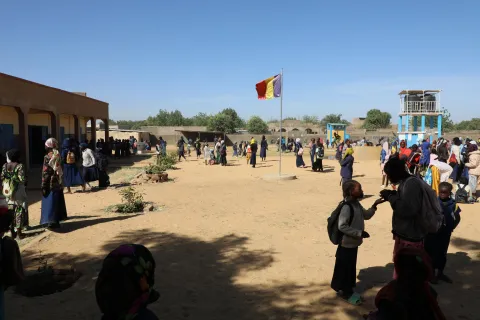
On this sunny morning, thousands of refugees have gathered at the Oure Cassoni refugee camp in the Ennedi Est province of eastern Chad to receive hygiene kits distributed by the Ministry of Water and Energy, in collaboration with the Chadian Red Cross and UNICEF.
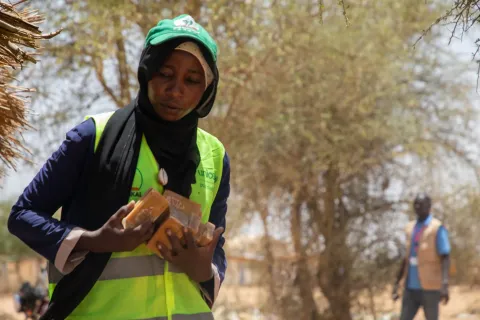
Under the scorching heat, Red Cross volunteers are hard at work, calling out beneficiaries one by one to hand over the packages.


For many, this simple box represents much more than a collection of items: it is a breath of hope in lives upended by violence.

Each hygiene kit contains soap, buckets, jerrycans, mosquito nets, bleach and other essential items to help families protect their health and dignity in a challenging environment.


Since the beginning of 2025, fighting around the Sudanese city of El Fasher — particularly in the displacement camps of Zamzam and Abu Shouk — has forced thousands to flee to Chad. Between January and April 2025, over 35,000 refugees crossed the border into the provinces of Wadi Fira and Ennedi Est.
Many of the refugees, mostly women and children, have been relocated to the Oure Cassoni camp in Ennedi Est province. Among them is Aïcha Souleymane Saleh Ali, a mother of seven, who walked from Zamzam to reach Oure Cassoni.

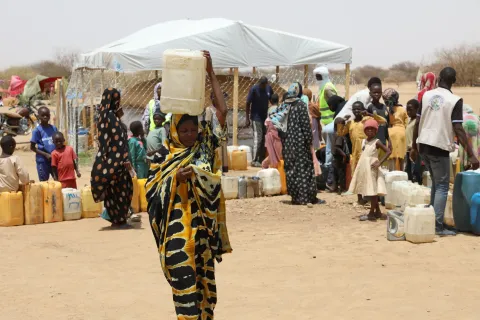
“We walked half the way… I have no news of my brothers who were injured there. We've been here for 16 days. We’re living under makeshift shelter, exposed to the sun. We have serious water problems. Alhamdulillah, this kit will help me take care of my children.”
That day in Oure Cassoni, 1,500 families received hygiene kits. Among the beneficiaries was Noura Ibrahim Wadi Ahmat, a Sudanese refugee who arrived about twenty days ago with her five children.

“We came with nothing, and right now we have no shelter. This kit will be a great help to us.”
To meet urgent water needs, UNICEF has also installed five water tanks (bladders) in the camp, with a total capacity of 46,000 liters, enabling more than 41,300 people — including nearly 25,000 children — to access safe drinking water, at a rate of 7.5 liters per person per day.


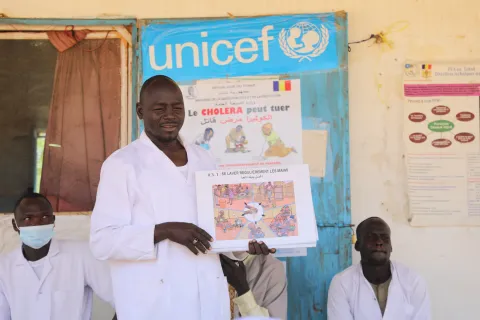
UNICEF supports the efforts of the Chadian Government by providing vital water, hygiene, and sanitation assistance to populations affected by the Sudanese crisis, including host communities.
UNICEF Chad is grateful for the support received from key partners for the WASH emergency response, including the Governments of Sweden and the United States of America, the United Nations Central Emergency Response Fund (CERF), as well as flexible humanitarian funding.