“Watching malnourished children regain their strength fills me with joy”
Supported by UNICEF and funded by the United States, Batangafo Hospital is doing its best to combat malnutrition.
- English
- Français
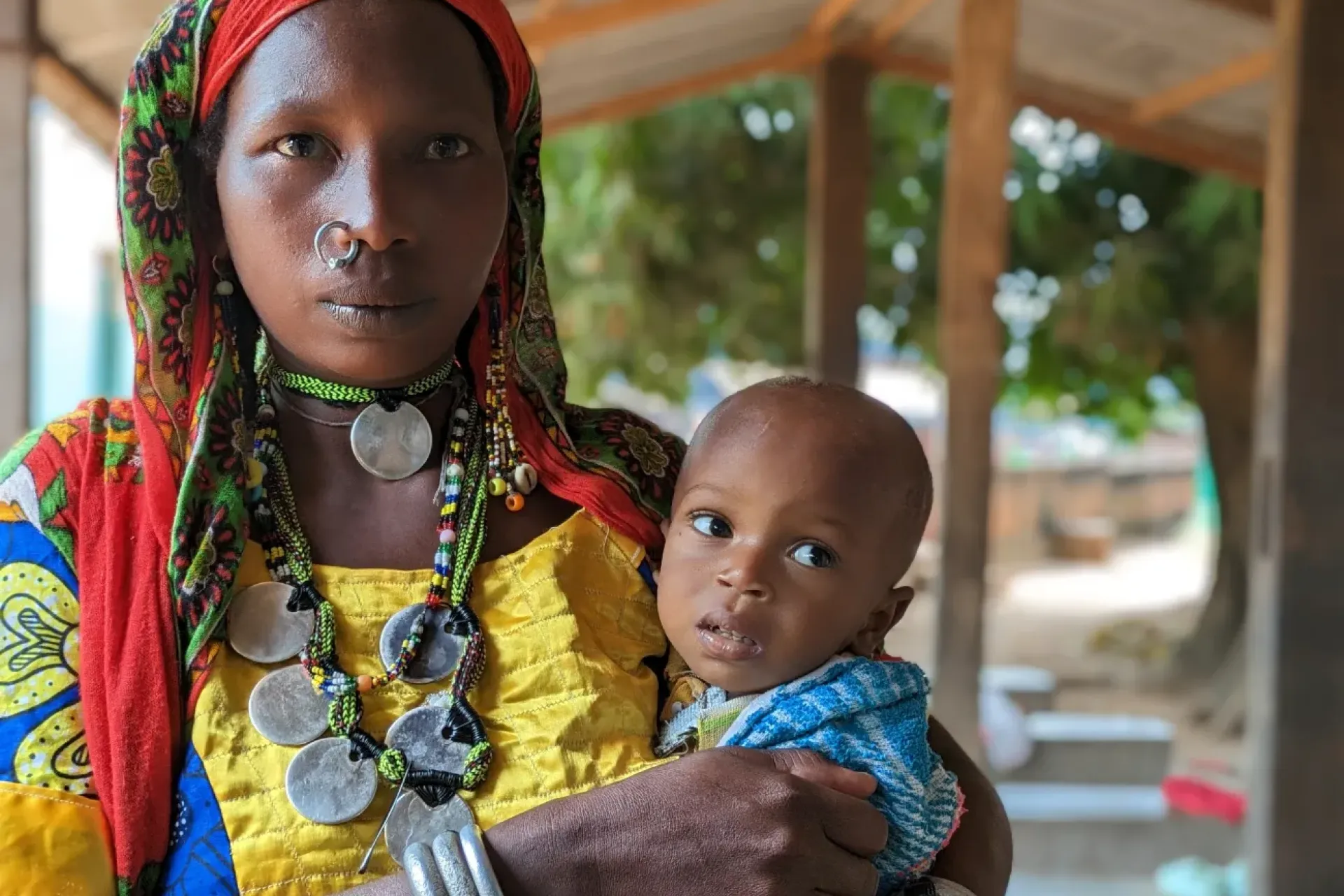
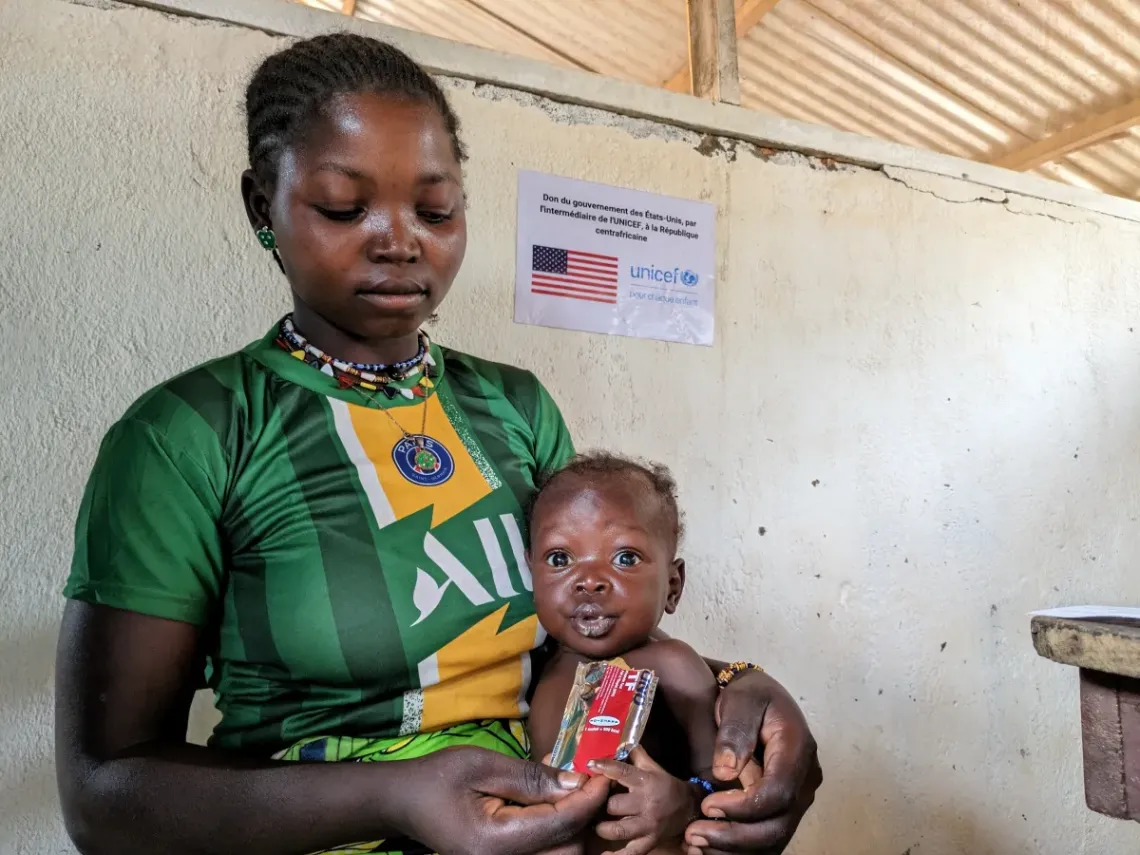
Five women, each carrying a child in her arms, have just arrived at Batangafo Hospital in the northwest of the Central African Republic. On that day, the hospital was organizing care for children who had been identified with severe acute malnutrition. One of them, Amina Ibrahim, mother of three, is worried as she sits in the consultation room. The nurse has just told her that her one-year-old son Musa had lost 200 grams since his last check-up a week ago.
“I live 14 kilometres from the hospital, and when I walk there and back with my son on my back, I end up very tired. “Years ago, my husband had a good herd of cows that helped us get by, but we lost everything in the war. Now we live in peace, but without livestock and with little space to farm, I can't feed my children properly.”
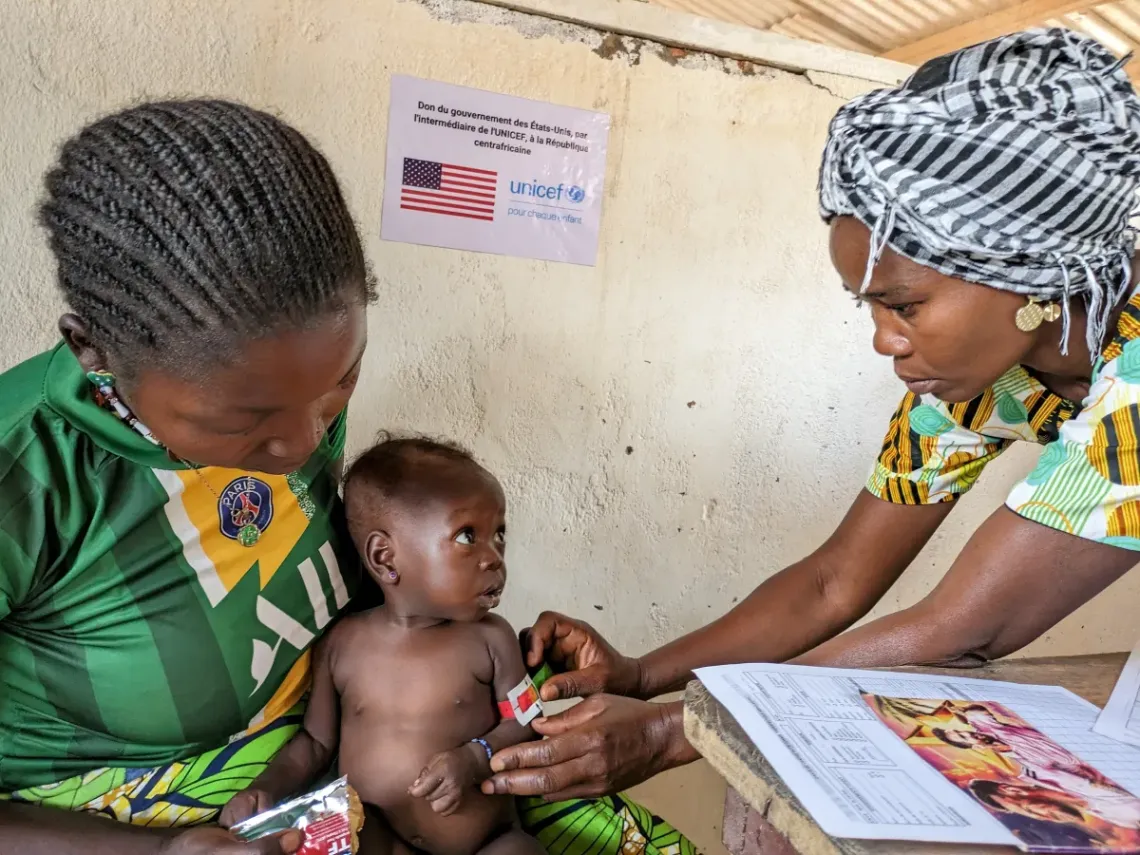
Inside the consultation room, nurse Judith Lamery takes little Musa in her arms to check how his treatment has progressed since his last visit. Following the usual protocol, after checking his details on his file, she weighs him, measures his arm circumference, and Judith calculates whether the child has gained weight. On this occasion, she looks somewhat concerned.
“Musa is severely malnourished, and we need to help him gain weight and recover. As her mother has to walk for many hours each time she comes, today I am going to give her double the amount of Plumpy Nut."
Amina's son and the other four waiting outside are among the 55,000 wasted children identified on average each year in CAR. Every time that she receives malnourished children, Judith hands to their mothers several sachets of ready-to-use therapeutic food (RUTF), an energy dense, micronutrient paste made using peanuts, sugar, milk powder, oil, vitamins and minerals that has helps treat millions of children worldwide threatened by severe wasting. In Batangafo, as well as in many other parts of CAR, UNICEF, in partnership with the Ministry of Health and Population, provides health centres with this treatment, which allows children with wasting recover in their own homes and communities. Over the past few years, funding from the US Department of State has made it possible to have a constant RUTF supply.
Outside the consultation room, mothers wait their turn under a shelter as Judith welcomes in parents one-by-one for during the twice-weekly clinic. Before starting the monitoring of each case, she exchanges with her workmate Guiliermina Gounfei, coordinator of the vaccination programme, to make sure that the children undergoing treatment do not miss the required shots of immunization.
In contrast to Moussa’s case, the next one—baby Daniella—represents a small victory for both her mother, Marlene, and for nurse Judith as well.
“She is eight months old. I just weighed her: she is 6 kilos and 800 grams, and her brachial circumference is also satisfactory. She has been following the treatment for four weeks and has progressed well. Today I am going to discharge her. I give the mother advice so they can continue good nutrition at home.”
She explains that she is currently following 22 cases. “The complete treatment usually lasts between six and eight weeks. Behind malnutrition there are often situations like unbalanced nutrition, lack of potable water, recurrent illnesses... Many of these cases come from displaced families who eke out a living with very few resources.”
Judith has been working in Batangafo for the last two years. It is her first assignment after she completed her studies in Bambari.
“My home is in Bangui, and living far away from my family can be difficult at times. However, I love my work. Seeing the children recovering, growing well, and returning to a normal life, fills me with joy. And when I witness the enormous sacrifices their mothers make, I realize that they are the ones who truly live a difficult life. Helping them is my vocation,” she concludes.