From waste to hope: Caleb’s journey
Thanks to support from Education Cannot Wait, UNICEF and its partners are helping children living on the streets of Bangui learn vocational skills and build a brighter future.
- English
- Français
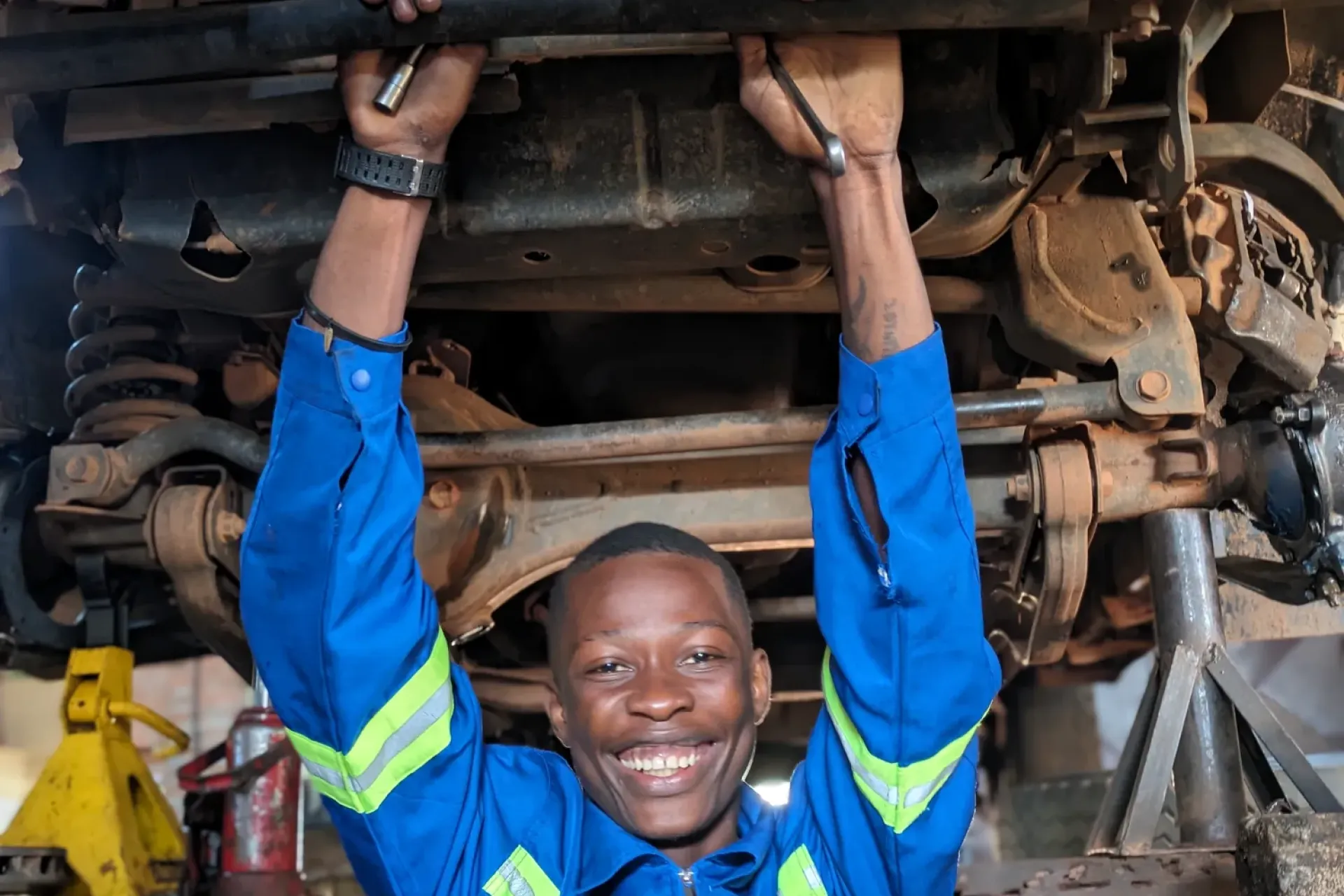
Dressed in his mechanic’s uniform, which he takes great care to keep spotlessly clean, Caleb Ngawan, 19, tell us about his earliest childhood memories. He remembers running about in a large courtyard at the monastery in the Boy Rabe neighbourhood of Bangui.
At around three years old, in late 2013, he found himself living in the monastery courtyard with his family, alongside thousands of others who had fled violence in the city. At the time, intense fighting had turned the Central African capital into a battlefield. But the worst was yet to come a few years later, as he vividly recalls:
“One day, when I wasn’t even ten years old, my parents told me they couldn’t look after me any longer. Overnight, I found myself on the streets. For six years, I spent my days collecting rubbish in the neighbourhoods, for which I was paid 200 CFA francs (about 30 cents of dollar per wheelbarrow. I slept with other children in the doorways in the city centre and went hungry a lot.”
As well as the overpowering stench of rubbish, which he still couldn’t shake off, two other things remained etched in Caleb’s memory: the frustration of not having been able to study, and the name people used to call children like him: ‘godobe’, a word in the Sango language that refers to children living on the street, and one that carries very negative connotations.
“I hate the name "godobe". Whenever I hear it, I feel deeply offended. People used to call us that as an insult, as if we were dangerous. When they see us on the street, they avoid us. But it wasn’t my fault that I grew up without a home to live in with my parents, like other children.”
Caleb’s fortunes changed the day he met volunteers from CADMR (Centre d’Action pour le Developpement du Monde Rural), a national NGO who was conducting a census of children living on the streets in Bangui. When Caleb heard them suggest that they could take him to a school where he could learn a trade for free, he was overjoyed.
They put him in touch with another NGO, Amici per il Centrafrica, UNICEF’s partner, which took care of all the necessary arrangements. The next step was to find him somewhere to stay to get him off the streets. After some work of mediation, Caleb was finally able to go and live with one of his aunts, with whom he still lives today.
When he was introduced to the different vocational training options available—mechanics, masonry, electrical work, welding—Caleb didn't hesitate.
“I’ve always been fascinated by mechanics. I love understanding how the parts of an engine work to make a car run. I can spend hours taking parts apart and putting them back together.”
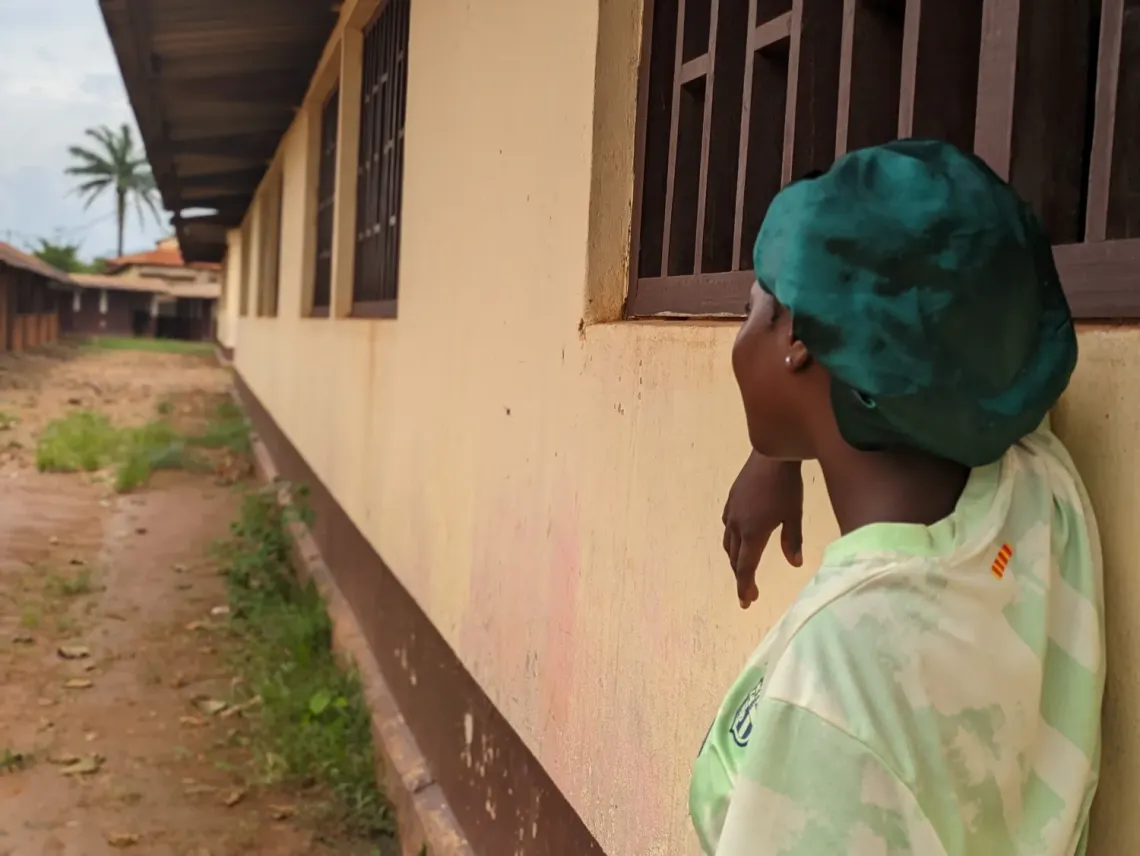
Thanks to funding from Education Cannot Wait, UNICEF, in partnership with Amici per il Centrafrica, has provided vocational training over the past year to 27 boys and 3 girls in vulnerable situations. The training took place at the Don Bosco Centre in the Damala neighbourhood. To ensure the right conditions that would allow them to study without disruption, the project provided daily transport with a minibus from their homes to the centre, as well as a midday meal.
Christine (nor her real name), 17, is another of the students who have benefited from the training. Her story is not very different from Caleb’s.
“I’ve always wanted to study, and when one day my parents told me they didn’t have the money to pay for my education, I got so angry that I ran away from home. I spent several months living on the streets. My worst memory is the harassment that girls like me had to endure. Many men took advantage of our situation to force themselves on us.”
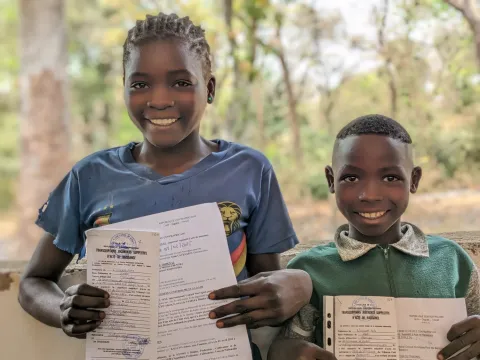
Christine was offered the same opportunity to undertake vocational training at the Don Bosco centre, thanks to the same NGO that had contacted Caleb. At the end of June, both were among the 30 teenagers who received certificates confirming their participation in the courses.
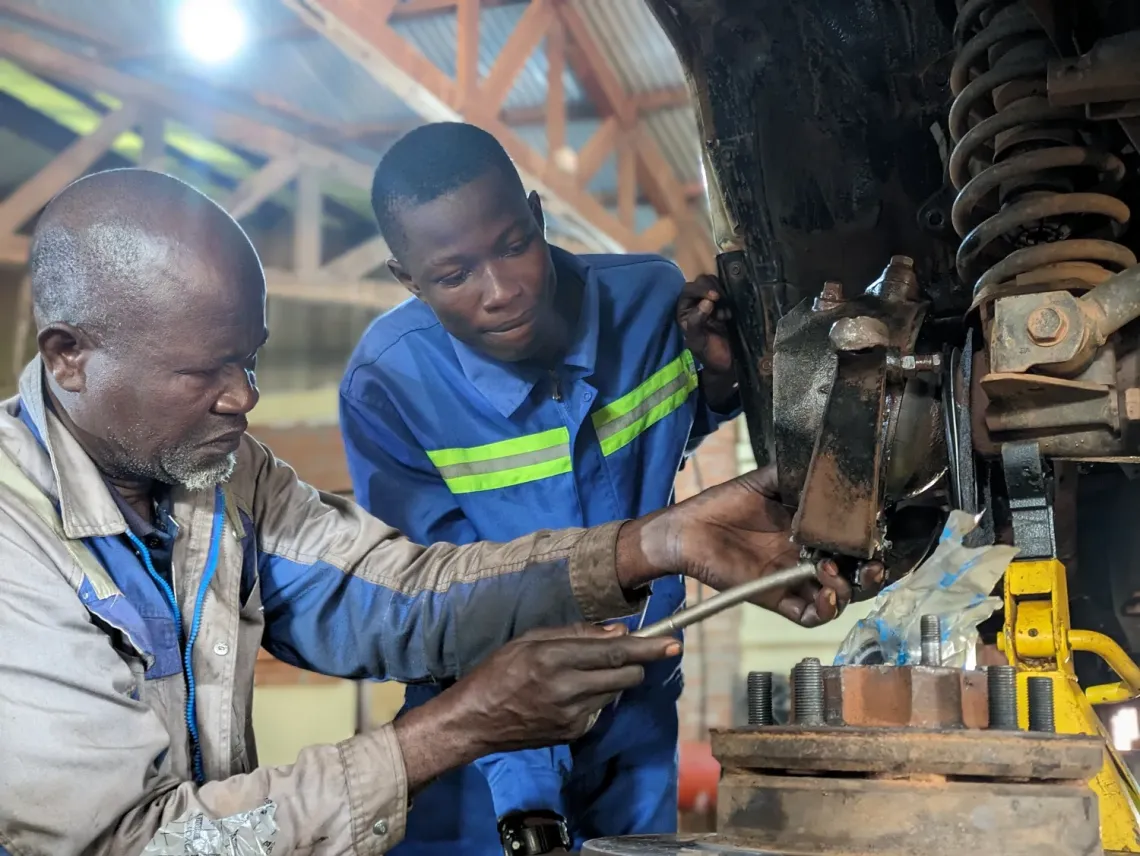
Receiving their qualifications does not mark the end of their training. Over the following months, they must still undertake several months of supervised work experience, which begins at the Don Bosco Centre itself and will continue at other workshops that will host them during that period.
Caleb descends into the mechanics’ pit, where he dismantles several parts from a vehicle being repaired whilst listening carefully to his instructor’s explanations. He is confident that the path that lies ahead of him will take him far.
“At the end of the training, we’ll be given the mechanic’s kit. What I want most is to be able to set up our own garage with my fellow trainees and earn a living. Throughout the course, they’ve always told us that, if we work hard, we can do it.”
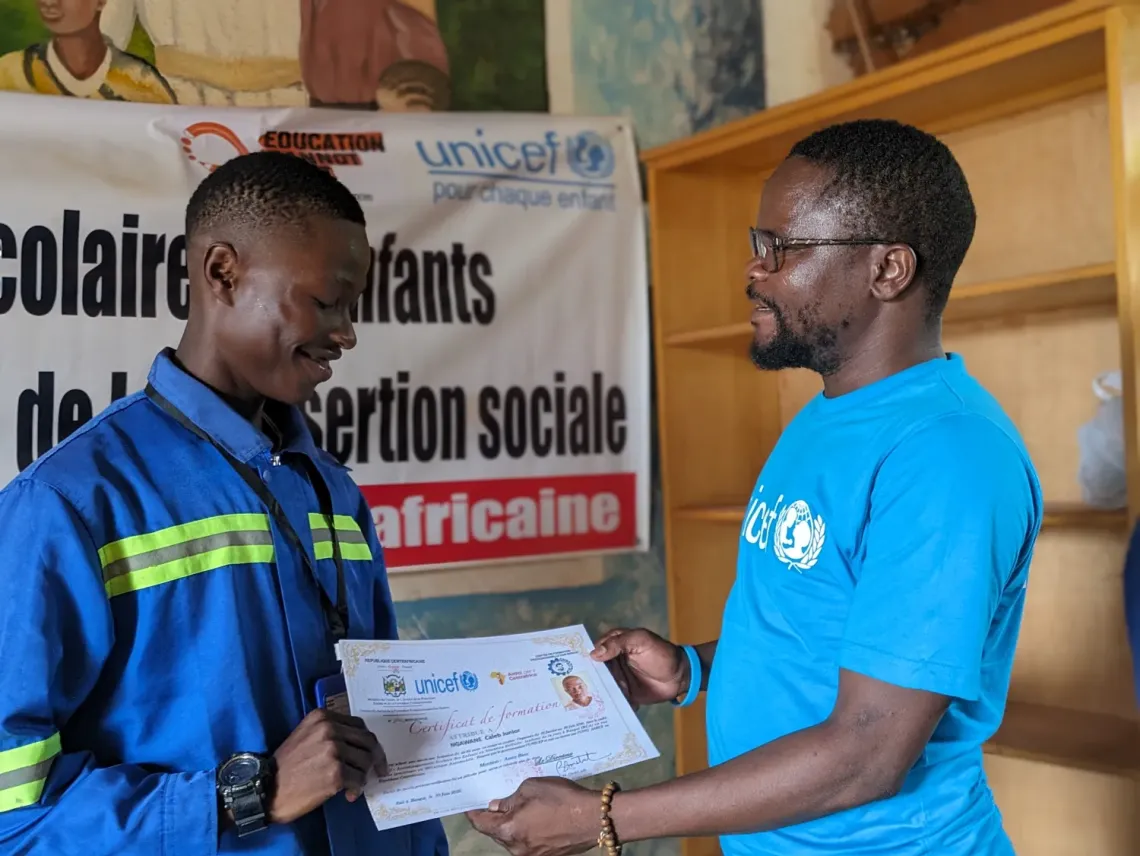
Since 2023, UNICEF and its partners have supported 180 vulnerable children in Bangui. They have benefited from programmes to consolidate their academic progress or from vocational training, aimed at facilitating their social and educational reintegration.