Kids getting kids to school
Thanks to a cash+ education programme, UNICEF and its partners are supporting families in CAR’s Lim Pende Prefecture to develop sustainable ways to fund their children’s schooling.
- English
- Français
Elysée Ndorate, a farmer in his late 40s, is convinced that breeding goats is an excellent way to raise money to support the education of his eight children.
“If I buy a goat, my neighbour’s billy goat breeds with mine, and after a few months, I have little ‘kids’ running around and growing well. I raise them and then sell them and have enough cash to cater for my kids’ education.”
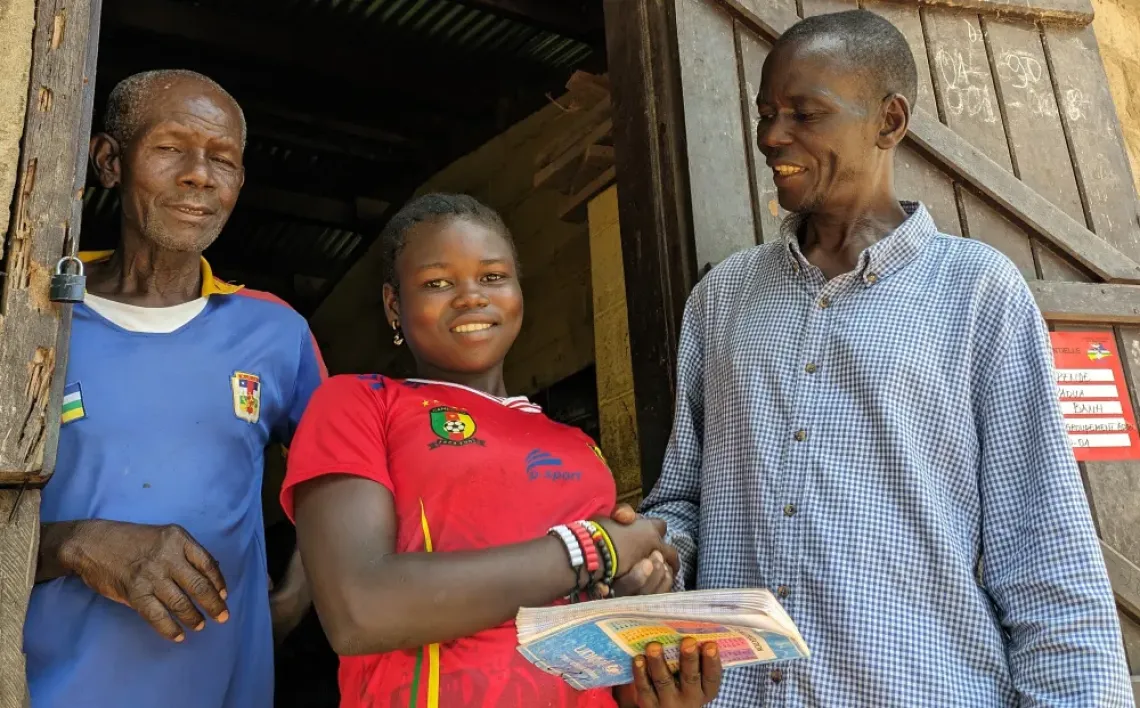
All of them attend school in Gouze, a big village of the Lim Pende prefecture located at an important road junction. He is a hard-working man for whom his children are the most important thing, and he has very clear ideas that he states without hesitation:
“I’ve always wanted all my children to go to school. My daughter Belya will finish primary school this year, and I’ll do everything I can to ensure she goes on to secondary school. There are wealthy businessmen who offer large sums of money to marry a teenager, but I’ll always say no. Belya’s mother and I always tell her that the most important thing in her life is to study and to reach university.”
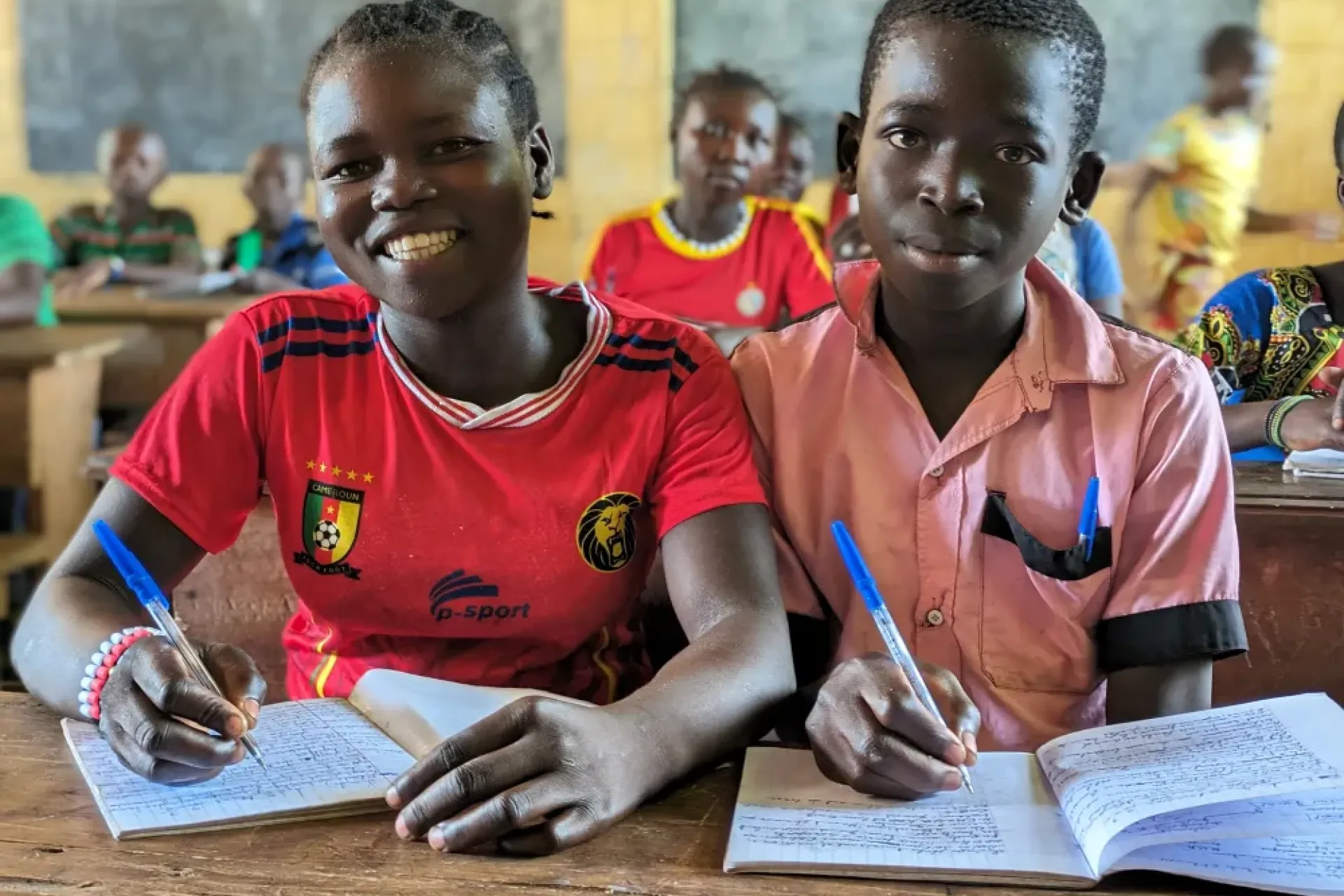
Fifteen-year-old Belya looks up from her notebook with a confident smile. She is delighted to be learning in one of the new classrooms recently built by UNICEF and its partner, Plan International. Thanks to funding from Education Cannot Wait (ECW), the school now has a new block of classrooms, along with an office and toilets.
Nearly 2,000 pupils attend the school in two shifts, studying in both the new and older classrooms. The school is staffed by three qualified teachers and eight volunteer educators, known locally as ‘maîtres parents’.
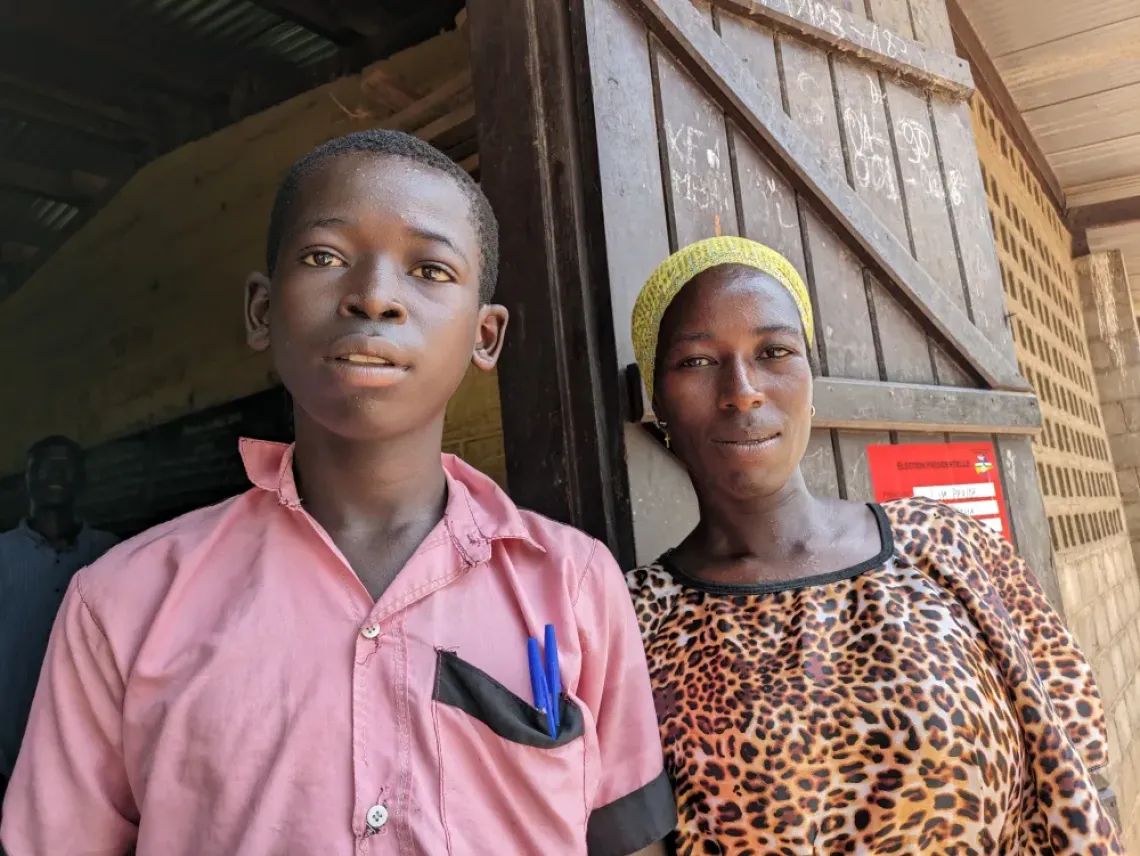
Her classmate, 14-year-old Dieu Beni Dimanche, shares her passion for education. “My immediate plan for the future is to sit for the end-of-primary examination and join secondary school,” he says. “I want to keep studying for as long as I can.”
To help families support their children’s transition from primary to secondary school, UNICEF, in partnership with the Ministry of Education, have launched a joint initiative that provides cash assistance to vulnerable households in Lim Pende prefecture. ECW and the European Union have been funding this programme since its inception.
So far, 23 schools have benefited from the programme—17 supported by ECW and seven by the European Union.
Community communication is an important element of the programme. Today, UNICEF has organized a community meeting: 60 people sit in a circle under the generous shade of mango trees. Each household has been receiving 15,000 cfa (about 30 euro) per school term. School fees in the Central African Republic are zero, but families do face some costs to send kids to the classroom like registration and school kits. Although modest, these costs can be a considerable burden for a family like the parents of Belya or Dieubeni, each family with seven siblings.
Nestor Yamenendji, UNICEF’s education officer in charge of running the cash programme, uses the concept of ‘seed money’. He patiently listens to the parents who have come today to the community meeting. He takes good note of the experiences they share and encourages each family to support their children’s education.
“Do you realize how important education is? It’s the most important thing in a child’s life. If I hadn’t studied myself, I wouldn’t be here now working for UNICEF and talking to you.”
But the cash education programme is not simply about handing out money and expecting families to spend it all at once on immediate needs. It is designed to foster a culture of planning and investment—helping families make the funds go further while ensuring they are used to support their children’s education.
Widespread poverty is a key factor in CAR’s low education indicators. CAR’s updated social indicators highlight that nearly 4 out of 10 children are out of school, with that proportion being higher for girls. The country has the world’s second worst rate for children out of school and also for the proportion of children finishing primary school. Making the transition to secondary school a distant dream for most of them.
Elysée insists that, thanks to the cash education programme, he has found a way to make his children’s education sustainable, so that none of them shall ever drop out.
“Goats are the best way to make your money work for you and grow. If I manage the money wisely, I earn enough to pay for my children’s education. I don’t waste it on beer or other unnecessary expenses — when money comes in, it goes toward my children’s schooling.”
Adeline Yassarandji, Dieubeni’s mother, takes the same view. Like many families, she and her husband balance farming with selling goods at the market to support their household and provide for their children.
Thanks to this income-generating scheme, their children are beginning to shape their own futures. Dieubeni says he wants to study to become a headteacher and help improve education for other children, while Belya dreams of becoming a nurse.
Both have clear ambitions for their lives. What is remarkable is how relatively modest sums of money, placed in the hands of highly motivated and resourceful parents, can deliver life-changing results