A practical lesson about how to avoid water-borne diseases
Very few schools in the Central African Republic have access to a fresh water supply. Thanks to funding from the European Union’s Bêkou Fund, UNICEF has built 23 new boreholes for schools.
- English
- Français
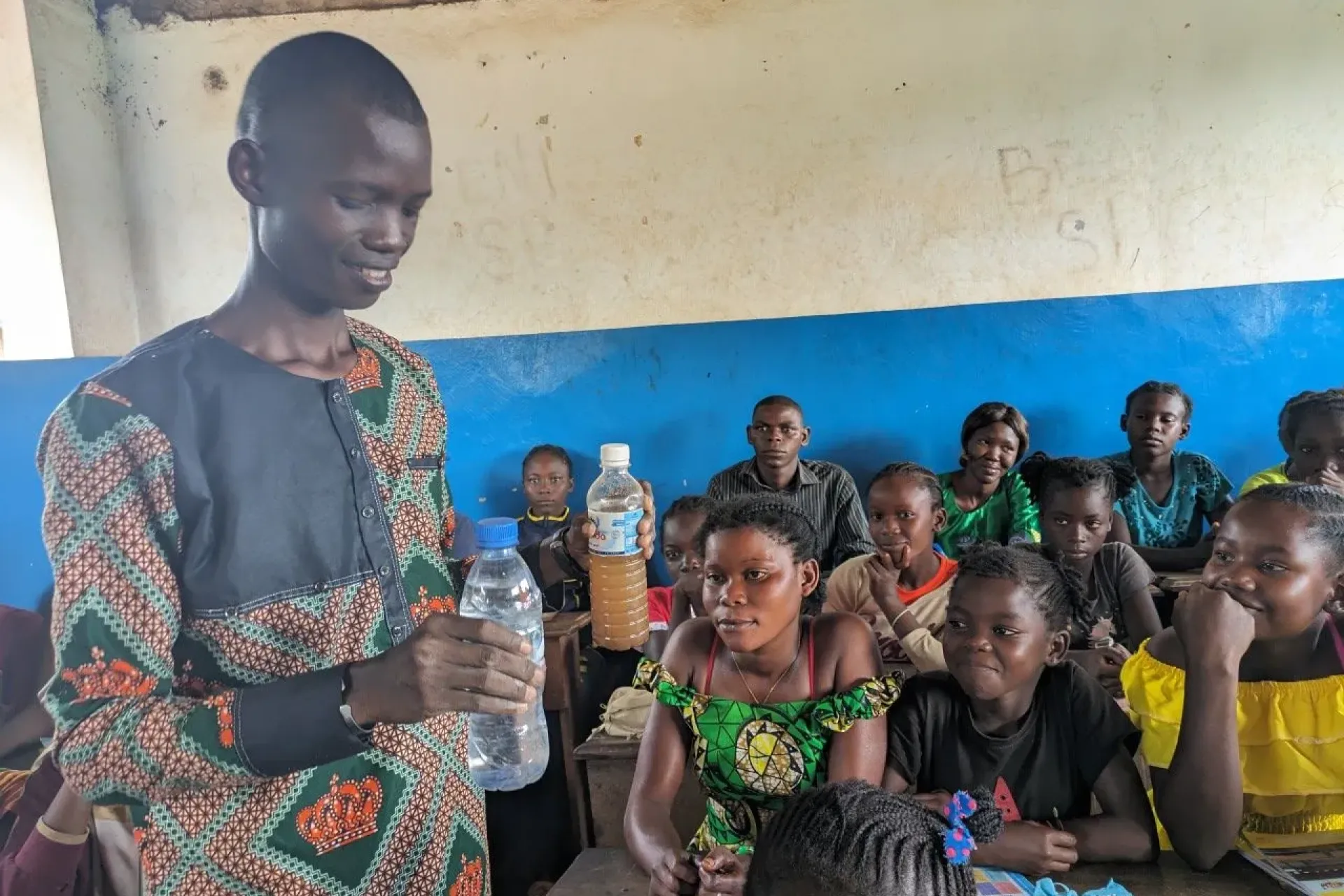
Esdras Samba, 25, stands before his class of Grade Five with a smile on his face. His pupils, from Sibut’s Prefectoral School, show signs of surprise when they see him start the lesson carrying two plastic bottles in his hand, one with clean water and the other one with dirty water.
There are 120 girls in the classroom, in a country with some of the highest ratios of teachers to pupils in the world, and soon their numbers increase when others arrive late. As Esdras begins his explanation, they all watch attentively, and there are some giggles.
“Look well and tell me,” he says. “What kind of water do you use in your homes? The clean one of the dirty ones? Today we are going to learn about the importance of drinking only clean, drinking water, to avoid many diseases.”
The overcrowded classrooms may be normal for the Central African Republic (CAR), but the school in the centre of CAR is lucky in another aspect: it is one of the few in the country that has a borehole in its compound. UNICEF’s updated data for 2025 shows that 84 per cent of schools in CAR do not have access to basic water service. The borehole is one installed by UNICEF in the prefecture of Kemo with funding from the European Union’s ‘Fond Bêkou’. Thanks to this ambitious project, which ran from 2018 to 2025, 867 boreholes were installed or rehabilitated in eight prefectures. As part of this scheme, 23 schools were equipped with water points and sanitation.
Good health with clean water
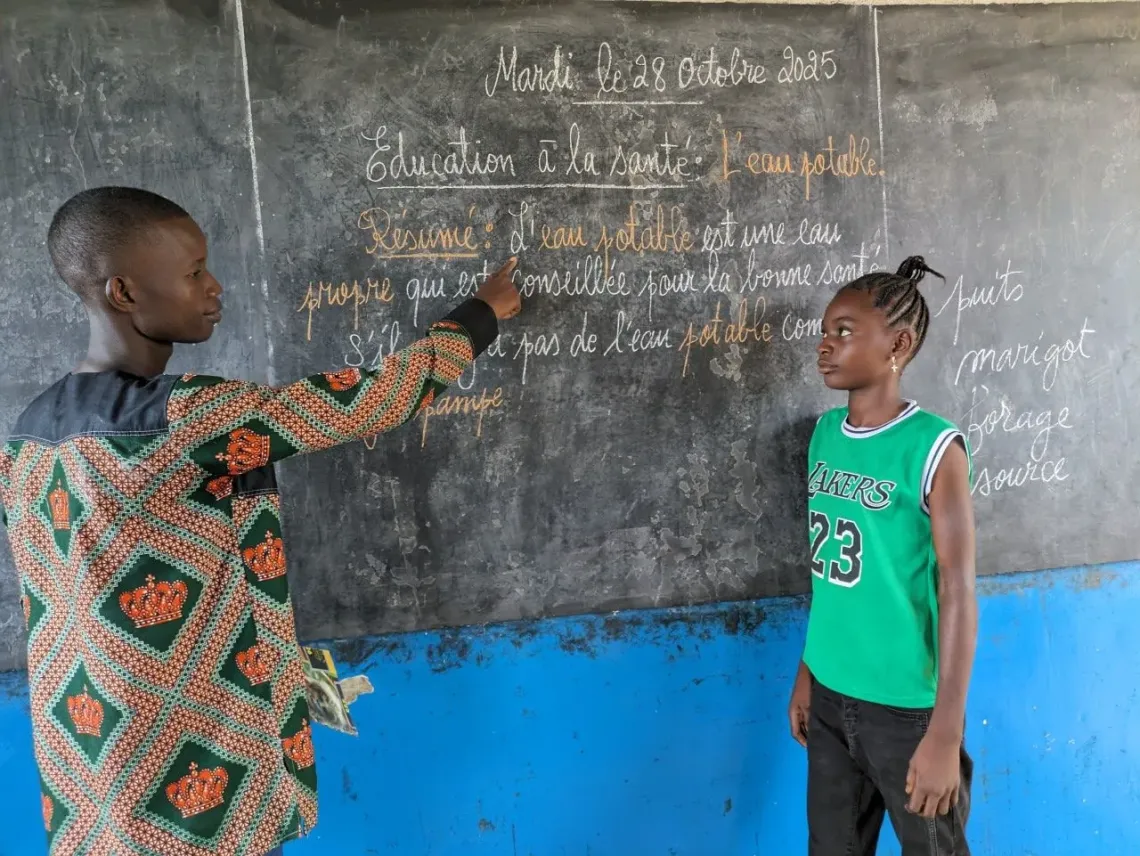
Esdras, a young man who exudes a lot of enthusiasm in his first year of teaching, passes the two bottles around the desks so that the girls have a closer look. Then, he asks for a volunteer. 11-year-old Prensia Dodte raises her hand, stands up and walks confidently to the blackboard. The teacher asks her to write all the sources of water she can remember. She picks up a piece of chalk and begins to write:
‘Wells, swamps, rivers, boreholes…’
“Very good” says Esdras. “Look again at the water in the two bottles. Do they have the same colour? I filled the one with dirty water from a nearby swamp, and the one with clean water, can you guess where I filled it?”
A chorus of girls’ voices bursts out in unison.
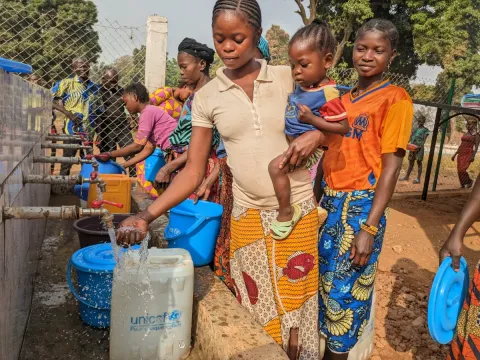
“From the borehole, here outside!” And they all point outside, at the water point few metres away, where children from another classroom are pushing the pump to draw water.
“Tell me, girls. Which one do you prefer?”
“The clean water, teacher!”
The lesson continues with an explanation about the importance of using clean water. “It keeps you in good health,” remarks Esdras. “What about if you drink dirty water? Have you heard about water-borne diseases? About typhoid fever?”
All the girls nod their heads.
“But having access to clean water is not enough. You must keep the water point clean. Be very careful not to dirty the place with your shoes, and always sweep and keep the place clean, inside and outside. And remember, that in school we do not use clean water only for drinking, but also for washing our hands.”
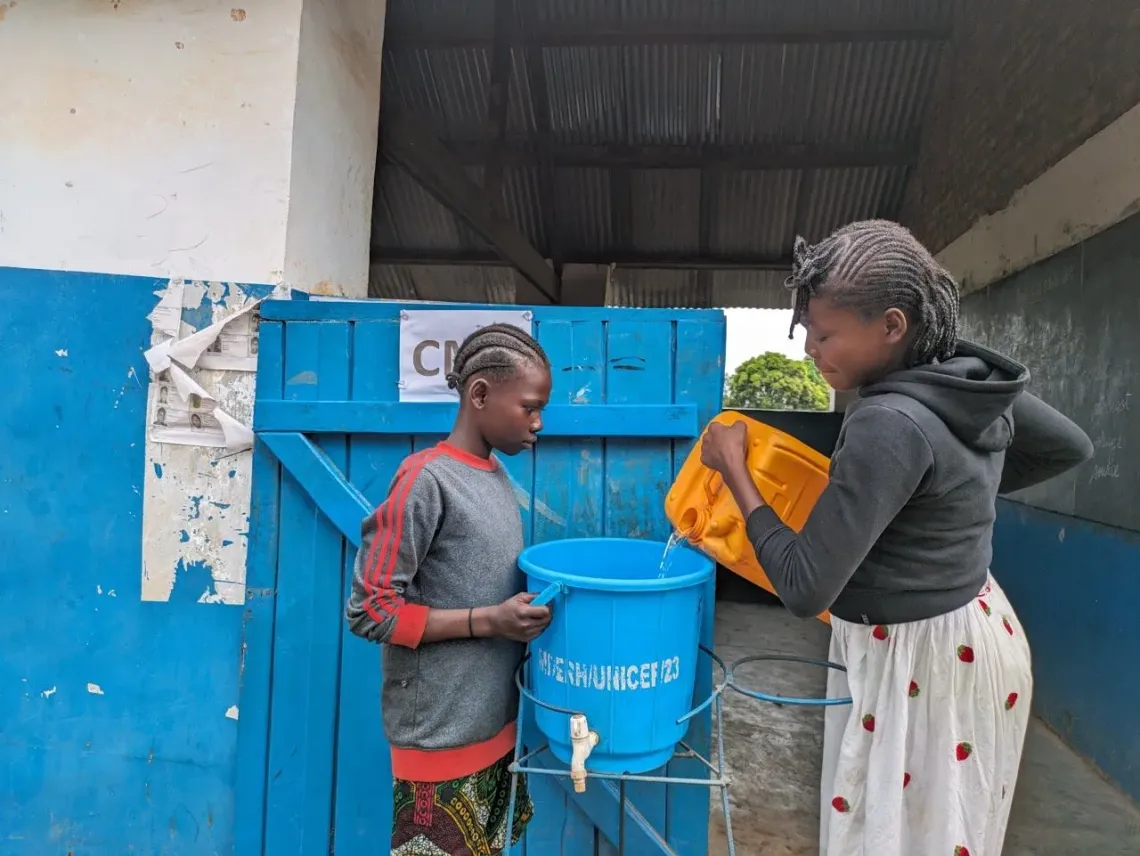
To complete the lesson, Prensia and two of her classmates pick up two jerrycans and hurriedly go to the borehole. Few minutes later, they returned and poured the water on a handwashing facility placed at the entrance of their classroom. When the first lesson is over, they all line up and wash their hands before carrying on with the routine of the day.
Prensia Dodte lives in Mbres, one of Sibut’s neighbourhoods. She attends the school with three of her six siblings.
“I love coming to school because I learn many things, and what they taught us today about clean water is very important. Even my parents, at home, always insist that we should be careful about the water we consume.”
And, as she reads the paragraph written on the blackboard, she whispers:
“Some of my friends who don’t come to school are very careless about drinking water anywhere. I am going to tell them that they must use only clean water to avoid falling sick