The boy who defeated cholera
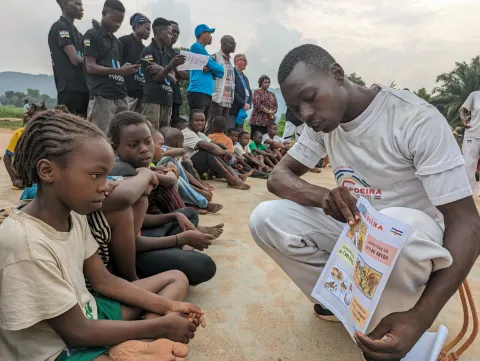
UNICEF CAR and partners, in support of the Ministry of Health, regularly visit cholera-affected communities. Quick life-saving measures are essential to contain the outbreak.

- English
- Français
Joseph Ndro’s dream is to play football like Lamine Yamal. At the age of nine, he runs and plays loudly with his friends in the village of Mondoli, a cluster of small houses scattered along a strip of land on the banks of the Oubangui River, 60 kilometres from Bangui, the capital of the Central African Republic.
Nothing you see in him at first glance would suggest that, just a month ago, little Joseph’s parents were seriously fearing for his life. On the day we visited his home, we were welcomed by his aunt, Fabiola Doubouma, who told us that his parents are currently in Bangui. On 11 June, they both panicked when the little boy started vomiting and suffering from non-stop diarrhoea.
“The little boy was crying endlessly; he was unable to stand and his body wasn’t responding. His parents and I took him to the health centre, where he was put on a drip to rehydrate him. We spent four days on tenterhooks until he was finally discharged. Since then, he has made a full recovery and we are overjoyed.”
On 26 June 2026 the Central African Republic declared its first cholera outbreak in ten years, and Joseph was among the first to fall ill. Since the epidemic began, children under the age of 10 are disproportionately affected, accounting for 44 per cent of all reported cases. Joseph was the first person diagnosed in Mondoli the initial hotspot.
Since then, Mondoli has registered 130 cases, including 10 deaths. “We have also treated patients from villages across the river in the Democratic Republic of the Congo, where there are no health facilities,” says Jean Kaito, head of the local health centre. “We provide care free-of-charge and without any discrimination.”
Today, the situation has improved considerably. With only two patients remaining in the isolation unit and no deaths reported since the end of June, health workers are beginning to feel cautiously optimistic. Even so, they stress that the fight against cholera is far from over and that communities must remain vigilant to prevent a resurgence of the disease.
From the middle of the river, Mondoli emerges as a picturesque village of small adobe houses nestled along its densely forested banks. Home to around 3,000 people, the community relies on farming, fishing and the timber trade for its livelihood. Reaching the village is no easy task: narrow dirt tracks, navigable only by motorcycles, are the main link to the outside world, carrying the goods that supply the makeshift stalls lining the riverbank.
Whenever traders arrive with their cargo of goods, they draw crowds of curious children. Joseph is among them. His eyes are fixed on a Barcelona FC jersey, far too large for his tiny frame, which he dreams of wearing one day. As he stands there, some of the adults watching him whisper in amazement that such a small child survived cholera. Looking at him now, full of curiosity and energy, it is hard to believe that only a few weeks ago they feared he would not survive.
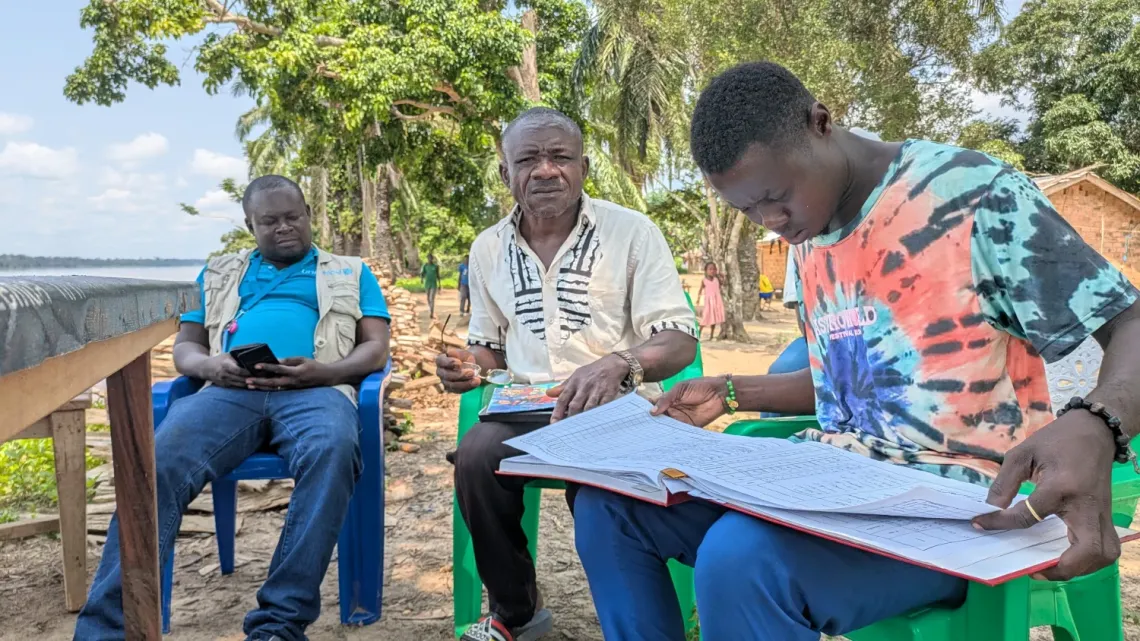
That natural beauty contrasts heavily with the harsh life its inhabitants endure, but they do have a health centre, which is not true for many neighbouring villages. When a case is identified, the patient is isolated and their close contacts are traced; these contacts are given 45 mm of cotrimoxazol tablets, an antibiotic that stops the spread of infections in the body.
“Cholera causes heavy loss of body fluids, this is why it is crucial to keep the patient well hydrated until they have fully recovered. To complement the preventive measures, we disinfect a 20-metre perimeter around their patient’s home.”
Like some other villages that fall under the Bimbo and Mbaiki health districts, people suffer because of a chronic lack of clean drinking water since there is no borehole nearby. Instead, people consume water from the river. No doubt, this - coupled with the lack of proper sanitation in houses - is the main source of transmission of cholera.
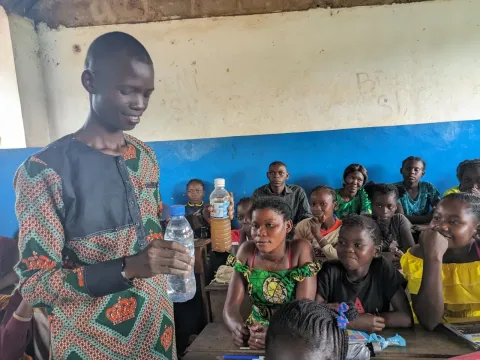
Little Joseph has stopped running around and is now next to Carine Dayo, a 23-year-old girl who leads the U-Reporters in Mondoli. Ever since the epidemic outbreak, the youngsters have been passing the message of prevention in a house-to-house sensitization effort:
“We tell people to abstain from drinking water from the river that has not been boiled or purified, wash hands with soap regularly, eat only food that has been thoroughly cooked and use latrines. We are happy that people here have welcome our messages. We are making progress,” proudly says Corine.
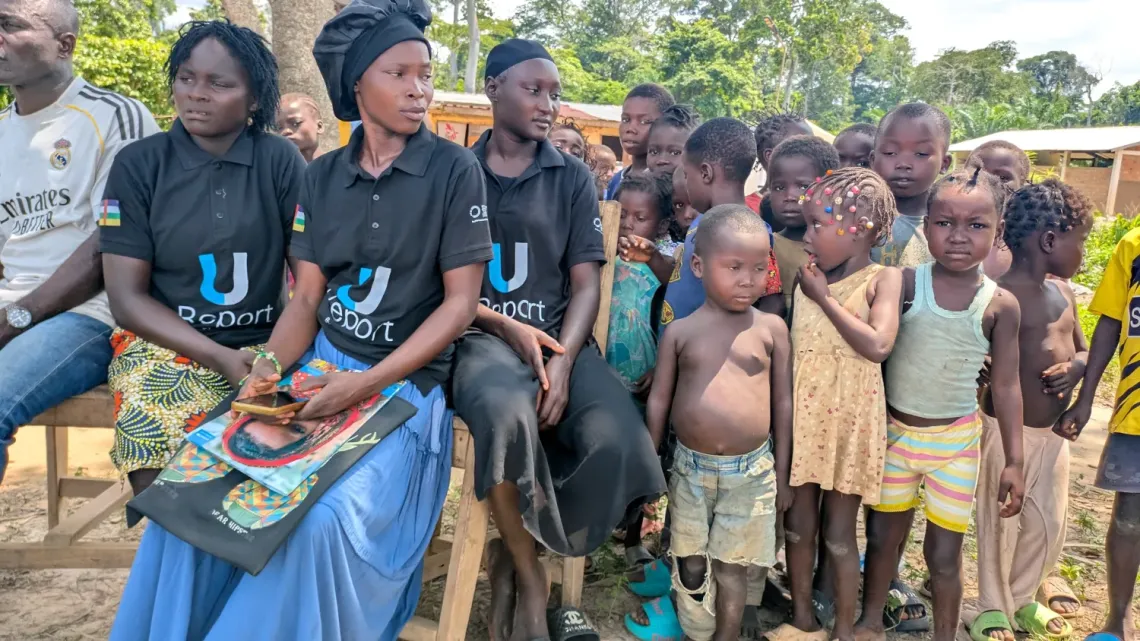
Mondoli’s U-Reporters work in close partnership with UNICEF. So far, their teams have carried out four visits to Mondoli. The first one, on 2 July 2026, was led by Dr. Pierre Somse, CAR’s Minister of Health. The field visits are carried out by boat, navigating through the waters of the Oubangui, thanks to a contribution with UNHCR. Thanks to funding from UNICEF’s Global Thematic Funds as well as the flexible funds from the German Federal Foreign Office, UNICEF in CAR has been providing a rapid response: emergency medicines for suspected cases, as well as complete water purification and pest control kits. With a further funding from the UN Central Emergency Relief Fund (CERF), UNICEF will also rehabilitate boreholes in the villages that are more at risk. Today, the team has handed to the health centre supplies consisting of 40 buckets, 10 packets of soap and 40 jerrycans.
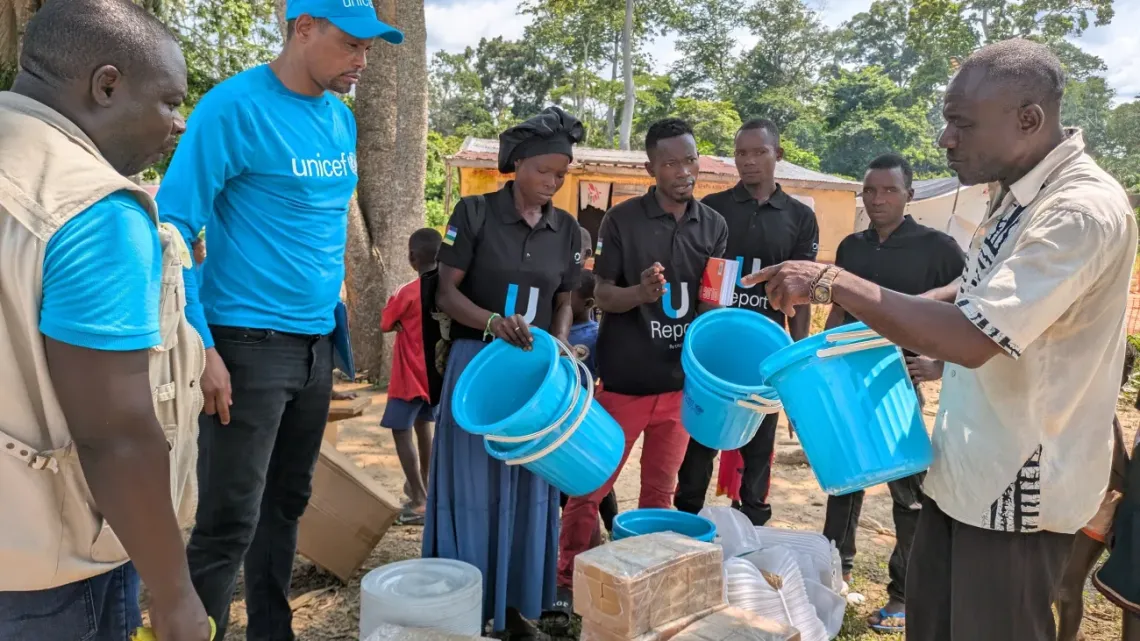
It is not the first time that cholera has hit some of CAR’s poorest villages. The harsh life conditions their inhabitants endure breed a lack of hygiene that favours the spread of infections. UNICEF’s search for permanent solutions includes planning for safe sources of clean water and drilling new boreholes. At shorter term, it aims at urgently supplying Mondoli’s and other health centres, as well as rapidly training more community health workers in health crisis management.
As the UNICEF team leaves Mondoli, little Joseph also comes to say goodbye to the visitors before they leave[JJ1] . One of them asks him if he doesn’t fear falling sick again. His reply strikes them:
“I don’t, because Carine and her friends have told me that if I wash my hands before eating and after using the toilet, and if I drink boiled water, I won’t have diarrhoea again."