CLEAN WATER TO STOP CHOLERA FROM COMING BACK
The recent cholera outbreak in the Central African Republic was quickly brought under control. To support the Ministry of Health, UNICEF and its partner Oxfam are working in the villages affected by the outbreak to prevent further outbreaks.

- English
- Français
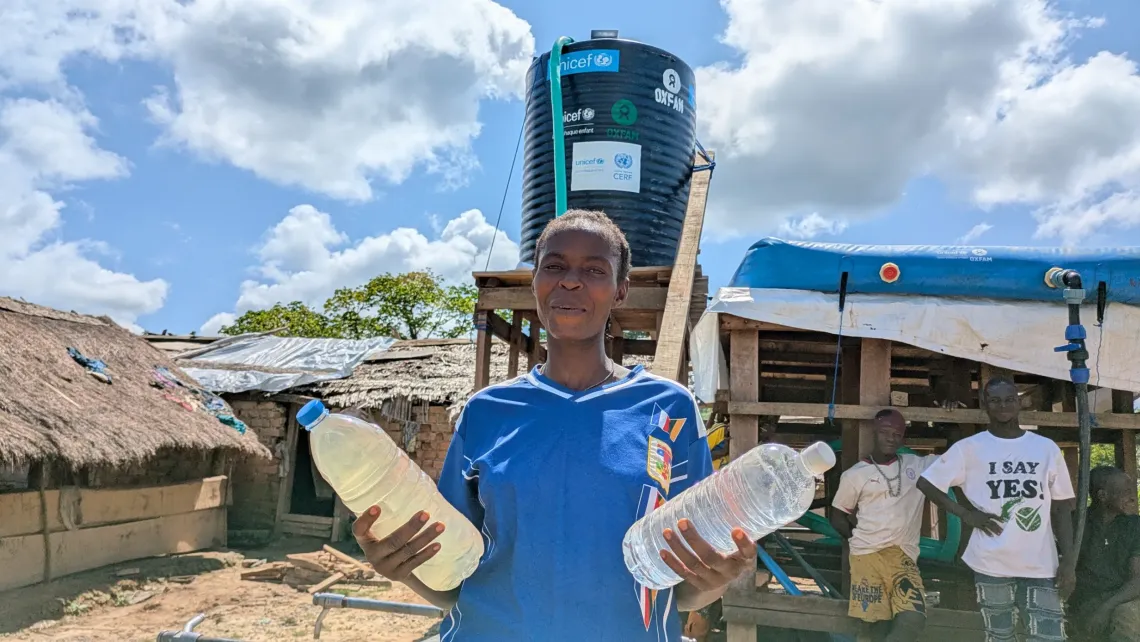
Nadège Ngambaou, 25, stands beside a tower supporting a 5,000-litre water tank in her village of Bobassa 2, on the banks of the Oubangui River. Proudly holding up two bottles of water, she explains the difference between them:
“In my right hand, you can see the murky water I collected directly from the river. In my left, you can see the clean water after treatment at the purification plant behind me. I have seven children, and I feel relieved knowing that, now that we have access to clean, safe drinking water in our village, they are less likely to fall ill,” she says.
Standing beside her, Patrick Pamale nods his face, his face etched with grief
“A few months ago, when a cholera outbreak hit our area, my seven-month-old son was among the children who died. Sadly, we did not yet have this facility to provide us with safe drinking water.”
The elevated 5,000-litre tank is part of a simple yet effective system known as a temporary drinking water supply system. An engine pumps water from the river into the tank, where it is treated every other day with 300 grammes of sulphate. The water then flows into a bladder tank for a second round of treatment with chlorine before being made available for consumption through a distribution point equipped with six taps.
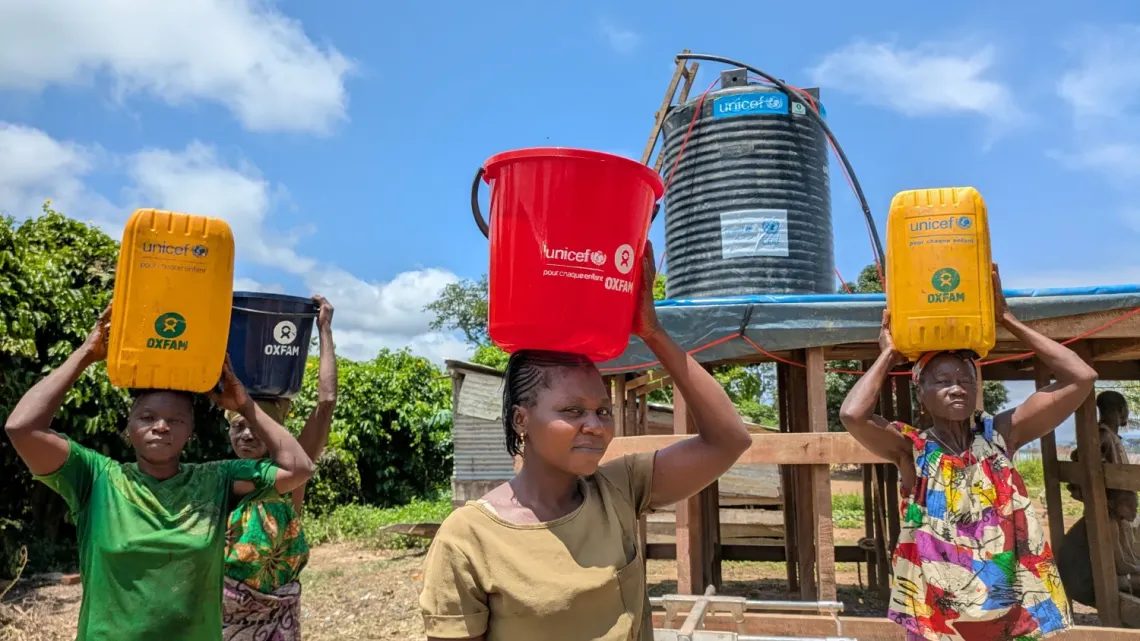
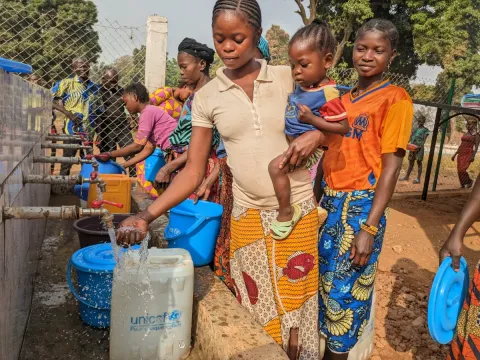
A few kilometres from Bobassa 2, in the village of Wayambo, 27 kilometres from Bangui and also situated on the banks of the Oubangui River, Mirabelle Opangdone joins a group of women collecting water from a similar facility. Her face radiates satisfaction and relief.
“I have seven children. When cholera cases began to emerge in our village, I was terrified that they might contract the disease. But now that we have access to clean drinking water, I feel reassured that the risk has been practically eliminated.”
Mirabelle’s fears were not unfounded. Wayambo has 843 inhabitants, and there were 65 cases of cholera, of whom three died.
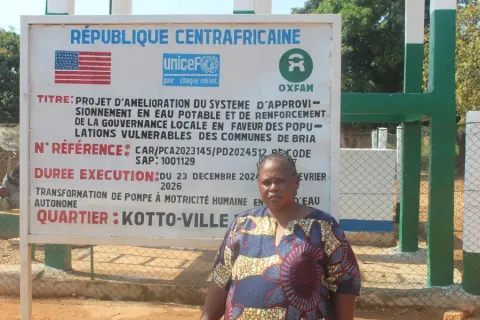
The water purification facilities are part of an emergency response to the cholera crisis, established in some of the worst-affected villages by UNICEF and its partner, Oxfam, with funding from the UN Office for the Coordination of Humanitarian Affairs (OCHA) through the Central Emergency Response Fund (CERF).
Aligned with the Ministry of Health and Population’s national cholera response plan, the initiative aims to provide safe drinking water to 15,000 people. The facilities in Bobassa 2 and Wayambo have been operational since September 2026, while a third facility in Bokassi 2, a village of 687 inhabitants, is still under construction.
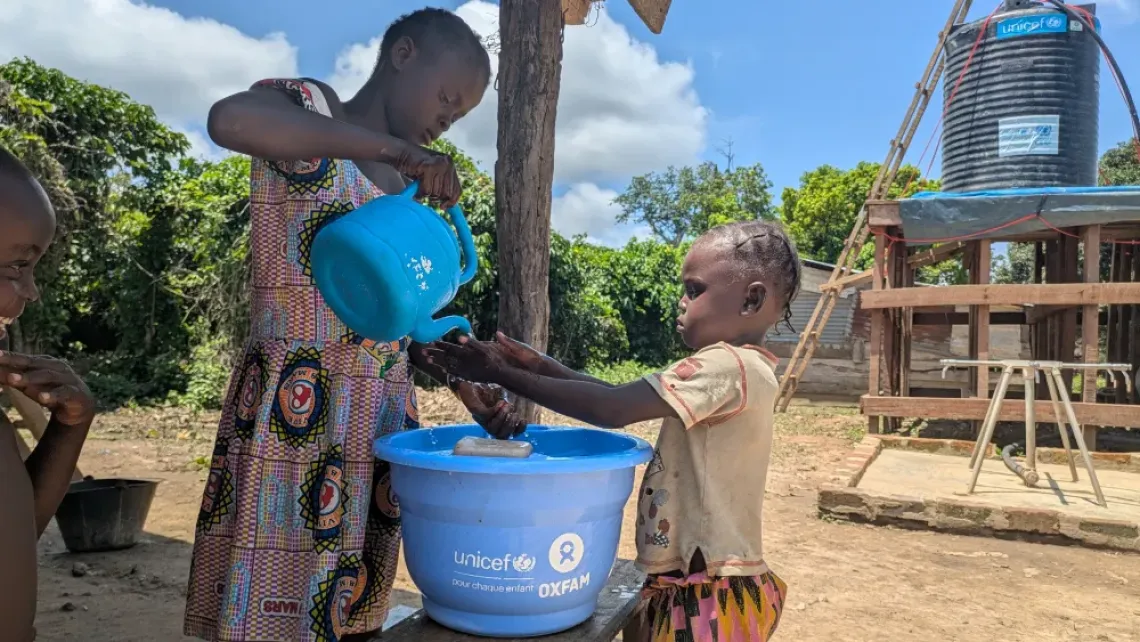
Mirabelle is part of a volunteer group of community health workers in Wayambo.
“We have explained to all our neighbours that, now that we have access to clean drinking water, no one should drink water directly from the river anymore. We have also reminded everyone that keeping the area around the taps clean and tidy is a shared responsibility—and essential to protecting the health of the whole community.”
She lives next to the facility, which is available daily from 6-10am and from 2-7pm. The rest of the time it is locked to keep it safe and to give sufficient time to the stored water to undergo the purification process.
At the entrance to Mirabelle’s home, a handwashing facility stands as a reminder of the importance of good hygiene. “I have taught my children to use it regularly. Maintaining good hygiene is essential if we are to prevent another cholera outbreak in the future,” she says.
The latest outbreak of cholera epidemic was initially declared on 26 June 2026 by the Ministry of Health and Population in the health districts of Bimbo and Mbaiki. Three months later, on 18 September 2026, President Faustin-Archange Touadéra officially declared the epidemic had ended, during the launching of the vaccination campaign in Bimbo. During those three months, there were 720 suspected cases and 46 deaths. Children under 10 years represented 44 per cent of the cases, almost half, making them the most vulnerable part of the population.
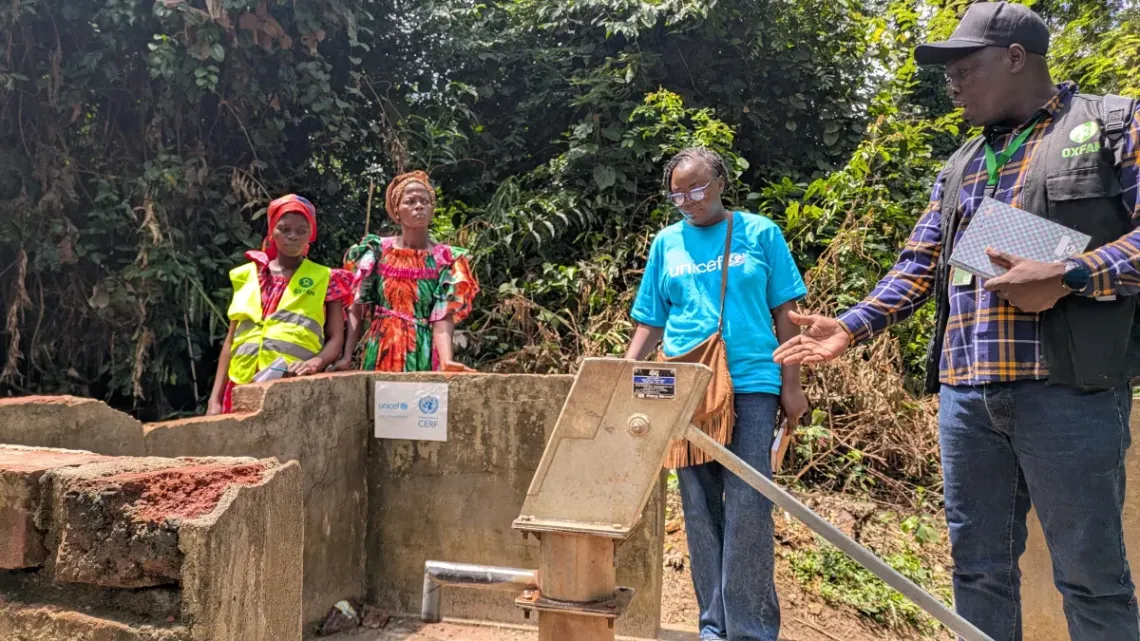
The cholera response programme implemented by UNICEF and its partner Oxfam also includes the rehabilitation of five water points in neighbouring villages. Bokassi 1 is one of them, where a borehole in need of repairs lies about a kilometre from the main residential area. Mureille Danemo, a mother of five who lives in the village, stresses the urgent need for a solution.
“Our village has neither a health centre nor a school. And since the borehole broke down, the river has been our only source of drinking water. As a result, many people fell ill,” she says.
According to the village chief, in Bokassi 1 there were 66 cases of cholera, including 14 deaths.
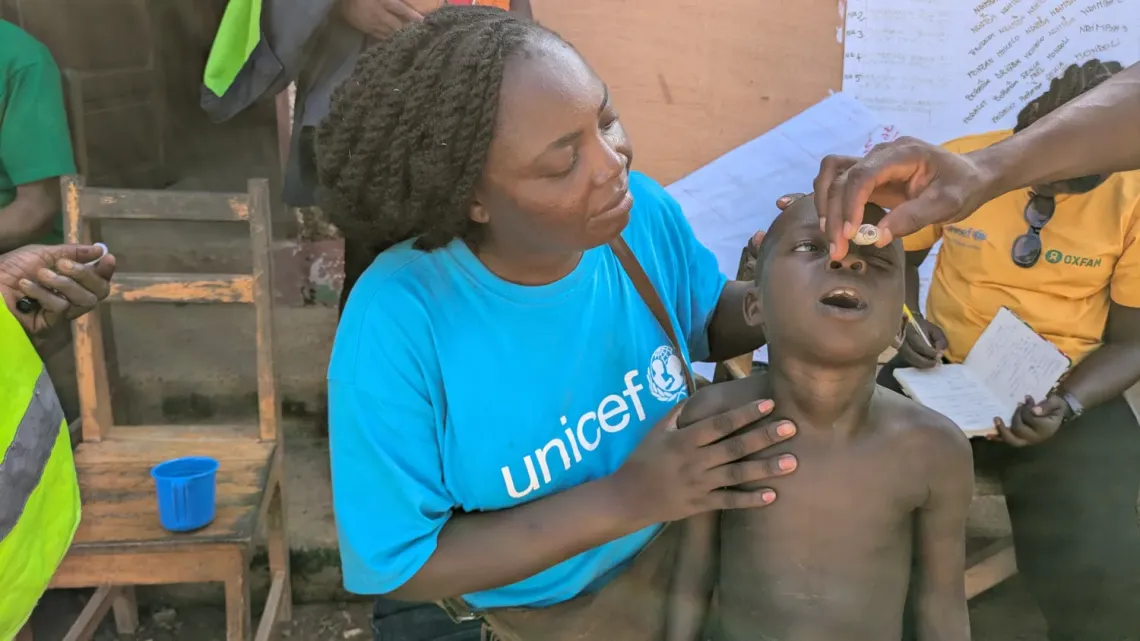
In Ndimba, a large village that was once an important coffee-producing centre, two more boreholes are slated for rehabilitation. Before they can be brought back into service, however, the water must be tested in a laboratory to ensure it is safe for human consumption.
Ndimba is one of the few villages along the banks of the Oubangui River with a health centre. It serves not only the local population but also residents of neighbouring villages and people from the Democratic Republic of the Congo, across the river, who come seeking medical care. Marceline Mbotia, the centre’s head nurse, reports that they recorded 55 suspected cholera cases, but no deaths.
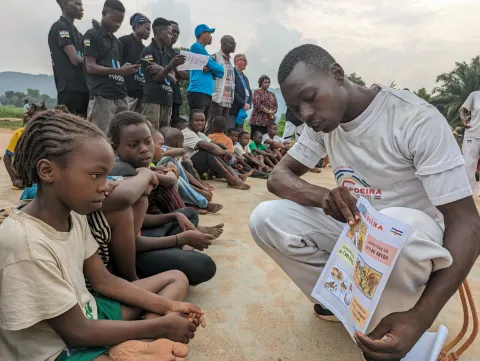
“We are fortunate to have a very active team of community health workers who have worked tirelessly to prevent the spread of cholera. Whenever a suspected case was identified, we isolated the patient and disinfected their home and the surrounding area within a 20-metre radius. Now that the outbreak is over, we are conducting a door-to-door cholera vaccination campaign, offering the vaccine to everyone aged one year and above,” she explains.
Ten-year old Alfred is one of them. Confidently, he opens his mouth to have the drops of vaccine poured inside. Then, some more children follow suit.
The cholera outbreak in the Central African Republic is over, but preventing its resurgence remains critical. Water purification systems, the rehabilitation of boreholes, ongoing awareness-raising campaigns on hygiene and safe practices, and cholera vaccination are all part of a comprehensive strategy to protect communities and prevent the deadly disease from returning.