A network of support for children fleeing conflict in Sudan
In Birao, UNICEF and its partners have set up a network of community workers to support children dealing with trauma and conflict.
- English
- Français
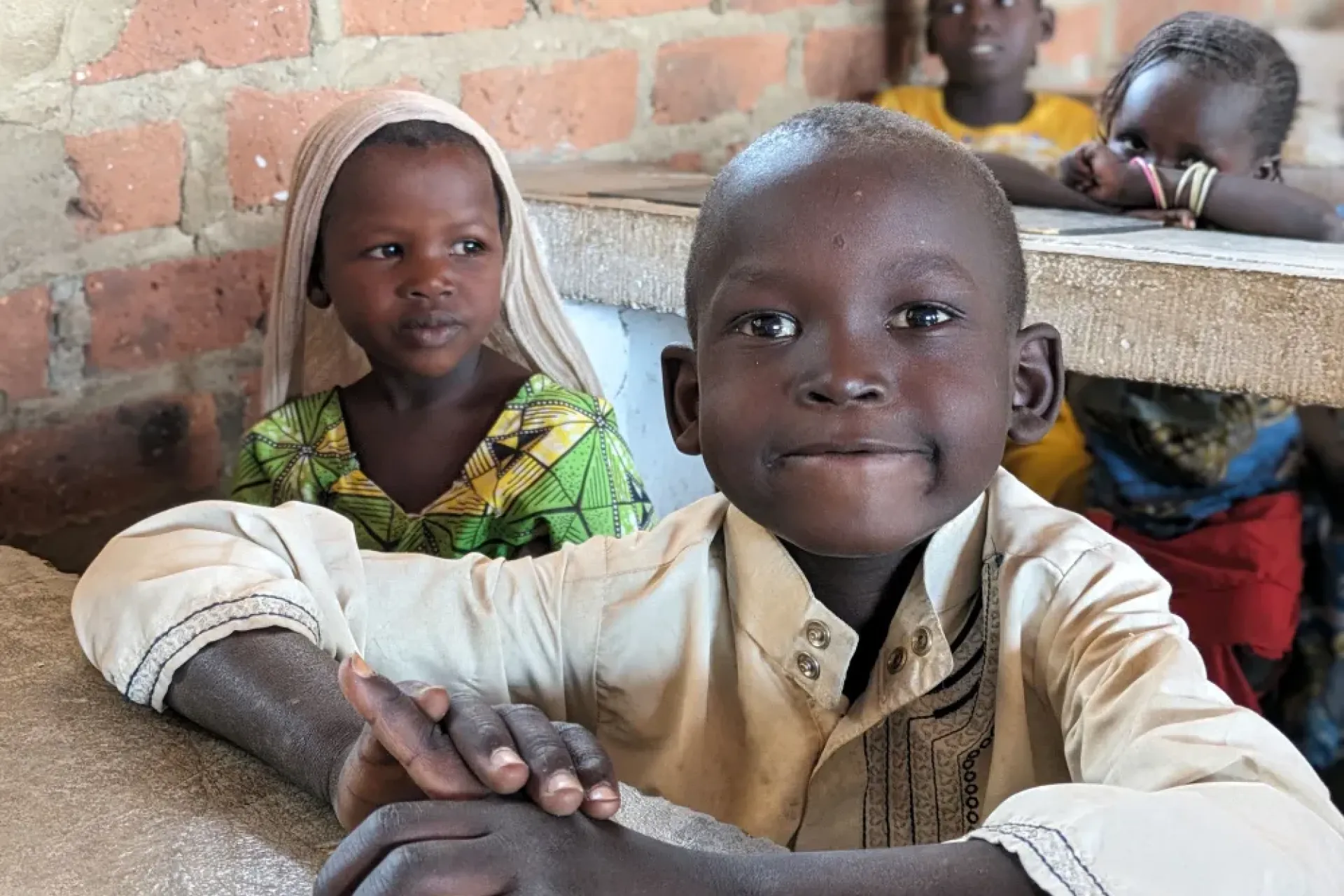
Motesh, 10, sits silently in class. Three days ago, he learned that his father had died.
Two years ago, with his mother Fatimata and two siblings, Motesh fled the Sudanese town of Al Fasher, while his father stayed behind to look after their home. The family escaped over the border to the Central African Republic where they now live in the Korsi neighbourhood in the town of Birao, home to 27,000 Sudanese refugees.
When armed groups captured Al Fasher at the end of October 2025, Fatimata feared the worst. A short time later, her worst fears were realised: one of her relatives who managed to escape the town rang her up and broke the news.
“Many children in the site are extremely vulnerable, above all, the ones who lost their parents because of the war or the ones who were separated, and don’t know their parents’ whereabouts. Our work is to visit them individually talk to them and their caregivers and support them in whatever we can.”
Hawa is a member of one of the 20 community child protection groups (called ‘RECOPE’ in French) supported by UNICEF, with funding from PRM, to provide support to children from the most vulnerable families in the Korsi neighbourhood. Each of the groups has ten community members, half female, and each member is taken through a five-day training course before joining.
While most of the Sudanese refugees in Birao initially came from the southern town of Nyala, since the beginning of 2025, there has been a notable increase in those coming from Al Fasher, capital of Darfur’s Northern Province.
"No child is safe,” said UNICEF Executive Director Catherine Russell on 29 October 2025, when the town of Al Fasher fell to militias. “While the full scale of the impact remains unclear due to widespread communications blackouts, the estimated 130,000 children in Al Fasher are at a high risk of grave rights violations, with reports of abduction, killing and maiming, and sexual violence.”
Child Protection community networks
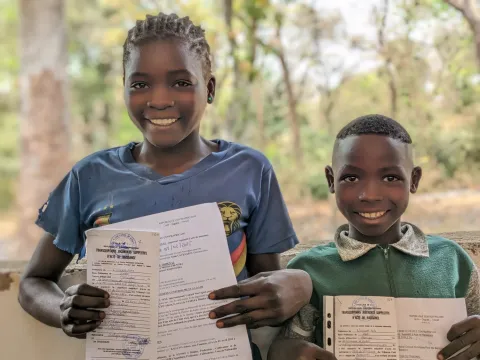
Little Ousman was lucky to have escaped Al Fasher in time. His new home in Birao is just a kilometre away from the local primary school, recently rehabilitated by UNHCR, and home to 1,700 pupils, both Central African and Sudanese.
The mix helps contribute to community relations and social cohesion.
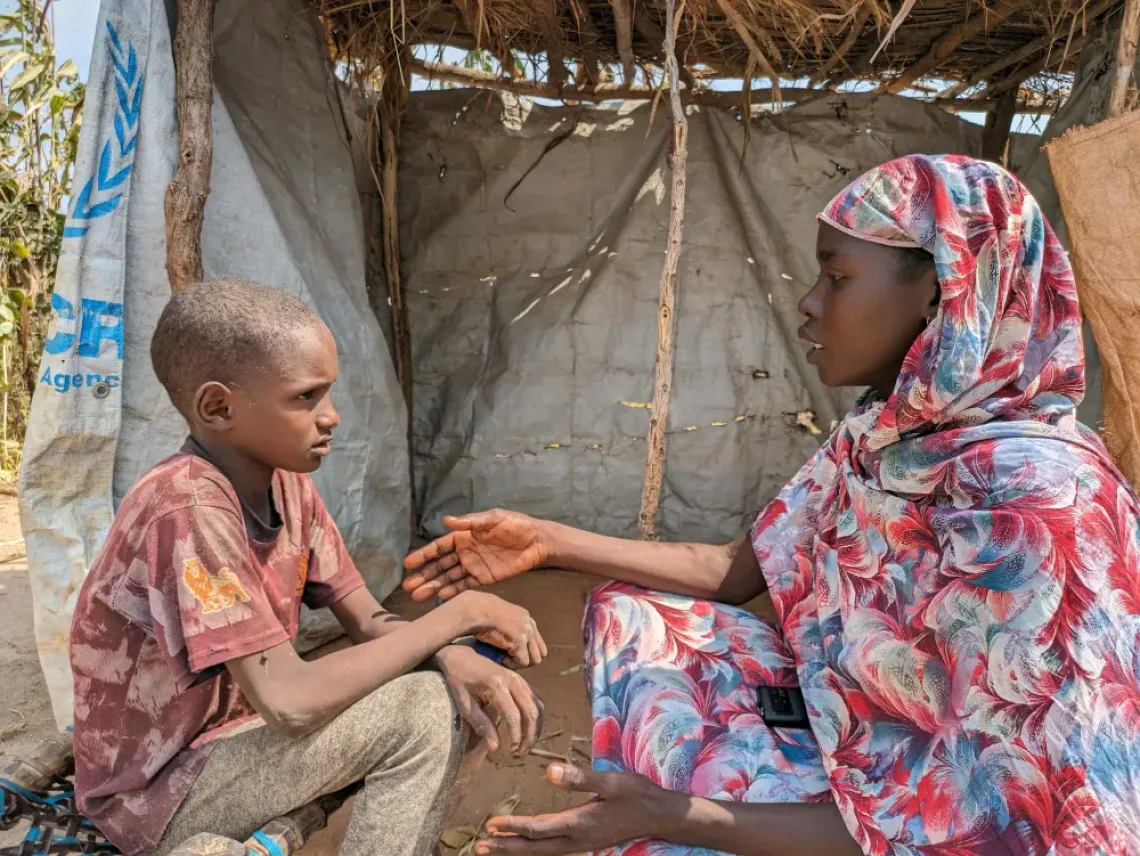
Hawa Abdsallah, who manages social welfare cases, is following up on several cases of children in the refugee site who are out of school.
In one of the homes, Hawa talks to 10-year-old Ousman, an orphan who lost both parents in the Sudanese conflict, and who has not been attending school. According to her grandmother, the main obstacle for her grandson’s schooling is “lack of proper clothes to sit with the other children.” Hawa pledged to come up with a solution very soon.
Not all Sudanese refugees in CAR live in Korsi. According to UNHCR, as of October 2025 the total number of Sudanese refugees in CAR is 42,000, spread out in different sites. The ongoing Sudanese conflict, which started in April 2023, also displaced an estimated 6,500 Central Africans, who had fled to South Darfur from CAR in 2019, following conflict in Birao. In Birao it is easy to find people who have crossed the border three or four times in their lifetime, escaping from conflicts on one side or the other. Kinship links on either side of the border are strong, and many simply go to live with relatives when hostilities break out.
Central African or Sudanese, most of the arrivals are children and young people and women.
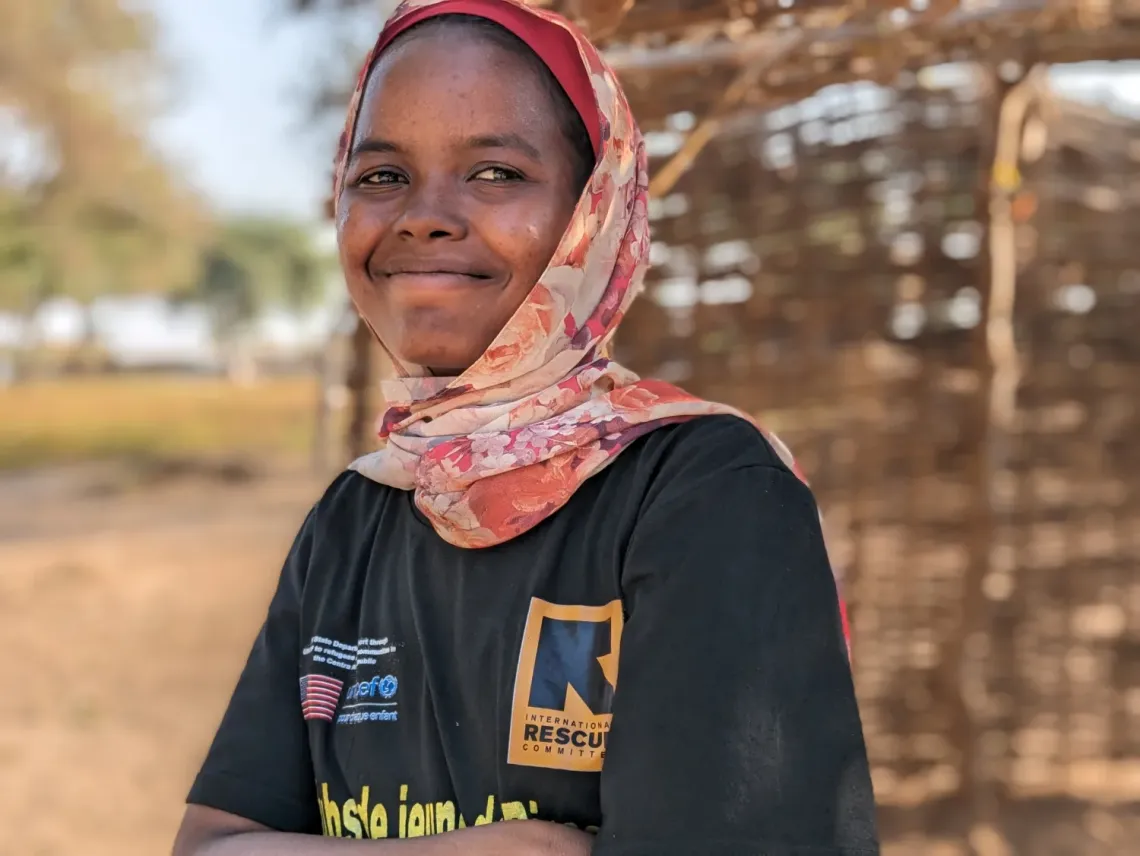
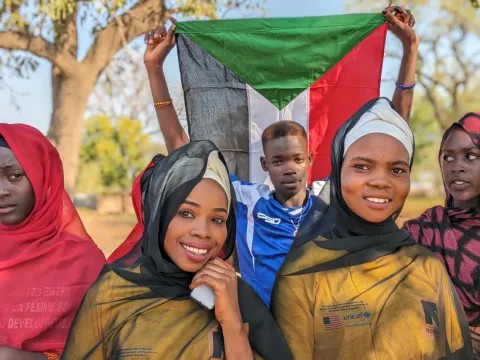
Eighteen-year-old Islam is one of them. In January 2025, she says armed men burnt down her family home in El Fasher and killed her father. She escaped with her mother and her six siblings and, after a difficult journey, reached the Central African town of Am-Dafock, from where they were brought to Korsi. She was a student of the last year of secondary school in Al Fasher, and now she is repeating the same course in Birao’s Lycée. Already fluent in English and Arabic, Islam is now beginning to master French, CAR’s official language.
“I am happy that soon I shall be fluent in three international languages. My hope is that I shall be granted a scholarship and continue my studies at the university in Bangui. I want to study medicine."
Islam is one of the leaders involved in the 200-strong UNICEF-supported youth clubs in Korsi. Each afternoon, she helps organize sports, dances, games and educational talks on life skills. Coming together and engaging in these activities helps them overcome the trauma they have experienced.
Ousman and Islam still have a long way ahead of them to pursue their dreams. Like many children and youth in Korsi, the war has left them as orphans, but as Islam puts it: “Living in a country where there is peace and I can study gives us a lot of hope.”