From isolation to inclusion: Zénabou's story
ECW, UNICEF and partners are empowering children with disabilities to access inclusive education and reach their full potential in the Central African Republic.

- English
- Français
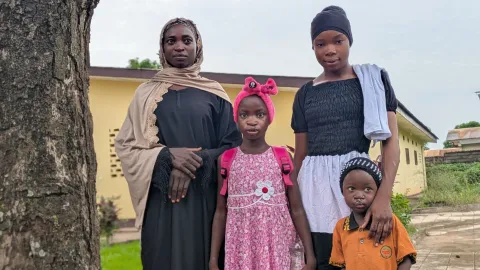
Along a dusty street in the town of Bambari, Zénabou, 14, who is deaf and non-speaking, used to watch as other children walked to school.
I always had the painful experience of seeing the other children go to school with their rucksacks. It was a torment because I realised that it was a system that wasn't made for me because I was different.
For many children with disabilities, the doors to education have remained firmly shut, leaving them with few opportunities and little hope for the future. Yet, across the Central African Republic today, their stories are beginning to change.
Children like Zénabou are finally receiving the educational opportunities that they deserve thanks to a new inclusive education pilot initiative. The programme is providing essential resources like learning materials, mobility aids, and specialized classes to learn Braille and sign language; creating a network of community support for families; and integrating children with disabilities into local schools.
This groundbreaking initiative is funded by Education Cannot Wait (ECW), the global fund for education in emergencies and protracted crises in the United Nations, and supported by UNICEF and national organizations, including the ‘Centre d’Alphabétisation et de Formation en Braille pour les Aveugles en Centrafrique’ (CAFBAC) and the ‘Association Nationale des Déficients Auditifs de Centrafrique’ (ANDAC).

A Door Opens
For Zénabou and other children with disabilities like her, this is an extraordinary moment.
Zénabou was born deaf and non-speaking. In a country where a deep-rooted stigma around disabilities exists, there have been few initiatives aimed at improving access to education for these vulnerable children. Before she enrolled in classes, Zénabou would stay at home most of the day, helping her mum with household chores: washing dishes, cleaning clothes and fetching water…
Going to school was something I'd never hoped for. The day I went to school for the first time, I realized that I wasn't the only one. Seeing more than 30 deaf people in the same place was astonishing!
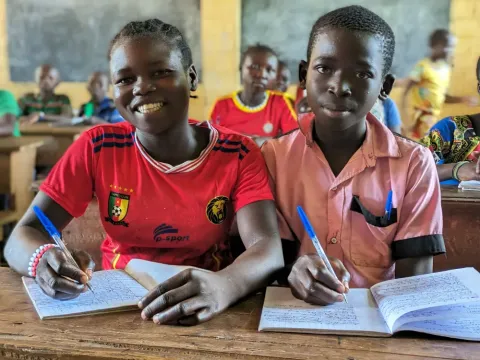
Through a multi-year investment from ECW, UNICEF – in partnership with Humanity and Inclusion and local organizations, and with the support of local educational authorities – has established specialized classes for deaf and visually impaired children in Bambari within ordinary primary schools.
It's a miracle that a child who cannot speak can now write! It proves that this school brings blessings.

Zénabou’s parents are her biggest champions.
Her mother is a member of the National Organisation of Disabled People's Associations (ONAPHA). Though not disabled herself, she takes part in meetings to defend the rights of her daughter.
This ECW-funded inclusive education initiative in CAR is strengthening national organizations such as the ONAPHA and the National Association of Hearing-Impaired Persons (ANDAC). These partnerships have facilitated the adaptation of education for children with hearing impairments in Bambari – and there are plans to further expand to other prefectures.
Working with organizations that represent persons with disabilities is key to ensuring their participation in decision-making.
Zénabou’s mother and father are grateful to now have more support in the community. Her 8-year-old sister Aziza, though hearing, attends the same class as Zénabou. Years ago, insecurity in the region kept her from enrolling in school, but now she attends class every day and is learning sign language.

Education Crisis in CAR
The Central African Republic is one of the toughest places in the world to be a child. Conflict, displacement and instability are undermining efforts for peaceful development, putting children and adolescents at serious risk. Years of violence have contributed to the breakdown of what were already limited service, leaving a million children and adolescents out of school. This crisis disproportionately affects children with disabilities.
Addressing these challenges requires concerted efforts.
ECW in CAR
ECW recently extended its Multi-Year Resilience Programme in CAR. The programme increases access to a holistic, quality education in protective learning environments, strengthens national and local education systems, and provides targeted support for girls and children with disabilities, like Zénabou. Partners like UNICEF are supporting the national government to promote inclusive education.
“Together with our partners, ECW continues streamlining disability inclusion across our investments in education while simultaneously supporting targeted interventions to overcome the specific barriers faced by girls and boys with disabilities in crisis contexts." ~Yasmine Sherif, ECW Director.
In 2023, ECW also launched a First Emergency Response (FER) in the country to help address the educational needs arising due to the escalating conflict in neighbouring Sudan. The FER targets refugees as well as the communities that host them, and works to ensure access to quality education services, provides language training and catch-up classes, strengthens protection and mental health and psychosocial support, reinforces educational infrastructure, supports teachers and more.
To date, ECW investments have reached nearly 536,000 crisis-affected children and youth in the Central African Republic with quality education support.
An adventure ahead
Zénabou's story is a powerful testament to the transformative impact of inclusive education and the incredible potential of children with disabilities when given the opportunity to thrive. As we look ahead, much more needs to be done to ensure that all children have access to the education they deserve.
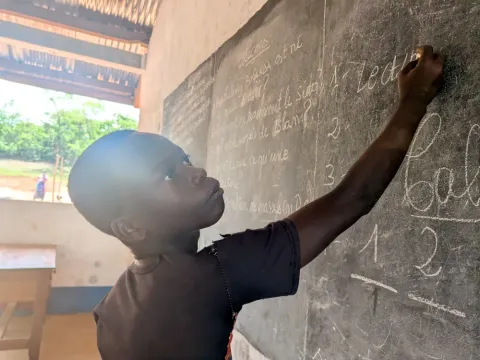
“I still don't know where this adventure is going to take me... but one thing's for sure: today, I can read, write and count, just like the other children, thanks to sign language! One day I'd like to work in the humanitarian sector.” - concludes Zénabou.