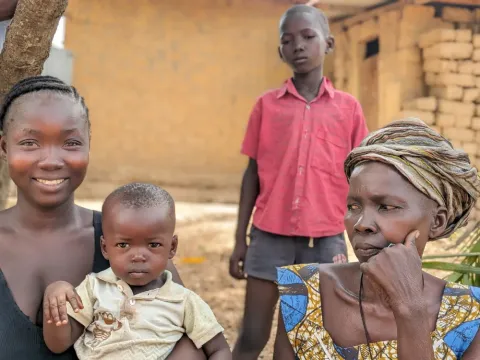
“The greatest disease we must eradicate first is misinformation”
As the Ministry of Health and UNICEF in the Central African Republic push for all children to be vaccinated against polio, young volunteer U-Reporters work with their communities to convince parents not to leave any child behind
- English
- Français
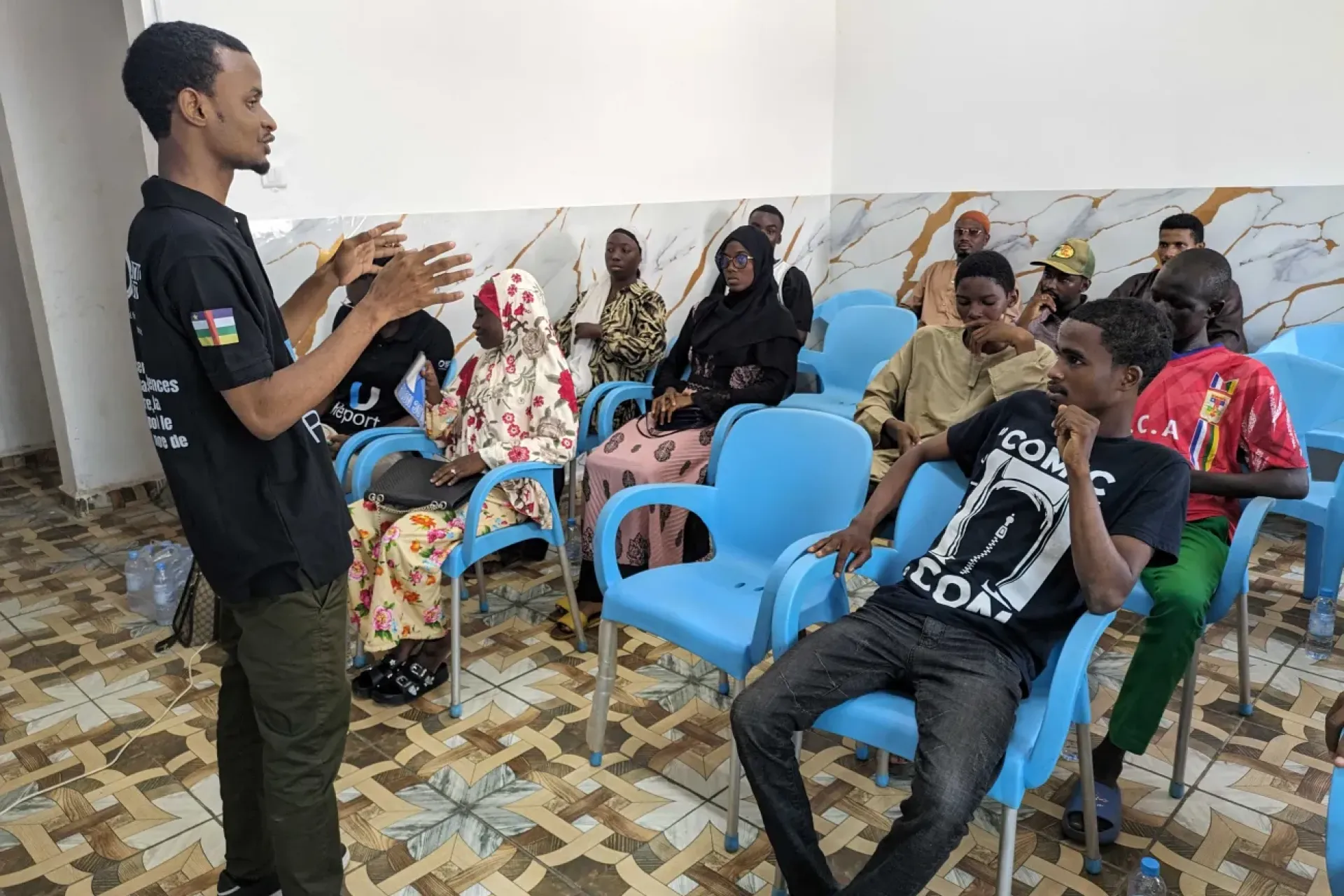
Wearing his U-Reporter T-shirt, Ousmane Abdoulaye, 23, starts his presentation to a group of 30 young people in Bangui’s PK5 neighbourhood with a powerful statement: “Polio poses a threat to children all over the world, but the greatest disease we must eradicate first is misinformation.”
And to back up his claim, he says that his district “is the area of Bangui [capital of the Central African Republic] with the highest number of children who have not been immunized against polio, and one of the reasons is that there are too many fake stories circulating that misleads people into thinking that if you vaccinate your child he will fall sick.” His conclusion is clear:
“We need to mobilize our community, and to do that we’ll start by educating ourselves, so we have a clear understanding of this disease and its vaccine. We also need a good communication strategy to persuade people.”
Ousmane is an active member of the U-Reporters, a network of young people supported by UNICEF, in CAR. He speaks with the enthusiasm of someone who has just learnt new ideas about how to do this job. A few weeks ago, he was supported by UNICEF to participate in a Youth Mobilization Lab in Nairobi. The event brought together young community leaders from 20 countries to strengthen their advocacy skills for polio vaccination. Alongside the training, participants also attended the World Health Summit, which was held concurrently in Nairobi with support from the United Nations.
“Taking part in this lab was a very rewarding experience, both personally and professionally,” he says. “It gave me the opportunity to meet committed young leaders from several countries, exchange ideas and discover different approaches to community mobilisation. Listening to their different experiences and the challenges they have faced has greatly changed my perspective and strengthened my motivation to continue my awareness-raising and advocacy work in support of vaccination and children’s health in my community and in the CAR.”
Full of enthusiasm, Ousmane returned home with a renewed sense of purpose: “I always share with my friends every new and interesting thing I learn.”
He explains that this passion for learning and sharing knowledge has always been part of his personality:
“I completed secondary school at the age of 20, but unfortunately, I was unable to finish my university studies. Even so, I have always been an avid reader, and I am deeply committed to volunteer community work. Together with my fellow U-Reporters, I began engaging local traders in PK5 to encourage them to send their children to school instead of having them sell goods in the market. We have also carried out campaigns to persuade parents to bring their children for vaccination. In our neighbourhood, there is still some resistance, but we must remain persistent because social change usually happens slowly.”
During a discussion with the participants (10 of whom were young women), he states: “A child’s first right is the right to life, and vaccines help them to live and stay healthy. We need to take action to make sure that no child is left behind.”
To reinforce his point, he cited the example of Nelson Mandela, who in 1996 launched the campaign “Kick Polio out of Africa”, rallying African leaders, celebrities and communities to eradicate the disease in the continent. He also mentioned that in 1988, around 1,000 children globally were paralyzed every day by polio, and that many coordinated actions worldwide reversed the trend. The American continent was the first to eradicate the disease.
“A lot of progress has been made also in our country, but we must not let our guard down."
The Central African Republic has not recorded any case of polio since 2020. To keep that status, UNICEF continues to support vaccination efforts in the country.
In 2025, UNICEF worked with the Ministry of Health and Population and the World Health Organisation to secure the vaccination of 2.5 million children, with funding from the Global Polio Eradication Initiative, which include partners like Gavi the Vaccine Alliance, the King Salman Humanitarian Aid and Relief Centre and the Gates Foundation. A recent vaccination campaign countrywide was launched in April 2026, with the participation of thousands of volunteer health community agents.
These efforts are done in a syncronised way across the Lake Chad Basin countries, with Nigeria, Niger, Cameroon and Chad. Community-based initiatives, such as the efforts of U-Reporters in Bangui, play a vital role in ensuring the campaign’s success.
“To keep this progress going, we have to convince parents who are reluctant to vaccinate their children, and we must be patient and persistent,” Abdoulaye says.
And he adds “for people to change their mindset, we need to have a plan, ensure follow-up and build on the results we have achieved. So, at the next meeting, we’ll look at how to communicate effectively to convince parents who refuse to have their children vaccinated.”
UNICEF has a direct partnership with the U-Reporters, facilitating the network, allowing young people ("U-Reporters") to share their opinions on crucial social issues, reporting on humanitarian needs, and drive positive change in their communities. UNICEF supports over 100 U-Report committees and local groups across CAR that carry out community campaigns (https://centrafrique.ureport.in)
These young volunteers raise awareness about child rights, promote school enrolment, and advocate against harmful practices.
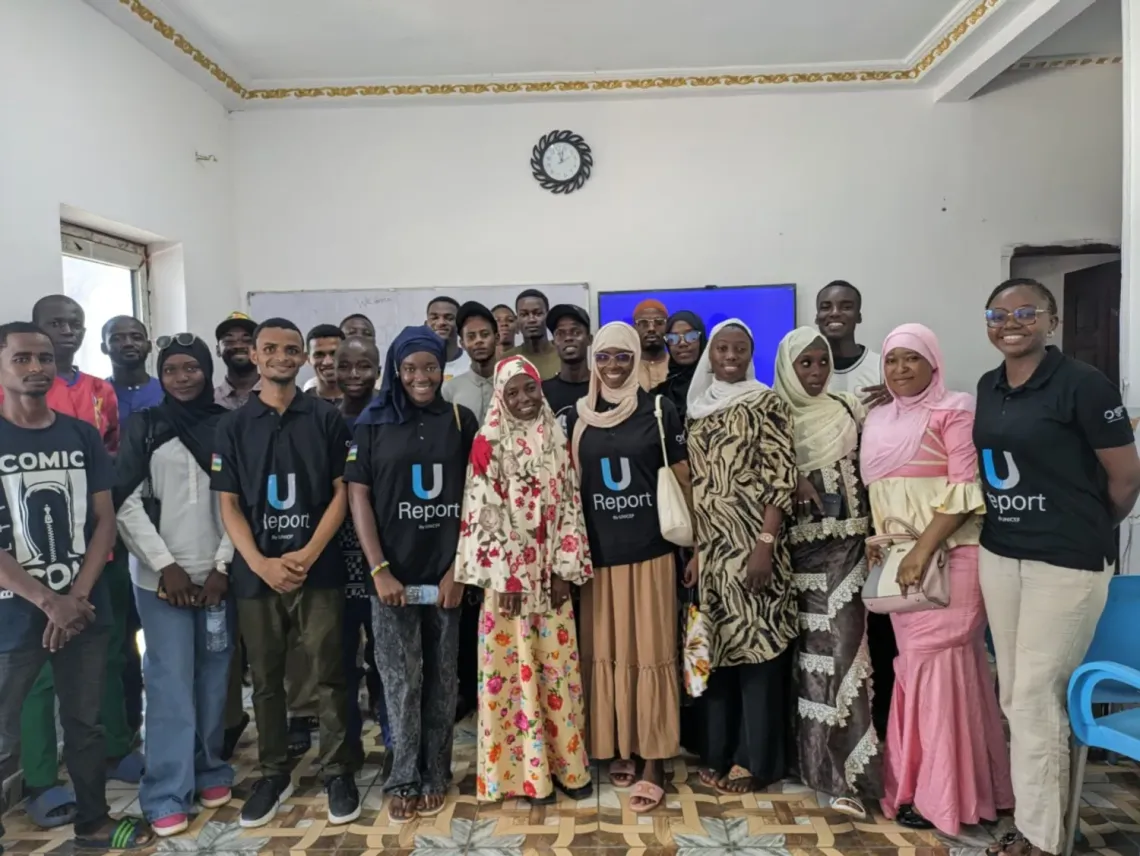
As the training session draws to a close, before leaving the participants take time to respond to an opinion poll that Ousmane has handed out to them and that will help UNICEF in the country to shape policies and advocate for children and youth needs.
“I am very happy to work with my fellow U-Reporters. There are some very good leaders among us who can change people’s mindsets, but good intentions alone aren’t enough: we need to educate ourselves, and that’s what we do here every Sunday. I am sure that soon we’ll have more parents bringing their children for polio immunization,” he concludes.
Young Central Africans can join the U-report network to share their voice by sending the word "RCA" or "UREPORT" by SMS to 1415.