Girls’ education in CAR: a race in which very few reach the finish line
More than 30 per cent of girls enrolled in primary school in CAR dropout before completing their studies. UNICEF is pushing to change this trend.
- English
- Français
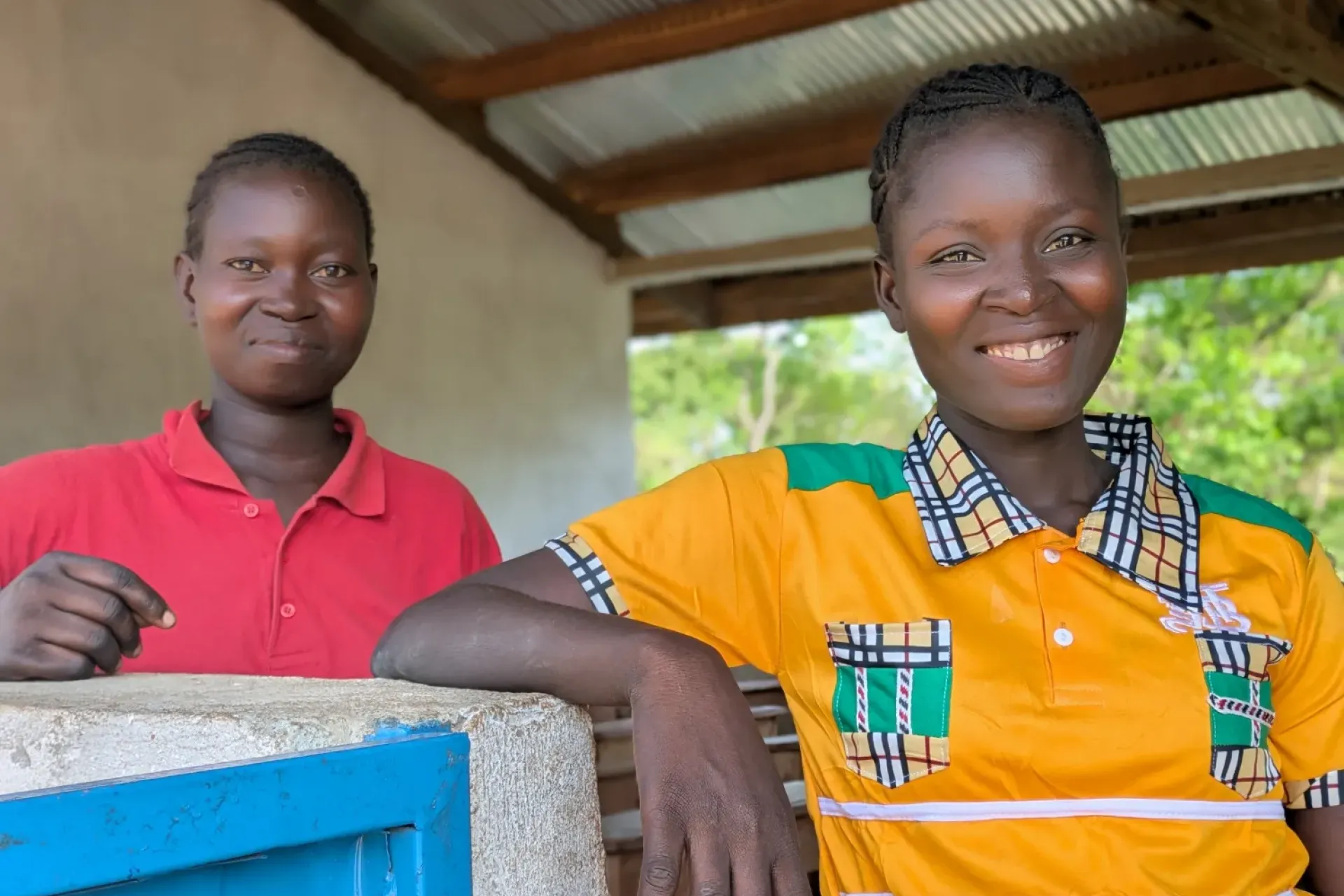
Auxilia Nguitiyo, 25, is seeking to volunteer as an untrained teacher. In the Central African Republic, where there is a shortage of qualified educators, many schools rely on young men and women known as “maître-parents,” or parent-teachers, to lead classrooms.
She and her friend, Fanni, have enrolled on a two-week intensive course ahead of the upcoming academic year, when they will teach children in the newly built classrooms of the primary school in Ndjaendola, a village in the Kémo prefecture. Having completed four years of secondary school in Bangui, Auxilia believes she is well qualified for the role. When asked why so few girls complete their education, or even secondary school, she does not hesitate:
“When boys begin to harass us, it’s the end of the story for girls.”
Her friend Fanni nods in agreement and adds: “Girls are also burdened with too much work at home.”
And the headmaster of the primary school where they will soon be working, Paul Doumer, an elderly man who up to now has been listening attentively, at a distance, intervenes: “In many cases, parents bear a great deal of responsibility, as they are the ones who pressure their daughters into marriage whilst they are still teenagers.”
Despite some progress, serious challenges due to gender inequality in education remain in the Central African Republic. According to a recent report from the Home | Geneva Global Hub for Education in Emergencies “more than 30 per cent of girls drop out of primary school due to economic hardship or early pregnancy, rising to 40 per cent in rural areas, with lasting effects on their lives. Child marriage is also a concern, with around two-thirds of girls marrying before age 18.”
The report goes on to state: “Underrepresentation of women in the education workforce is another issue: only 28 per cent of primary school teachers and 20 per cent of secondary school teachers are women, limiting girls’ access to female role models and mentors. These gender disparities are reflected in stark literacy gaps, with 75 per cent of women illiterate compared to 53 per cent of men.”
Ndjaendola Primary School is one of 46 educational facilities recently constructed by UNICEF and its partner, the Norwegian Refugee Council, with funding from the European Union. These schools serve a vast area covering the prefectures of Kémo, Nana-Gribizi, and Ouham-Fafa in the central region of the Central African Republic.
A few kilometres further north, 226 students are enrolled at the Lycée CEG of Somboka, a high school also built under the same programme—75 of the pupils are girls.
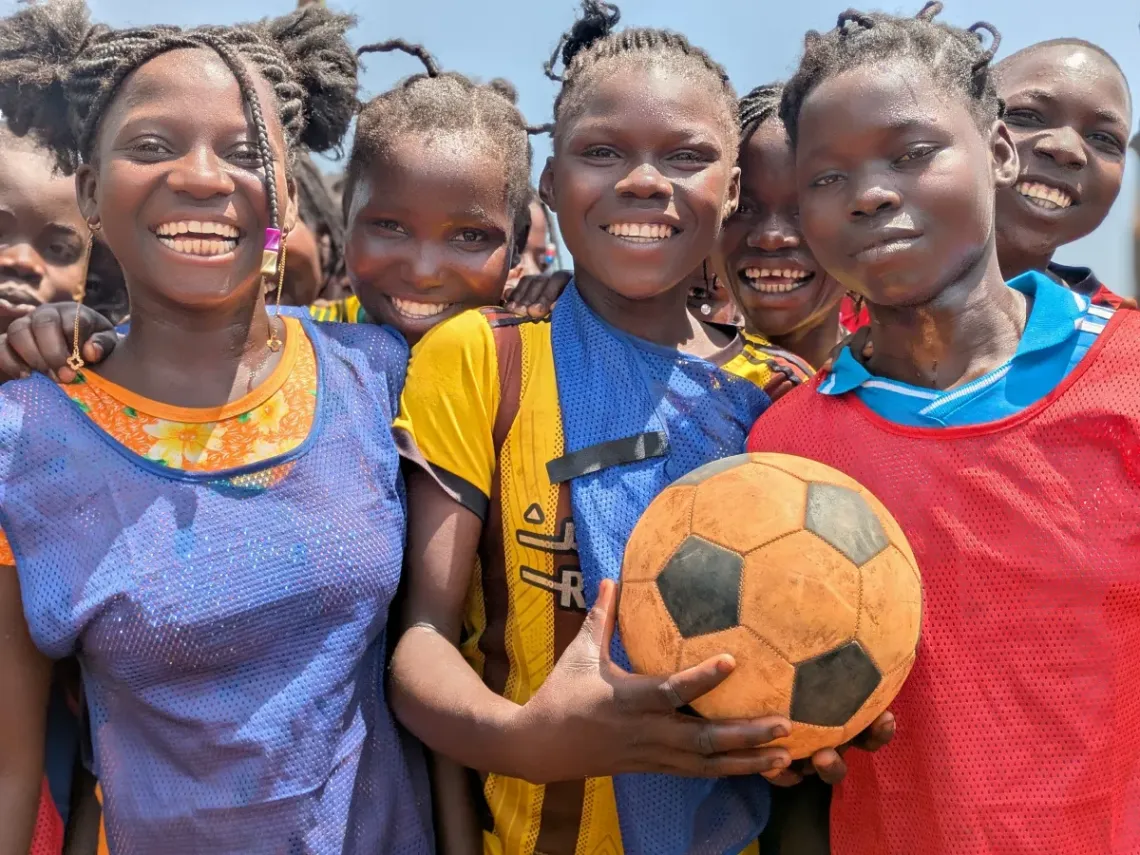
The school holidays have just begun, and the pupils are throwing themselves into an exciting football match at the ground in front of the school building. The girls’ team, who seem to be running faster after the ball than the boys, are leading three-one. When the match is interrupted for half-time, they hear the question: ‘Who plays better?’ They all reply loudly and without hesitation: ‘We do!’
Among the players, thirteen-year-old Prunelle Bagaza and sixteen-year-old Sensitia Dimanche are among the fortunate few able to attend this rural secondary school. Both hope to continue their studies and eventually go to university.
But Sensitia lowers her head, her optimism fading: “I’m not sure my parents will be able to afford it,” she says.
The gender imbalance is not as apparent at primary school level, where it is not uncommon to find more girls than boys in the classroom.
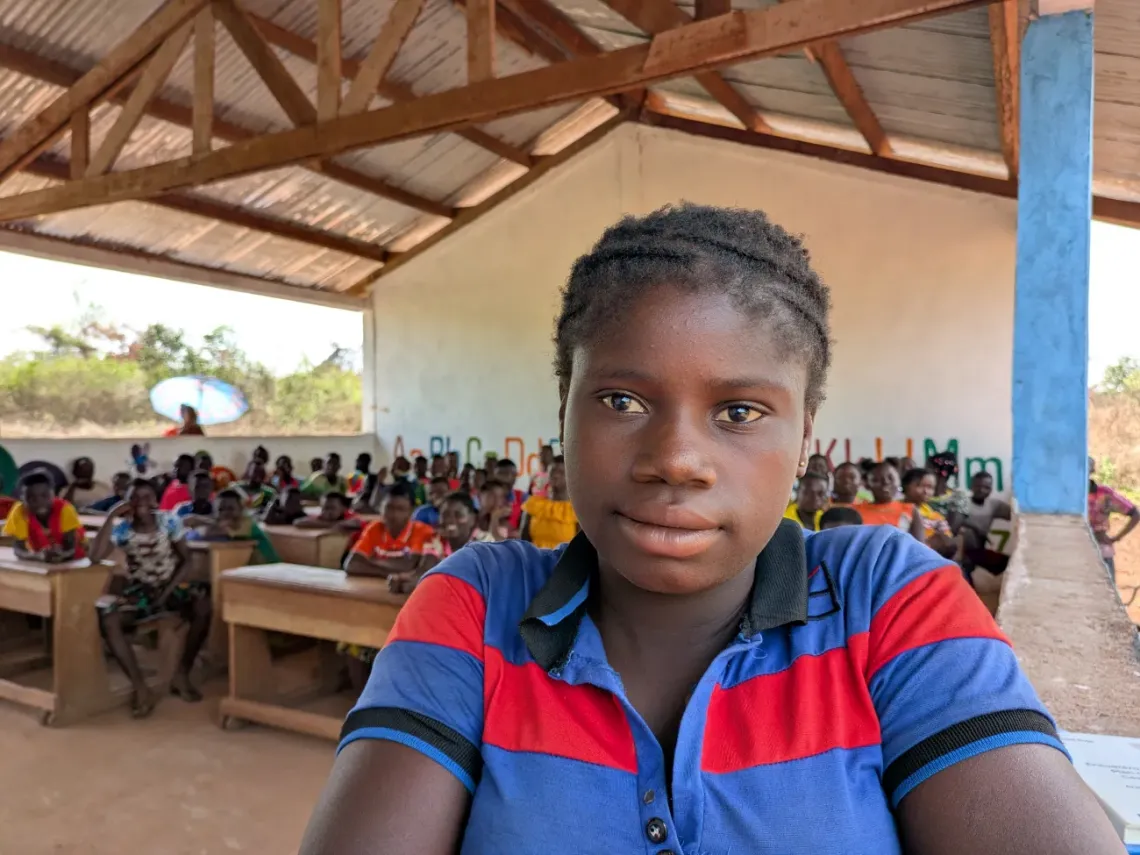
This is the case at the École Mixte de Brouilli, in Nana-Gribizi prefecture, a few kilometres north of Somboka. The school was also built under the same EU-funded programme.
The attendance figures are displayed on the blackboards. In the first year of primary school, girls outnumber boys (48 to 37). By Year 5, however, their numbers have declined (24 compared to 32). And although nearly as many girls as boys pass the final primary leaving exam, only a small number will go on to attend secondary school the following year.
Fourteen-year-old Sojagele, a final-year primary school pupil, insists she knows the reason—and she cannot hide her anger: “I don’t want to hear about marriage. All my classmates who dropped out of school did so because they became pregnant.”
To underscore her point, she adds: “Today, a group from an NGO came to visit our school, and I saw two women step out of the car. One day, I want to be just like them.”
Sojagele has ambitious plans for her future. To turn them into reality, she knows exactly what she needs: “I ask UNICEF to keep building more schools, so there is enough space for us, girls, to study. And I ask people in our village to change their mindset and leave us alone. We want to study in peace.”