Helping adolescent girls face uphill challenges
In a society where girls are at risk, new classrooms may not be enough. UNICEF and its partners are training teachers to have a gender-sensitive approach.
- English
- Français
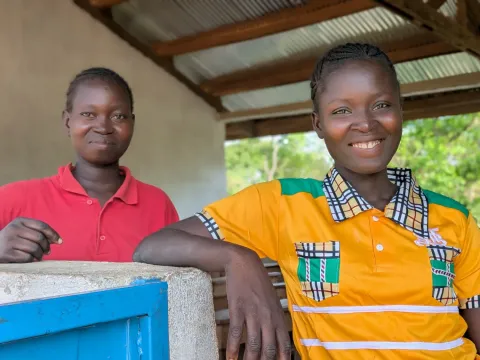
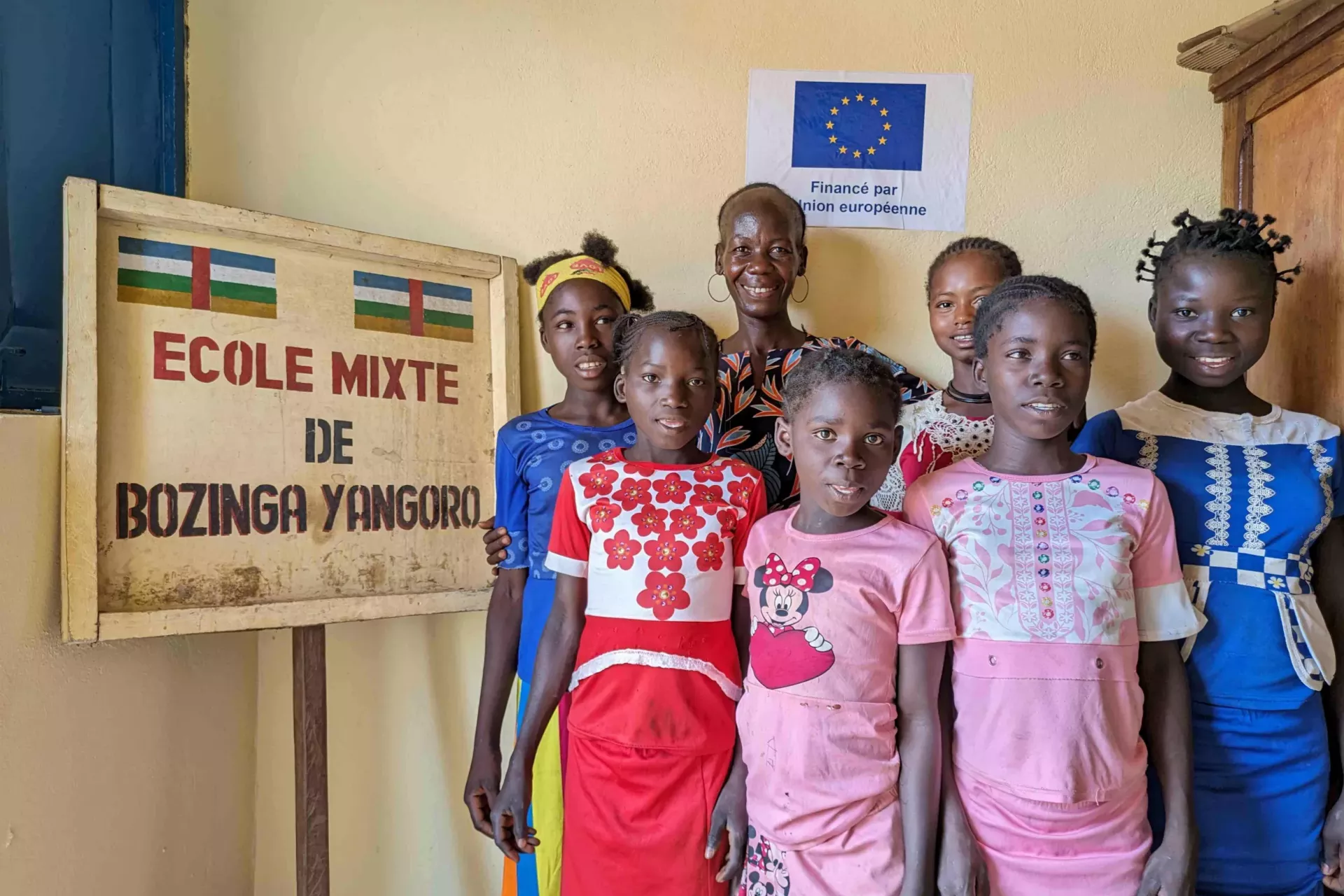
Standing in the middle of a busy classroom, teacher Augustine Wesset, moves slowly but confidently while calmly teaching her lesson. She is one of the four voluntary parent-teachers (maitre-parent, as they are known in the Central African Republic) working at her school. From the beginning of 2025, she proudly performs an added function: she is the gender-focal point of Bozinga Yangoro Primary.
Attended by 165 pupils, of whom 75 are girls, the school four-classroom blocks stand by the side of the road between Bossemptele and Baoro, in the north-west of the country. UNICEF, with funding from the European Union, has been rehabilitating the school, which is already in much better shape.
But beyond the building work, Augustine has an equally important task: supporting teenager girls who face difficult situations.
“I am a mother of six and I understand very well how difficult it is for girls in my country to go through adolescence. Early marriages, child pregnancies and sexual abuse are rife. I listen to their problems and counsel them to help them overcome such challenges.”

Trust is the key
People, like Augustine, who provide emotional support for teenagers, are very much needed in a country where, according to UNICEF’s data, 61 per cent of young women of 20-24 years report being married off before their 18th birthday. 26 per cent report being married before the age of 15. One out of four girls have been victims of some sort of sexual violence.
To respond to this, UNICEF, with support from the European Union, has launched a programme to train women teachers to act as gender focal points in schools.
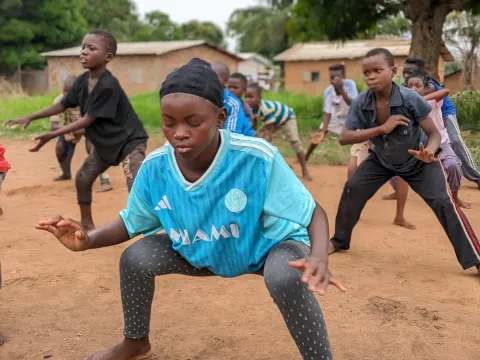
This psycho-social support initiative is complemented by the preparation of small groups of adolescents, boys and girls, who can back their own classmates through peer-support groups known as “enfants de confiance” (the trustworthy kids).
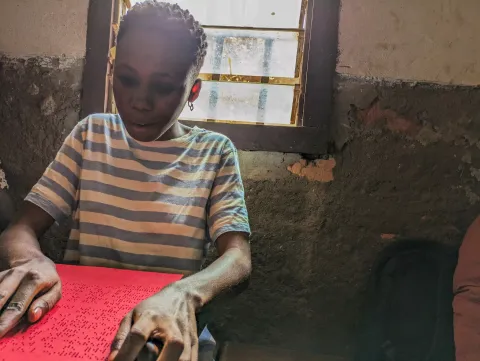
“When I see girls who drop out of school, I feel very sad”, says Augustine. “Imagine that many girls even fail to attend lessons because they lack means to take care of their menstrual hygiene. I tell them that they must be strong and assertive to pursue their studies.”
She says that trust is the key. She has managed to build up a relationship with the girls, who look to her like a supportive sister. Her care is coupled with home visits to interact with the parents of girls who face difficult situations.
New schools boost hope
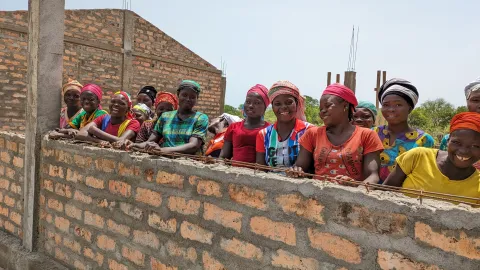
Supporting children who go through difficult situations begins with the fundamental step of helping them access education in places close to their homes. The programme aims at building or rehabilitating 450 classrooms of 150 schools in several prefectures. In another corner of the Ouham Pende, in the village of Zombere, UNICEF and its partner Plan International are overseeing the building of a new secondary school. Ambrose Kpodan, from the local branch of the Ministry of National Education, expresses his happiness as he visits the building site with Sidney Leroi, from UNICEF, the coordinator of the project in the zone:
“If boys and girls from this village want to continue with their studies after primary school, the nearest high school is six kilometres away,”says Mr Kpodan. “Everybody here is very eager to see the new premises completed. We shall be delighted to see them enter the new classrooms at the beginning of the new academic year.”

All along the 420-kilometre road from Bozoum via Bouar to Bocaranga, we come across a string of schools under construction or rehabilitation. In all of them, small teams of gender focal-points and “enfants de confiance” are planned to provide the extra help that children need to acquire life skills.
In one of them, Ecole Bogang-La Vie, halfway between Bouar and Bocaranga, 380 pupils emerge from their grass-thatched shelters. Their five teachers (of whom only two are formally qualified) are overjoyed to see a new block of four classrooms rise. The new building, equipped with an office and toilets, is expected to be completed by the beginning of the new academic year.
One of its students, Ila, 14, is in CE2 (the fourth year of primary school). His age reveals that he, as many other Central African children, have lost at least two or three years of education due to the disruption of insecurity.
“I want to be a doctor,” he confidently states as he strikes a big smile.
Parents are seen ferrying jerrycans of water to the building site, to help the masons.
When all the buildings shall have been built or rehabilitated, teachers like Augustine or the peer-helpers will continue their work: strengthening adolescents so that they are able to face up to their future.