The CRC in CAR – A day in the life of a child in Bangui hoping for a better future
Despite progress, children in the Central African Republic (CAR) face an uphill struggle to realise the rights enshrined in the Convention on the Rights of the Child (CRC)
- English
- Français
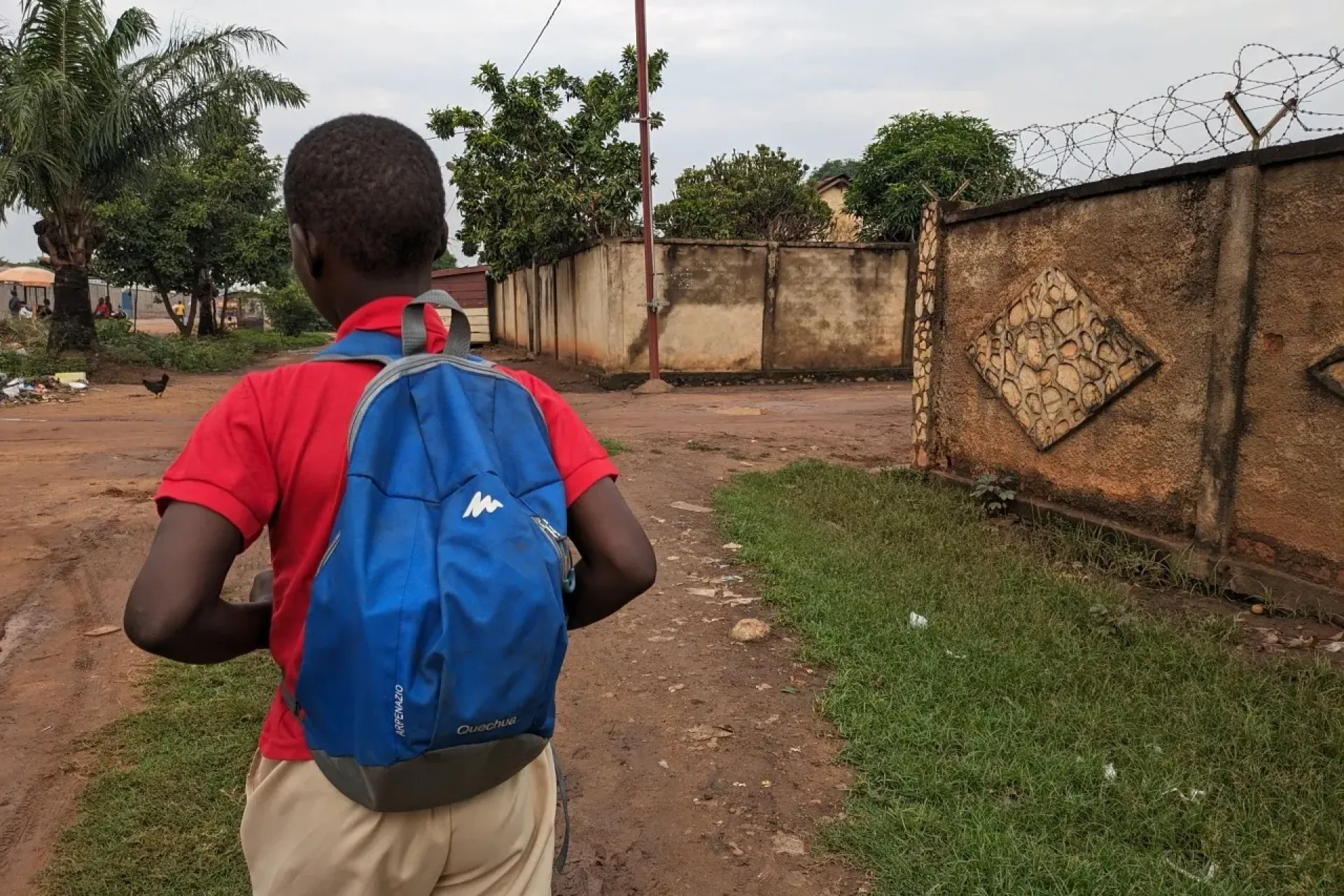
Twelve-year-old Cedric* lives in the second district of Bangui, capital of the Central African Republic (CAR). His slight frame and low height give him a look much younger than his real age. His day begins at 5 am where a few blocks from his home, a local trader sets him going with a wheelbarrow of charcoal that he pushes through the streets. He often sells his goods quickly and uses the profits to buy the small items he needs for school such as pens and exercise books; he has a keen interest in studying.
“I see young people who have completed university and who earn good money writing documents. I know two of them who bought motorcycles. Me too, I want to study a lot, so that I may do the same”
Two years ago, Cedric lost his father to ill health. Almost at the same time, his baby brother died just a few months after birth. For some time, Cedric had a stepfather, but one who took little interest in caring for the children of Cedric’s mother. To make matters worse, his mother died a few months ago and he and his siblings are now under the care of their grandmother.
At around half past six, Cedric hurriedly eats a small piece of bread, at times with some sugarless tea, and walks to school, about 30 minutes away. There, he joins around 100 other pupils crammed into a single classroom, with lessons running till midday. Last year he repeated the third year of primary school, as he failed all his exams, and he hopes for the best in this new academic year, even though he is well behind the level he should have achieved at his age.
Cedric says that when he gets back home in the afternoon, he helps his grandmother with the domestic chores and in the evening he eats supper (the only day’s proper meal), usually consisting of gozo (cassava boiled flour) and some vegetables. The house is small and he and his three brothers and one sister sleep on mats laid on the floor of their sitting room. A few months ago, he fell sick of typhoid fever and says he came close to dying as his gran could not afford to complete treatment. Every Saturday he goes to stay with one of his cousins and likes to play football with him. It is the best moment of the week, as his relative lives in a house with a television and for some few hours he enjoys watching cartoons and eating biscuits with milk.
Cedric has never heard of the Convention on the Rights of the Child (CRC) and his life is a long way from the rights enshrined in it. CAR agreed to adopt the CRC in 1992 and in 2020, the country passed the Code de Protection de l’Enfance enshrining greater national protections for the rights of children in line with the international treaty.
But years of poverty and some of the lowest development indicators in the world make CAR a challenging place to be a child.
• Nearly 1.3 million children (about one third of the total population under 18) need humanitarian assistance.
• Around 40 per cent of children under 5 suffer from chronic malnutrition.
• One in two children do not have access to basic health services. Linked to this, despite some progress in recent years, 86 per cent of children aged between 12-23 months are not fully vaccinated.
•Only 66 per cent of children attend primary school and 8 per cent attend secondary school regularly. But, out of those lucky ones, only 27 per cent and 12 per cent complete primary and secondary schooling, respectively.
•Child marriage is a major problem. Two out of three girls are married before the age of 18.
•CAR is the country where children are most exposed to the effects of climate change and environmental degradation.
Basic rights, still a distant dream
World Children’s Day is celebrated every year on 20 November, the date on which the Convention of the Rights of the Child was adopted in the UN General Assembly in 1990. Since then, it has been ratified by 196 member states, making it the most widely ratified human rights convention in the world. It consecrated the concept of the ‘best interests of the child’. The same year, the Organisation of African Union proclaimed the African Chart of the Rights and Welfare of Children, although it only entered into force in 1999.
Child rights are human rights. They are non-negotiable and universal. For this year’s campaign, UNICEF is highlighting the fact that cuts to funding for children, growing violations of international humanitarian law and increasing challenges to child rights are putting young lives at risk, just when they need our help the most.
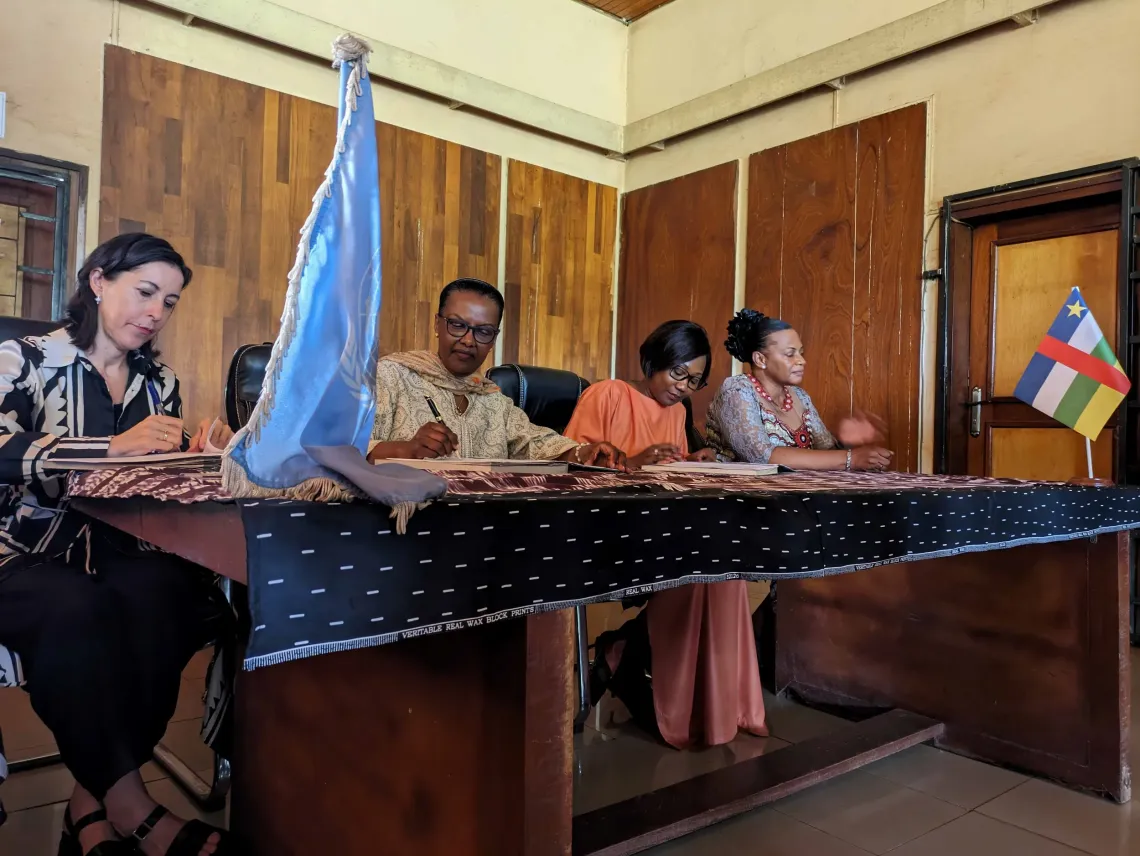
CAR has made some progress in developing its own child-protection legislation since 2020. The challenge is to see rights respected on the ground. In January 2024, the country established a National Council for Child Protection, with a mandate to coordinate all interventions by partners and government actors involved in children’s rights. Also in May 2024, the authorities adopted a National Strategy to End Child Marriage, and later in October a Handover Protocol for the transfer of children associated to armed groups.
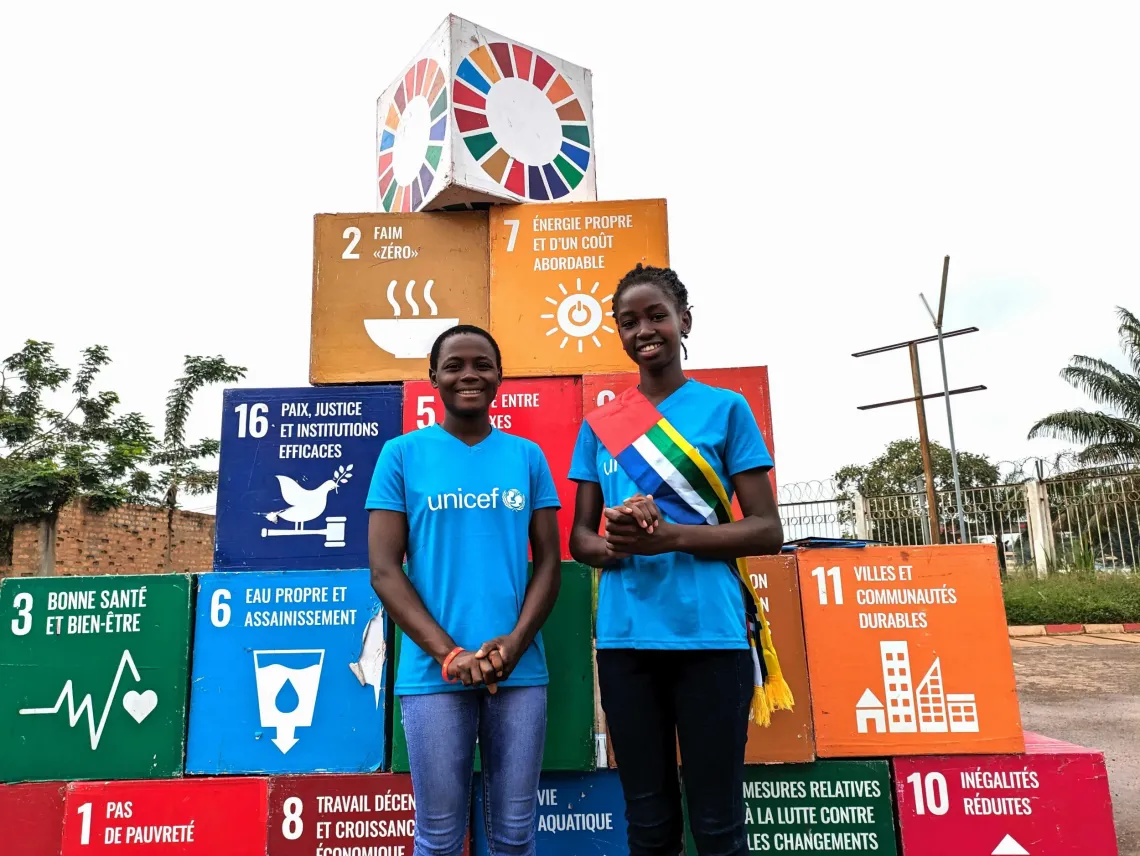
Children though are not just waiting for adults to help them realize their rights. At the recent regional summit of adolescent girls, held in Dakar on 10-11 October 2025, more than 100 participants urged political leaders in their countries to put in place measures to end discrimination, particularly when it comes to access to education, and to protect girls from conflicts’ violence. They also pleaded for the inclusion of girls with disabilities in decision-making processes.
If children like Cedric manage one day to drop the charcoal cart and reach the same level of education, they may become agents of change for their own rights and begin to see a more promising future.
*Not his real name.