Eloi, the Guardian of Health in Mangoa
A Story of Transformation and Hope for the Pygmies in CAR

- English
- Français
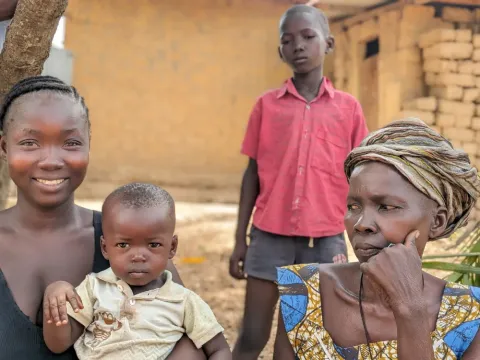
Eloi, a 42-year-old farmer, is a pillar of the Pygmy community living in the village of Mangoa, located in Katakpo in the Sanga M'baere health district in the Central African Republic.
The Pygmies have a rich history and culture dating back thousands of years. They are one of the oldest indigenous ethnic groups in Central Africa, living primarily in the country's dense forests.
For the Pygmies, the forest is not just their habitat but also the heart of their way of life, beliefs, and traditions. However, despite their ancestral connection to the forest, their access to education, healthcare, and other social services is often limited, leaving them in precarious living conditions.
In the context of CAR, the Pygmies face particular health challenges. Their access to basic healthcare is often hampered by geographical, social, and cultural barriers. The distances to travel to reach health centres, combined with a lack of adequate infrastructure, make it difficult to access medical care.
"We live 45 km from the city centre, which makes it difficult to access essential services. Many children have died because they were not diagnosed or treated in time," explains Eloi.
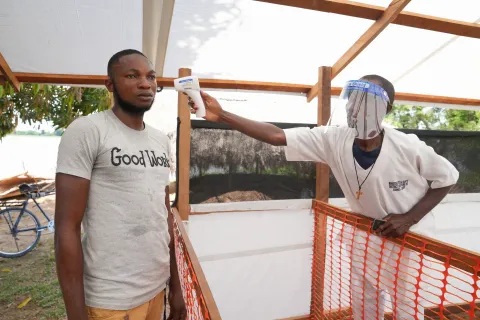
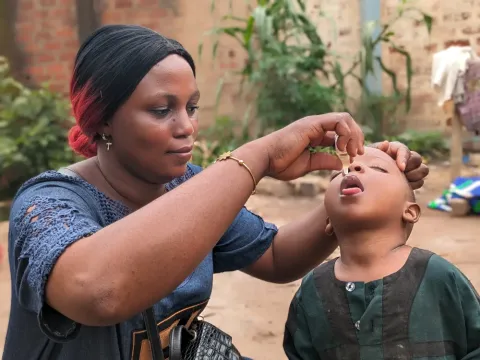
Government initiatives implemented by the Ministry of Health & Population, with support of partners such as the United States Agency for International Development (USAID) & UNICEF aim to improve access to healthcare for Pygmies in CAR. Community health programmes are being implemented to provide integrated health services, including screening and treatment for common diseases such as malaria, acute respiratory infections, and diarrhoea.

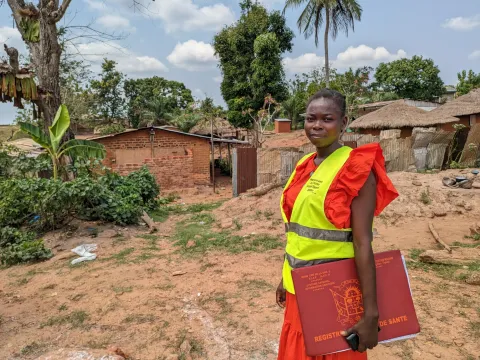
However, these initiatives can only succeed with the collaboration of community pillars like Eloi himself. As a Community Health Worker (CHW), he provides care for common diseases, offering free treatment to children and families in need.
"I am convinced that every individual, regardless of their lifestyle, deserves decent and accessible healthcare. That is why I became a CHW," he says.
Thanks to USAID's support in providing accessible and free healthcare services, distributing hygiene kits, and equipping the local hospital with a moto-tricycle adapted for transporting patients from health centres and community healthcare sites to the secondary hospital, the community has seen a significant improvement in its nutritional and health status. Similarly, home visits by community health workers have raised awareness of good health practices among households, strengthening the foundations for a healthy life.
"Healthcare services have brought a sense of security and relief to a community once faced with disease and distress," says Eloi. "I remember how we managed to save the life of little Kofi who was severely malnourished. With the help of the health centre chief, the child was treated quickly and effectively, regaining his vitality. Before, children with similar cases would die. Today, they have access to treatment."
In this struggle for survival, hope lies in the unity and determination of the community. Monthly accountability and advocacy meetings also provide a space where the voices of Mangoa are heard, needs are expressed, and hope turns into action.
Despite persistent challenges, the community expresses deep gratitude and appreciation for the tireless efforts made by the Government and its partners USAID & UNICEF to assist them, thus demonstrating unwavering solidarity and hope for a better future.