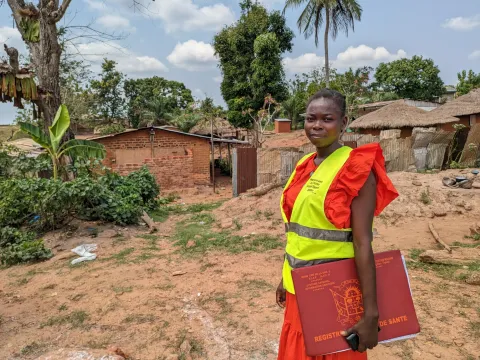
Bema, a key frontier town ramps up Ebola prevention
As an entry point to the Central African Republic, communities, health authorities and partners are joining forces to prevent the virus from crossing the border and to protect every child.

- English
- Français
Located about a hundred kilometres from Bangassou, the commune of Béma in the Central African Republic (CAR) has become a strategic point for Ebola prevention in the Haut-Oubangui region due to heavy river traffic. The town is situated along the Oubangui River directly opposite the Democratic Republic of the Congo and a Congolese province, Haut-Uélé, where the virus has been detected.
In the Central African Republic, fourteen districts are currently at risk of virus importation, and Béma facing the commune of Yakoma—sits on the front line.
Against this backdrop, the Haut-Oubangui Health Region organized a cross-border meeting in Béma on 15-16 September 2026, to assess the Ebola threat on both sides of the Oubangui River. From the DRC side, the Yakoma Territorial Administrator, the mayor, the District Chief Medical Officer, and his surveillance team were in attendance.
On the Central African side, the meeting brought together the Sub-Prefect of Ouango, the mayor of Béma, the Chief Medical Officers of Ouango-Gambo and Bangassou, and partners such as WHO, UNICEF, MSF, Catholic Relief Services and Caritas.
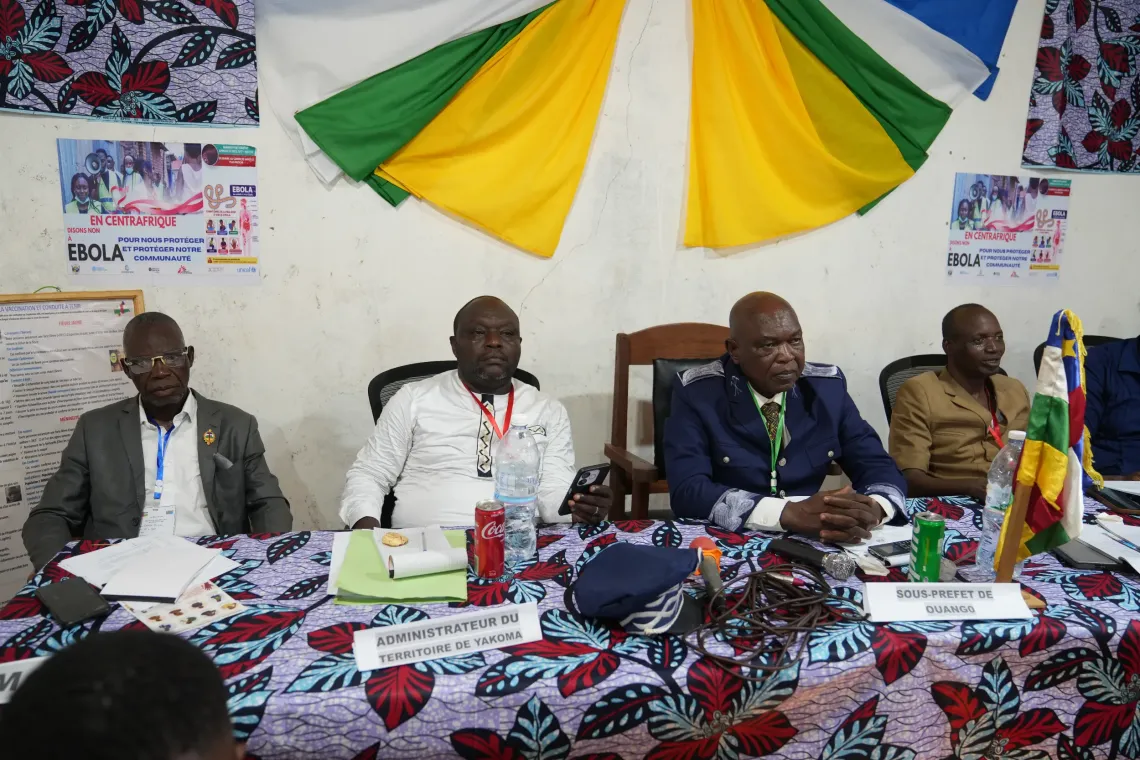
These discussions aim to harmonize procedures regarding points of entry, the monitoring of suspected cases, and coordination mechanisms, ahead of the signing of a memorandum of understanding between the two administrations.
UNICEF played a vital role in these discussions. "Béma is a potential entry point for the Ebola virus into the Central African Republic. That is why the Regional Health Director for Haut-Oubangui invited the UNICEF team to take part in this important meeting—to better understand what is being done on both sides and to better integrate these efforts into preparedness planning," says Thomas Nditar, Emergency Specialist at UNICEF.
On the ground, this initiative translates into concrete measures. At the Béma river landing, a health checkpoint equipped for handwashing and temperature checks has been set up with UNICEF's support. All canoe operators and passengers are required to pass through it.
"This is UNICEF's work," confirms Pierre Simbakole, President of the Béma canoe operators' association, who makes several crossings to Yakoma each day. Along with his colleagues, he follows the guidelines received during training: systematic passenger screening and the isolation of suspected cases. However, equipment is still lacking to ensure this work can be sustained over the long term.
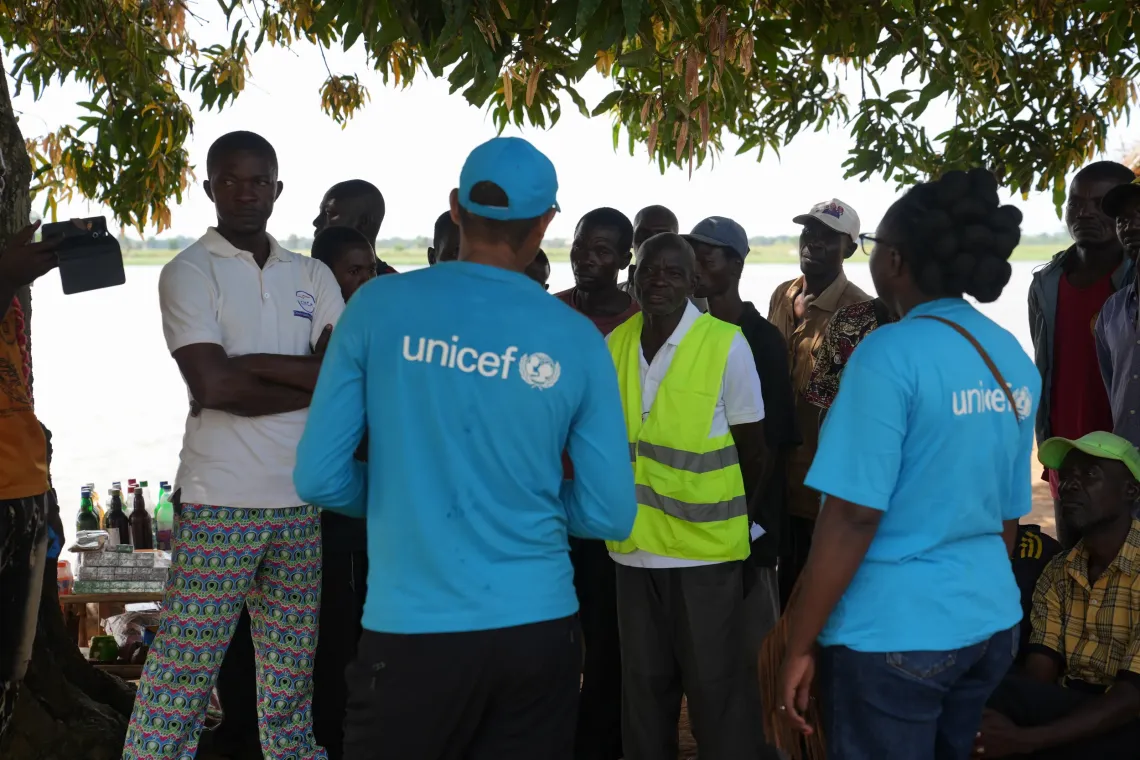
We hope UNICEF won't abandon us and will strengthen our capacity to block Ebola's advance toward Béma.
Awareness-raising efforts also need to reach further into the communities. At the local market, Marina Daguia, a 32-year-old smoked meat vendor, has noticed a drop in sales due to rumours about the disease, yet she admits she has "received no direct training." The little information she has comes from her church, where people are advised to avoid shaking hands. This case highlights the importance of directly informing local traders and rural markets.
To address this priority, health authorities and their partners plan to rapidly roll out this strategy at the community level, leveraging local intermediaries. Operating at the institutional, logistical, and community levels, UNICEF intends to continue supporting the population to halt the virus's spread right at the border.
So far, the Central African Republic has had no Ebola cases but the country remains on alert to prevent any infections from neighbouring outbreaks.