“Drinking water has brought our neighbourhood back to life”
After years of conflict, the installation of water towers by UNICEF and its partner Oxfam in Bria is giving hope to its inhabitants.

- English
- Français
To support her family, Roseline Andjilongo, mother of nine children, cultivates a small field in the Kotto Ville 2 neighbourhood on the outskirts of the city of Bria and sells doughnuts and powdered coffee. Her husband is a hunter, an uncertain job that does not always provide enough to feed the family. Despite all her efforts, making ends meet remains difficult. But the greatest need was for a supply of drinking water.
‘Before, during the dry season, our lives were difficult. Every morning, along with the other women in the neighbourhood, I would get up at around 1 or 3 o'clock in the morning and we would walk a long way to fetch water. Sometimes we would return at 7 or even 9 o'clock in the morning, and the water we collected was not clean. But we had no choice.’
The lack of water affected not only their health, but also their daily lives: fatigue, lack of time for income-generating activities and constant worries about their children's health. Diarrhoea, stomach aches and parasitic infections were common.
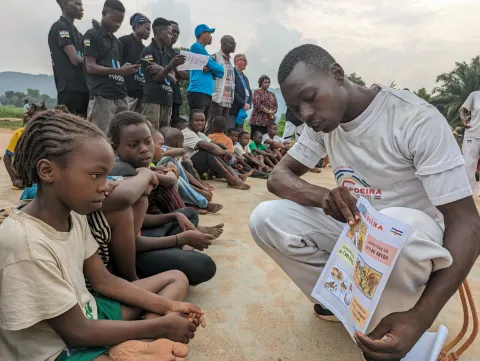
Waterborne diseases are responsible for a high percentage of illnesses and deaths among children in CAR.
‘The water was dirty and smelled bad. But when you're thirsty, you drink whatever you can find. And then the children got sick,’ says Roseline.

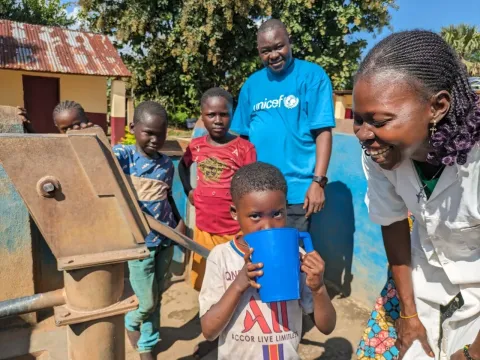
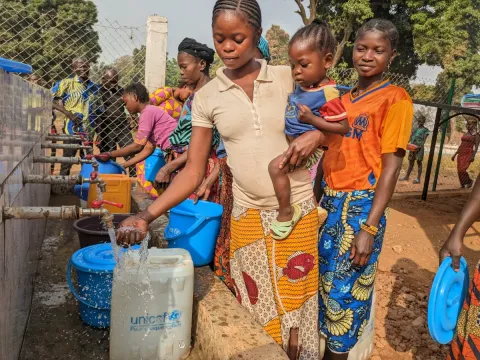
A few weeks ago, UNICEF and its partner Oxfam completed the installation of a water tower in Kotto-Ville 2. This is part of a project to improve the drinking water supply system in three neighbourhoods (Fini Kodro, Moussa Gbadou and Kotto Ville) in Bria, which are home to former displaced persons. Three old manual-powered pumps have been converted into autonomous water stations, capable of providing a much higher flow rate thanks to a solar-powered pumping system. The US State Department provided the funding, thanks to which the arrival of clean water marked a turning point.
‘The day the water started flowing, I cried. It felt like we were finally being taken seriously."
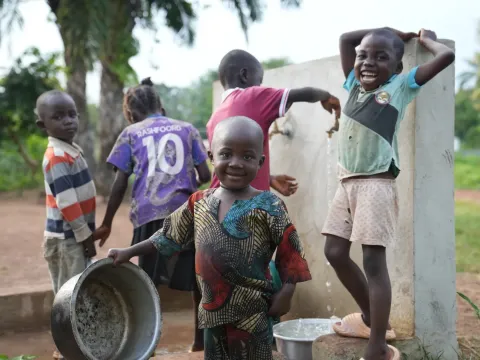
Today, drinking water is available close to her home. Families no longer have to get up at dawn to fetch water. Diseases linked to dirty water have fallen sharply.
For years, Bria had become a stronghold for various armed groups, which often fought each other. This led to the displacement of tens of thousands of people. With the arrival of peace, families gradually settled in new neighbourhoods, but these often lacked essential services. Families travelled long distances to find water, but it was often neither clean nor safe, causing many illnesses.
This project has restored hope to the community, for whom access to water has become a symbol of dignity, health and stability.
Since they were commissioned on 17 October 2025, around 3,000 people, half of whom are children, from the three neighbourhoods have been able to access these facilities safely every day. The neighbourhoods have regained their vitality. In Kotto Ville 2, even residents from neighbouring areas such as Gobolo 1 and 2 now come here to get their water.
‘Before, I was suffering. Today, I live with hope. Water has given us back our smiles,’ concludes Roseline.