Achille, the beneficiaries’ voice in Paoua
Thanks to UK aid support through UNICEF, humanitarian accountability gives dignity and a voice to CAR’s vulnerable populations.
- English
- Français
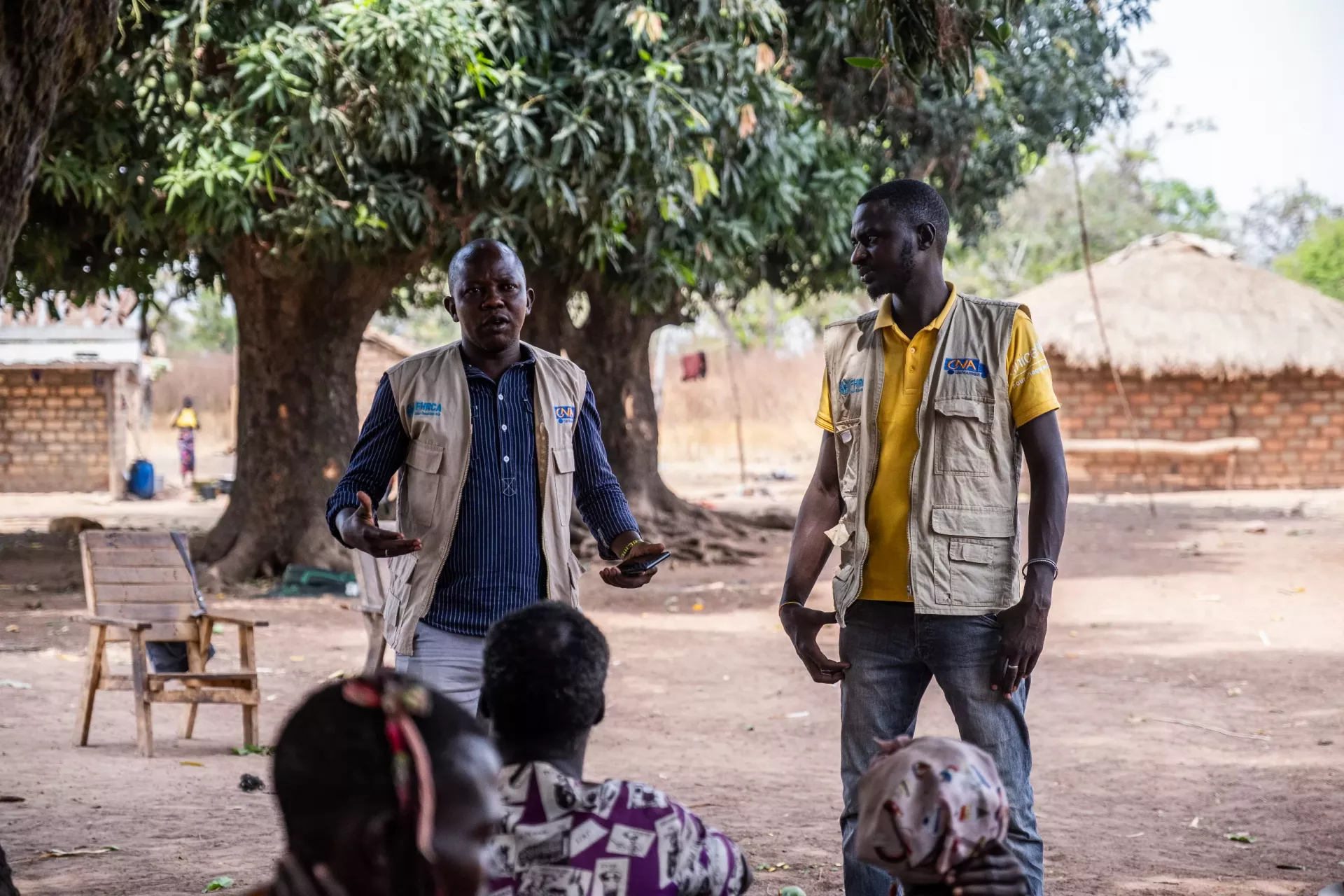
In Paoua, a small town in the north of the Central African Republic, Achille Gandi serves as a sort of ‘bridge’ between the expectations of people in humanitarian need, and the response they receive. Since 2023, he has been working as a roving feedback agent for UNICEF partner, Cinema Numerique Ambulant (CNA). His tasks are part of a project to assure accountability towards affected populations. As each week begins, he works with his team on a programme of visits to the villages that are part of the on-going humanitarian interventions.
This work is not only about logistics: it is deeply human. Achille listens, informs, reassures and makes sure that every voice is listened to. While under past mechanisms, complaints were left anonymously in suggestion boxes, today they are dealt with through a direct dialogue, which receives follow-up, and gets logged in a database thanks to a digital application. The mobile agents register all complaints and forward them to the concerned partners, creating a circuit of feed-back and transparent information.
As an example, one day during a food distribution, things flared up because of a mistake on the list, causing tension. The beneficiaries who found their names were missing threatened to take justice into their own hands. Achiles calmly listened to them and managed to defuse the tension. He personally followed up the matter until its satisfactory outcome, thus restoring trust.
On another occasion, a young girl who had been a victim of violence found herself helpless. Her family, disoriented, didn’t know which way to turn to. Thanks to the mobile feedback mechanism, her situation was taken into consideration. The culprit was identified and punished. That day, silence was broken and dignity was restored.
Improving the beneficiaries’ perceptions gives me a great satisfaction,” says Achille. “We stand as a guarantee of accountability. Now, the community knows that her voices are taken seriously.
Behind these individual actions lies a system which was conceived with the aim of rendering aid fairer, more efficient and more humane. Thanks to a funding from UK aid, several mobile feedback mechanisms are operational in five prefectures in the CAR. Over 70,000 people have been sensitized about their rights, more than 12,000 households have been visited and about 200 community dialogue sessions have been conducted, reinforcing the flow of information in both directions.
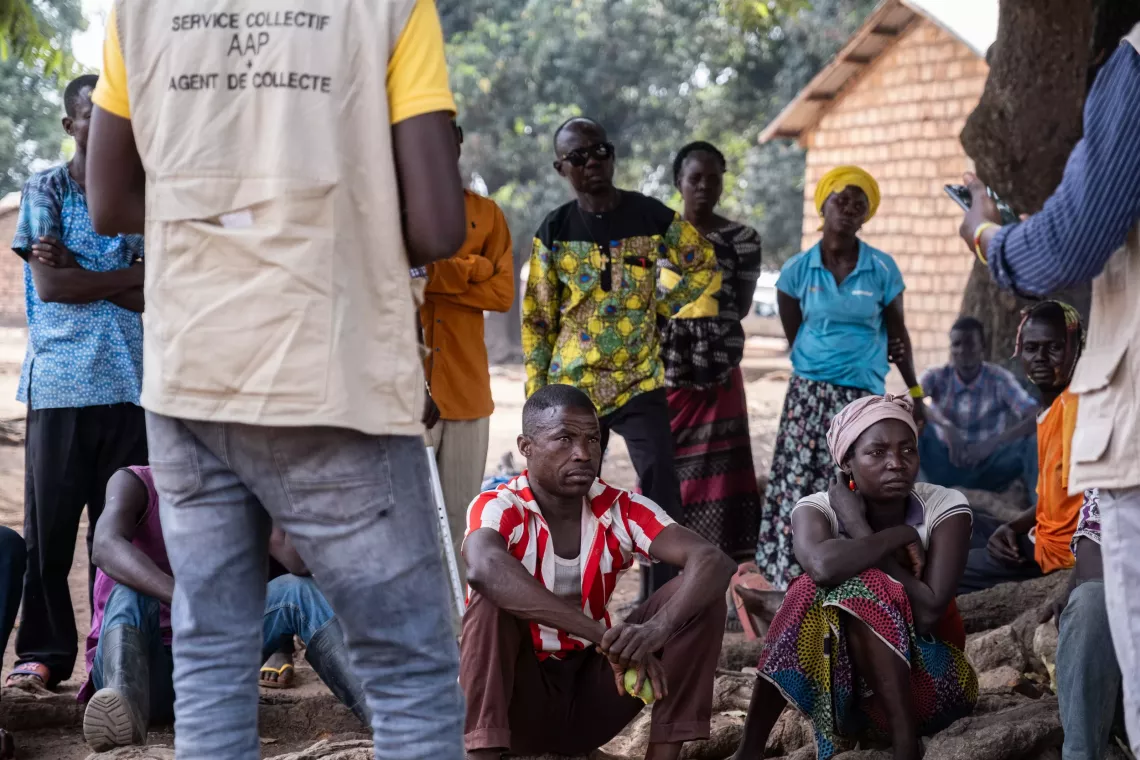
The mobile feedback agents are our only recourse, because often the humanitarian workers do not speak our language,” says community member Théophie from Bétokomia, 7 km from Paoua. “When distribution is over and we are easily forgotten, they are the ones who keep on listening to us and reintegrating us.
But despite this progress, the accountability project is not free from challenges. The first one is the language barrier. The feedback agents, having been recruited directly from the communities, speak their local languages and play an essential role in mediation. This obstacle enhances the importance of reinforcing local capacities, involving more the communities and improving the coordination between partners to guarantee quick and adapted responses.
For Riva, a UNICEF staff member, this project has brought about a real change of paradigm:
I once met a woman who wept, saying that even if she received charitable help, she is happy to be able to offer her reactions. I am convinced that this is not just charity. It is a matter of rights for them, and for us it is a duty to give power to the community. This greatly improves our intervention.
From the side of UK government support, Steven Loyst, a humanitarian advisor, insists on the strategic aspect of this approach:
The importance of the AAP project is also the solution it brings to social cohesion in CAR. It is a condition for a lasting stability in the future.
Beyond digital tools, it is champions like Achille who put flesh and a soul to this project. Thanks to him, as well as to other agents, the communities are no longer simple beneficiaries: they become actors of their own future.