Access to water, a protection at all levels
The integrated approach project financed by the German cooperation BMZ/KfW will solve several problems

- English
- Français
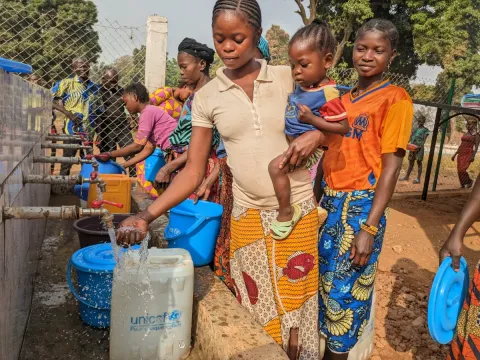
Yvonne, 45, was one of the many people who were relieved to witness the construction of an artesian well at the Haoussa school in Bouar.
The mother-of-nine, originally Lopo district, a few meters from the school, had been facing difficulties for some time to have access for water. She had to go miles to have clean, with all the risks it entailed.
“Previously, we used to walk for hours, four times per day, to get water for the household’s needs. The long distance has led to many women and girls getting aggressed on the way which was disturbing and scary for our community,” she said.
With the water well built in the school, the community does not have to go in the forest and take risks to fill their buckets, especially women and children.
Yvonne says her two daughters at the Haoussa school are no longer forced to leave their classes to drink water.
"The drinking water is clean, no more diarrhea and skin diseases!" she cried from joy.
The integrated approach project financed by the German cooperation BMZ/KfW will solve several problems in terms of hygiene, sanitation and education.
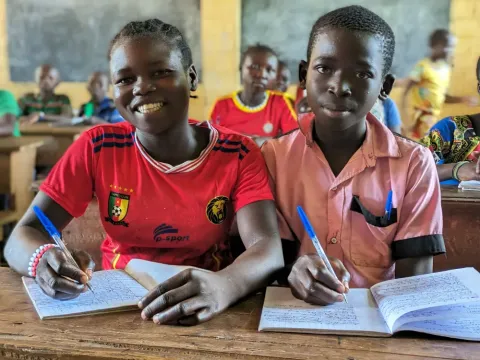
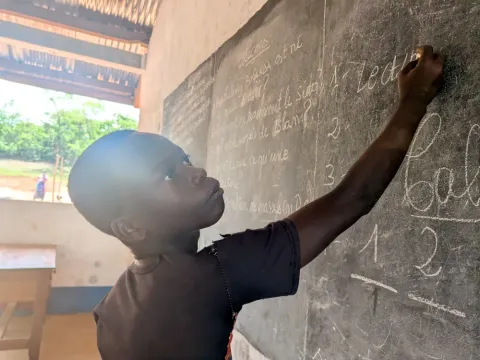
Ms Madeleine Ida Gbolo, the Haoussa school director and teacher noticed the impact of the implemented changes through the project, like the construction of separate latrines and new preschool classes, the capacity building for teachers and teachers-parents as well as the learning kits.
“The construction of separate latrines for girls and boys has really relieved teachers and parents and reduced aggression against girls,” she explains. Furthermore, with the new buildings for big kids and preschool for toddlers, children are well taken care of as part of their school learning and the follow-up they receive is much better.”

“As for us the teachers, we have regular trainings that motivate us to work. The children and the parents are happy and so are we. Everyone wins,” she continues.
The school director noted that parents have more confidence in the educational structures to send their children to school.
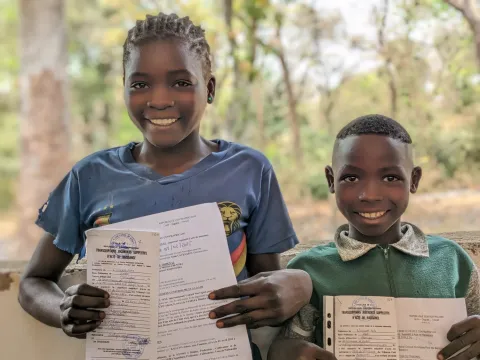
« I have noticed a significant increase in the number of students attending classes. Parents trust us: at the beginning of the school year, we give their children school kits, and all yearlong they have access to clean drinking water. As a plus, families can also draw water at any time,” concludes Ida Gbolo.

Thanks to the support of the German cooperation, BMZ, KfW, UNICEF and its implementing partners were able to build, in addition to the Haoussa school, latrines in gender-segregated blocks and water points equipped with hand pumps in 25 schools, the equivalent of 104 classrooms, of which 24 are preschools.