Psychological support helps crisis-hit children heal, learn in Muyuka
In Yoke, UNICEF-trained facilitators are helping children affected by crisis rebuild confidence, express emotions, and reconnect with learning through psychosocial support

In the Yoke community, psychosocial support activities are transforming Temporary Learning Spaces into safe environments where children can heal, learn, and thrive again.
For Mr. Agbor Otto, teaching children in the crisis-affected community of Yoke in Muyuka Subdivision goes far beyond delivering lessons in a classroom. Every day, he helps children rebuild confidence, express emotions, interact with others, and recover from the invisible impact of crisis and displacement.
As a facilitator in a UNICEF-supported Temporary Learning Space (TLS), Mr. Agbor works closely with children who have experienced prolonged school disruptions and distress caused by the ongoing crisis.
“Before the training, many of us focused only on teaching lessons, and misinterpreted the behavior of some children and blamed them, and those who don’t participate or are shy were seen as not being able to learn like their peers, ignoring that these are signs of distress in children. We were not able deal with some timid and aggressive reactions from children”.
Mental Health and Psychosocial Support (MHPSS) is a key part of UNICEF’s humanitarian response for children affected by crisis. UNICEF works with partners to integrate psychosocial support into education and child protection programming, helping children strengthen resilience, restore routines, cope with signs of distress, and regain a sense of normalcy through safe and supportive environments.

In practice, this includes structured recreational activities, life skills sessions, peer interaction, storytelling, games, and emotional support activities designed to help children heal and reconnect with childhood.
“The Psychosocial Support training, we realized that all the signs we were seeing were actually signs of distress in children and now I think from the training, I can identify signs of distress, know the level of distress and communicate more friendly with children. I can also organize some reactional structured activities which supports children understand their needs, to regulate their emotions and be of support to them”
The MHPSS training also strengthened Mr. Agbor’s understanding of child safeguarding and referral pathways, enabling him to identify signs of distress among children and refer vulnerable cases for specialized child protection and psychosocial support services when needed.
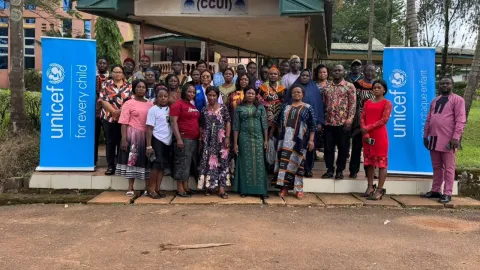
UNICEF is supporting children to heal and rebuild their lives through a community-based mental health and psychosocial support approach. By working closely with communities and strengthening local capacities, facilitators are trained to recognize signs of distress, provide psychological first aid, and guide children toward appropriate support services. In Temporary learning spaces, children take part in recreational structured activities , and life skills activities that help them regain a sense of normalcy, reconnect with their peers, and build resilience. Through this approach, communities themselves become a source of healing ensuring that children receive the care and support they need, both now and in the future.
“Some children came here unable to speak or interact with others, Others were always isolated and afraid. But through the activities, encouragement, and psychosocial support, we started seeing gradual changes. Today, many of them participate freely, interact with friends, and feel more confident. For those who continue to show signs of distress, I can refer them to the protection actors, to continue the referral pathway.”
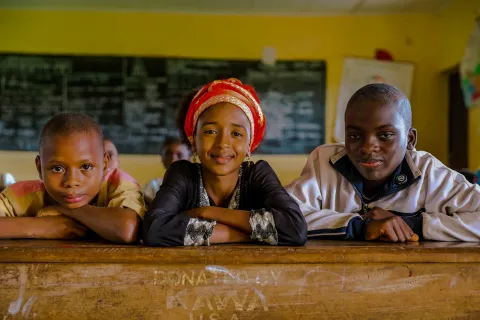
Inside the Temporary Learning Space, laughter and play have become part of the healing process.
Ten-year-old Bisong Grace says the activities at the TLS helped her regain happiness after months away from school.
“I enjoy the games and life skills sessions because they make me feel happy, “Now I can play with my friends and learn at the same time.”
Another learner, Uche Edual, explains how the supportive environment helped him overcome fear and shyness.
“Before, I was shy and unable to interact with others, Now I enjoy coming to school because I can participate, play, and talk with my friends.”

According to Mr. Agbor, attendance and participation among children have improved significantly as children begin to feel safer and more connected within the learning environment.
“When the children feel supported, they become active again. The transformation is visible. Children who were once withdrawn are now smiling, participating, and excited to come to school.”
For UNICEF, Mental Health and Psychosocial Support is not only about helping children recover emotionally, it is also about creating protective environments where children can safely learn, develop life skills, build resilience, and restore hope for the future. Through trained facilitators like Mr. Agbor, children affected by crisis receive care and support that goes beyond academics.
In the North West and South West regions of Cameroon, UNICEF and its partners reached 56,523 children, adolescents, parents, and guardians through community-based Mental Health and Psychosocial Support (MHPSS) activities implemented in schools and Temporary Learning Spaces (TLS). The intervention supported 18,400 boys, and 21,618 girls, helping to strengthen emotional well-being, resilience, and positive learning outcomes for crisis-affected communities, including 607 children with disabilities.
With support from the European Union Humanitarian Aid, UNICEF and implementing partner TeenAlive Association continue to strengthen Mental Health and Psychosocial Support services and child protection interventions for children affected by the crisis in Cameroon’s North West and South West regions.
Protecting children in emergencies requires collective action. Every child deserves not only access to education but also safe spaces, emotional support, protection services, and caring adults who help them heal and thrive. Childhood should be filled with learning, protection, play, and hope, and through Mental Health and Psychosocial Support, children in crisis-affected communities are being given the chance to simply be children again.
For every child, an actor, for the future