Community Leader Protects Education in Ntahbang
Local leaders in Cameroon bridge humanitarians and families, using their trust and local knowledge to expand education access for vulnerable children.
Local community leaders are at the heart of every successful development initiative. As trusted voices within their communities, they bridge the gap between humanitarian actors and the children and families who need support the most. Their leadership, local knowledge, and commitment ensure that interventions are not only accepted but are responsive to the real needs of communities. In Cameroon’s North-West and South-West Regions, their role has been instrumental in expanding access to education for vulnerable children.
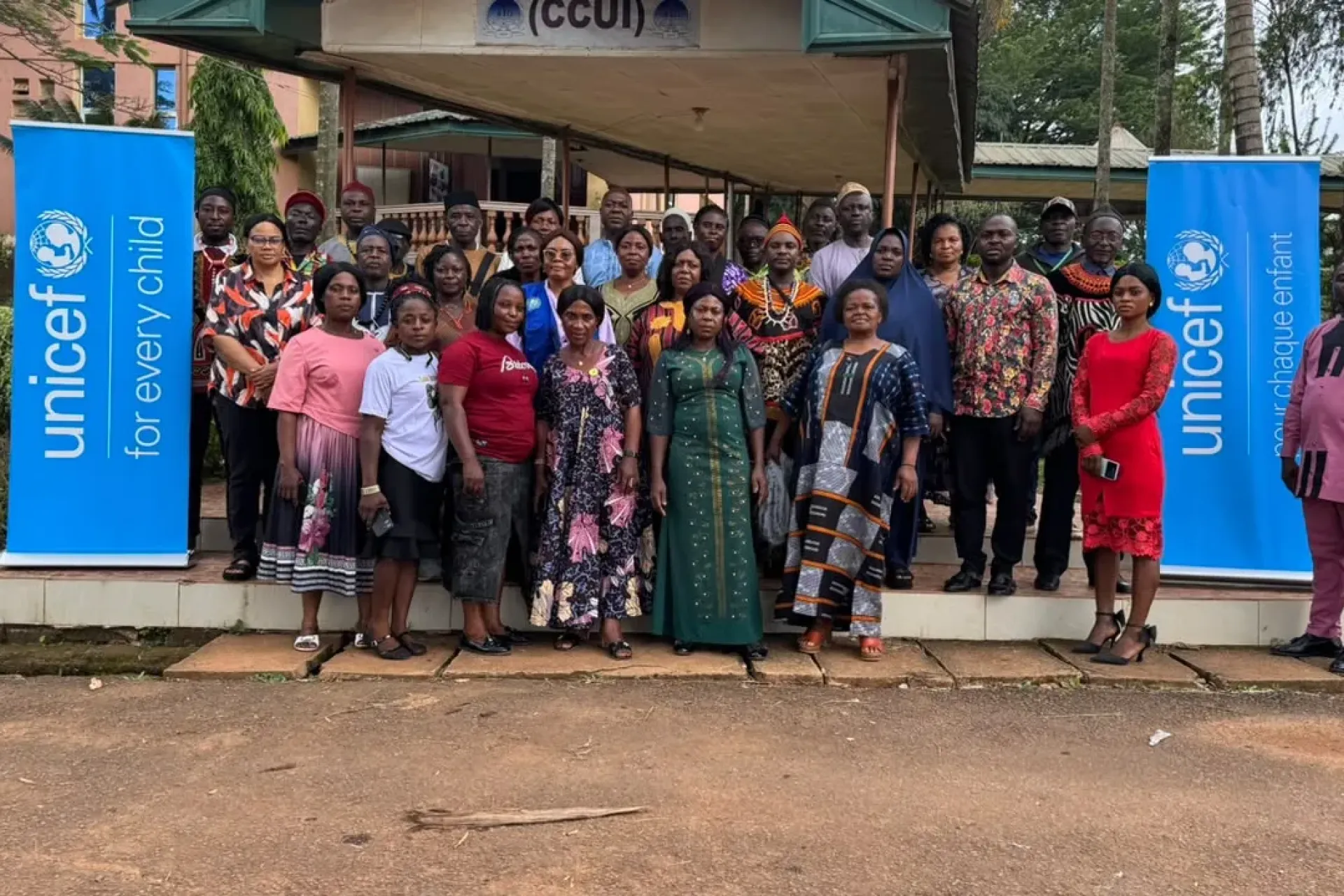
Recognising this, UNICEF works closely with these traditional and local authorities to plan and implement its education in emergencies programme, ensuring that communities are active partners rather than passive beneficiaries. During a recent community engagement meeting in Ntahbang, local leaders came together to shape the next phase of the programme through UNICEF-constructed Temporary Learning Spaces (TLS), reaffirming their collective commitment to ensuring every child has the opportunity to learn. For Gori Mohamadu Adamu, the community leader of Ntahbang, the establishment of a UNICEF-supported Temporary Learning Space represented more than just a new classroom; it was a community investment in the future of its children.
"When they brought the materials and started building the TLS, the children immediately had a place to learn, it was a good thing for our community. All we need is education. Children need to be educated so they do not remain vulnerable."
Gori Mohamadu Adamu, community Leader
A Learning Space for the Most Vulnerable
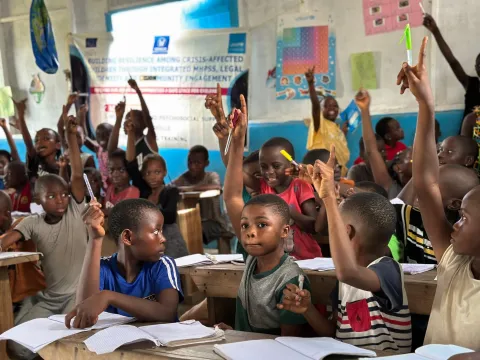
For two years, the Temporary Learning Space has provided learning opportunities for children who otherwise might never have returned to school.
Many of the children enrolled came from vulnerable households. Some had lost one or both parents, while others were living with caregivers who could not afford school fees or educational materials.
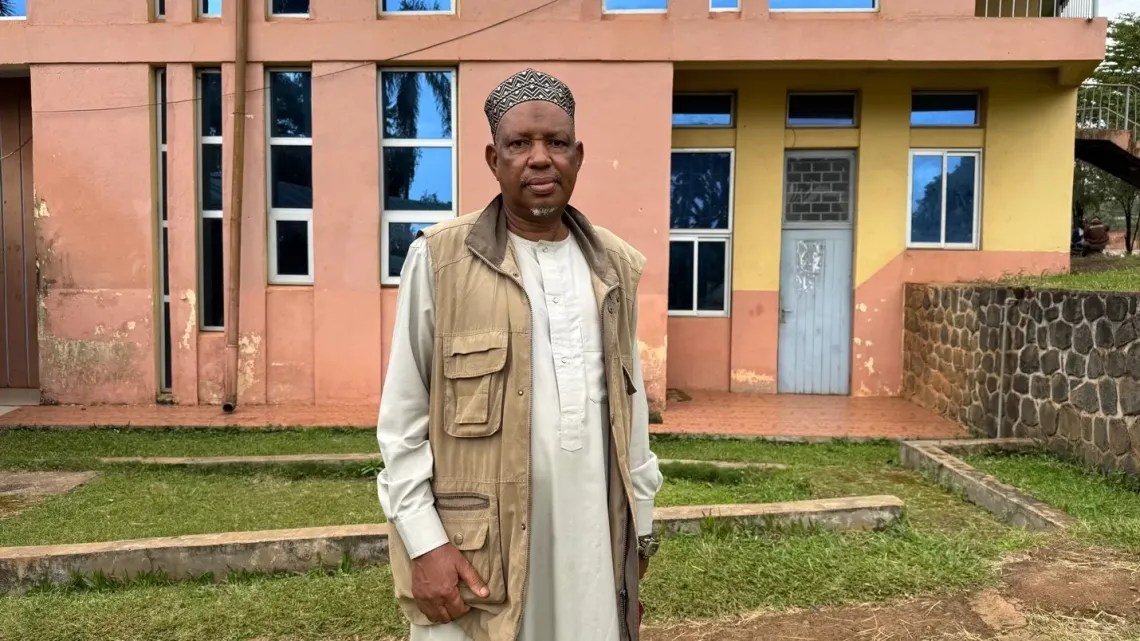
"The TLS has helped many children in my community who were unable to go to school, most of these children are internally displaced who had runaway away from their villages due the insecurities the schools have been burned and some locked down while some of these children have lost their parents. Without this programme, many of these children would have remained out of school."
Gori Mohamadu Adamu says
The programme is intentionally structured to avoid duplicating existing services; it is reserved strictly for out-of-school and displaced children living in areas where formal education is completely inaccessible. By prioritizing those hardest hit by the conflict, UNICEF ensures that resources reach the absolute frontline of need.
Keeping Children Safe and Engaged
Before the learning space was established, many children spent their days roaming around the community without supervision or meaningful activities.
Today, the situation looks different.
"You do not see them loitering around anymore. Before, some children spent their time moving around the neighbourhood and getting involved in things they should not be doing. Now they attend classes, spend time learning, and return home with purpose."
Gori Mohamadu Adamu says
For him, the value of the TLS goes beyond academic achievement. It provides structure, protection, and a sense of belonging for children who have experienced years of disruption.
Learning Through Radio Education
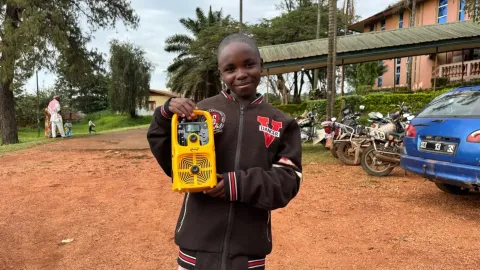
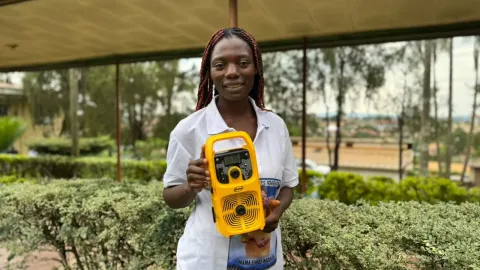
One of the programme's most popular features is interactive radio education, which combines audio broadcasts with direct facilitator support.
The community leader has observed how children respond to the lessons and the enthusiasm they bring to the classroom.
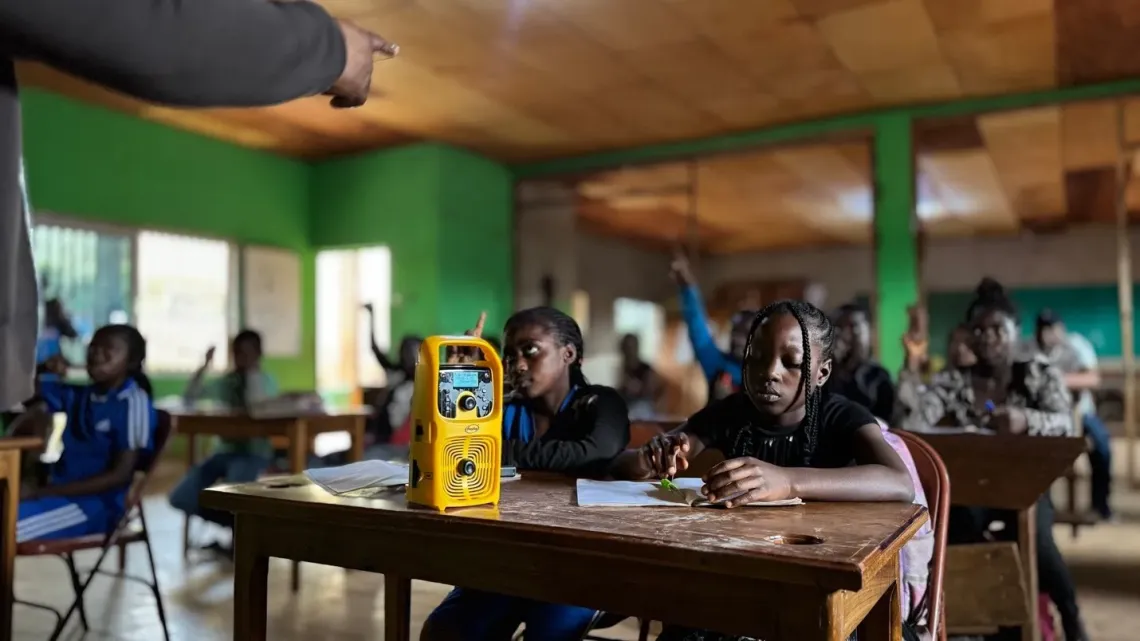
"The children respond very well to the radio lessons, they listen carefully, participate, and enjoy learning. We have seen positive changes in their behaviour and their commitment to education."
Gori Mohamadu Adamu
The combination of radio-based learning and facilitator support has enabled children to continue learning despite the challenges posed by the ongoing crisis.
Community Ownership Makes the Difference
As a community leader, he believes that protecting educational opportunities requires the involvement of everyone. He recognises that the success of the Temporary Learning Space depends not only on humanitarian assistance but also on strong community leadership and ownership.
For Gori Mohamadu Adamu as a community leader, he is committed to supporting the programme beyond simply providing space for learning. Their responsibilities include helping identify suitable locations for Temporary Learning Spaces, providing accurate community information to facilitate implementation, organising community sensitisation meetings, and encouraging families to enrol out-of-school children.
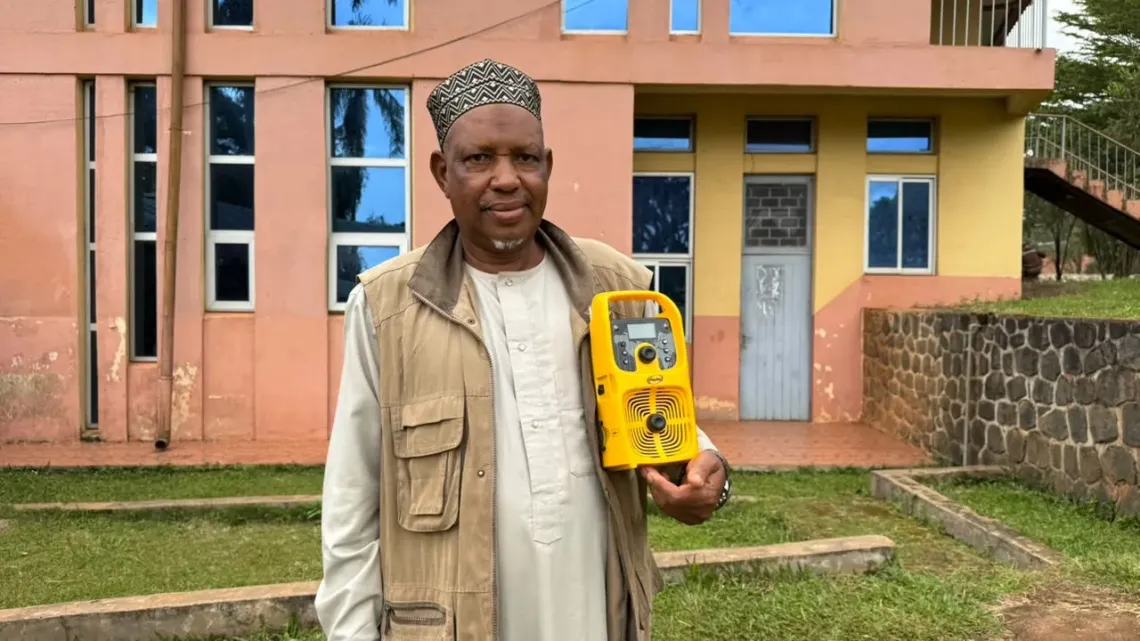
"We need to make sure that vulnerable children are the ones benefiting from these opportunities, as a community, we have a responsibility to support them and encourage their education."
Gori Mohamadu Adamu says
The community also have have a part to play to ensure every child has access to education by regularly following up with children and their caregivers to encourage consistent attendance and reduce dropout rates, recognising that enrollment alone is not enough; children must be supported to remain in school and succeed.
Leaving No Child Behind
A key priority for community leaders like Gori Mohamadu Adamu, is ensuring that every child has an equal opportunity to learn, especially children living with disabilities.
He believes that inclusive education is not optional but essential.
"Every child deserves the chance to learn. If a child has a disability, it should not stop them from going to school."
Gori Mohamadu Adamu insists
As part of their commitment, community leaders are actively identifying children with disabilities within their communities and working with families to ensure they participate in Temporary Learning Space activities. They are also raising awareness among parents and caregivers about the importance of inclusive education, reinforcing the programme's commitment that no child should be excluded because of disability or vulnerability.
Standing Up for Education
The community leader's commitment reflects the vital role communities play in sustaining education during emergencies.
Thanks to the generous funding from European Union Humanitarian Aid, UNICEF, alongside its dedicated implementing partners, GPA and COHESODEC, continues to provide safe, inclusive, and quality learning opportunities for conflict-affected children across the North-West and South-West regions. While thousands are back in the classroom, many more are still waiting on the margins. UNICEF continues to call on governments, donors, and community networks to stand hand-in-hand to expand these safe spaces. Together, we can help every child reclaim their right to learn, build resilience, and shape a peaceful future for their communities.