Inclusive Education in Crisis Cameroon: Adriel & Kimberly
In crisis-hit Cameroon, insecurity and displacement exclude children with disabilities from education not for lack of ability, but because needed support remains out of reach.
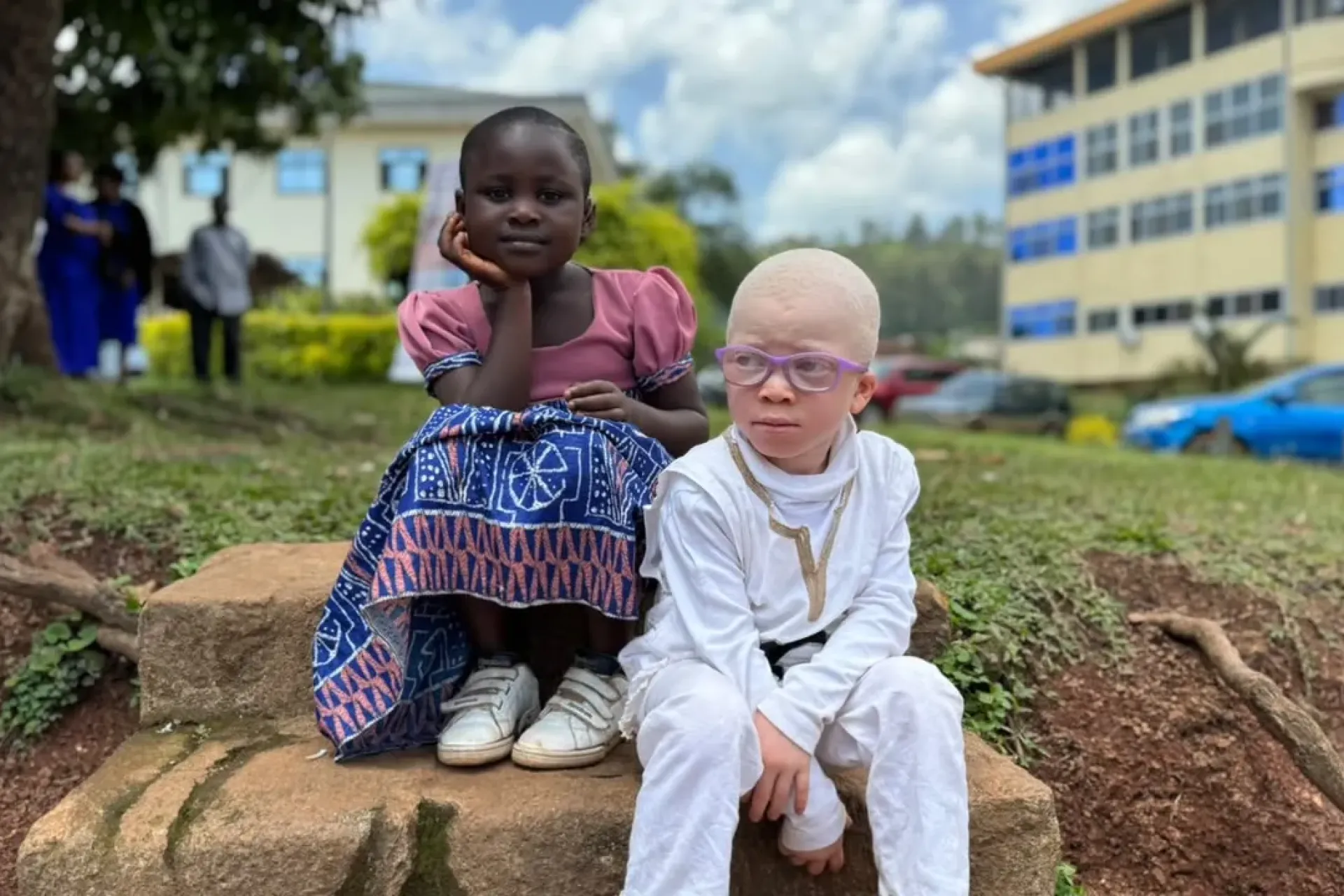
The prolonged crisis in Cameroon's North-West and South-West regions has intensified the challenges children living with disabilities already face in accessing education. Years of insecurity, repeated attacks on education, and displacement have left many children with disabilities excluded from learning, not because they lack the ability to succeed, but because the support they need has often been out of reach.
To ensure that no child is left behind, UNICEF, together with the Cameroon Baptist Convention Health Services (CBCHS) and Presbyterian Community Rehabilitation Services (PCRS), is strengthening disability-inclusive education through the Education in Emergencies programme. Children are screened to identify functional difficulties, provided with appropriate assistive devices, and enrolled in accessible Temporary Learning Spaces (TLS) and schools where trained teachers support their learning alongside their peers.
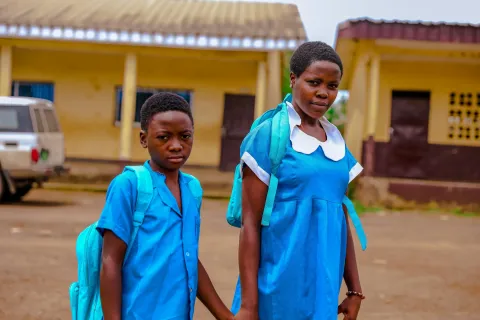
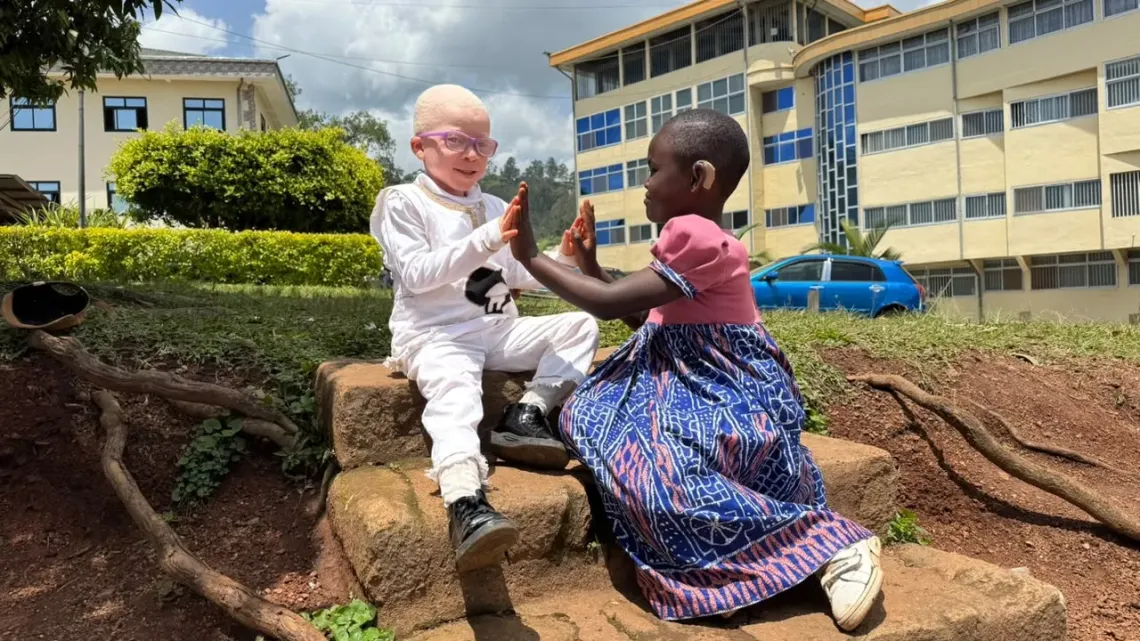
When the disability inclusion programme reached their TLS in their communities, the lives of six-year-old Adriel Etoma and seven-year-old Kimberly Ndibongha began to change.
Seeing the board clearly
When Adriel Etoma first enrolled in the TLS in his community, learning was difficult; going to his TLS was something he looked forward to, but living with albinism meant that learning was often difficult. His visual impairment made it challenging to see what his facilitator wrote on the board, while bright sunlight limited his ability to play and interact with his classmates.
His father, Sylvester, remembers watching his son struggle every day.
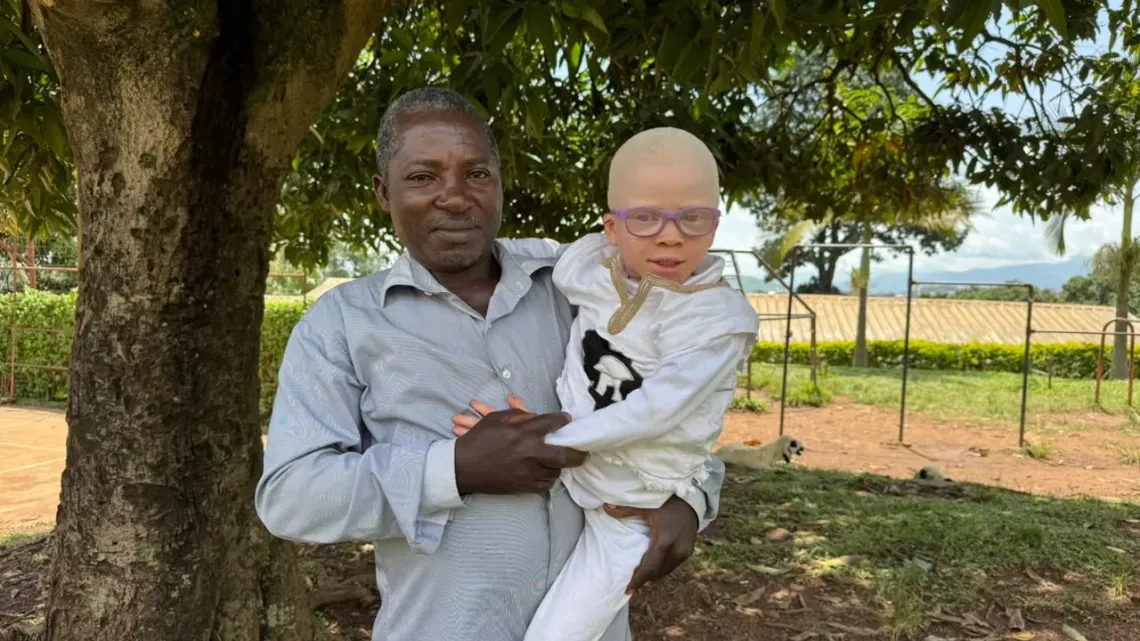
"Before he received the lenses, he had difficulty seeing what the teacher wrote on the board, Even moving around was difficult for him."
Sylvester, Adriel’s Father
His teacher experienced these challenges firsthand.
"I always put him in the front row beside me because he couldn't see the board well, writing was very difficult for him, he was very slow in copying from the board and often he was copying the wrong things."
Although Adriel wanted to learn and like every other child, his visual impairment limited his participation both inside and outside the classroom.
Following a vision assessment conducted through the disability inclusion programme, Adriel received prescription lenses tailored to his needs.
The change was almost immediate.
"From the very first day he started using the lenses, everything changed, His movement improved, and he became much more confident."
Sylvester, Adriel’s Father
Today, Adriel follows lessons with confidence, moves around the school independently, and enjoys playing with his classmates.
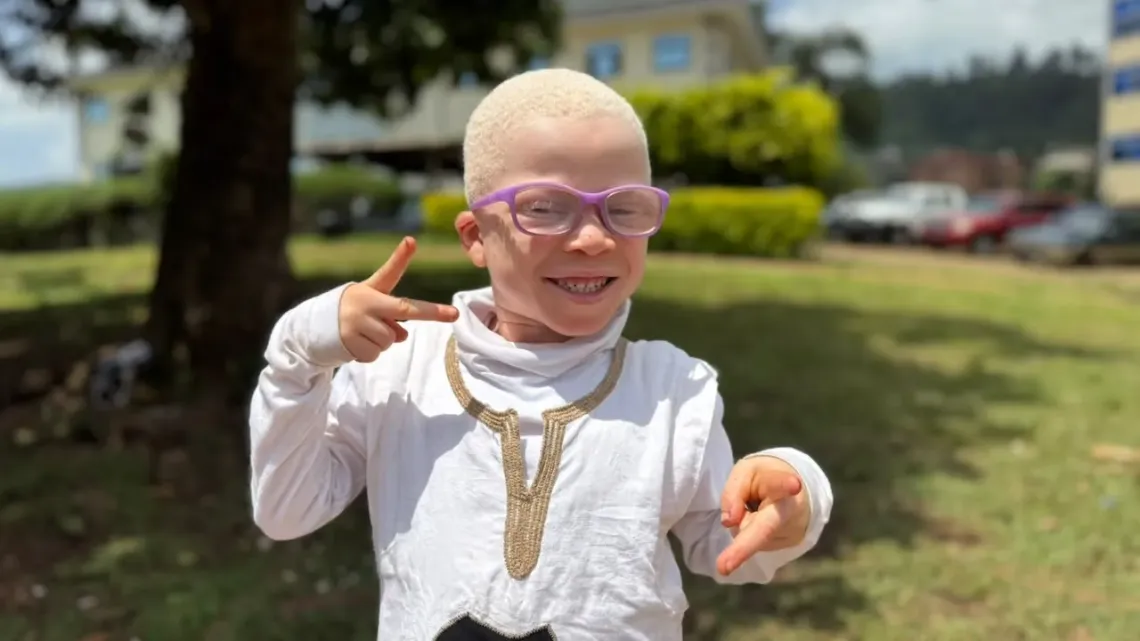
His father has also noticed the difference at home.
"The lenses have helped him one hundred per cent. If I had to buy them myself, I don't think it would have been possible."
Finding Her Voice
Like Adriel, seven-year-old Kimberly Ndibongha also faced barriers to learning, but hers were different. From infancy, Kimberly lived with a hearing impairment that made communication difficult both at home and at school.
Her grandmother, Adama Esther, remembers the uncertainty the family experienced.
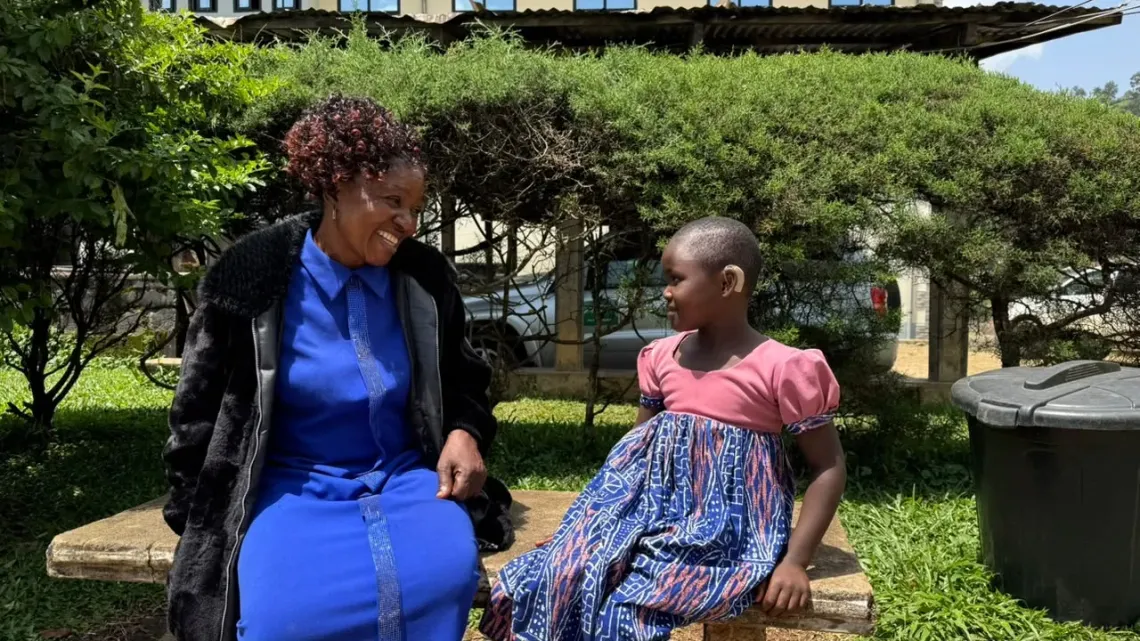
"When she was still very young, we realized she could not hear properly, when people talked to her, she would not respond because she couldn't hear them."
Without the ability to hear clearly, Kimberly struggled to understand class lessons and found it difficult to communicate with those around her. After being identified through the programme and receiving hearing aids, everything began to change.
"Now she can hear people when they speak to her; she talks much better now. Before, her speech was unclear, but now people can understand what she is saying."
Her progress is evident both at school and at home. Unable to afford hearing aids on her own, Kimberly's grandmother describes the support as life-changing.
"Without this support, I would never have been able to help her. I thank everyone who made this possible."
Today, she encourages other families not to hide children with disabilities but to seek support and ensure they attend school.
"These children can learn and have a better future if they receive the right support."
Inclusion Is More Than an Assistive Device
For Adriel's facilitator, inclusive education means creating a classroom where every child can participate and succeed.
The Temporary Learning Space supports children with different disabilities, including learners with hearing impairments and physical disabilities, through UNICEF's disability inclusion programme. Accessible pathways and disability-friendly sanitation facilities ensure that children using mobility aids can move safely and independently throughout the learning space.
"I am trying my best to support every child. If we receive more training, we will be able to support them even better."
Her philosophy is simple.
"All children can learn," she says.
"We should never keep children with disabilities away from school. When they learn together with other children, they build confidence, make friends, and we discover talents we never knew they had."
Beyond the Classroom
The stories of Adriel and Kimberly demonstrate that inclusive education is about much more than providing assistive devices. It is about removing barriers so that children with disabilities can learn, communicate, participate, and thrive alongside their peers.
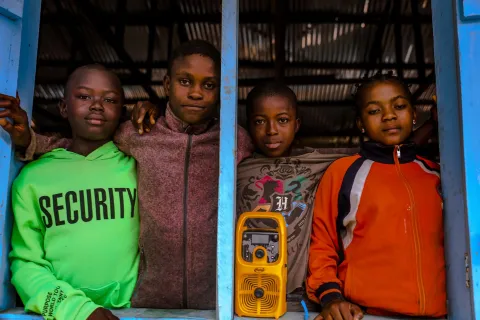
This inclusion extends beyond the classroom walls. Through community engagement, radio broadcasts, and direct outreach, UNICEF, alongside implementing partners Cameroon Baptist Convention Health Services (CBCHS) and Presbyterian Community Rehabilitation Services (PCRS), is promoting positive attitudes toward disability and challenging the stigma that too often prevents children from accessing education. Families and communities are increasingly recognising that every child can learn and that disability should never be a reason for exclusion. Many children with disabilities in crisis-affected communities still lack access to the education, health, protection, and rehabilitation services they require. A sustained collaboration between the Government, local authorities, communities, and families is essential to ensure that children with disabilities are identified early, supported effectively, and fully included in education.
Every child has the right to learn, to be protected, and to thrive. Achieving this requires all of us to remove barriers, challenge stigma, and ensure that children with disabilities are no longer isolated or overlooked.
Because inclusion is not optional, it is a shared responsibility, and it begins by seeing the child, not the disability.