Temporary Learning Spaces Rebuild Hope in Cameroon
In crisis-hit Cameroon, years of insecurity and displacement have turned school into an impossible dream for thousands of children.
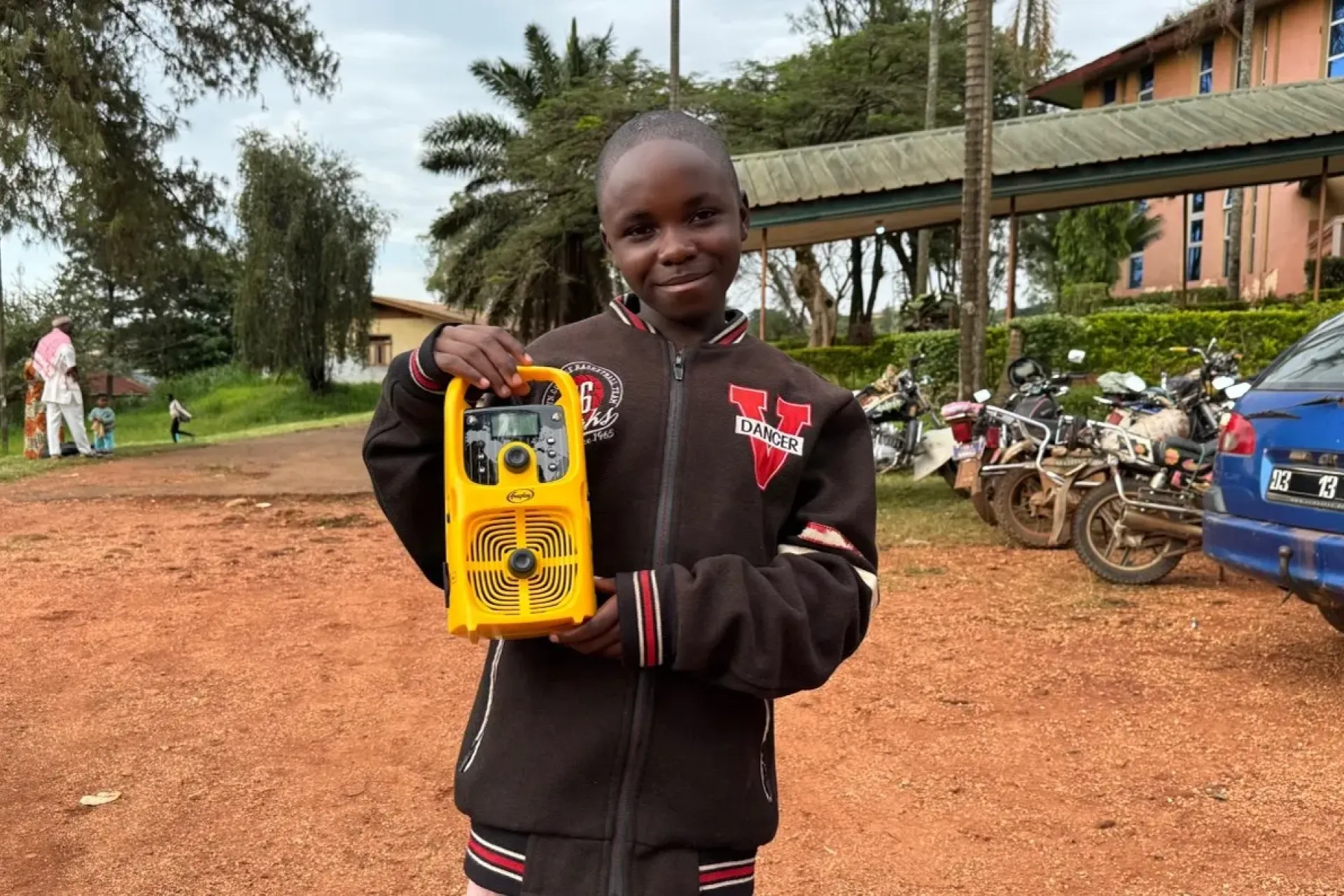
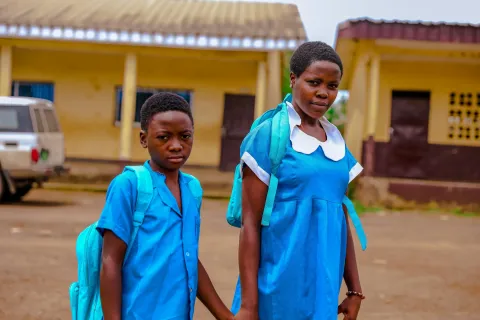
For many children living in Cameroon's North-West and South-West regions, the ongoing crisis has turned what should be a simple journey to school into an impossible dream. Years of insecurity have forced families to flee their homes, disrupted education, and left thousands of children out of school.
To respond to this urgent need, UNICEF, with funding from European Union Humanitarian Aid, has supported the implementation of Temporary Learning Spaces (TLS) across both regions. A TLS is exactly what its name suggests: a safe, makeshift classroom, often a tent, a borrowed hall, or a simple shelter set up in communities where schools have been destroyed, abandoned, or rendered inaccessible by insecurity. Rather than replacing permanent schools, these spaces serve as a vital bridge: keeping children safe, protected, and connected to a routine while the conditions for formal schooling are rebuilt. Precious Finds Her Way Back to Learning
For 12-year-old Njwepekem Precious, the Temporary Learning Space became the opportunity she feared she had lost forever. When violence escalated, Precious’s education ground to a sudden halt.
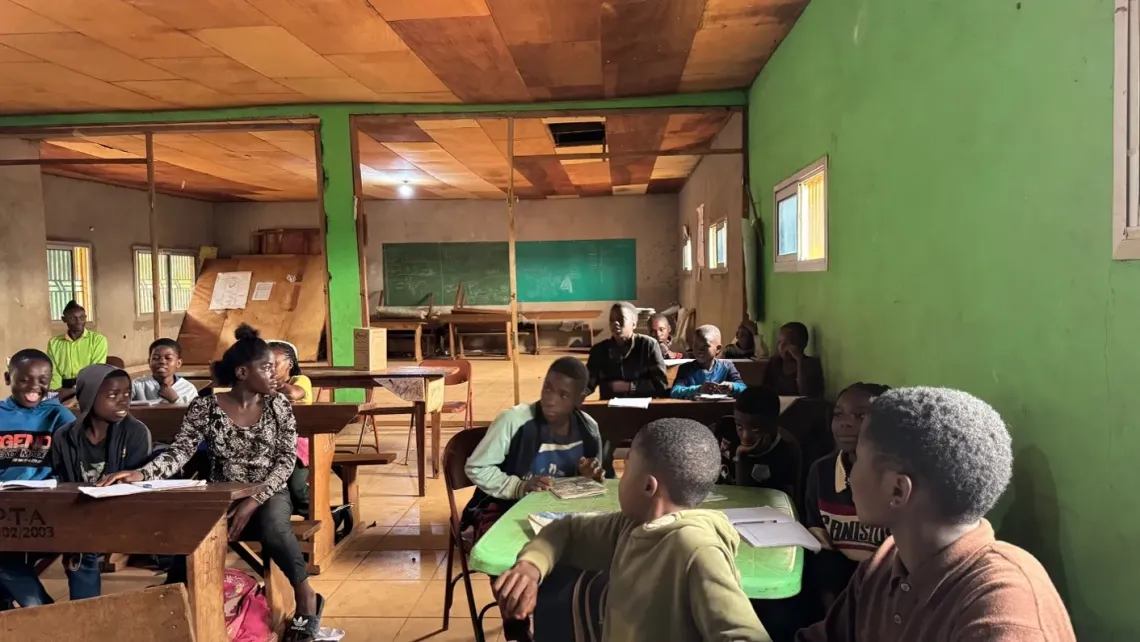
"I was not able to go to school; I stayed at home for two years," Precious recalls. "I was not able to read and write. My mother took me to the farm every day."
In communities where conflict has decimated infrastructure and displaced teachers, formal education can cease for years at a time. The TLS model is specifically designed to fill this gap rapidly. By offering accelerated learning modules from Level 1 to Level 3, these spaces allow children who have missed years of classes to regain foundational literacy skills and eventually transition seamlessly back into the formal education system. When UNICEF and its partners established the TLS in her neighborhood, Precious’s life changed.
"When UNICEF came, I was very happy. I insisted that I wanted to go to school," she says proudly.
Today, Precious is a thriving learner in Level 2. She has made new friends and wakes up every morning eager to attend classes. The learning space has not only helped her catch up academically but has also restored her confidence and renewed her hope for the future.
Now, she uses her voice to inspire other out-of-school children in her community:
"We must be educated, in any situation, we need to struggle and go to school."
Precious, 12
Bringing Lessons to Life Through Radio Education
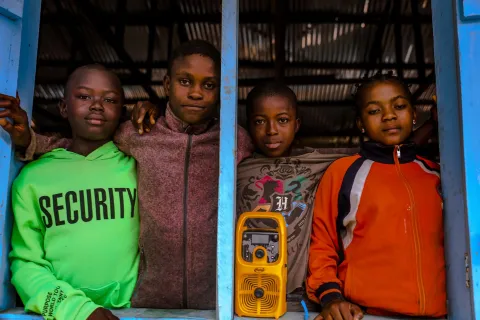
Within these temporary classrooms, innovative teaching approaches are used to make lessons engaging, interactive, and accessible for crisis-affected children. Central to this effort is interactive radio education, which complements teacher-led lessons with structured audio programs covering core subjects like English, mathematics, literacy, and environmental education. For 10-year-old Ayim Favour, radio lessons have transformed the classroom experience.
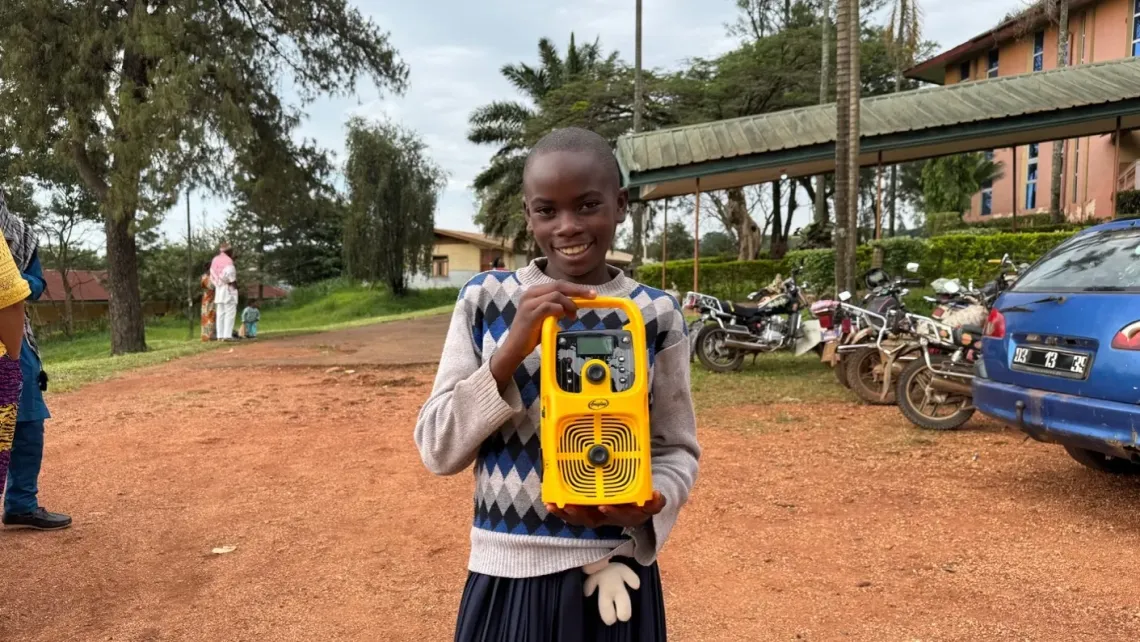
"We have been using the radio to learn; we use it to learn English, mathematics, environmental education and other lessons."
Favour,10
The radio lessons capture learners' attention and make it easier for them to understand concepts taught in class.
"I enjoy learning with the radio."
Favour,10
Among her favourite subjects are geography and environmental education, both of which are taught through radio-supported lessons.
She believes these lessons are helping her perform better in school and stay motivated despite the challenges surrounding her community.
When asked about her future, Favour answers confidently.
"I want to become a doctor."
Favour,10
Her ambition is proof that innovative education in emergencies does more than just improve grades; it restores a child’s ability to dream of a future beyond conflict. Education Cannot Wait
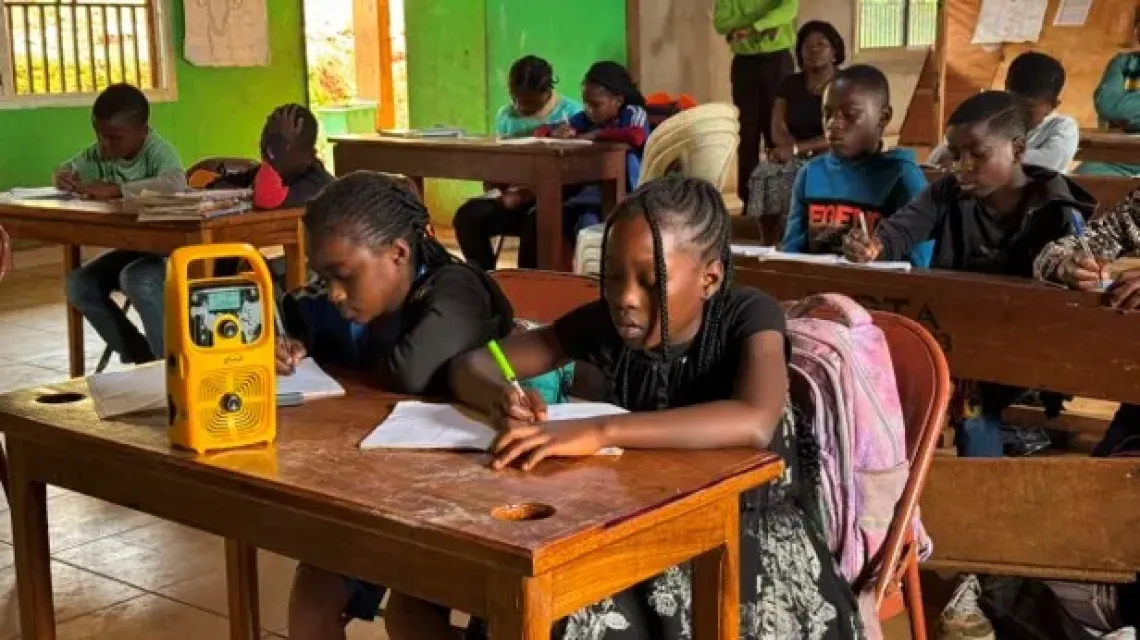
Temporary Learning Spaces are far more than emergency structures; they are sanctuaries where children heal, rebuild friendships, and rediscover the joy of learning. Thanks to the vital partnership between European Union Humanitarian Aid, UNICEF, and local implementing partners, hope is being restored to thousands of children across Cameroon. However, the need remains immense. Countless children across the North-West and South-West regions are still waiting for their chance to return to a classroom. UNICEF continues to call on governments, humanitarian partners, and community leaders to scale up support for safe learning spaces and innovative education programs. Together, we can ensure that every child, like Precious and Favour, exercises their fundamental right to learn, realise their potential, and build a brighter, more peaceful tomorrow.