From the radio education to their dreams: how wisdom and bethel are reconnecting with education
UNICEF and partners use radio education to bring learning to children in crisis, helping them rebuild essential skills and keep their dreams alive.

For children living in communities where access to formal schools has been disrupted by crisis, a classroom may feel far away. But in Teke village, Kumba, learning is finding another way to reach them.
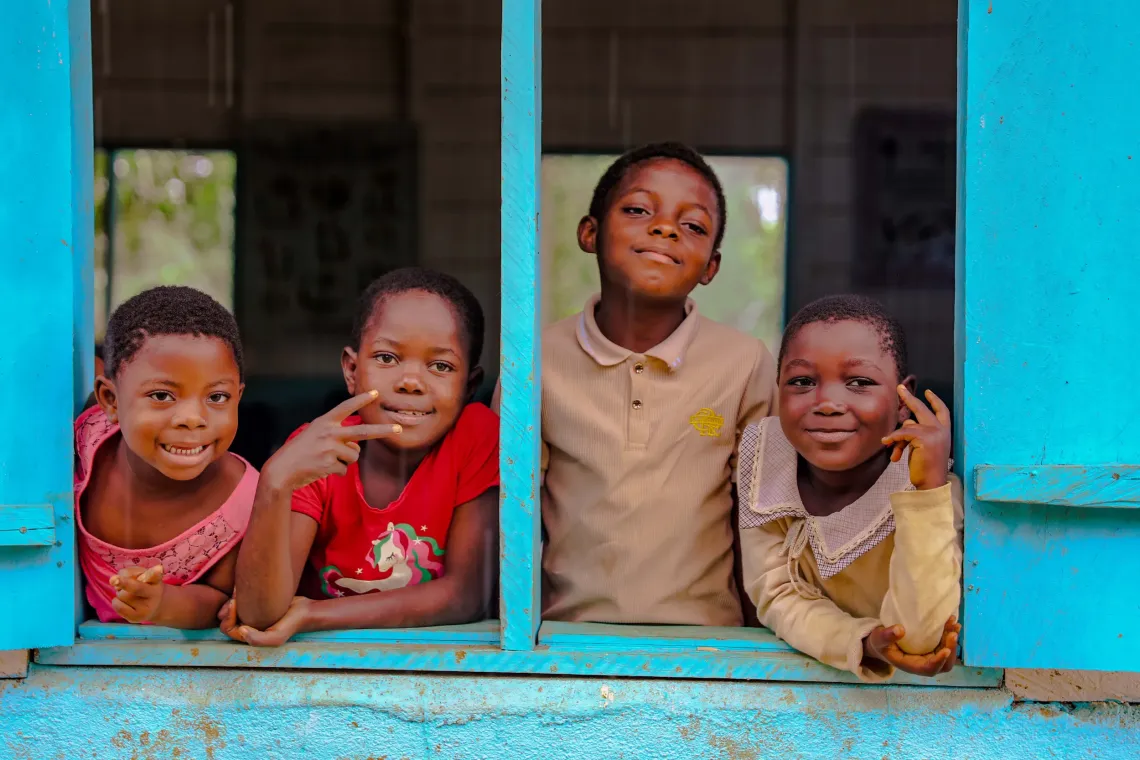
For Bethel and Wisdom, that opportunity comes through the Radio Education Program, which is helping children who have missed out on school develop essential literacy and numeracy skills while keeping alive their hopes for the future.
WHERE SCHOOL IS NOT WITHIN REACH
For more than a decade, children in Cameroon’s North West and South West regions have faced barriers to education as the crisis continues to disrupt communities and learning.
More than 240,000 children have been affected by school closures, while 41 per cent of schools are reported to be non-functional. For children living in communities without functioning schools, the consequences can go beyond missing lessons. Some spend their days at home, helping their families with farming and household activities, while others face the risk of dropping out of education altogether.
In these circumstances, reaching children has become essential. UNICEF and its partners are working to provide children with opportunities to continue learning through approaches that can operate even when conventional classrooms are not accessible.
Across the North West and South West, UNICEF supports 136 Temporary Learning Spaces, creating safer places where children can learn. Through these interventions, 18,065 out-of-school learners have been enrolled in Levels 1 and 2, giving children who have missed education an opportunity to rebuild their foundational skills.
The Radio Education Program is designed to bring learning to children who cannot easily access traditional schooling because of crisis, displacement or other barriers.
Through radio lessons and the support of trained facilitators, children are guided through foundational literacy and numeracy, including reading, writing and mathematics. The approach also incorporates science and technology, life skills and other areas that contribute to a more holistic learning experience.
The programme is supported by trained facilitators who are equipped not only to deliver lessons, but also to understand and respond to the different needs of children affected by crisis. Facilitators receive training on children’s learning needs, psychosocial support and school-based disaster risk reduction, helping them create an environment where children can learn, participate and feel supported.
The programme has also provided 104,756 learning materials to children across Temporary Learning Spaces, strengthening opportunities for children to continue learning despite the challenges around them.
“Now they can read and write”
For Epongya Joseph, a facilitator working with children in Teke, the difference is visible.
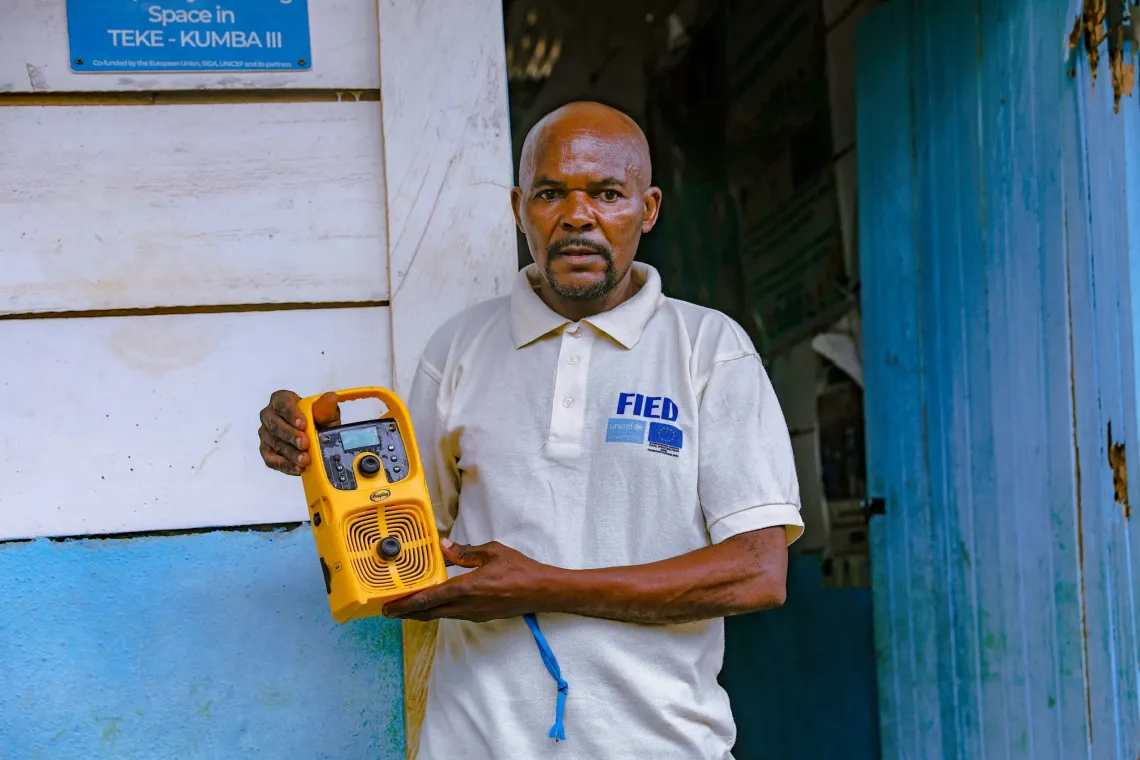
He has seen how the absence of accessible education can leave children with few opportunities to learn. With the Radio Education Program, children now have a structured way to engage with lessons and develop skills they can use in school and everyday life.
“Before the coming of the radio programme, parents were keeping children out of school. We have education now and we are very happy. Now they can speak English, they can write well. We use Science and Technology, reading and writing, Mathematics and life skills.”
For Joseph, the progress is not measured only by what children can answer in a lesson. It can be seen in their growing confidence in their ability to read, write, calculate and participate more actively in their communities.
Bethel discovers a new future
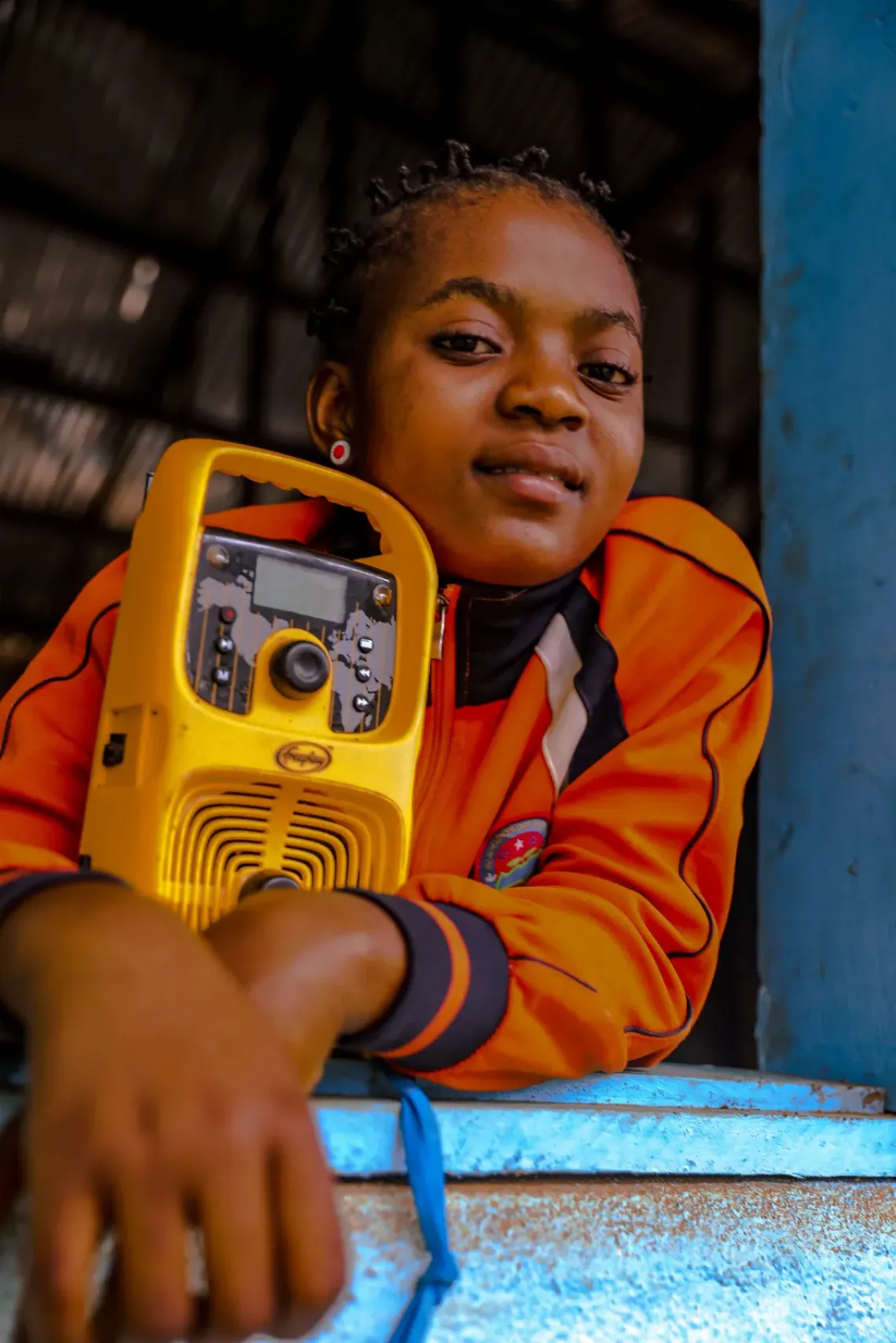
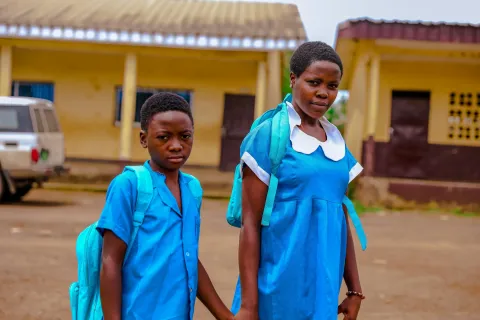
For Ndomie Bethel, like many children in communities affected by the crisis, access to education has not always been straightforward. But through the programme, Bethel is now developing skills that she hopes will take her further.
“Since I have been here, I have learned how to read and write. In the future, I will become a nurse.”
Wisdom finds confidence in Mathematics
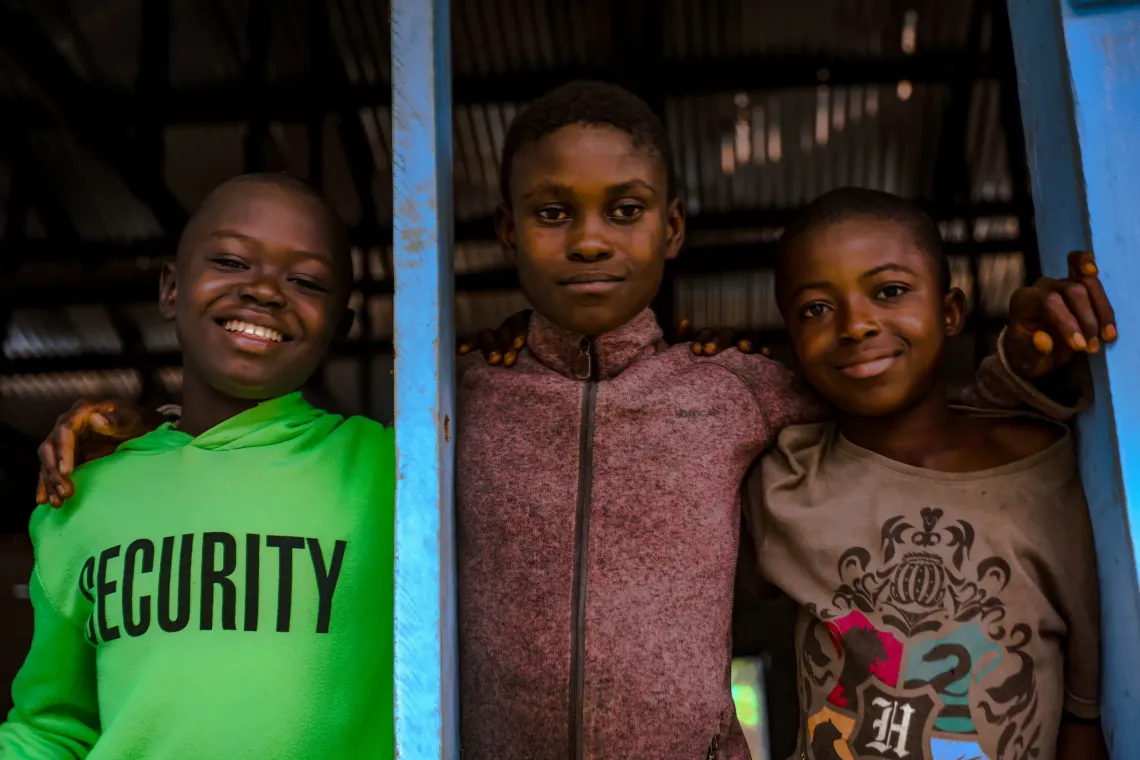
Esambili Wisdom has also found a subject that keeps him engaged: Mathematics.
The lessons are helping him strengthen skills that were once difficult for him. He can now solve problems and write with greater confidence.
“I like solving mathematics problems, and I can write well now, unlike before. I want to become a pilot.”
KEEPING THE DOOR TO EDUCATION OPEN
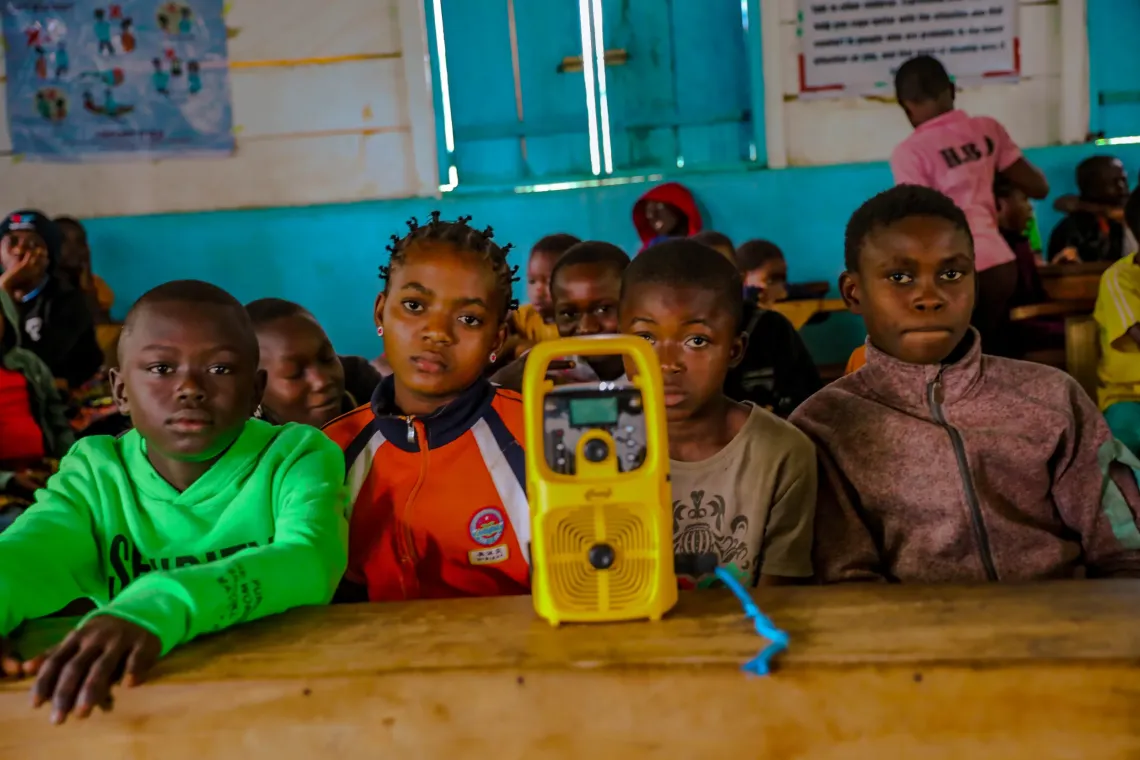
The stories of Bethel and Wisdom reflect a larger challenge facing children in crisis-affected communities.
When schools are closed or inaccessible, children do not stop needing education. Without alternatives, they can gradually lose the skills they have acquired, become disconnected from learning and face an increased risk of dropping out permanently.
Radio education offers one way of keeping that connection alive.
It brings learning closer to children who might otherwise be left at home, while trained facilitators provide the human support needed to make the learning meaningful. Together with Temporary Learning Spaces, learning materials and community engagement, these interventions help create opportunities for children to continue their education despite the challenges around them.
Yet the need remains enormous.
In 2026 alone, 24 incidents of attacks affecting education have been reported, including two incidents of shelling and bombing directed at schools. A further 563 people have reportedly been arbitrarily arrested or kidnapped, including 307 teachers, further affecting the ability of children and education personnel to safely access and provide education.
MORE CHILDREN ARE STILL WAITING
UNICEF and its partners, with funding from European Union Humanitarian Aid, continue to work to ensure that children affected by the crisis are not forgotten. But thousands of children remain out of school and need safe, accessible and quality learning opportunities.
Continued support is needed to expand alternative and accelerated learning opportunities, strengthen safe learning environments, support teachers and facilitators, and help more children return to formal education. Protecting education must remain a shared responsibility because when a child loses access to learning, the consequences can last a lifetime.
For every child, a chance.