Inclusive education in crisis: Naomi and Princewill’s journey to learning
UNICEF and partners help kids with disabilities learn and thrive by building inclusive classrooms, boosting community support, and providing essential assistive devices

For every child, education is more than a classroom. It is a pathway to confidence, opportunity and a future they can imagine for themselves. For children with disabilities, however, that pathway can be filled with barriers from stigma and discrimination to inaccessible learning environments and a lack of appropriate support and assistive devices.
In communities affected by crisis, these challenges can become even greater.
When families are struggling with displacement, safety, food and other daily needs, the specific learning needs of children with disabilities can easily go unnoticed. A child may sit at the back of a classroom because they cannot see the board. Another may struggle to move around the school because they do not have the right mobility support. Some may face teasing or exclusion from their peers.
But with the right support, these barriers do not have to determine a child’s future.
Seeing the child, not the disability
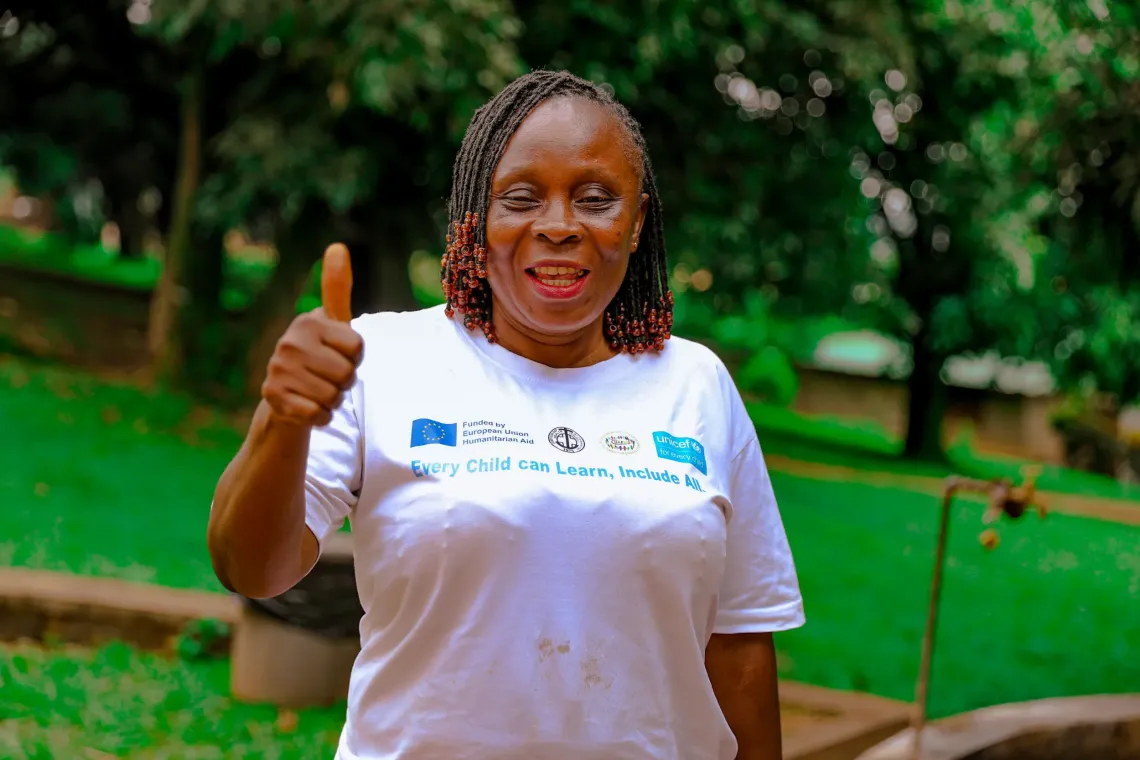
At the Temporary Learning Space in Mulang, Madam Theresia has seen first-hand what inclusive education can mean for children. For her, inclusion starts with recognising that children with disabilities are children first, with abilities, aspirations and the same right to learn alongside their peers.
“Children with disabilities are so smart. They have their own strengths. As teachers, we need to sit with them and speak to them, identify the issues they may be facing and see how we can create possible solutions. This way, we learn how to bring them together into the group.”
Through support from UNICEF and its partners, including the Cameroon Baptist Convention Health Services (CBCHS), efforts have focused on three important areas: creating enabling environments, building family and community support, and strengthening service delivery.
This includes identifying children who may have disabilities, assessing their needs and connecting them with appropriate specialists and assistive devices.
A pair of glasses opens a new door
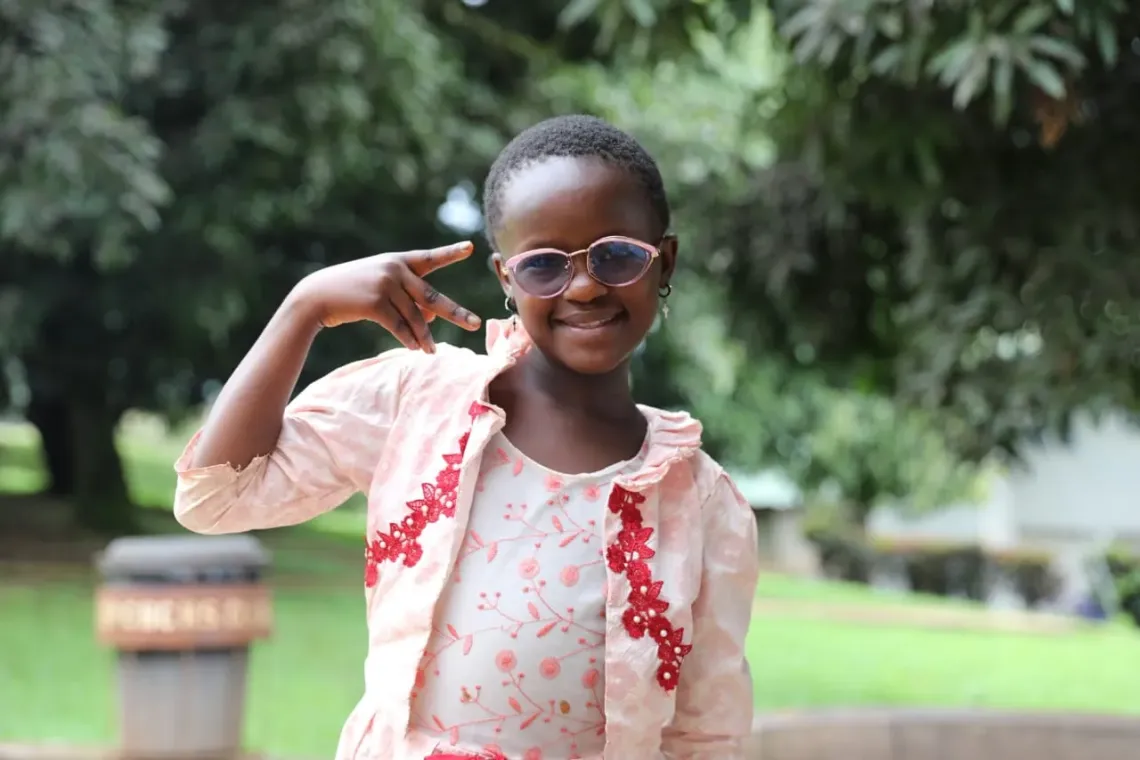
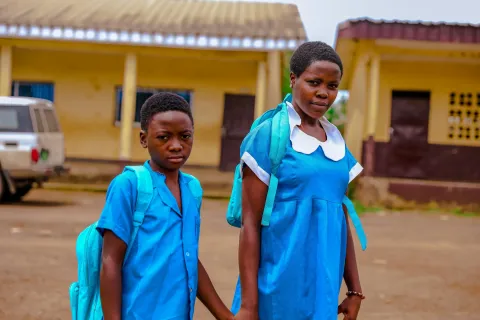
For 11-year-old Naomi, one of those barriers was something many children take for granted: being able to see the blackboard clearly.
Before she was identified through the screening process, Naomi struggled to see what was written at the front of the classroom. She was often seated at the back, making learning even more difficult.
Following screening and assessment, Naomi was provided with corrective glasses and moved closer to the front of the classroom.
“At first, I used to face a difficult challenge in school, and I could not see the board well. But after receiving my glasses from UNICEF, I can see the board well. This has helped me to write my First School Leaving Certificate examination and pass. I will be going to Form One in secondary school.”
From being teased to moving with confidence
Princewill faced a different barrier.
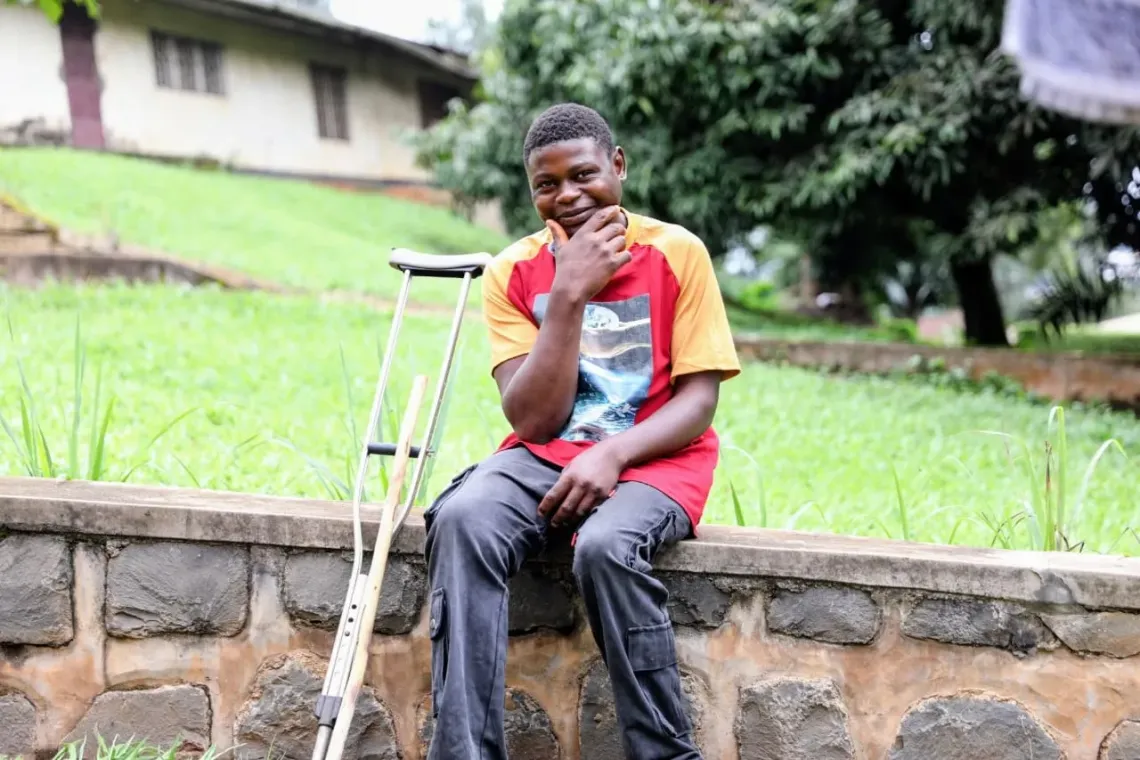
He has a mobility impairment and previously relied on a stick to move around. But his disability also made him a target for teasing from some of his classmates. He remembers being mocked as “the boy with the stick or Ebwa.”
After being identified and assessed, Princewill received crutches that have made it easier for him to move around and attend school.
“At first I was using this stick to go to school, and my friends would laugh at me and say, ‘Look at that boy moving with the stick.’ Thanks to UNICEF, I now have crutches, and I move well with them.”
Now, Princewill is approaching his final year of school with greater confidence and fewer barriers to moving around his learning environment.
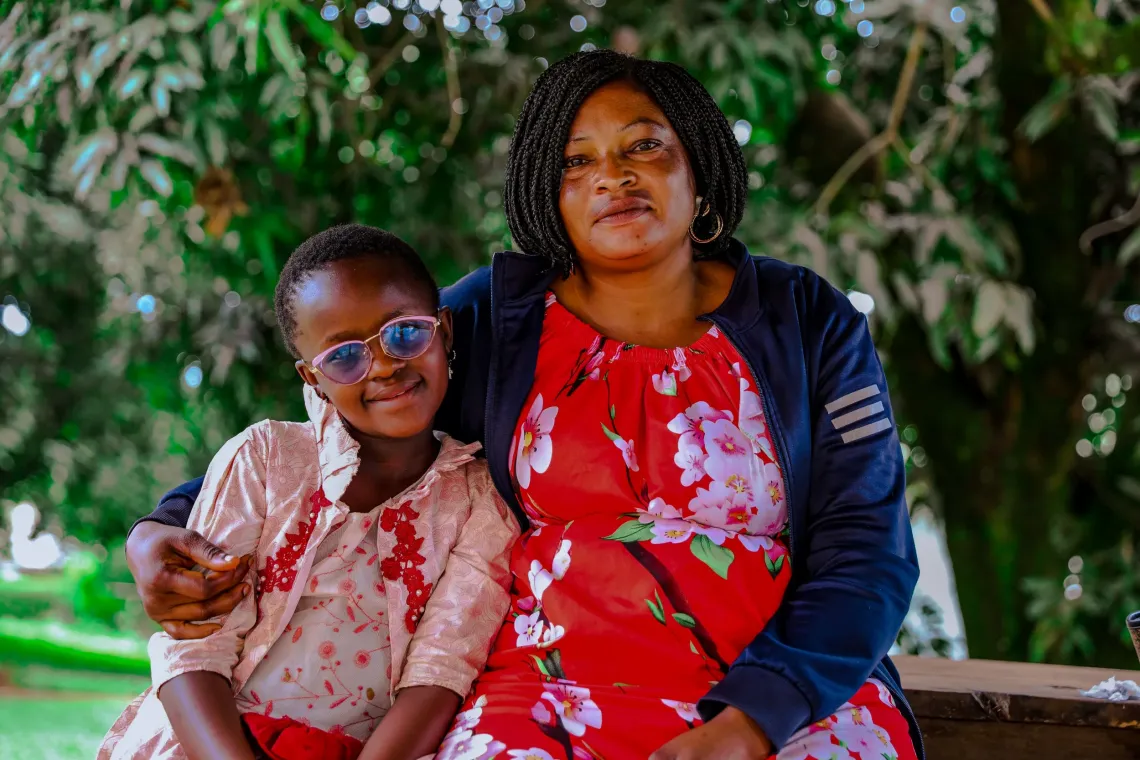
For parents living through crisis, identifying a disability is not always easy. Nicholine, Naomi’s mother, remembers that her daughter often complained about pain in her eyes. At first, she thought it was simply something children experienced.
But Naomi continued to struggle and eventually told her mother that she could not see the board properly. When screening was conducted at her school, Naomi’s visual impairment was identified, and she was referred for further support.
“One day I was informed that screening was done in my daughter’s school and that she had a disability. Days later, support was provided with lenses for her to read well. It really helped her because she stopped complaining and she can write well. She has really improved, with a Grade A in her final exams. I am grateful for this because without it, I don't know where I would have got the money for lenses.”
And for both mother and daughter, it demonstrated the importance of identifying challenges early and connecting children to the support they need.
Identifying a disability is an important first step towards inclusion, so how is it done?
Through the use of the Washington Group questions, children are screened to identify possible functional difficulties. Children who require further assessment can then be referred to specialists who determine the type of support or assistive device they may need. This can include corrective glasses, braille materials, white canes, hearing aids, crutches, wheelchairs and other mobility or learning support.
In the North West and South West regions, 84 children in the North West alone have received assistive devices this year. Among them, 49 children had visual impairments, with 48 receiving corrective glasses and one receiving a braille kit and white cane.
Children with hearing impairments have received hearing aids, while children with mobility impairments have received crutches, cerebral palsy chairs and wheelchairs.
There are an estimated 240 million children with disabilities worldwide. Like every other child, they have ambitions, dreams and the right to reach their full potential. Yet children with disabilities remain among those most at risk of being excluded from education.
In crisis-affected communities, the barriers can be even greater. That is why inclusive education must not be treated as an additional service provided only when resources allow. It is a right.
UNICEF and its partners, are working to ensure that children with disabilities are identified, supported and included in learning.
But the gap remains.
More children need to be reached. More teachers need support. More families need information. More schools need to become accessible. And more children need access to the assistive devices and specialised services that can transform their learning experience.
The work must continue
Cameroon’s commitment to inclusive education provides an important foundation for ensuring that children with disabilities are not left behind. The next step is turning that commitment into sustained action in classrooms, in communities and across the education system.
We must invest in inclusive education. We must strengthen early identification and referral systems. We must equip teachers and schools to respond to diverse learning needs. And we must ensure that assistive devices and specialised support reach every child who needs them, especially children living in crisis-affected communities.
Let’s break all barriers, for every child