Building the Shield: Cameroon Strengthens Frontline Capacity to Protect Children in Conflict
A four-day Training of Trainers equips 22 child protection monitors in Cameroon’s conflict zones to document grave violations and train peers, with support from UNICEF Child Protection, NYHQ.

In Cameroon, conflict continues to expose children to grave violations, from recruitment and abduction to attacks on schools and denial of humanitarian access. In the Far North, violence linked to the Lake Chad Basin crisis persists, while in the North-West and South-West regions, the sociopolitical crisis continues to disrupt the lives of thousands of children and families. Many of the most vulnerable children remain displaced, separated from caregivers, and cut off from essential services.
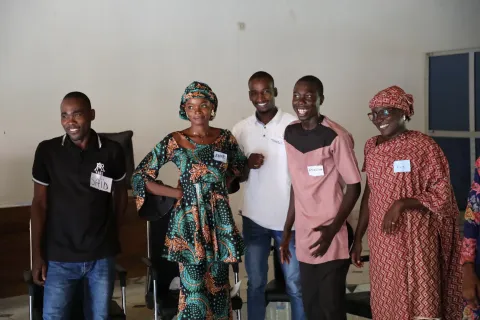
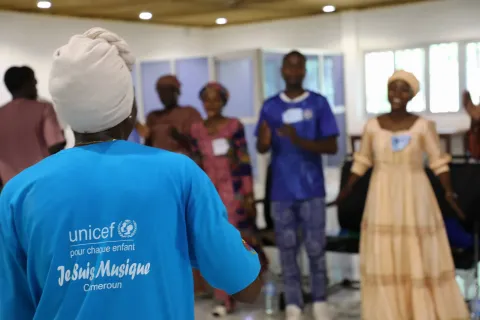
To strengthen protection efforts, UNICEF and partners organised a four-day Training of Trainers workshop on Children and Armed Conflict (CAAC) and the Monitoring and Reporting Mechanism (MRM) from 20 to 23 April 2026 in Yaoundé. The workshop brought together 22 participants from UN agencies, international NGOs, and national NGOs working across Cameroon’s conflict-affected regions. The initiative aimed to strengthen national capacity to monitor, document, and report grave violations against children, while creating a pool of trainers capable of cascading knowledge to field-level actors.

“Monitoring and reporting of violations against children remains a collective responsibility across the UN system,” said a representative of the Resident Coordinator’s Office during the opening session.
Over four days, participants deepened their understanding of the six grave violations against children, ethical and child-sensitive monitoring approaches, data verification methodologies, and advocacy strategies. The training also focused on adult learning techniques to prepare participants to train additional focal points in their respective regions.
The workshop marked an important milestone for Cameroon’s inter-agency CAAC Technical Working Group, established in 2023 and co-led by UNICEF and the Office of the United Nations Resident Coordinator. Through the MRM, Cameroon contributes to the United Nations Secretary-General’s annual report on Children and Armed Conflict, ensuring that violations affecting children are systematically documented and elevated to global advocacy platforms.

Participants demonstrated significant improvements in knowledge through pre- and post-training assessments, and all 22 participants received certification as CAAC/MRM trainers and monitors. A six-month regional workplan covering the Far North, North-West, South-West, and Yaoundé was also developed to guide monitoring and reporting activities between May and October 2026.
“The goal is not only to document violations, but to reduce their occurrence and impact on children across all affected regions,” noted the CAAC Technical Working Group during the training.
Beyond technical learning, the workshop also strengthened advocacy efforts at the national level. Participants engaged with the Humanitarian Country Team to advance key child protection priorities, including support for children deprived of liberty due to alleged association with armed groups, the inclusion of children in disarmament and reintegration programmes, and the endorsement of the national Handover Protocol for children in contact with security forces.

With 22 newly certified trainers and monitors embedded across Cameroon's most conflict-affected regions, a six-month regional work plan in place, and renewed HCT-level engagement on child protection priorities, the foundations for a stronger, more self-sustaining MRM system are firmly in place. Each certified trainer is now expected to cascade expertise to sub-national focal points, progressively reducing reliance on external support.
The 22 participants who left Yaoundé in April 2026 with their certificates are not the end of the story; they are the beginning of the next chapter.
For more information, contact Casimira Benge, Chief Child Protection, UNICEF Cameroon, Yaounde