In Cameroon's East Region, a piece of cardboard is changing children's worlds
In Cameroon’s East Region, where schooling is often unaffordable, communities created Community Preschool Centers, giving young children a first chance to learn, grow, and prepare for primary school.
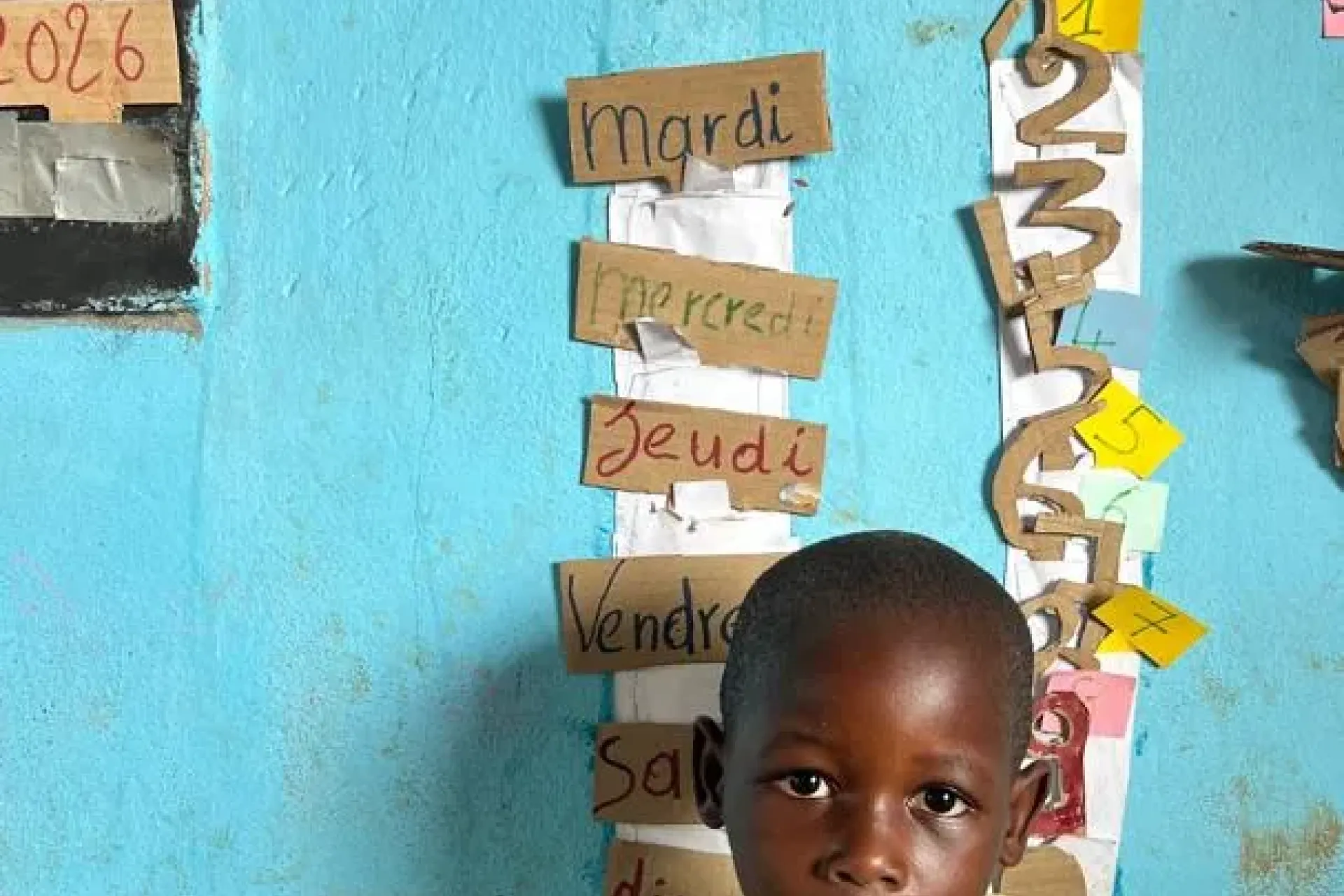
In a mud-brick classroom in the village of Bakombo, Pricil walks up to the wall with the quiet focus of a child who knows exactly what she is doing. She is four years old. In front of her, a row of hand-cut cardboard cards, each one bearing the name of a day of the week. She points to them one by one, without hesitation.
Monday. Tuesday. Wednesday.
No one bought her specialized learning materials. No one equipped this classroom with sophisticated tools. These cards were made by her animator Damaris, cut by hand from salvaged cardboard, a technique she learned during a training organized by UNICEF, the Ministry of Basic Education, and the Korean International Cooperation Agency (KOICA).
When poverty shapes early choices
With a poverty rate hovering around 40%, many families here face stark choices from the very first years of their children's lives. The balance between meeting immediate household needs and investing in education is rarely straightforward.
“A lot of parents here simply cannot afford to send their children to nursery schools, given that they are not free of charge and most of them are found only in subdivisional headquarters, " explains Nkoo, Regional Pedagogic Inspector for Basic Education for the East region. He concluded by saying, “Life is very difficult for them, even though they deeply value education.”
Yet, despite these constraints, parents continue to seek solutions that will give their children a better start in life.
Communities stepping up for their children
Faced with these challenges, communities have come together to establish community preschool centres. By pooling their efforts, they build simple learning spaces and recruit local animators with little to no pedagogic skills to care for the children.
These animators, driven by dedication, use songs, games, and basic activities to support children's development. While the approach is informal, it reflects a strong community commitment to ensuring that no child is left behind.
Today, the East Region counts 882 community preschool centres. But for years, these centres have operated with limited resources and, in most cases, without structured pedagogical guidance. Animators do their best, and their commitment is never questioned. In some cases, they lack the tools to turn that commitment into quality pedagogy.

Strengthening those who shape the minds of future leaders
Given their limited background capacities, they require ongoing capacity-building and refresher courses. Recognizing both the potential and the limitations of these centres, UNICEF, in partnership with the Ministry of Basic Education, and with financial support from the Korean International Cooperation Agency (KOICA), stepped in to strengthen CPC animators' capacities.
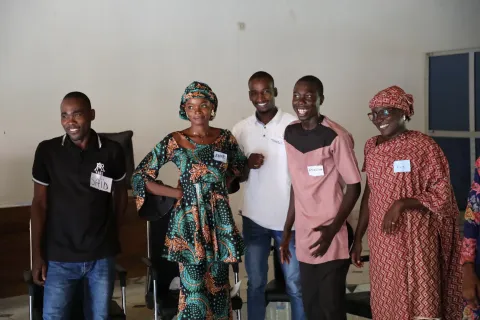
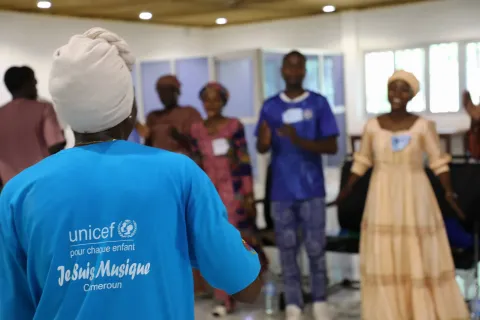
In January and February 2026, some community preschool animators from Betare Oya, Ngoura, Garoua-Boulaï, Batouri, Kette, Kentzou, Ouli, and Mandjou participated in training focused on animation and creativity techniques. The objective was to equip them with practical, hands-on tools to create more engaging, stimulating, and nurturing learning environments for the youngest children in the region.
In total, 174 people were trained. But the scale of the challenge puts this figure into sharp perspective.
“We cannot abandon our children. We have a responsibility to support those who guide them,” emphasized Nkoo.
A shift towards playful learning
The training marked a turning point. Animators were introduced to interactive and child-centred approaches, learning how to design monthly themes around topics such as animals, everyday professions, and the human body.
They learned to create new songs, which include awakening songs and calming songs, among others. They acquired knowledge on how to transform ordinary objects into extraordinary learning moments.
“Before the training, we would try to keep the children busy by singing generic songs, hoping it was enough. Now I plan my sessions around a theme each month,” says Damaris, an animator at the Bakombo CPC, “But after the training, everything changed,” she concluded.
These simple yet effective methods have made learning more dynamic, more intentional, and more meaningful for children and animators alike.

Brighter beginnings for every child in the region
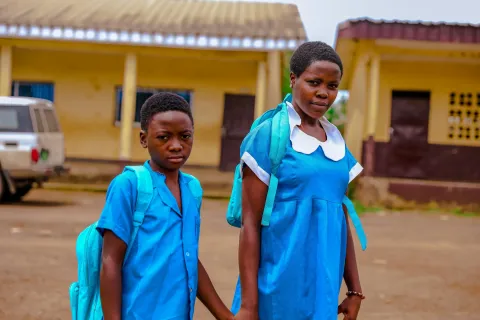
Today, children attending these centres benefit from a more structured, creative, and stimulating environment. They are more engaged, more curious, and better prepared for the transition to primary school.
Pricil is a living proof. At four years old, she can already identify the days of the week, matching each day to its card on the classroom wall. An exercise that her animator learned during the training, using nothing more than hand-cut cardboard.
Pricil's small triumph is being replicated across the centres whose animators attended the training. According to projections, 5,353 children, including 2,646 girls, will directly benefit from the improved teaching methods introduced through this programme.
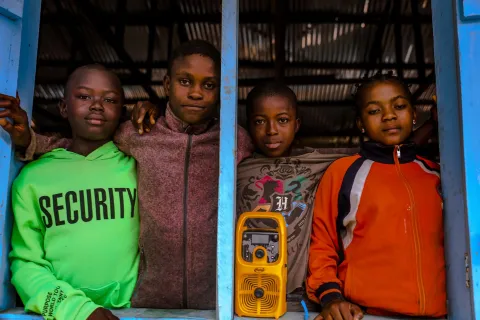
In a region where economic hardship continues to challenge access to formal education, CPCs offer a vital alternative. They provide not only early learning opportunities but also a sense of stability and hope.
A foundation worth building on
The numbers tell one story. Pricil tells another. Together, they point to the same truth. When you invest in the people who teach the youngest children, you change the trajectory of an entire generation.
Yet, in the East Region, out of 882 preschool centres, only 115 have benefited from the training so far. This gap highlights the urgent need to scale up the initiative and reach more centres. Continuous support, refresher training, and close supervision remain essential to help animators provide the quality care and learning experiences young children deserve.
Thanks to UNICEF, its government partners, and the sustained support of KOICA, meaningful progress is being made. The task now is to go further. To reach every animator, every centre, every child who is waiting, without knowing it, for a row of cards to change their world.