Mokong: A major breakthrough in the fight against stunting
In Mokong, despite an initial landscape of fragmented services and limited training, the integrated 1000-day approach—supported by UNICEF and the Government of Germany/BMZ through KfW has significantly reduced child malnutrition.

- English
- Français
Preventing stunting at the heart of the 1,000 Days Approach (from conception to age 2) in the Mokong health area in the Far North of Cameroon
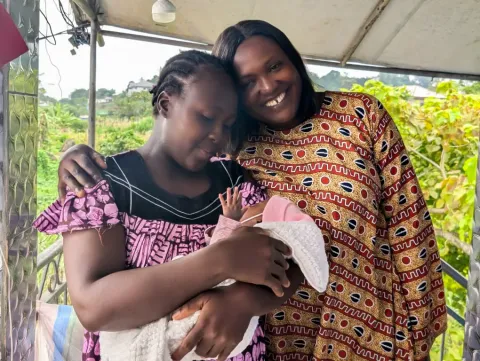
Prenatal consultations have become increasingly popular at the Mokong District Medical Centre in the Far North of Cameroon. Pregnant women from the six villages in the area gather to participate. In a relaxed atmosphere, they sit together in a circle and speak in Fulfulde with health workers. The discussions focus on the importance of maintaining a healthy, balanced diet during pregnancy, the significance of breastfeeding, family planning, and the necessity of taking iron and folic acid. They also cover vaccination and emphasise the importance of ensuring that their children have a legal identity.
"I learned that babies should not be given water before the age of six months and that they should be fed exclusively breast milk. For my part, I have to eat fruit, vegetables and eggs, as well as taking iron and folic acid tablets. I started taking iron and folic acid tablets when I was four months pregnant. At first, I often felt dizzy, but then the dizziness went away and I feel fit and healthy — and I know my baby does too," says a mother who is expecting her fifth child.
During prenatal consultations, mothers are typically received folic acid and iron supplements.


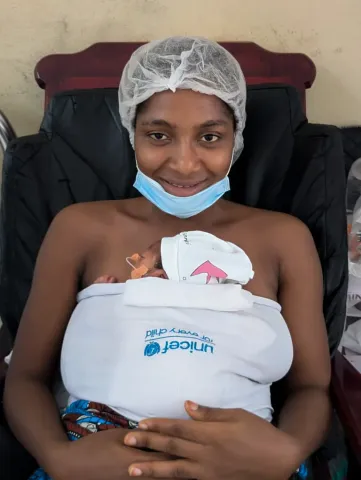
Mokong Outpatient Nutrition Centre: an integrated and effective response to severe acute malnutrition, based on the 1,000 Days Approach
Since 2022, the Mokong outpatient nutrition centre has been at the heart of the integrated response to severe acute malnutrition. Based on the 1,000 Days Approach, it has been integrated into routine vaccination sessions at the Mokong CMA.
"The work of screening for malnutrition begins in communities thanks to the efforts of multi-skilled community health workers who refer cases of acute malnutrition to the hospital. We also have mothers who come for routine vaccinations and, following malnutrition screening, discover that their babies are not well nourished," says Julienne Kovou, malnutrition focal point at the Mokong CMA.
The integration of nutrition centre activities into routine vaccination sessions has improved the screening and rapid treatment of children suffering from severe acute malnutrition. This process begins with raising awareness about good practices in maternal and infant nutrition, as well as contraceptive methods.
Next, a comprehensive assessment is conducted, which includes checking vaccination status, nutritional status, and civil status. This assessment involves catch-up vaccinations, vitamin A supplementation, deworming, screening for oedema, measuring upper arm circumference, verifying civil status, and taking weight and height measurements.
Children are then categorised into three groups based on their upper arm circumference: well-nourished, suffering from moderate acute malnutrition, or suffering from severe acute malnutrition. Severe acute malnutrition is addressed immediately by providing nutritional advice to mothers and offering ready-to-use therapeutic food, such as Plumpy Nut.
Finally, personalised follow-up care is established to ensure that mothers attend weekly appointments until their child has fully recovered. This follow-up continues even after recovery to maintain good nutritional practices, ensure that vaccinations are completed, and prevent any relapse.


"Among malnourished children, many are out of sight. That is to say, they are not up to date with their vaccinations. We therefore check their vaccination records and catch up on any missing vaccinations according to the child's age."


UNICEF and its partner the Government of Germany/BMZ through KfW support all activities at the nutrition centre, including the provision of supplies, training health personnel in the treatment of malnutrition, and supporting multi-skilled community health workers.
"We are seeing an improvement in our statistics for the treatment of severe acute malnutrition. In August 2024, we recorded around 30 cases of severe acute malnutrition. In August 2025, we recorded fewer than 10 cases. This proves that there has been a clear improvement."
Julienne Kovou emphasises that support for mothers must continue, particularly by providing them with seeds to encourage small-scale gardening, enabling them to feed their children.

This integration allows the CMA to increase awareness among women regarding the importance of birth spacing and family planning as vital components in addressing malnutrition. Many pregnant mothers are still being registered for support. UNICEF and its partner the Government of Germany/BMZ through KfW assist nutrition centres that specialise in treating severe acute malnutrition. They ensure that essential supplies are consistently available, thereby guaranteeing effective and continuous care.