Back to learning: how CARED is opening doors to education for out-of-school children
UNICEF and its partners are helping children like Aminatou, Ali Baba and Treasure catch up on missed learning and find their way back to school.

For more than a decade, children in Cameroon’s North West and South West regions have borne the greatest burden of a crisis that has disrupted their education and changed their daily lives. For many children, going to school has become increasingly difficult.
Schools have been closed or become non-operational, families have been displaced, and teachers and communities have faced serious challenges. As a result, thousands of children have been left out of school and have missed years of learning opportunities.
According to the Regional Delegations of Basic Education, 223,749 children are completely out of school, while 2,463 schools are non-operational (2,005 in the North West and 458 in the South West). For children who have already lost valuable time in school, returning to learning can feel like a difficult journey.
But for some, that journey is beginning again.
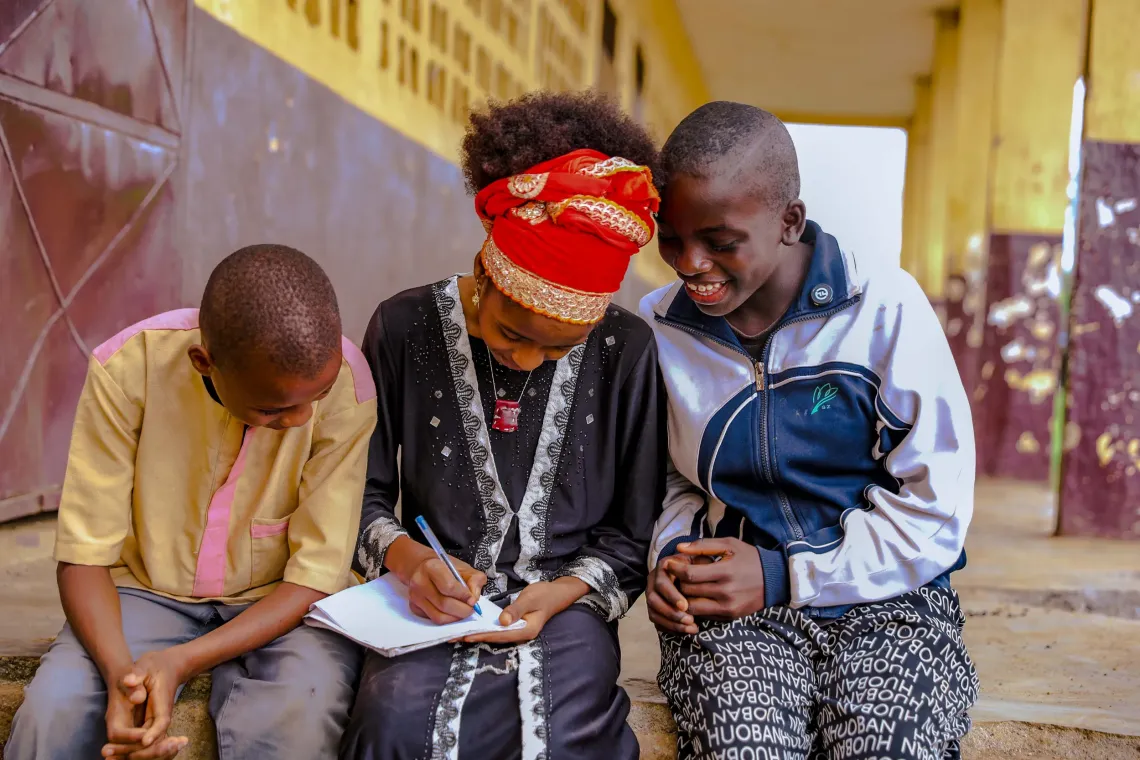
A pathway back to school
UNICEF, with support from the European Union Humanitarian Aid, are working to ensure that children affected by the crisis are not left behind.
One of the approaches being used is the Accelerated Curriculum for the Reintegration of Dropout Children (CARED).
Put simply, CARED is an accelerated learning programme designed for children who are out of school and have missed learning. During the holidays, children are identified and supported through focused lessons that help them rebuild important foundational skills, including reading, writing, mathematics, as well as science, technology and environmental education.
The goal is not to keep children in an alternative learning programme indefinitely. It is to help them catch up, regain confidence and prepare to return to formal education.
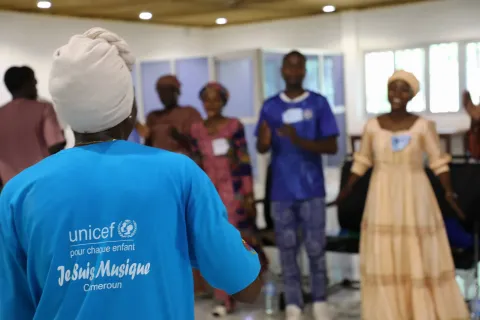
Mr Andrew Ewange is one of the pioneer teachers trained to work with children through the programme. Beyond using multigrade teaching approaches to support children with different learning levels, he also works with parents and encourages them to enrol their children when the new school year begins.
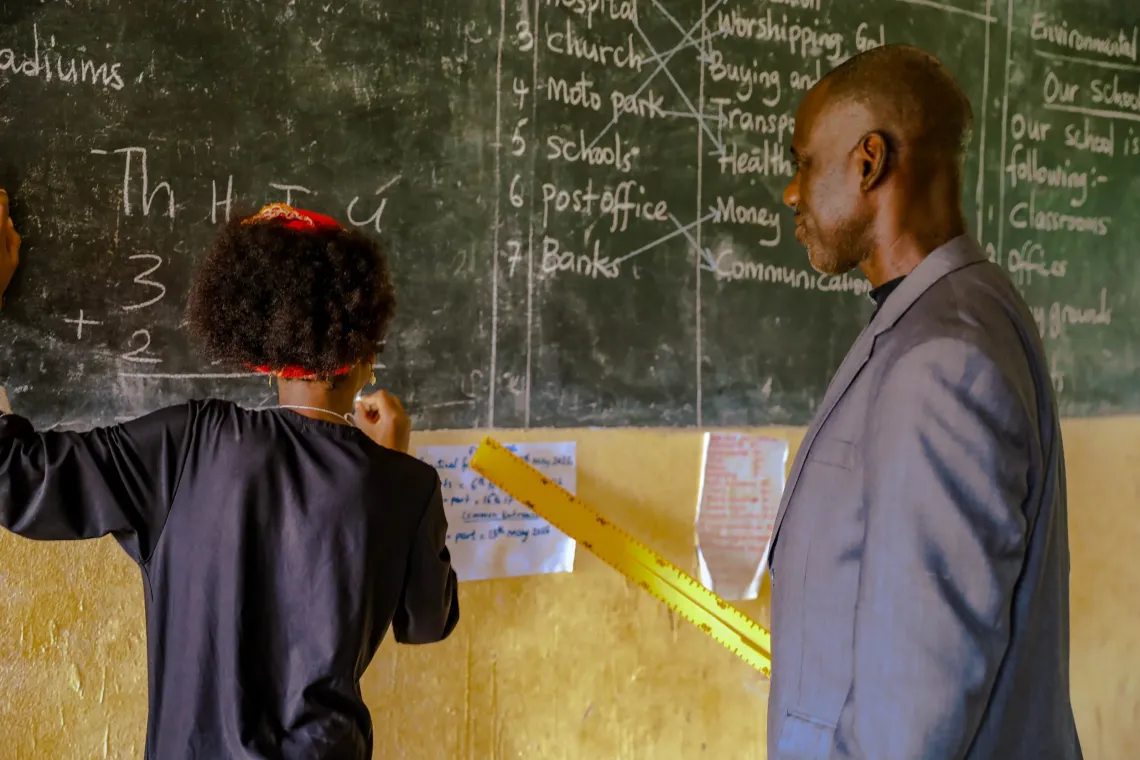
“When we started last year, most of the children that we worked with were so excited and enrolled back into school. This programme is very helpful for children out of school because they come and learn and they are also very excited. This encourages their parents not to allow them to stay at home.”
For Andrew, the classroom is only one part of the solution. Helping a child return to school also means helping families understand the importance of education and encouraging them to support their children’s return.
AMINATOU WANTS TO BECOME A NURSE

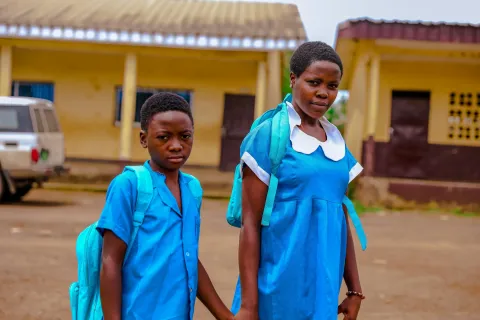
At 10, Aminatou knows what it means to have her education interrupted. She and her parents fled Bamenda and settled in Kumba in search of safety and a better life. The move also meant leaving behind the school environment she knew.
This holiday, Aminatou is attending CARED classes. Each day, she is discovering new lessons and rebuilding the skills she needs to continue her education.
“We left Bamenda because of the crisis, and now we are in Kumba. What I learn here is Mathematics, Science and Technology. My dream is to be a nurse.”
ALI BABA DREAMS OF BECOMING A POLICE OFFICER

Ali Baba, 10, is also among the children benefiting from the accelerated learning classes after being out of school. In class, he is learning basic mathematics, reading and writing skills that will help him prepare for a return to formal education.
“In Mathematics, we learn to add and subtract, and in English how to read and write. I want to be a police officer, and I wish that children can go to school.”
His wish is simple: that every child should have the opportunity to learn and build a future.
TREASURE WANTS TO HELP OTHERS

For 11-year-old Treasure, Mathematics is a favourite. She also comes from Binjo and is excited to be part of the CARED classes. Her lessons are helping her strengthen the knowledge she needs to pursue her dream of becoming a doctor.
“My best subject is Mathematics. I love Mathematics because it helps me to calculate. I want to be a doctor so that I can help people who are sick in hospitals and also those on the streets. This way, I will fulfil my dreams and make my father proud of me.”
Treasure’s dream is a reminder of what is at stake when children lose access to education. Behind every number of children out of school is a child with a dream, a family with hopes and a future that depends on having the opportunity to learn.
GIVING CHILDREN A WAY BACK

In a crisis that has continued for years, bringing children back to school requires more than reopening classrooms. Children who have missed learning need support to rebuild their foundational skills and confidence before they can successfully return to formal education.
CARED provides that bridge.
Through accelerated learning during the holidays, trained teachers, support from parents and communities, and the commitment of UNICEF and its partners, children who have been left out of school are being given another opportunity to learn and prepare for their return to the classroom.
For Aminatou, Ali Baba and Treasure, the journey back to school has already begun.
But many more children are still waiting for that opportunity.
Keeping children out of school can have consequences that last far beyond the classroom. Every child deserves the chance to learn, dream and build a future. Continued investment in accelerated learning, safe education and support for families is essential to help children affected by crisis return to school and stay on the learning path.
For every child, a pathway to education