80 Years of UNICEF. For Every Child, Hope.

Anniversary Exhibition

“The hope of the world rests in the coming generations.” 

With these words in 1946, the General Assembly recommended the establishment of the United Nations International Children’s Emergency Fund, UNICEF, to safeguard the lives of children struggling to survive in the aftermath of World War II – and in doing so, to help rebuild devastated societies and restore hope for a better future. 


Our mandate is clear: reaching every child in need, protecting children’s rights to survive, thrive, and reach their potential. This is the DNA of UNICEF. From the ashes of war to the global challenges that affect millions today, our mandate has never wavered. UNICEF works to protect the rights of all children. Whoever they are. Wherever they live. 
UNICEF has worked in Bulgaria since 1946 to support children and families, with its role evolving over time and continuing today. Bulgaria was among the first countries to ratify the Convention on the Rights of the Child in 1991 and remains a key partner in building a better world for every child, including as co-founder and co-chair of the Group of Friends of Children and the SDGs. 


These photos tell a story of UNICEF’s determination and ongoing efforts to bridge the gap between what every child has right to and what is yet to be achieved. It is the story of thousands of courageous, committed people who have worked relentlessly in some of the world’s toughest places to reach the most vulnerable children, of government partners, donors and supporters from around the world who have provided critical resources and constant encouragement to reach our common goals for children, of  Goodwill Ambassadors and advocates who have spoken out fearlessly for the cause of children. 


Most of all, these pictures tell the story of millions of children whose bravery and resilience have inspired us for 80 years. In conflicts and crises, through poverty and deprivation, despite discrimination and exclusion, children have the capacity to play, to smile and, above all, to hope for a better future. 


UNICEF’s 80th anniversary is an opportunity to recommit ourselves to fulfilling that hope, for every child. As we look back, we learn from our accomplishments and challenges. As we look ahead, we recommit ourselves to realizing the rights of every child. 


Children are our mission. And the “hope of the world” still rests on them. 
 

Christina de Bruin 
UNICEF Representative in Bulgaria 


80 Years of UNICEF. For Every Child, Hope.
Anniversary Exhibition
 

Embedded video follows
UNICEF Bulgaria/2026
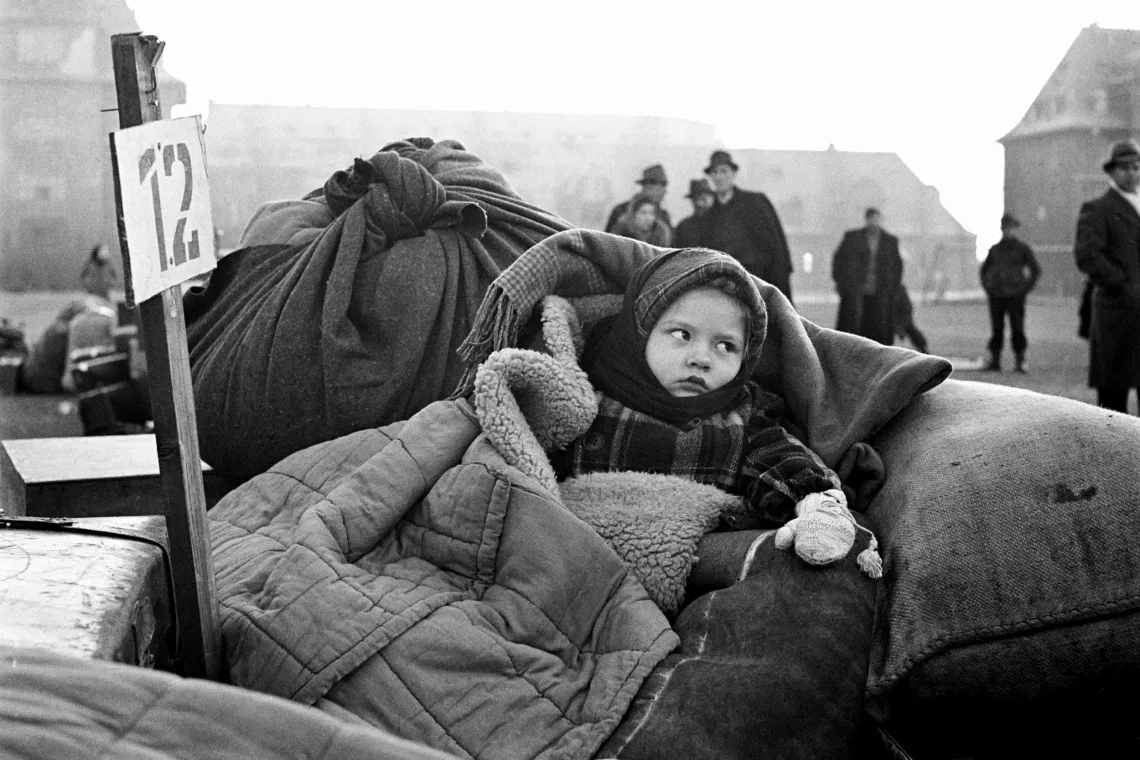
УНИЦЕФ/UNI142416/Германия,1946 УНИЦЕФ/UNI142416/Германия,1946
UNICEF Germany/UNI142416/1946 A small, displaced girl, wrapped in blankets and sitting on a mound of belongings, waits to continue her journey home.
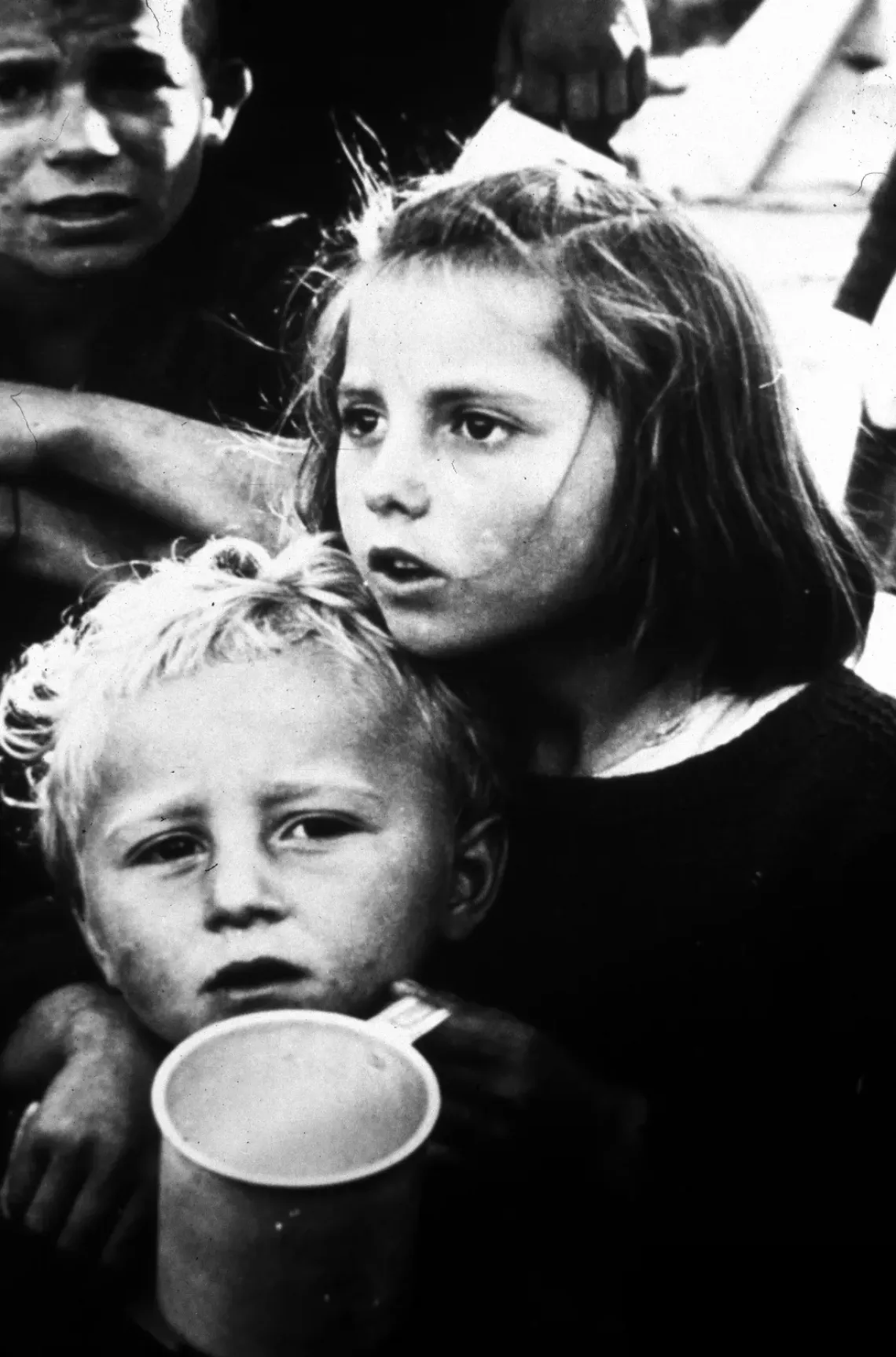
УНИЦЕФ/UNI281449/Европа,1948 УНИЦЕФ/UNI281449/Европа,1948
УНИЦЕФ/UNI281449/Европа,1948 In 1947, the first private contribution to UNICEF is received. To this day, UNICEF relies on millions of supporters to help make a difference in the lives of children.
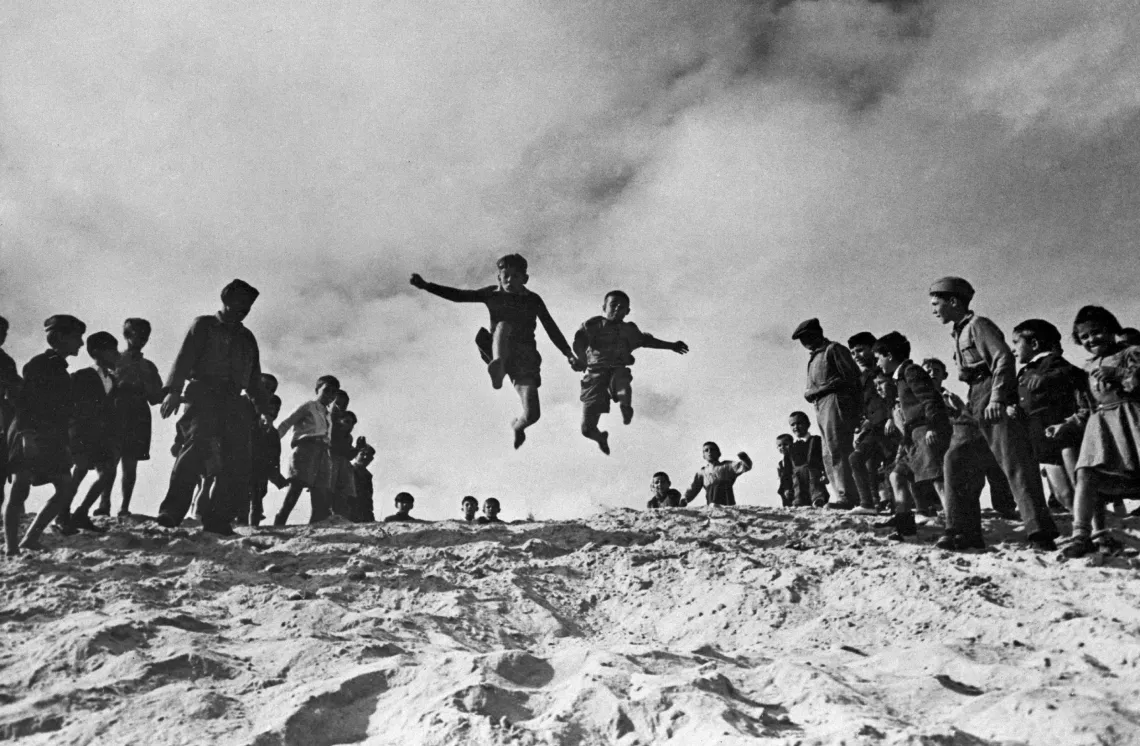
УНИЦЕФ/UNI43135/Египет, 1947 УНИЦЕФ/UNI43135/Египет, 1947
УНИЦЕФ/UNI43135/Египет, 1947 Two boys are cheered on by their companions during the long-jump event of a sports competition at the camp for 1000 Yugoslav refugees, near the north-eastern port city of Suez.
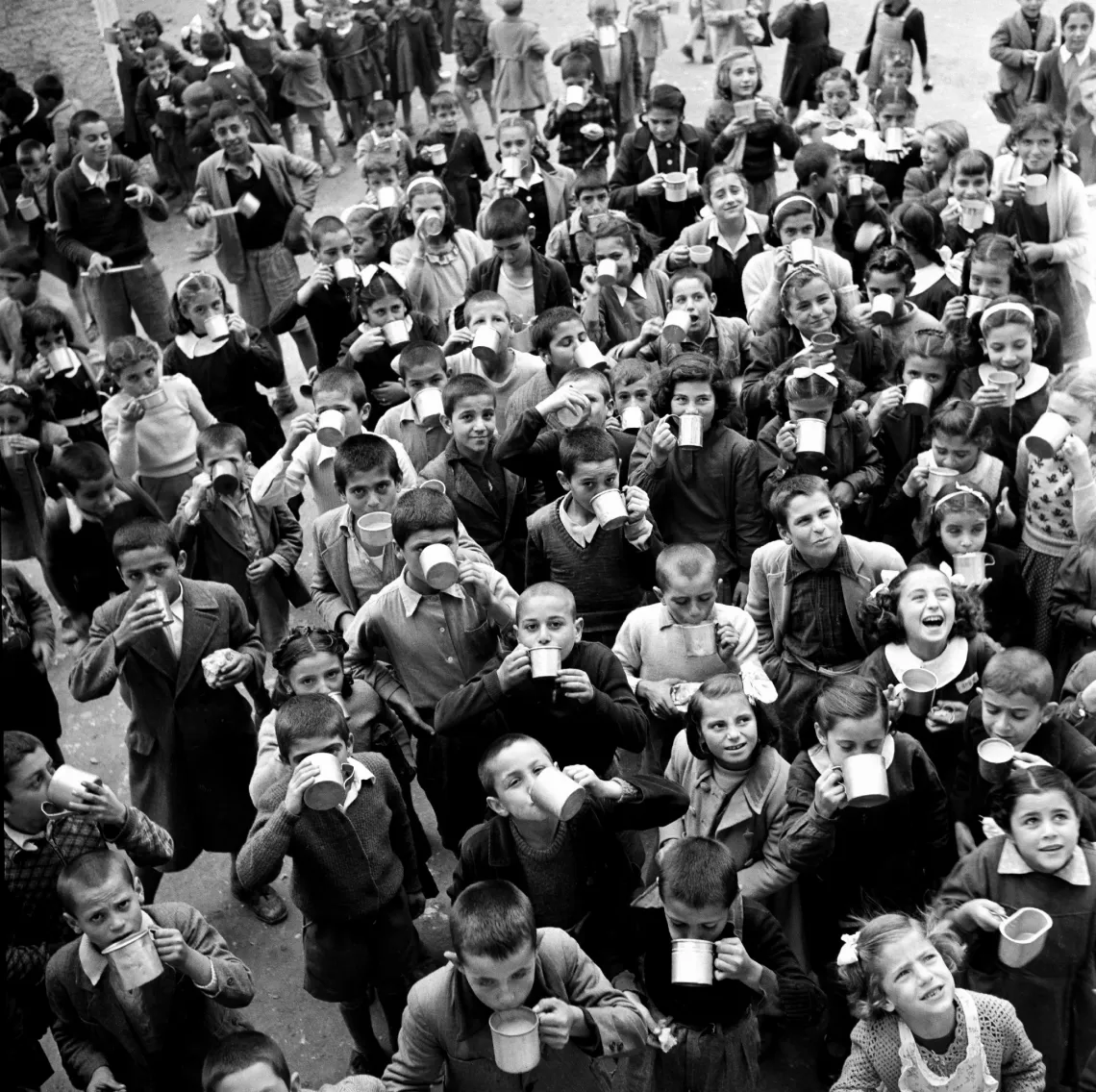
УНИЦЕФ/UNI41884/Гърция, 1946 УНИЦЕФ/UNI41884/Гърция, 1946
УНИЦЕФ/UNI41884/Гърция, 1946 Children in Patras, a north-western port city of Greece, eat cereal provided by UNICEF.
УНИЦЕФ/UNI43176/Гватемала, 1950 УНИЦЕФ/UNI43176/Гватемала, 1950
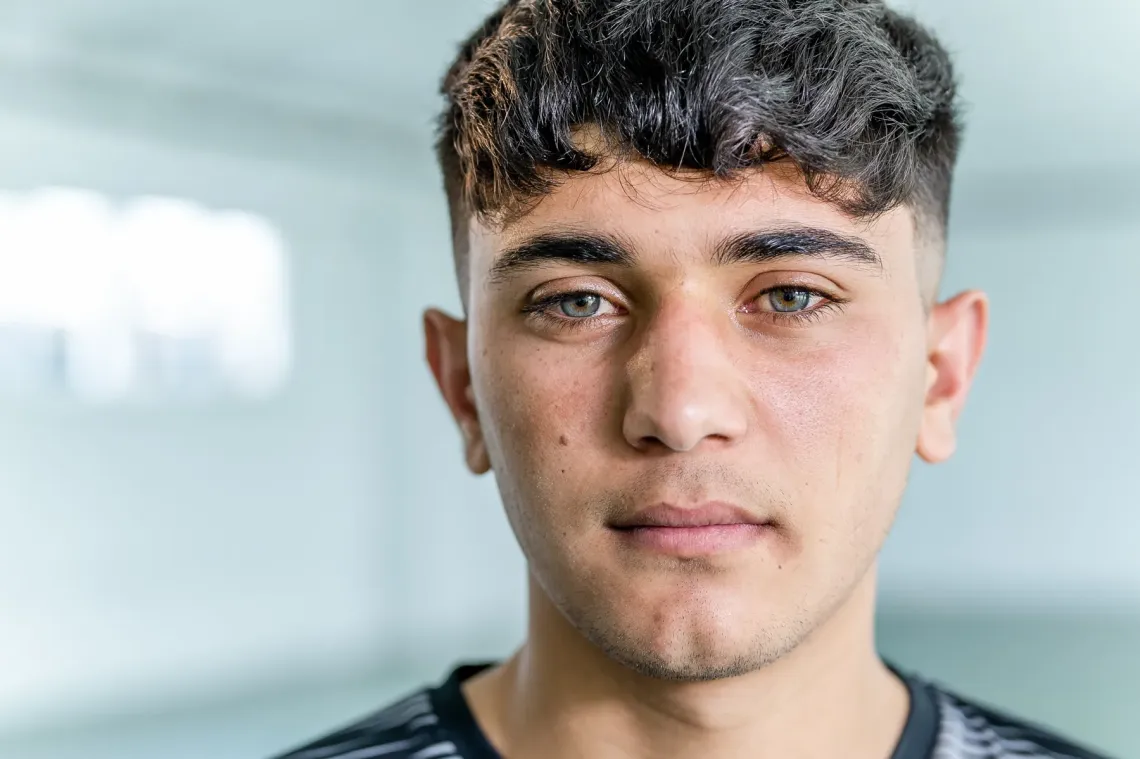
УНИЦЕФ/UNI43176/Гватемала, 1950 In 1950, UNICEF’s mandate was extended to address the long-term needs of children and women, especially in developing countries. 1950 in Guatemala, the Government, assisted by UNICEF, has set up a maternal and child health demonstration and training programme in a rural area outside Guatemala City, the capital, to train medical aides and improve environmental sanitation.
УНИЦЕФ/UNI43217/Коста Рика, 1952 УНИЦЕФ/UNI43217/Коста Рика, 1952
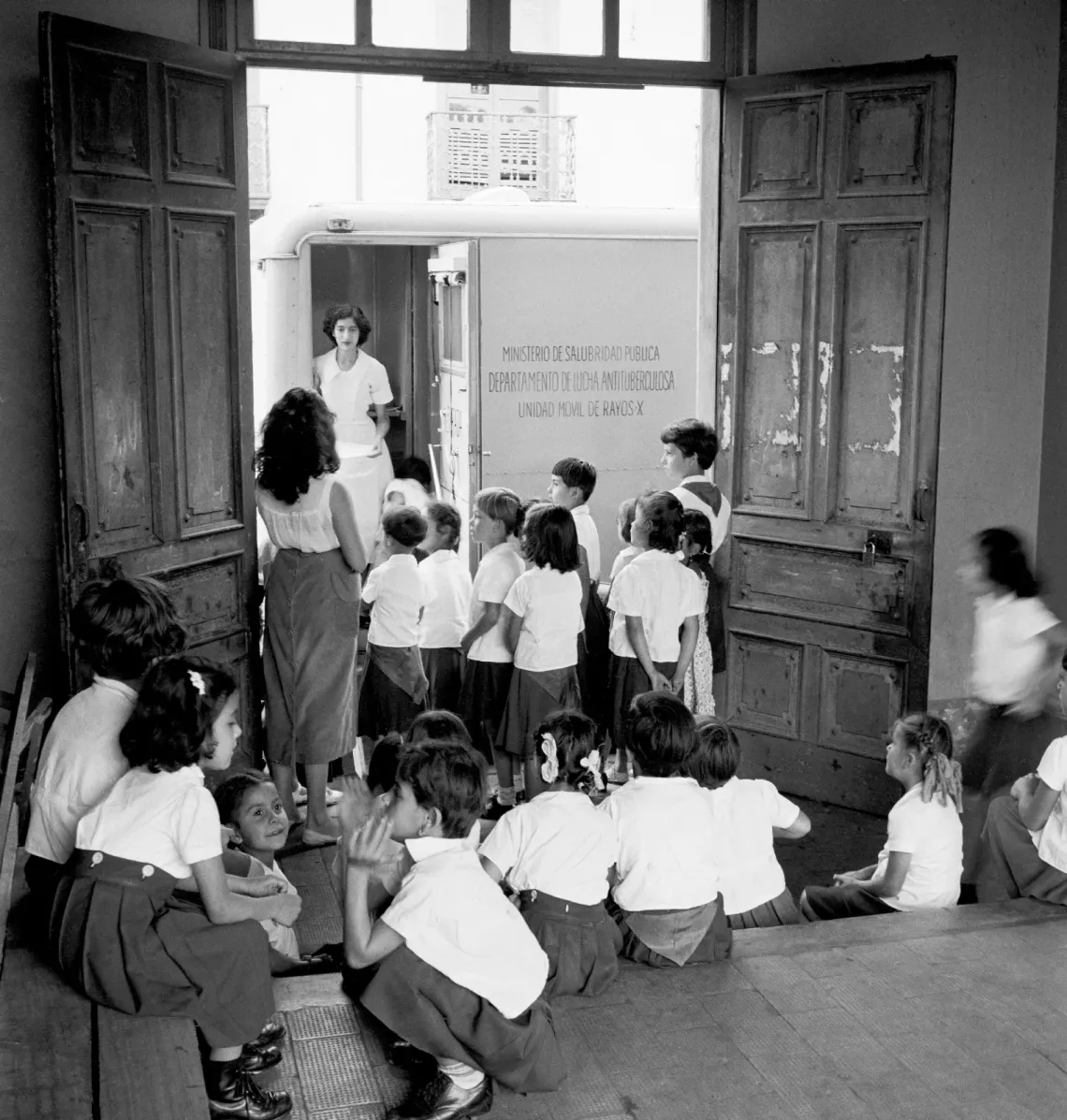
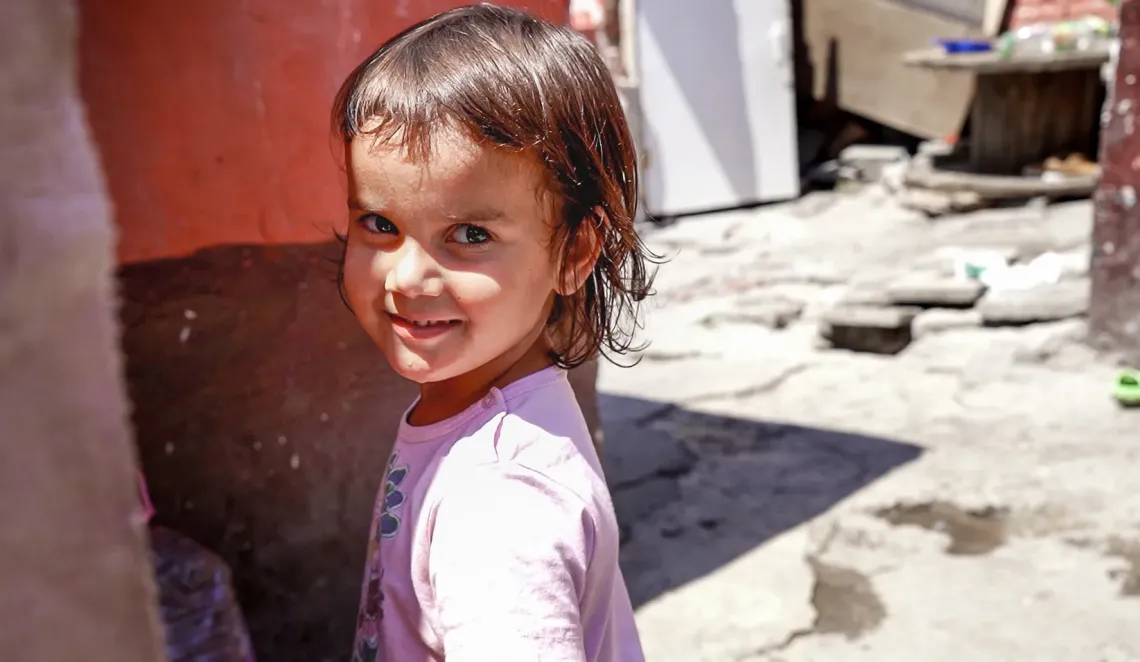
УНИЦЕФ/UNI43217/Коста Рика, 1952 A woman health worker in a UNICEF-supplied government truck carrying the Government's only mobile X-ray unit prepares to screen children for tuberculosis, at the Miguel Obregon school in the village of Alajuela. In 1952 in Costa Rica, the Government began a two-year campaign against tuberculosis.
УНИЦЕФ/UNI42502/ Етиопия, 1955 УНИЦЕФ/UNI42502/ Етиопия, 1955
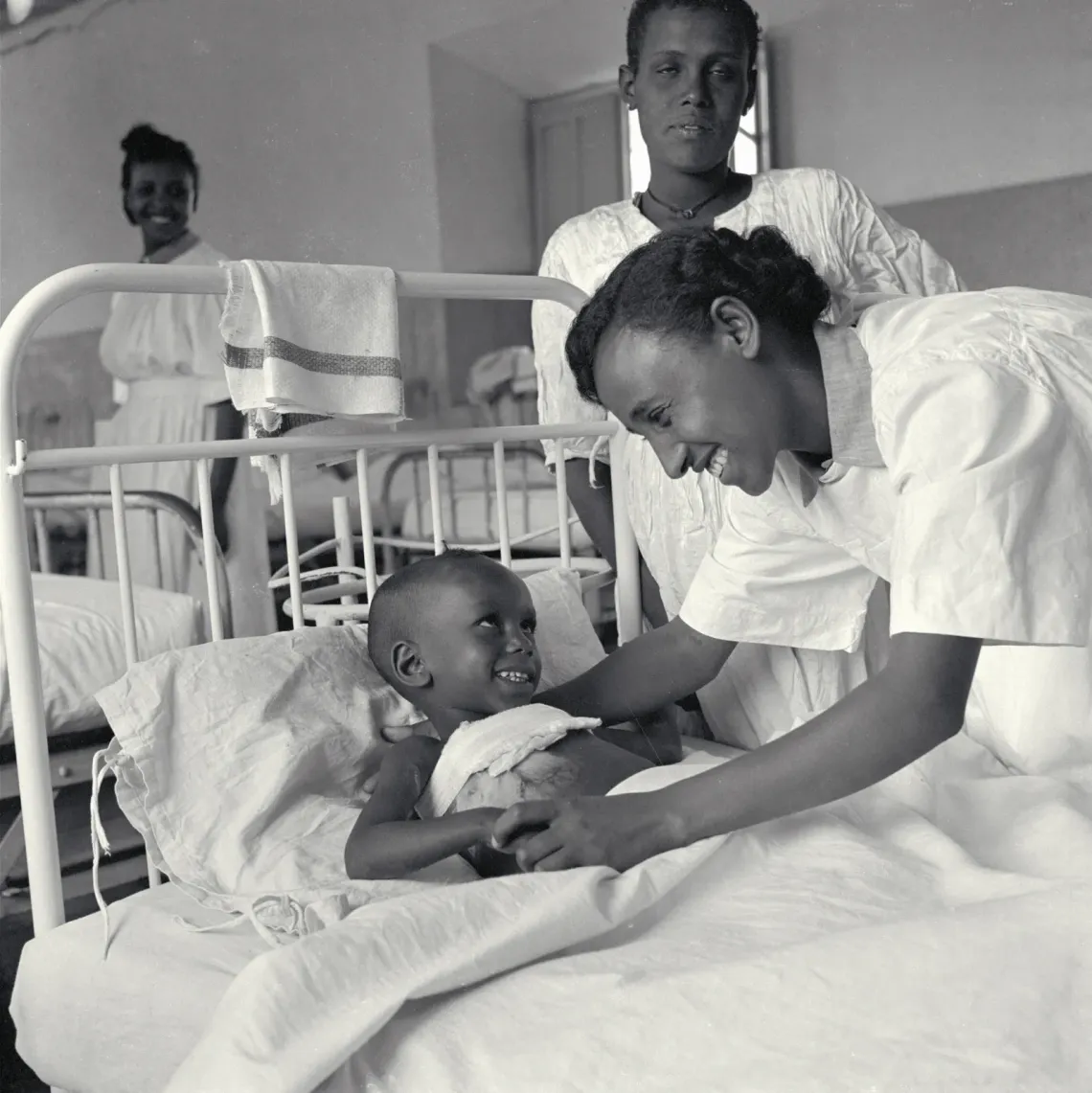
УНИЦЕФ/UNI42502/ Етиопия, 1955 With his mother and another health worker looking on, a small child suffering from burns returns the smile of a woman health worker, student-in-training, as he lies in a hospital bed in the UNICEF-assisted Public Health College and Training Centre in the north-western city of Gondar, Ethiopia.
UNICEF/UNI142418/ Ecuador, 1958 UNICEF/UNI142418/ Ecuador, 1958
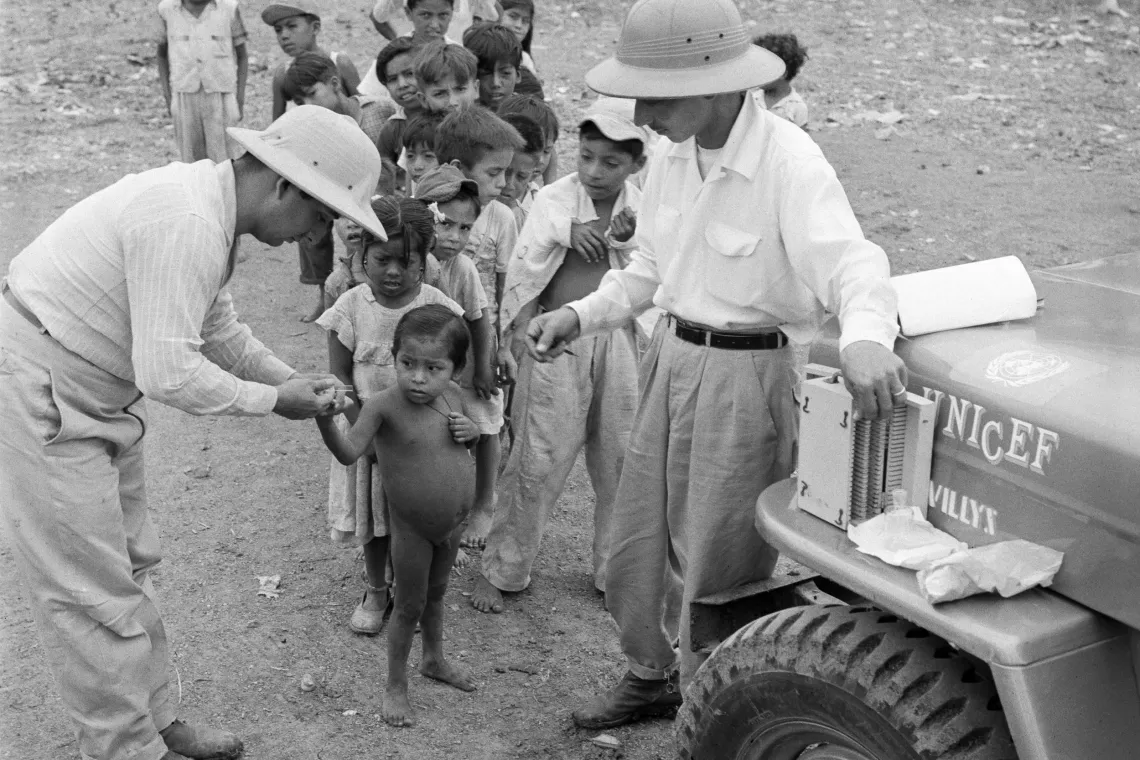
UNICEF/UNI142418/ Ecuador, 1958 To combat malaria, a principal cause of infant mortality, the Government of Ecuador is conducting a wide-scale DDT spraying campaign using UNICEF-supplied insecticides, vehicles, and spraying equipment. Тhe campaign has reached almost half of the country'­s 1.5 million people.
УНИЦЕФ/UNI43162/Югославия, 1950 УНИЦЕФ/UNI43162/Югославия, 1950
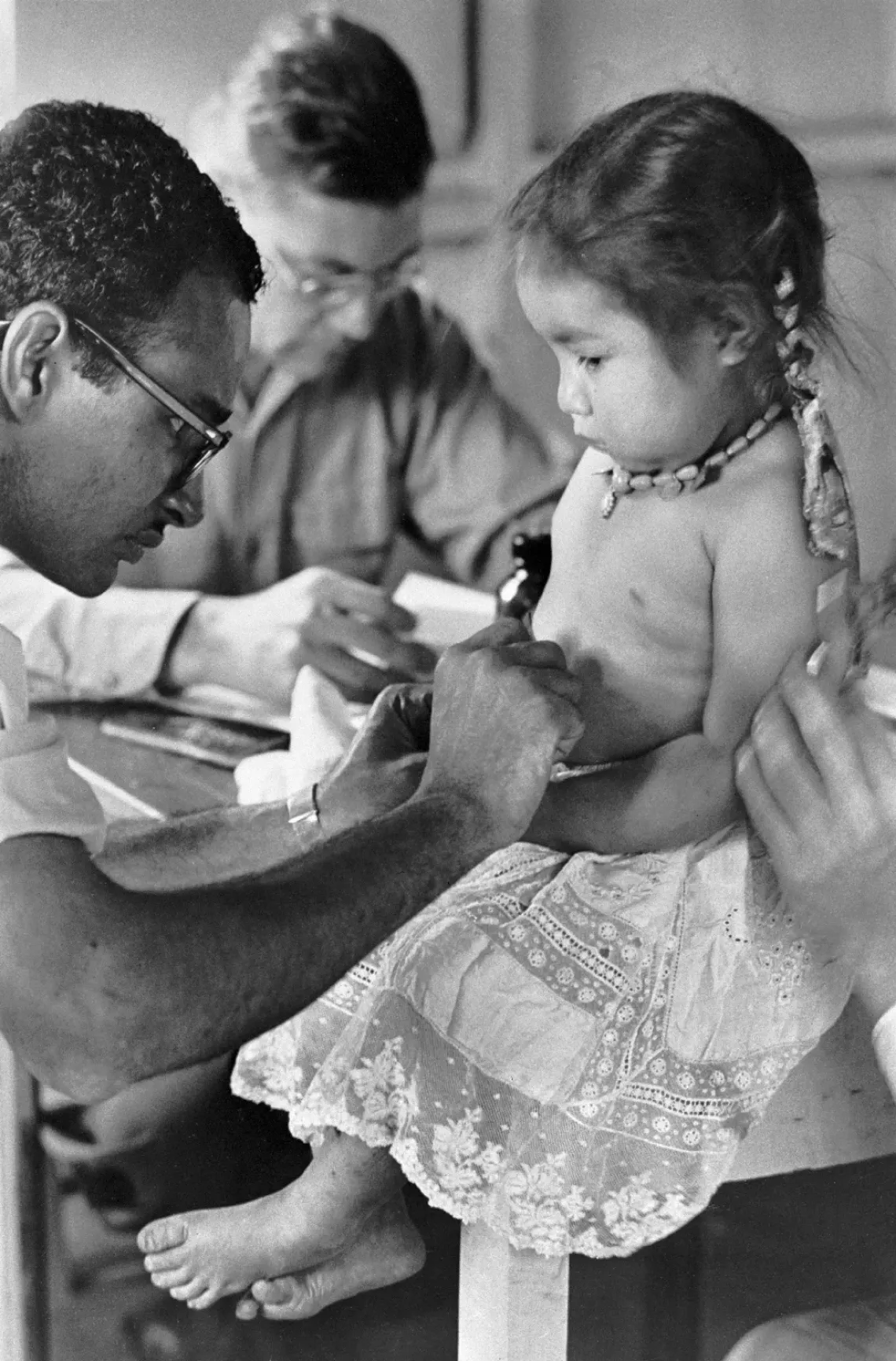
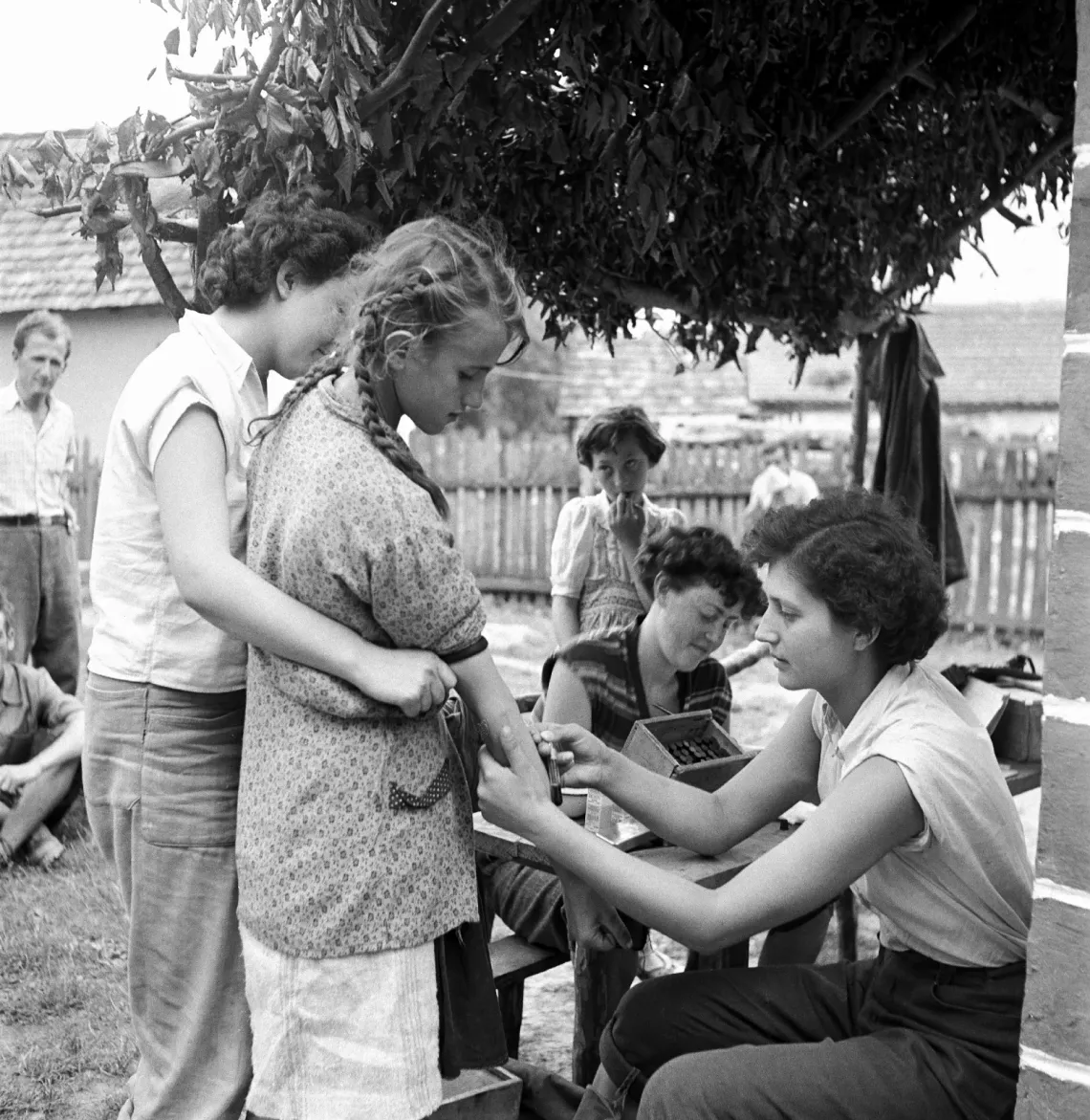
УНИЦЕФ/UNI43162/Югославия, 1950 Health workers at an outdoor site in the central region of Bosnia.
УНИЦЕФ/UN034289/ТОРГОВНИК, 2016 УНИЦЕФ/UN034289/ТОРГОВНИК, 2016
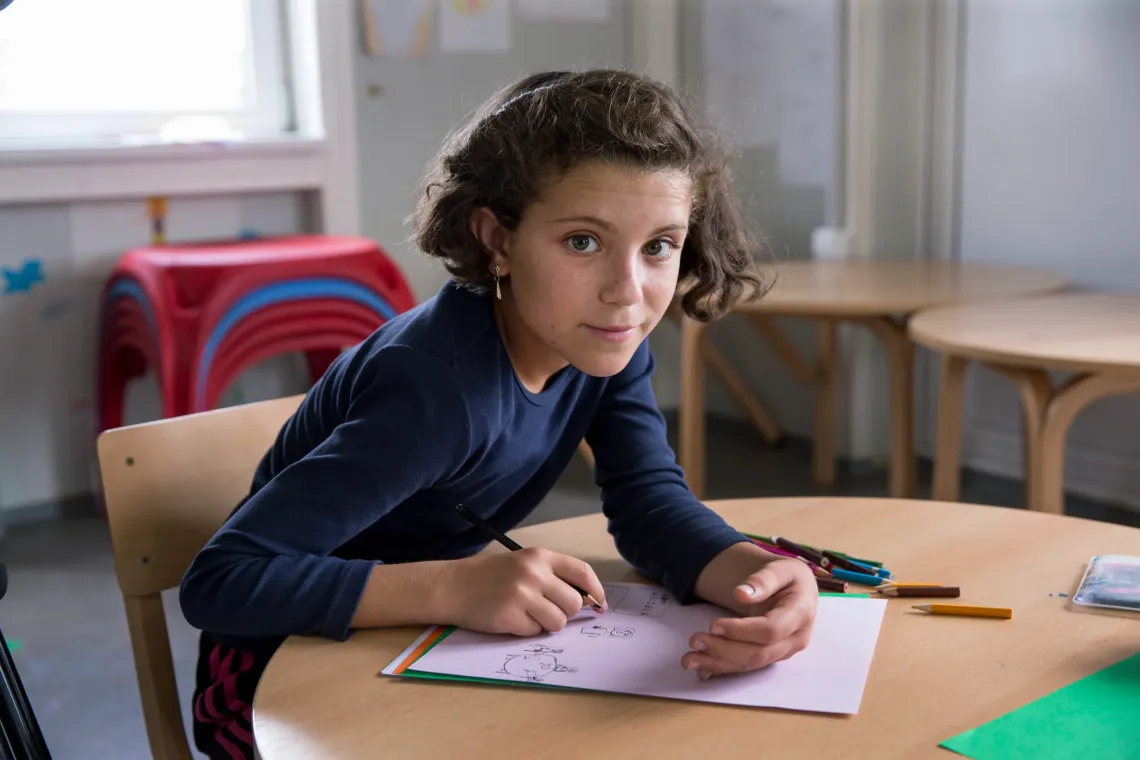
УНИЦЕФ/UN034289/ТОРГОВНИК, 2016 In 1959, the United Nations adopts the Declaration of the Rights of the Child. The document defines children’s rights to protection, education, healthcare, shelter and good nutrition. Hiba Al Nabolsi is a 10 years-old Syrian girl who grew up in war and endured an exhausting and risky journey to safety. She is living with her family in a refugee and migrant transit center in the Republic of North Macedonia, where a UNICEF-supported child-friendly space brings back the smile on her face.
УНИЦЕФ/UNI46382/ Джон Исак, Пакистан, 1983 УНИЦЕФ/UNI46382/ Джон Исак, Пакистан, 1983
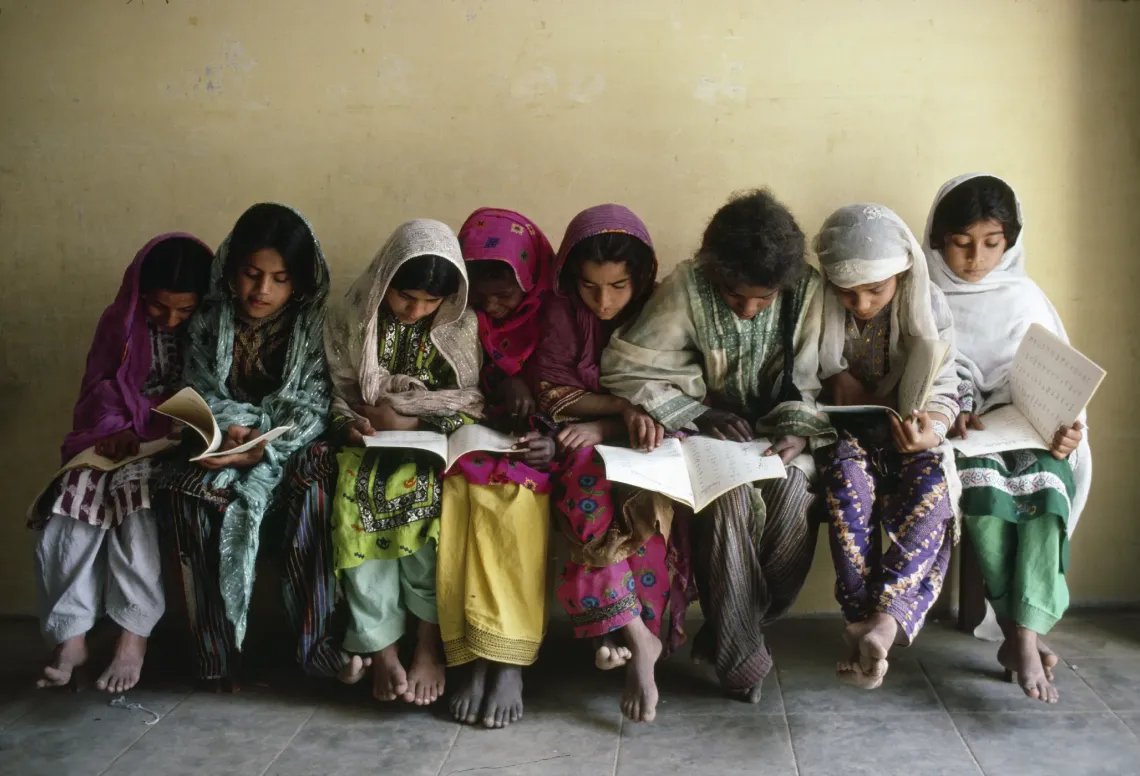
УНИЦЕФ/UNI46382/ Джон Исак, Пакистан, 1983 In 1961, UNICEF expands its focus to include children’s education. Aid for education programmes are launched globally and continue for years to come. In 1983 in Pakistan, girls share books and a bench after class in their school in the city of Karachi.
УНИЦЕФ/UNI99955/ Норвегия, 1965 УНИЦЕФ/UNI99955/ Норвегия, 1965
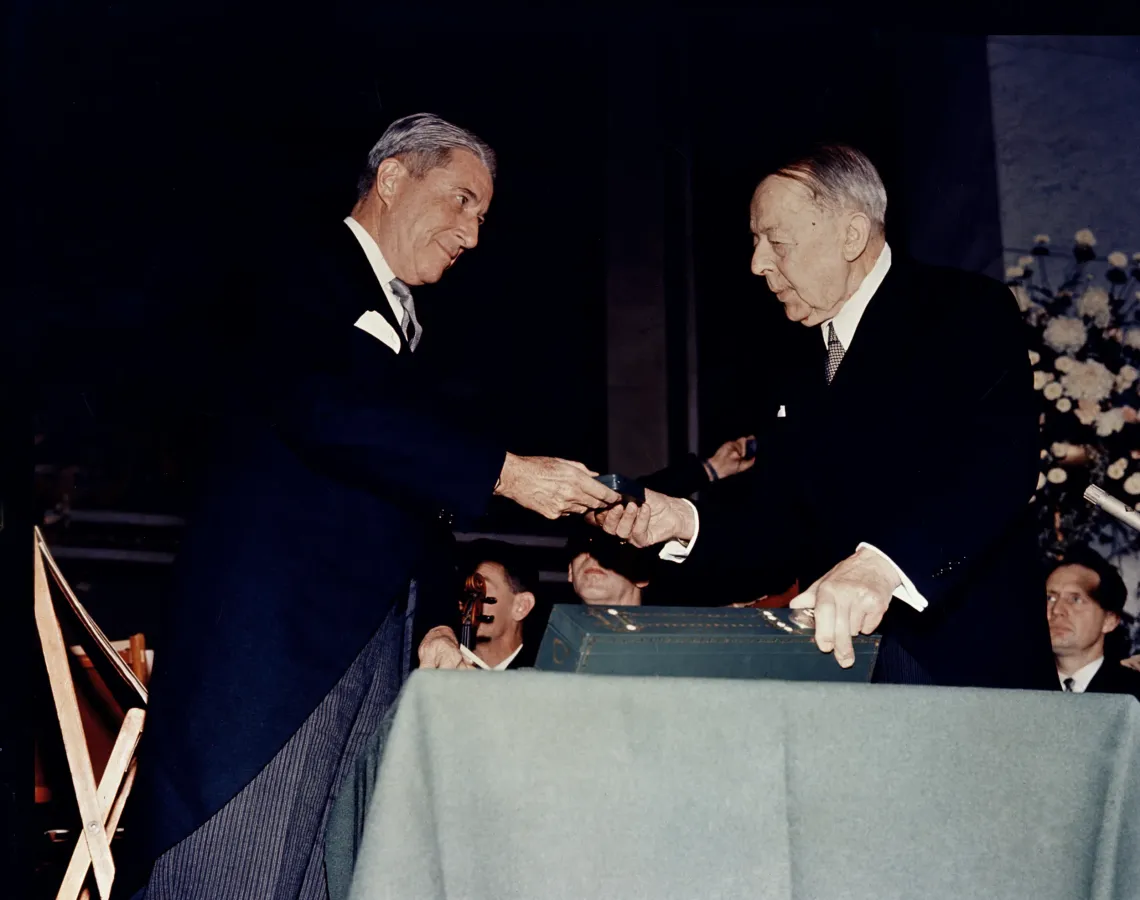
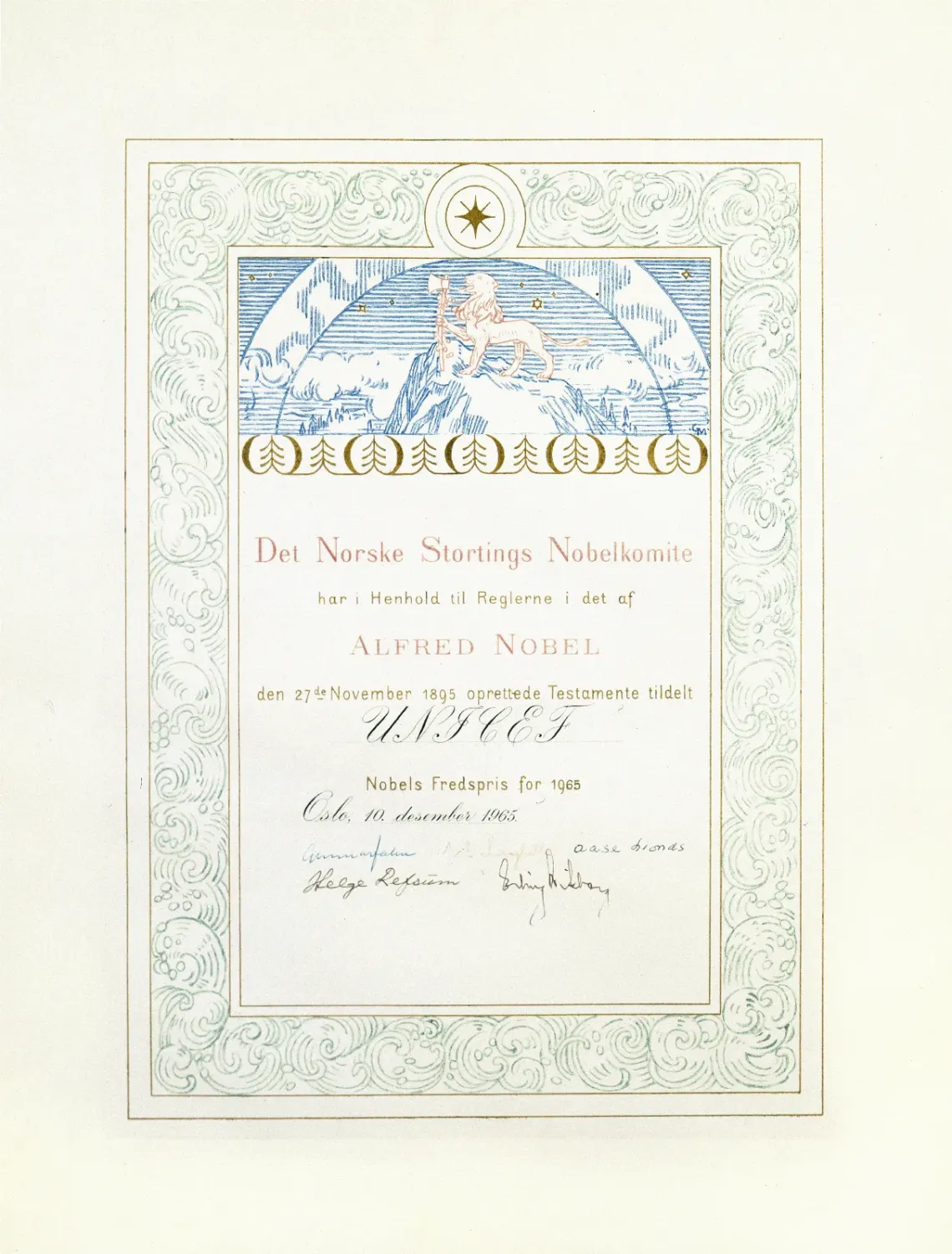
УНИЦЕФ/UNI99955/ Норвегия, 1965 In 1965, The Nobel Peace Prize is awarded to UNICEF for the "promotion of brotherhood among nations". The Nobel Peace Prize designation recognizes work for children as work for peace. Henry Labouisse, UNICEF Executive Director (1965–1979), receives the Nobel Peace Prize medal on behalf of UNICEF. "The welfare of today’s children is inseparably linked with the peace of tomorrow’s world.
УНИЦЕФ/UNI42249/ Дави УНИЦЕФ/UNI42249/ Дави
УНИЦЕФ/UNI42249/ Дави The official document commemorating the awarding of the 1965 Nobel Peace Prize to UNICEF "for the promotion of brotherhood among nations".
УНИЦЕФ/UNI42509/Шийън/Нигерия, 1968 УНИЦЕФ/UNI42509/Шийън/Нигерия, 1968
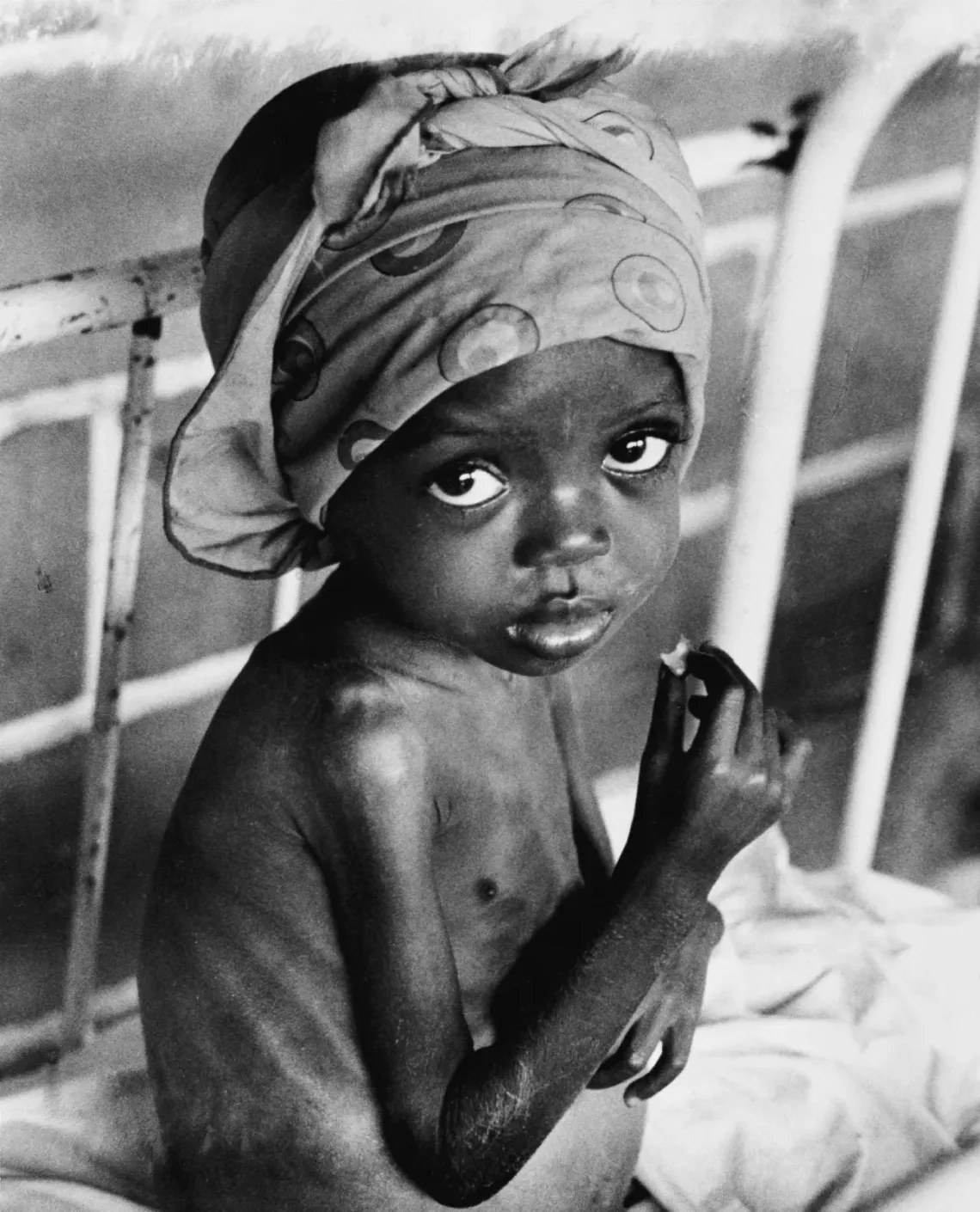
УНИЦЕФ/UNI42509/Шийън/Нигерия, 1968 UNICEF provides aid for mothers and children in civil conflicts in many countries, upholding its philosophy of non-political and non-discriminatory aid. A baby takes her first bite of bread after months in a refugee hospital near the front line during the Nigerian Civil War. UNICEF provides food, medicine and other emergency supplies.
УНИЦЕФ/UN04111/Даноа/Виетнам, 1972 УНИЦЕФ/UN04111/Даноа/Виетнам, 1972
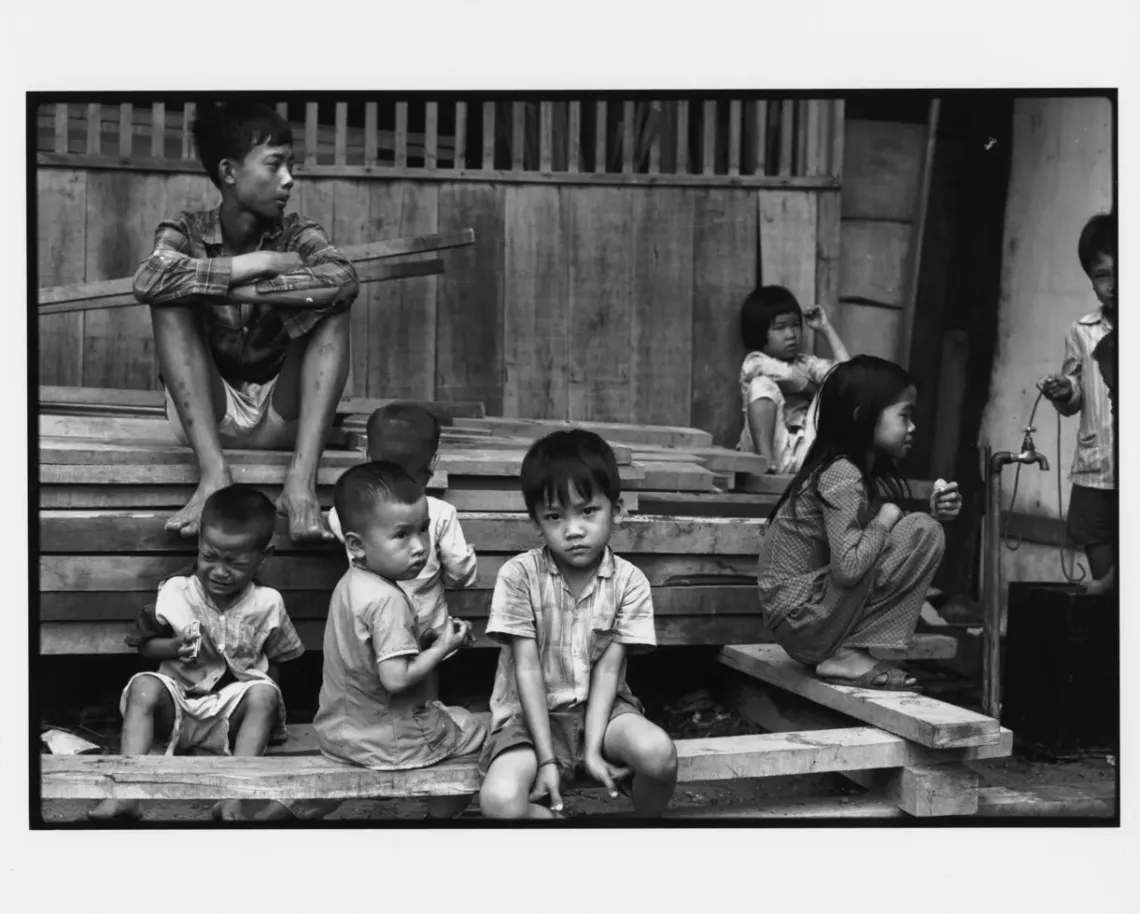
УНИЦЕФ/UN04111/Даноа/Виетнам, 1972 In South Vietnam, an estimated 200,000 abandoned and orphaned children like these are living in the streets, suburbs and slums of Saigon— malnourished, wounded, burned, crippled, blind —innocent victims of the war. UNICEF provides equipment for orphanages, nurseries and the distribution of high protein food in the schools and refugee camps as well as assistance for education and rehabilitation.
УНИЦЕФ/UN03781/Т. С. Сатян /Афганистан, 1976. УНИЦЕФ/UN03781/Т. С. Сатян /Афганистан, 1976.
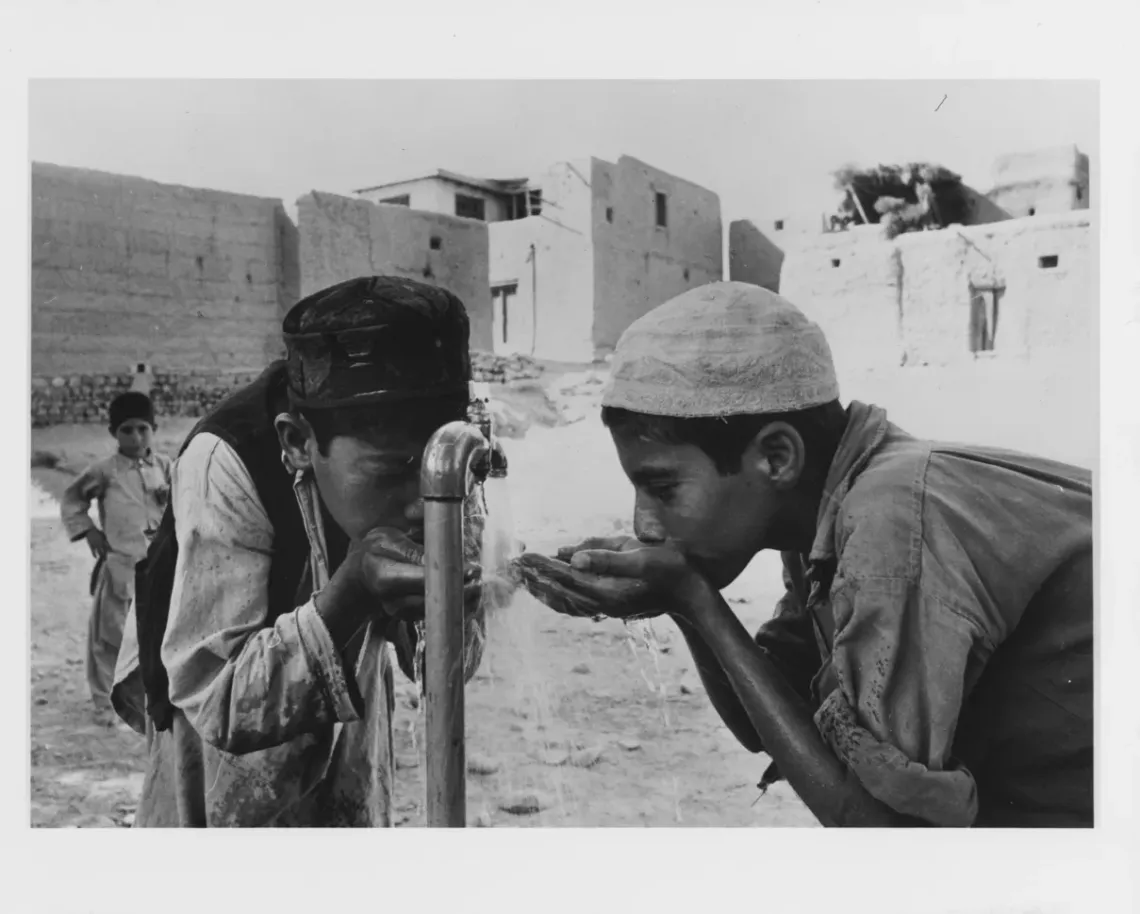
УНИЦЕФ/UN03781/Т. С. Сатян /Афганистан, 1976. In 1975, the Mark II water pump is invented, transforming children’s lives. Clean, safe water flows out of the newly installed taps in Fatiabad, as children and adults eagerly carry it home. In 1976, UNICEF supports Afghanistan’s rural water supply programme by providing supplies and equipment, transport, training and expert personnel.
УНИЦЕФ/UNI124767/Исак/Турция, 1985 г. УНИЦЕФ/UNI124767/Исак/Турция, 1985 г.
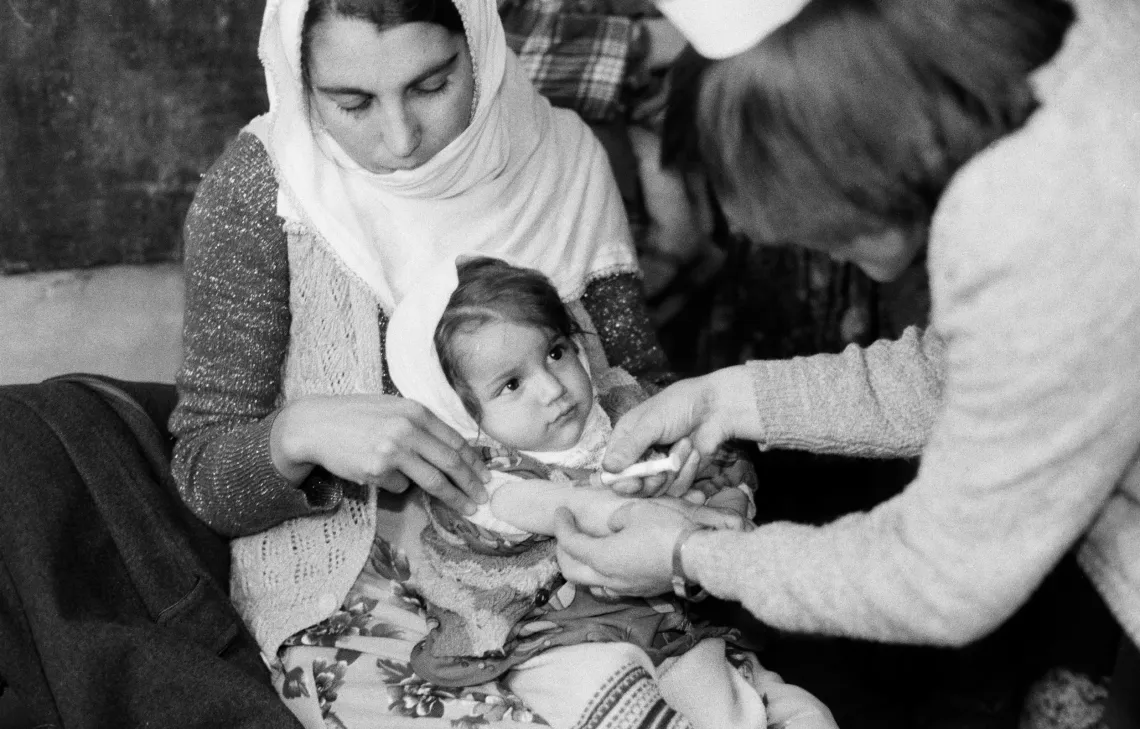
УНИЦЕФ/UNI124767/Исак/Турция, 1985 г. 50 years ago, the world launched the Expanded Programme on Immunization, bringing life-saving vaccines to children everywhere. Much has changed since then, but UNICEF’ goal remains the same – to ensure that every child, everywhere, has access to vaccines. In the last 50 years alone, immunization has saved nearly 154 million lives. A small girl, held by her mother, is vaccinated by a nurse, in the village of Köskköy, during the final round of the UNICEF-supported immunization campaign. On 3 December 1985, Türkiye completed the final round of its unprecedented nationwide immunization campaign. Over three 10-day drives beginning in September, more than 80 per cent of the country’s 5 million children under age five are immunized against diseases responsible for over 500 child deaths each week.
UNICEF/UNI39719/Rotner, New York, USA, 1979 UNICEF/UNI39719/Rotner, New York, USA, 1979
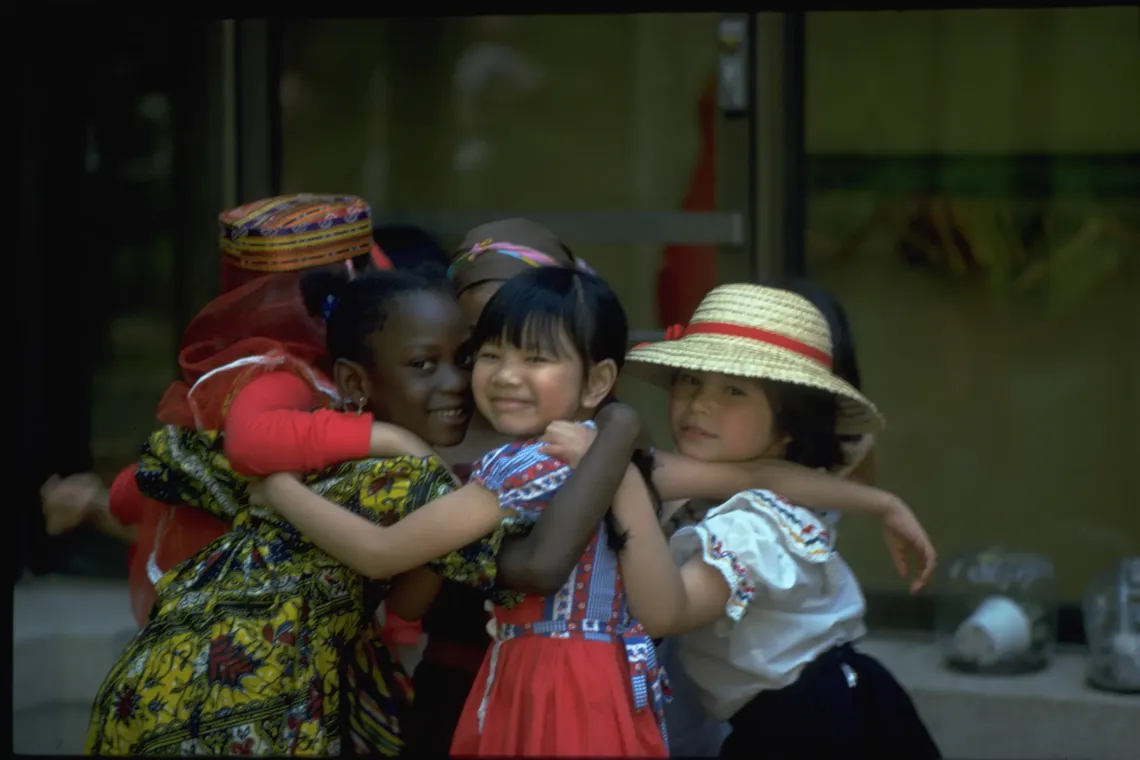
UNICEF/UNI39719/Rotner, New York, USA, 1979 The United Nations declares 1979 as the International Year of the Child to increase awareness of the conditions facing the world’s children and to spur action on children’s rights. In 1979 in the United States of America, a group of smiling girls, dressed in traditional costumes of their homelands, embrace outside the United Nations International School in New York City.
УНИЦЕФ/UNI46239/ Кронфол, 1980 УНИЦЕФ/UNI46239/ Кронфол, 1980
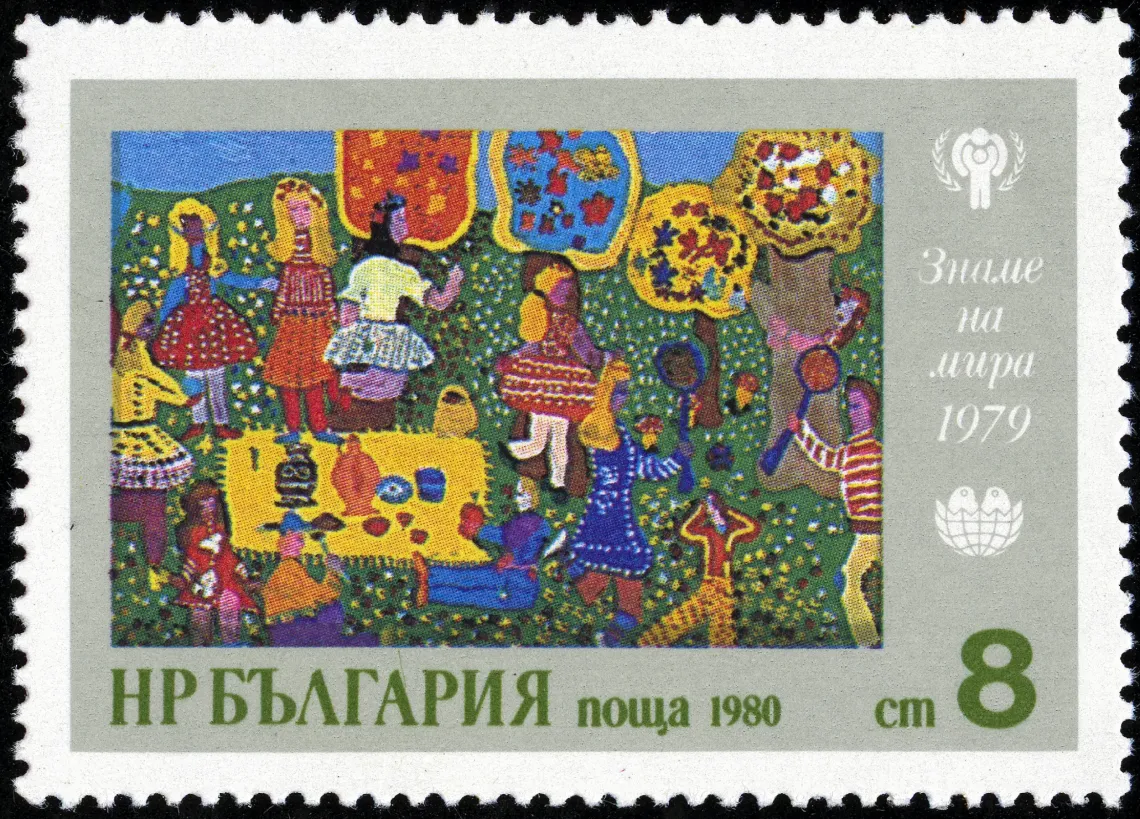
УНИЦЕФ/UNI46239/ Кронфол, 1980 A 1980 postage stamp from Bulgaria depicts children and adults at an outdoor gathering. The stamp features the International Year of the Child (1979) logo, the inscription 'Banner of Peace 1979' (in Bulgarian) and the emblem of the International Children's Assembly - two newly hatched chicks in an egg. The first Children's Assembly of the Banner of Peace movement, held in Sofia in 1979, was dedicated to the International Year of the Child.
УНИЦЕФ/ NI43281/Волан/ Етиопия, 1984 г. УНИЦЕФ/ NI43281/Волан/ Етиопия, 1984 г.
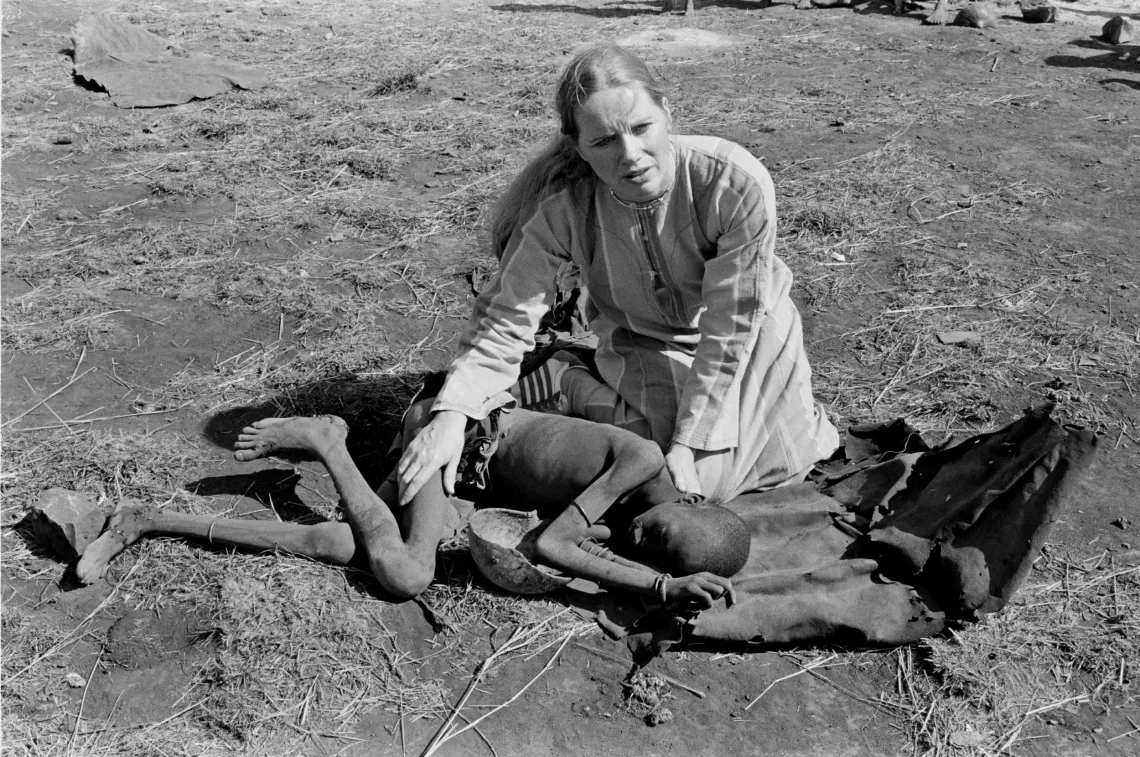
УНИЦЕФ/ NI43281/Волан/ Етиопия, 1984 г. In 1982, UNICEF launches the Child Survival and Development Revolution, a drive to save the lives of millions of children each year. It focuses on four low-cost, life-saving measures: growth monitoring, oral rehydration therapy, promotion of breastfeeding, and immunization. In 1984 in Ethiopia, UNICEF Goodwill Ambassador Liv Ullmann kneels beside a child in the refugee camp in Surma.
УНИЦЕФ/ UNI51098/ Персоназ/ Еритрея, 1994 г. УНИЦЕФ/ UNI51098/ Персоназ/ Еритрея, 1994 г.
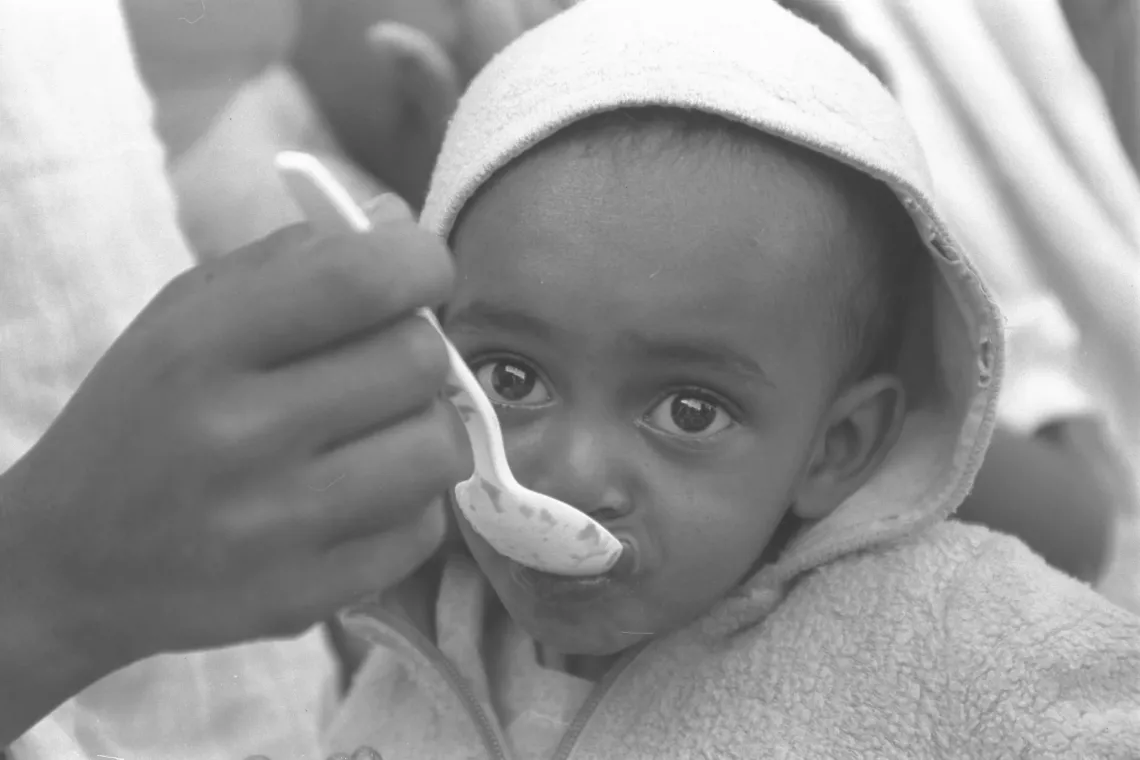
УНИЦЕФ/ UNI51098/ Персоназ/ Еритрея, 1994 г. A four-year-old girl is spoon-fed at a UNICEF-assisted therapeutic feeding center near Asmara, the capital of Eritrea. After 30 years of civil conflict, the country has one of the highest under-five mortality rates in Africa (208/1,000) and an estimated 52% of children under five years old suffer from chronic malnutrition. UNICEF's 1994-1995 programme is focused on assisting some 100,000 orphans of war, strengthening primary health care, providing clean water and sanitation, and promoting primary education.
УНИЦЕФ/UNI40117/Мера/Ню Йорк, САЩ, 1989 г. УНИЦЕФ/UNI40117/Мера/Ню Йорк, САЩ, 1989 г.
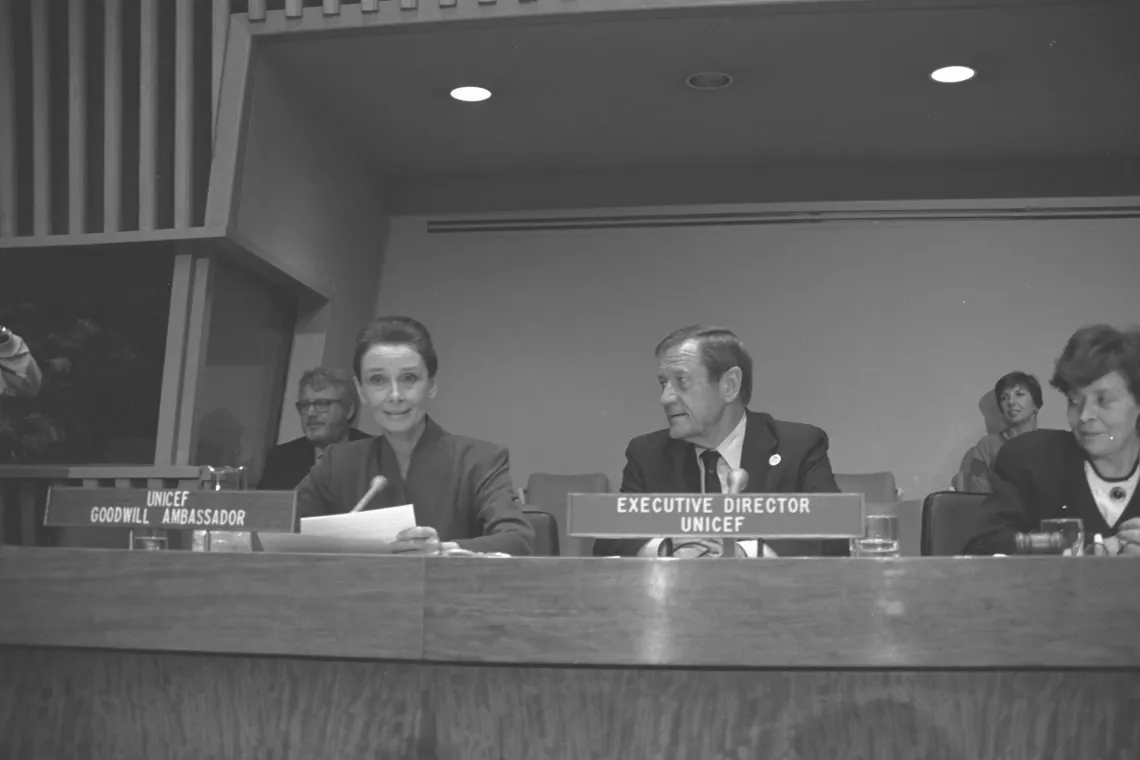
УНИЦЕФ/UNI40117/Мера/Ню Йорк, САЩ, 1989 г. On 20 November 1989, 159 United Nations Member States adopt the Convention on the Rights of the Child - the most universally endorsed human rights treaty for the protection of children - after a decade of negotiations and debates. UNICEF Goodwill Ambassador Audrey Hepburn (left) reads an excerpt of the Convention on the Rights of the Child at a meeting with children from around the world celebrating this historic document.
УНИЦЕФ/ UNI40095/ Исак/ Етиопия, 1988 г. УНИЦЕФ/ UNI40095/ Исак/ Етиопия, 1988 г.
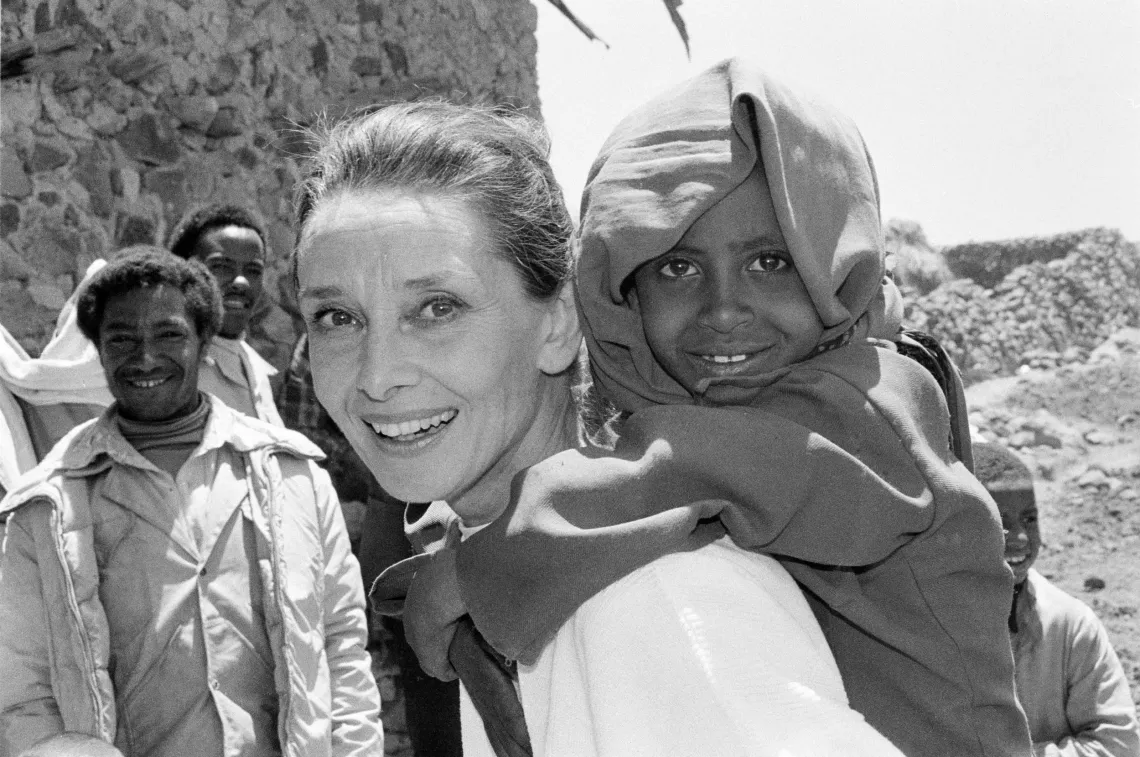
УНИЦЕФ/ UNI40095/ Исак/ Етиопия, 1988 г. In 1988, internationally known film actor and UNICEF Goodwill Ambassador Audrey Hepburn travels to Ethiopia on her first official UNICEF mission to raise awareness of the impact of the continuing drought on the country’s children and women. Today, UNICEF works with more than 400 Goodwill Ambassadors across more than 100 countries to champion the rights of every child. Since the programme’s launch in 1954, hundreds of prominent figures have served at international, regional, and national levels to drive change for children worldwide.
УНИЦЕФ/ UNI51578/ Спраг/ България, 1991 г. УНИЦЕФ/ UNI51578/ Спраг/ България, 1991 г.
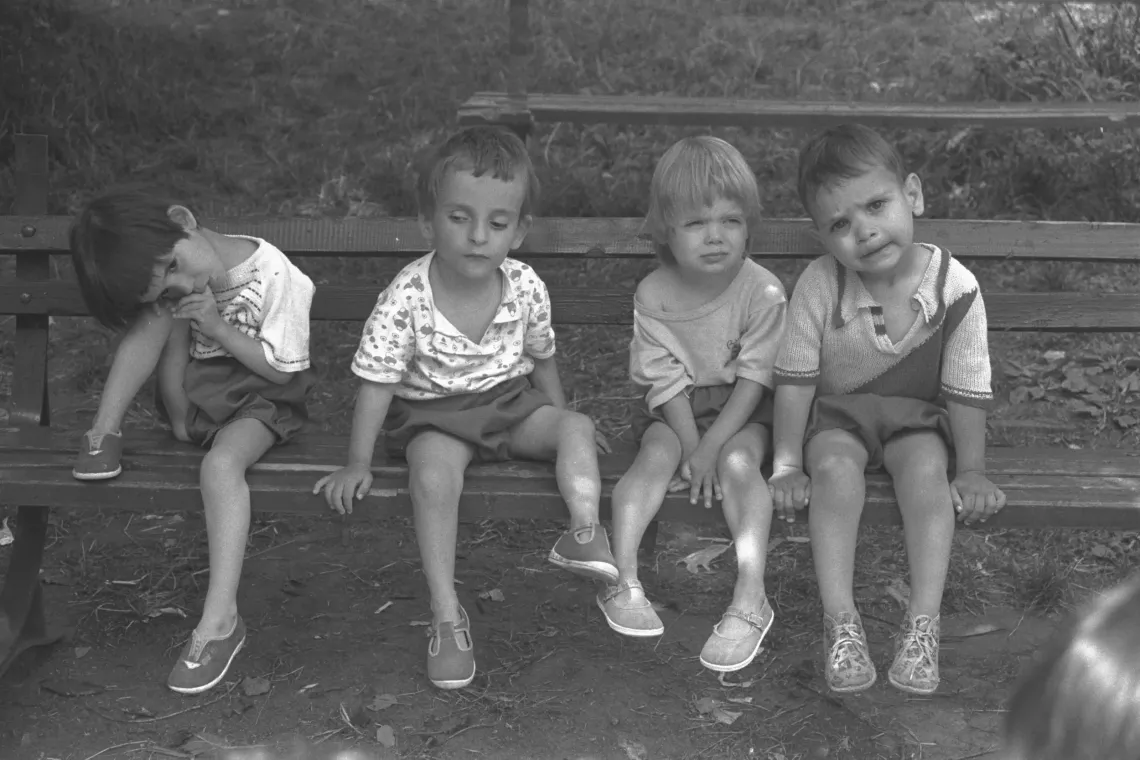
УНИЦЕФ/ UNI51578/ Спраг/ България, 1991 г. Four toddlers sit on a bench outside a home for children with disabilities in Sofia. The unprecedented economic, social, and political transformations across Central and Eastern Europe and the former Soviet Union create significant challenges for children and other vulnerable groups. In response, UNICEF launches a programme in 1991 that combines advocacy to promote the Convention on the Rights of the Child, research to inform child focused policies, and targeted emergency assistance. By early 1993, 15 countries in the region, including Bulgaria, ratify the Convention on the Rights of the Child, and 10 also sign the World Summit for Children Declaration.
УНИЦЕФ/ UNI53344/ Мера/ Ню Йорк, 1995 г. УНИЦЕФ/ UNI53344/ Мера/ Ню Йорк, 1995 г.
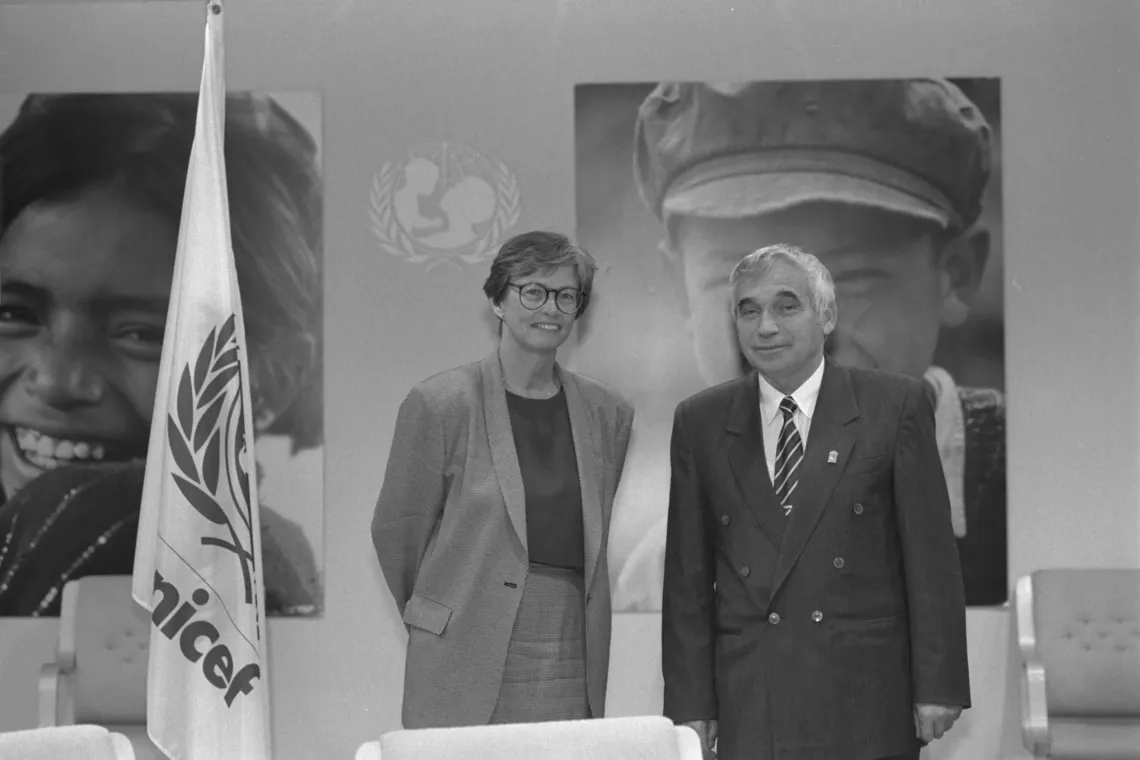
УНИЦЕФ/ UNI53344/ Мера/ Ню Йорк, 1995 г. UNICEF Executive Director Carol Bellamy and Bulgaria’s first democratically elected President, Zhelyu Zhelev, during their meeting at UNICEF House on 24 October 1995.
УНИЦЕФ/UNI50371/ Заир, 1994 г. УНИЦЕФ/UNI50371/ Заир, 1994 г.
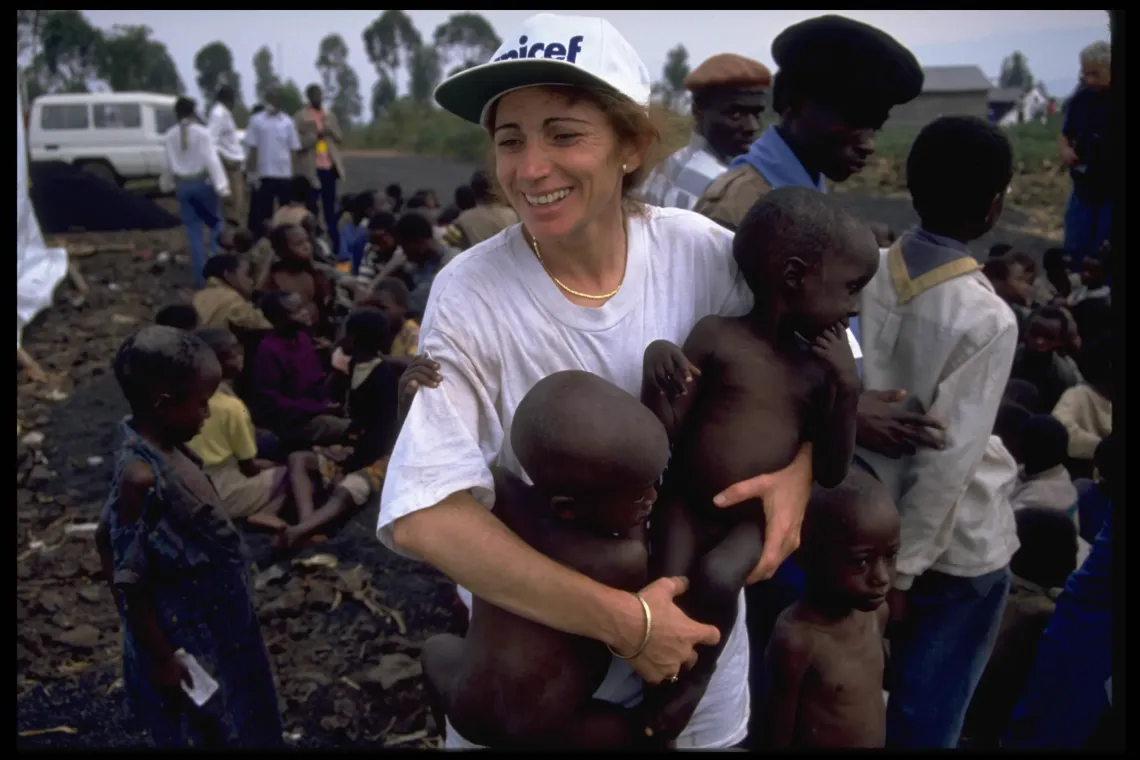
УНИЦЕФ/UNI50371/ Заир, 1994 г. Natural disasters, armed conflict and the silent emergencies of famine and disease continue to impact children worldwide – particularly those already burdened by poverty and disadvantage. Since its founding, UNICEF has never stopped responding to these humanitarian crises. UNICEF Somalia Health Advisor Carmen Carrigos holds two Rwandan refugee children at the Ndosho camp for unaccompanied children near the town of Goma. After the 1994 genocide in Rwanda, which claims nearly one million lives, more than 120,000 unaccompanied children are registered across the region. When a cholera epidemic strikes Rwandan refugee camps in Zaire, UNICEF staff in Somalia draw on their experience curbing a cholera outbreak in Mogadiscio to respond. Focusing on Ndosho—a camp for 3,600 Rwandan refugee children—the team achieves rapid results: within a week, the child death rate in Ndosho drops from 56 a day to four, and by mid August, to just two.
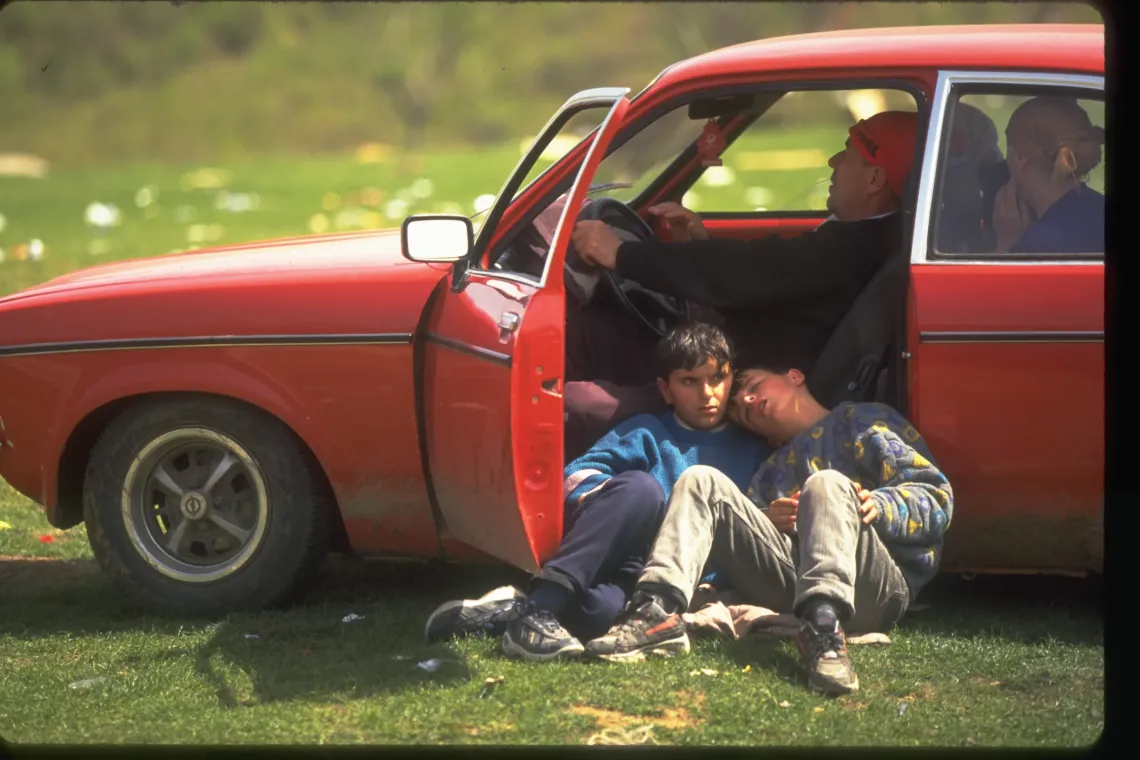
УНИЦЕФ/UNI31487/Чаласани, Албания, 1999 г. УНИЦЕФ/UNI31487/Чаласани, Албания, 1999 г.
УНИЦЕФ/UNI31487/Чаласани, Албания, 1999 г. Two refugee boys from Kosovo near the norther border town of Kukes. By the end of April 1999, in a period of just over a month, more than 600,000 ethnic Albanian refugees—most of them women and children - flee Kosovo in the Federal Republic of Yugoslavia to neighboring countries. UNICEF distributes health kits, essential medical supplies, baby hygiene parcels, high protein food, blankets, water purification tablets, and water testing kits. In Kukes, UNICEF completes an immunization campaign against polio and measles, reaching 24,000 children. UNICEF’s “school in a bag kits,” containing basic classroom materials, are used to restore access to education wherever possible.
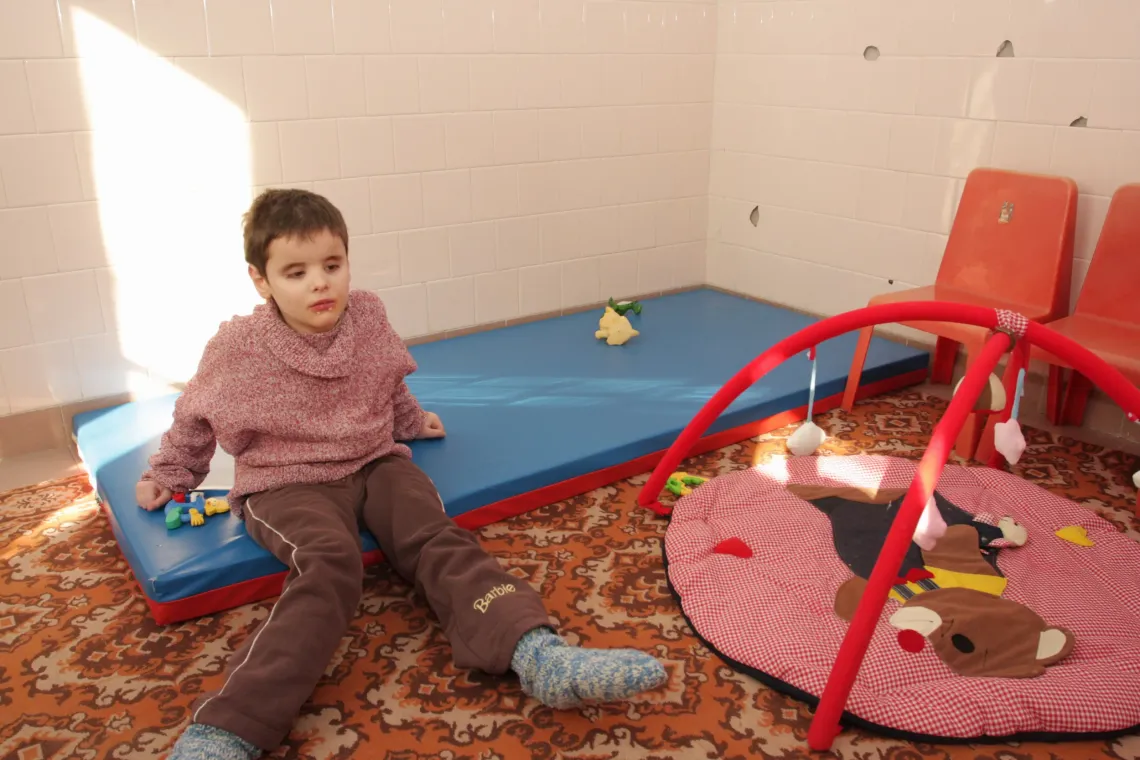
УНИЦЕФ/ Пенов/ Могилино, България, 2008 г. УНИЦЕФ/ Пенов/ Могилино, България, 2008 г.
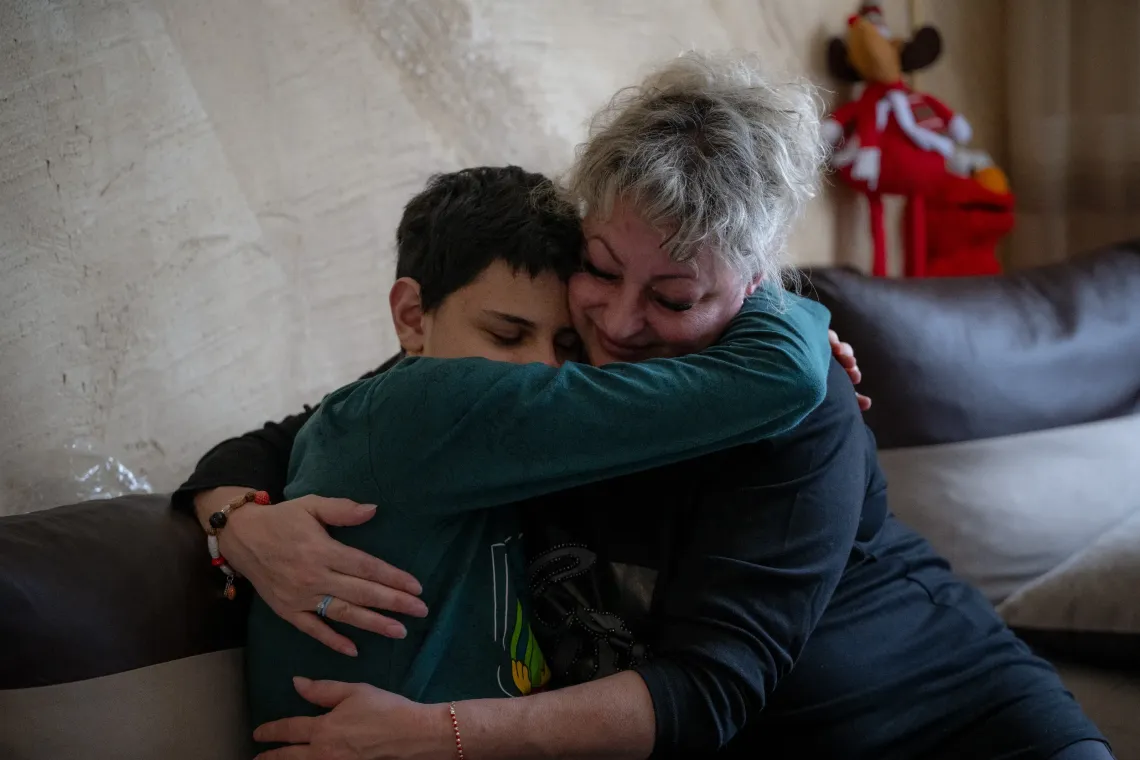
УНИЦЕФ/ Пенов/ Могилино, България, 2008 г. Since the establishment of its Country Office, UNICEF has worked in close partnership with the Government of Bulgaria for over 20 years to improve the lives and well-being of children across the country. In 2007, the world is shocked by a BBC documentary revealing the inhumane living conditions in the Mogilino home. The effort to move the 67 children and young people with disabilities out of the home quickly becomes a national cause. UNICEF supports the Government in closing the institution and developing community based services for children unable to live in a family environment. 52 children and young people from Mogilino are accommodated in six family type placement centers, where they receive professional care and protection.
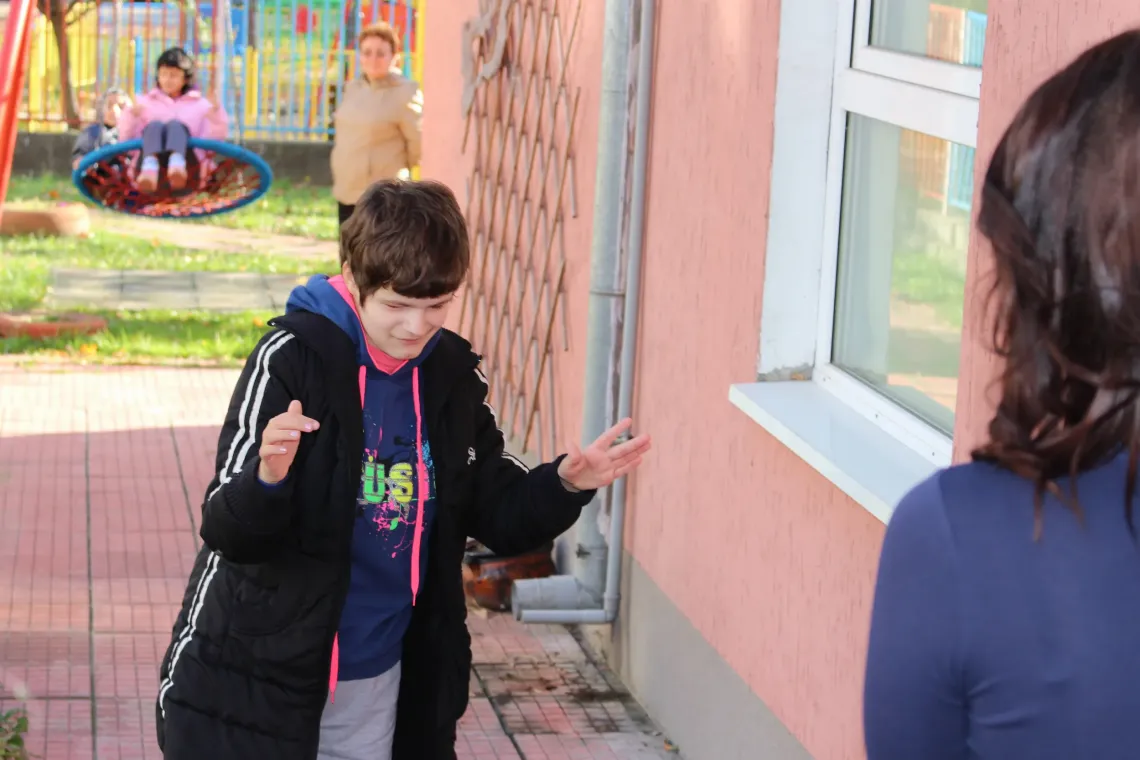
УНИЦЕФ/Русе, България, 2016 УНИЦЕФ/Русе, България, 2016
УНИЦЕФ/Русе, България, 2016 Rossie is born with a visual impairment and spent 13 years in Mogilino. She is later placed in one of the six family type centers established as part of the home’s closure. She continues to live there today, now known as the “Pink House” in Russe. Rossie grows into an affectionate young adult who can walk, eat, dress, and communicate actively with those around her.
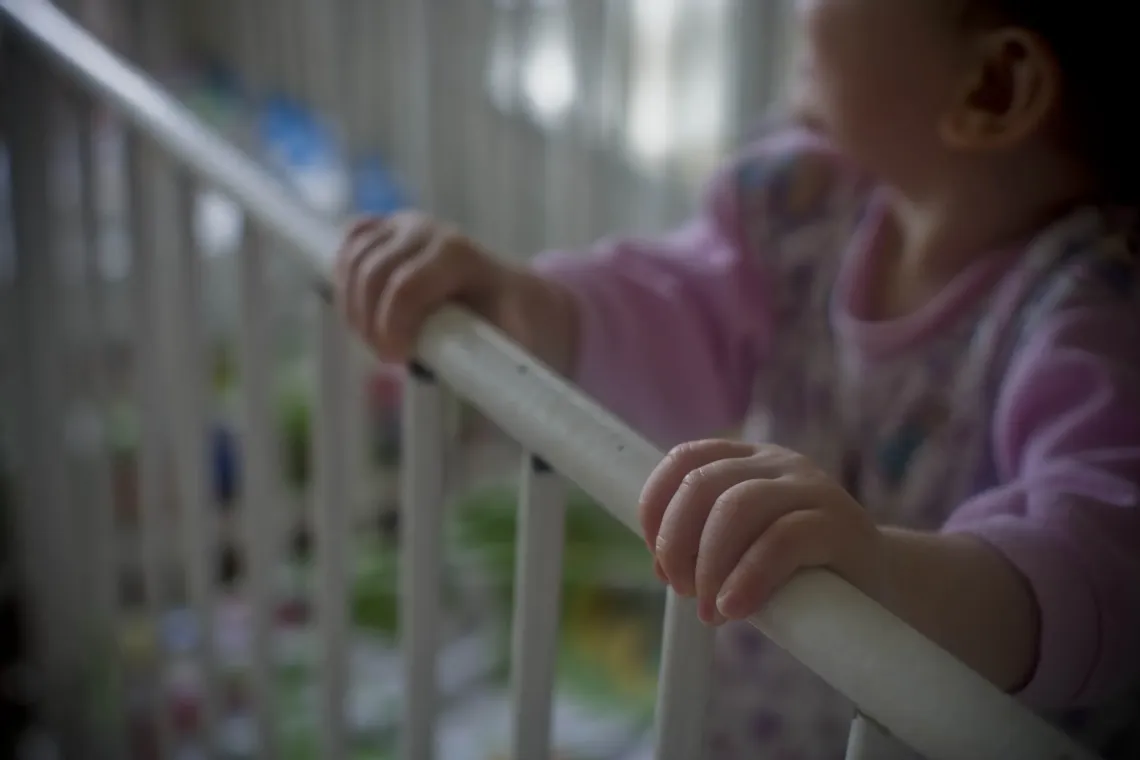
УНИЦЕФ/ UNI114861/ Холт/ Шумен, България, 2011 г. УНИЦЕФ/ UNI114861/ Холт/ Шумен, България, 2011 г.
УНИЦЕФ/ UNI114861/ Холт/ Шумен, България, 2011 г. For over two decades, Bulgaria achieved an impressive progress in childcare reform – the country closed almost all large-scale institutions, banned the placement of children under three in institutional care, and invested in parenting support and family-based alternatives such as foster care, kinship care, and community support services. In 2000, there were more than 35,000 children in 165 different homes for children with limited support provided to vulnerable children and families, insufficient staff skills and a general lack of understanding about children’s rights and needs. Today, 26 years later, fewer than 90 children remain in the last 2 homes for medical and social care for children, both of which are planned for closure. At the same time, more than 770 social services now support vulnerable children and families. A baby stands in a crib at the home for medico-social care for children in Shumen which once accommodated over a hundred children aged 0-3. UNICEF supported the Government with developing new services such as home visiting nurses, outreach community support for children and families at risk, as well as foster care for babies. These efforts contributed to the closure of the home in 2013.
UNICEF/ UNI114865/ Holt, Shumen 2011 UNICEF/ UNI114865/ Holt, Shumen 2011
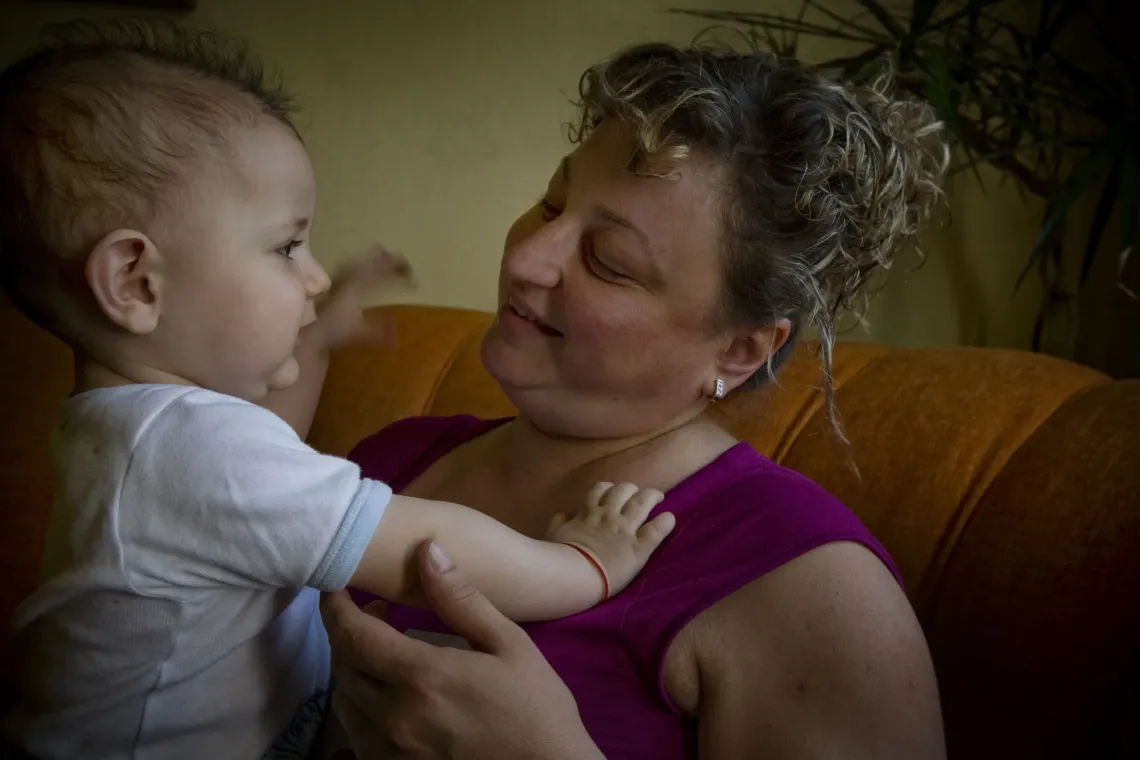
UNICEF/ UNI114865/ Holt, Shumen 2011 Six-month-old baby Vladi with his foster mother Petya at their home in Shumen. The boy is one of the first children to be removed from the Shumen institution and placed into foster care.
УНИЦЕФ/Стойков/ Шумен, България, 2023 УНИЦЕФ/Стойков/ Шумен, България, 2023
УНИЦЕФ/Стойков/ Шумен, България, 2023 Petya and Vladi still live together, and over the years she has cared for eight other children as a foster parent.
УНИЦЕФ/Стойков/София, България, 2024 УНИЦЕФ/Стойков/София, България, 2024
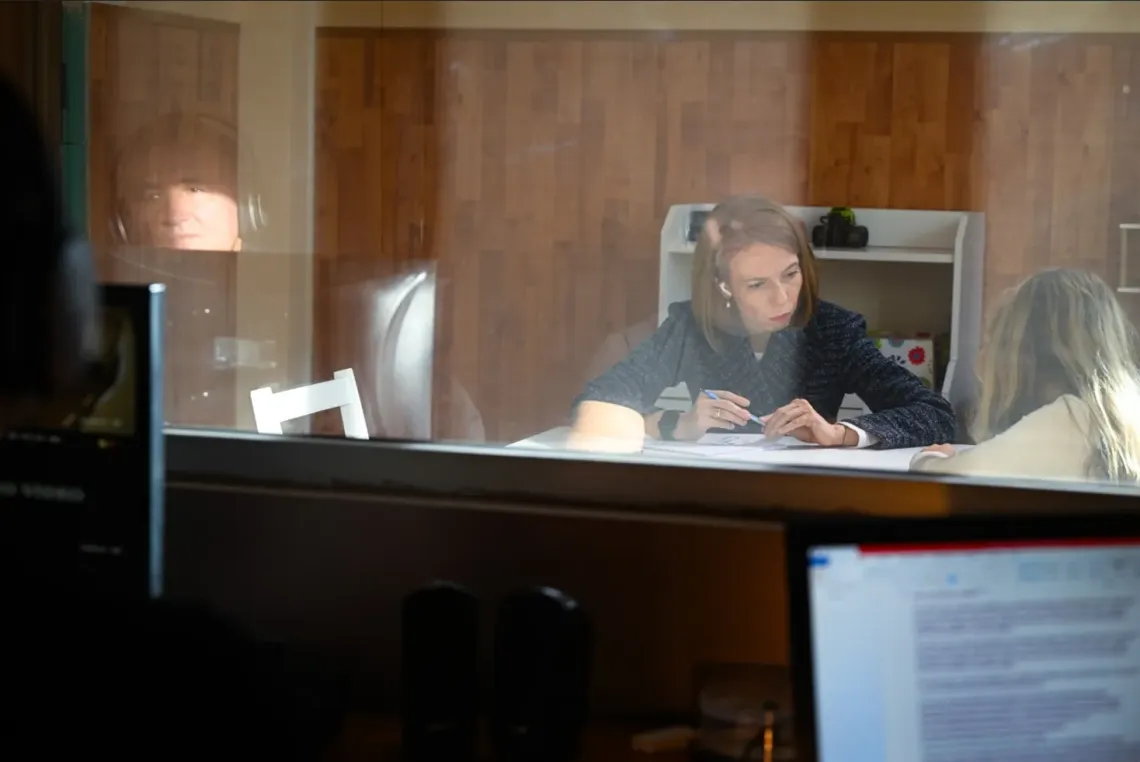
УНИЦЕФ/Стойков/София, България, 2024 In 2008, the first “Blue room” – a child-friendly space for interviewing children who are victims of violence – is established in Pazardjik by the Social Activities and Practices Institute (SAPI). Today, more than 70 “Blue rooms” operate in the country, supported by a national methodology and guidance for their use and work. Petya Dimitrova, a psychologist from SAPI working in a Blue room with a girl, during her hearing.
УНИЦЕФ/Стойков/София, България, 2024 УНИЦЕФ/Стойков/София, България, 2024
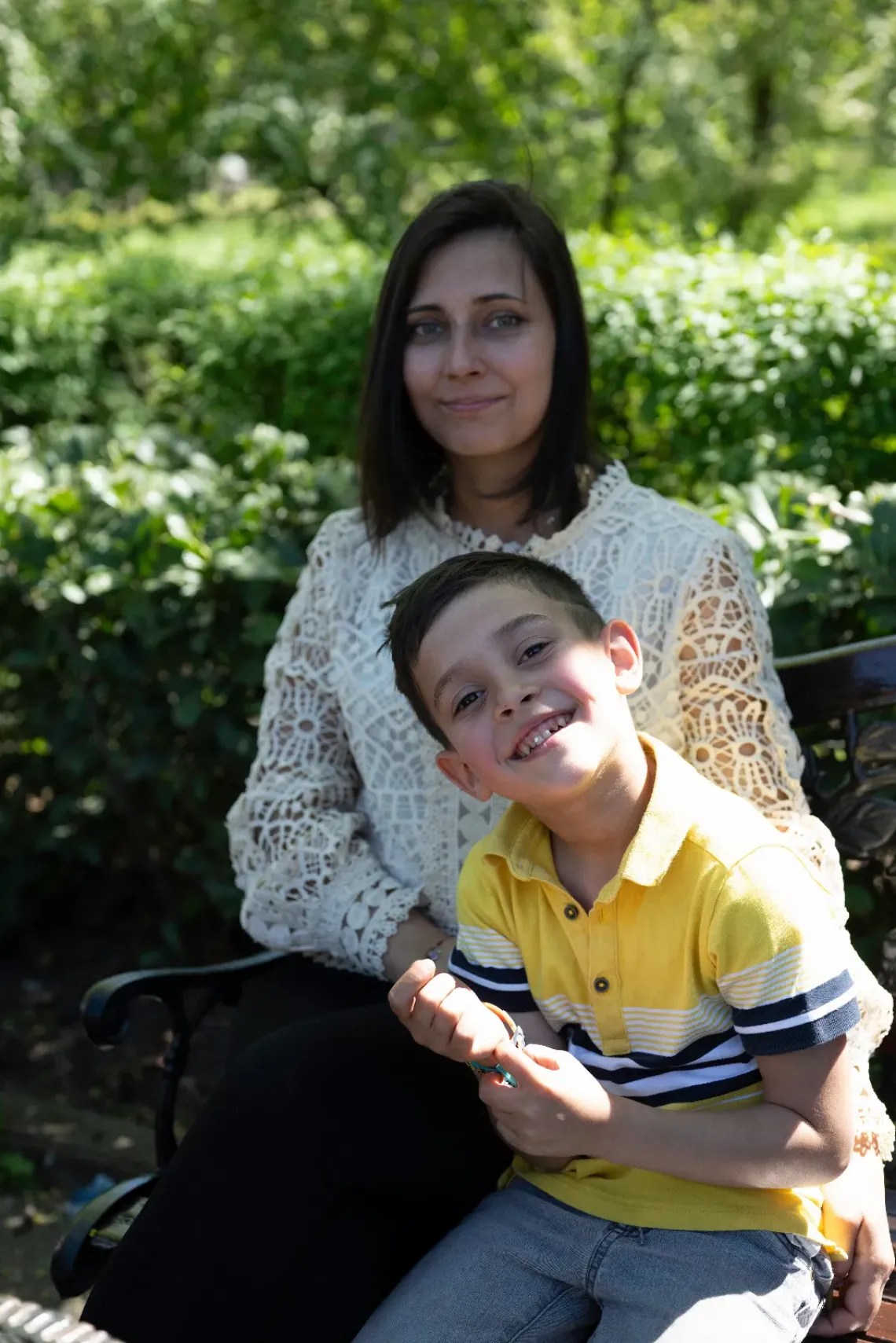
УНИЦЕФ/Стойков/София, България, 2024 One of the key services responding to the needs of children, victims and witnesses of violence, is the “Zona ZaKrila” model. Introduced in 2015 with UNICEF’s support, it provides children and their families with specialized, multidisciplinary support in one place – under one roof. Currently implemented in 11 districts across Bulgaria, the Zona Zakrila model has supported more than 5000 children and their parents to date. Vladi six-years-old and his mother Tsvetelina, smiling in a park in Sofia, Bulgaria. Tsveti and Vladi spend more than a year in the crisis center of the Animus Foundation Association, while the “Zona ZaKrila” team in Sofia provides them with legal assistance as well as psychological and social support, enabling them to overcome trauma and continue their lives free from violence. Tsveti also receives support to complete her education and find a job. Today, Tsveti and Vladi are safe, managing on their own with a renewed sense of strength and confidence.
УНИЦЕФ/Минков/Сливен, България, 2024 УНИЦЕФ/Минков/Сливен, България, 2024
УНИЦЕФ/Минков/Сливен, България, 2024 In 2012, UNICEF and its partners established the first Center for Child and Maternal Health in the Shumen region, followed by a second center in the Sliven region in 2014. To date, together they have supported over 17,000 families in providing comprehensive care for their children during the earliest and most critical years of life. Hristina at her home with her one-year-old Miroslav and visiting nurse Margarita Atanasova from the Center for Maternal and Child Health in Sliven, established by UNICEF. Since little Miroslav’s birth, Margarita Atanasova is a constant presence in the family’s life, providing regular home visits. Every year, visiting nurses from the Center for Maternal and Child Health in Sliven support more than 3,000 families with young children, offering professional care and advice free of charge.
УНИЦЕФ/ Нови Пазар, България, 2016 УНИЦЕФ/ Нови Пазар, България, 2016
УНИЦЕФ/ Нови Пазар, България, 2016 In 2016, UNICEF and Ministry of Education and Science launch the programme ‘Together from the kindergarten’, enabling more than 5,000 children - including those with special needs - to grow, learn and play together. The cheerful five-year-old Ivena attended the "Sunny" class at the "Kitka" Full-Day Kindergarten in Novi Pazar. "Kitka" is one of 30 kindergartens included in the "Together from Kindergarten" programme, where UNICEF and its partners create an inclusive environment for children with special needs and disabilities to learn, play and grow alongside their peers.
УНИЦЕФ/ Стойков/ Кюстендил, Център за обществена подкрепа, 2023 г. УНИЦЕФ/ Стойков/ Кюстендил, Център за обществена подкрепа, 2023 г.
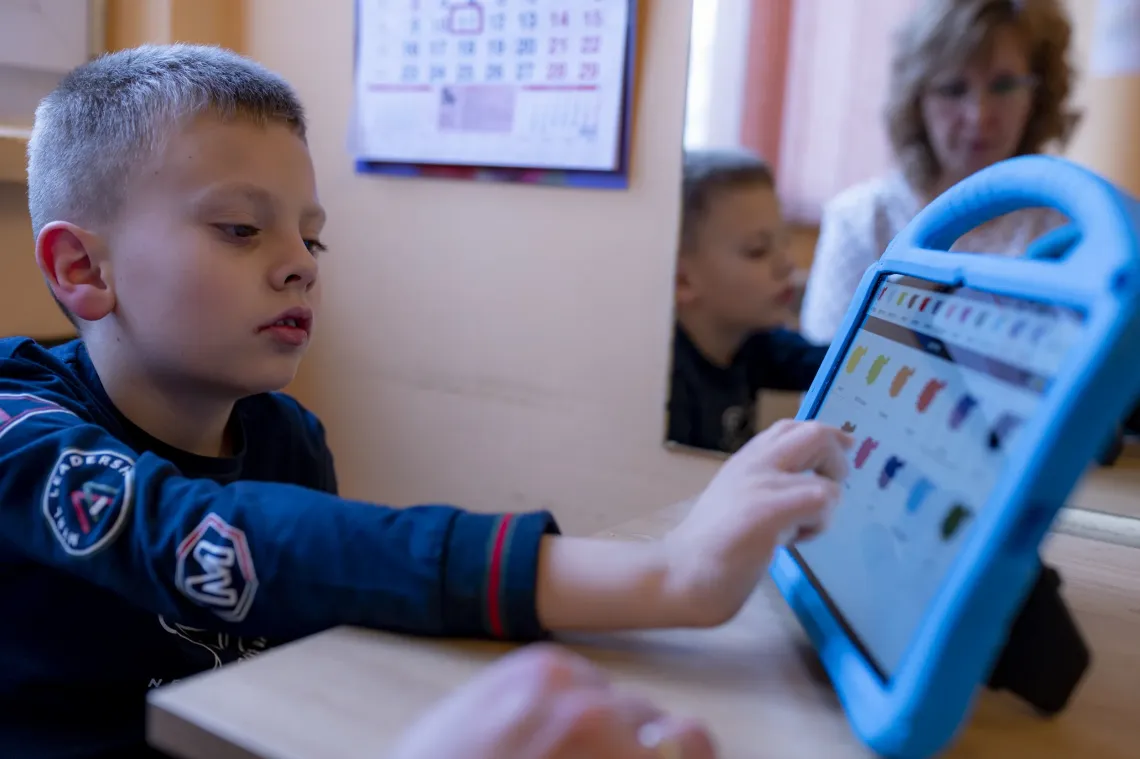
УНИЦЕФ/ Стойков/ Кюстендил, Център за обществена подкрепа, 2023 г. Through the programme “A Voice for Every Child,” UNICEF and the Regional Centers for Inclusive Education introduce augmentative and alternative communication (AAC) tools in kindergartens and schools across Bulgaria, enabling all children to learn and communicate alongside their peers. Augmentative and alternative communication (AAC) tools enable children with communication difficulties to express themselves and allow their parents, teachers, and classmates to better understand and support them. One of the innovative AAC tools for children and adults with speech and language disorders is the Cboard digital app, supported by UNICEF and available free of charge. Boris Cholakov (Bobo) is an eight-year-old nonverbal child in first grade at a school in Kyustendil. When Bobo was younger, he attended a preschool in the Druzhba neighborhood in Sofia, which was part of the “Together from Preschool” programme. Through C-board, he is, for the first time, able to make choices, express what he wanted to do, and write down and find what he was looking for.
УНИЦЕФ/Стойков/ Нова Загора, България, 2024 УНИЦЕФ/Стойков/ Нова Загора, България, 2024
УНИЦЕФ/Стойков/ Нова Загора, България, 2024 Since 2018, UNICEF’s Early Childhood Intervention Programme supports families of young children with developmental difficulties by identifying challenges early and providing guidance at home. Specialists work directly with parents, empowering them with practical tools and confidence to support their child’s development in everyday moments. Evidence shows that early detection and family centred support lead to significantly improved developmental outcomes for children. Vasko, five-year-old, at “Nadezhda” kindergarten in Nova Zagora, 2024. Vasko began speaking at the age of five. With the support of his family and UNICEF’s early childhood intervention specialists, he developed communication and social skills that allow him today to learn, play, and connect with other children.
УНИЦЕФ/ Драгоданово, България, 2012 УНИЦЕФ/ Драгоданово, България, 2012
УНИЦЕФ/ Драгоданово, България, 2012 Children face many of the same obstacles in accessing justice and support as other citizens. However, they are also confronted with specific legal and social barriers due to their status as minors. Since 2013, UNICEF assists the Government in reforming the child justice system to better reflect the rights of children in need of care, support, and protection. This includes strengthening legal and policy frameworks, developing new services for children with offending behaviour and those in conflict with the law, and building the capacity of professionals working with them. A boy from the Socio-pedagogical Boarding School (SPBS) in the village of Dragodanovo, where 37 other children were accommodated at that time. In 2017, with the support of UNICEF and partners, SPBS Dragodanovo is closed as part of efforts to end institutional care for children in conflict with the law.
УНИЦЕФ/ Минков/ СУ“ СВ. Седмочисленици“, София, България УНИЦЕФ/ Минков/ СУ“ СВ. Седмочисленици“, София, България
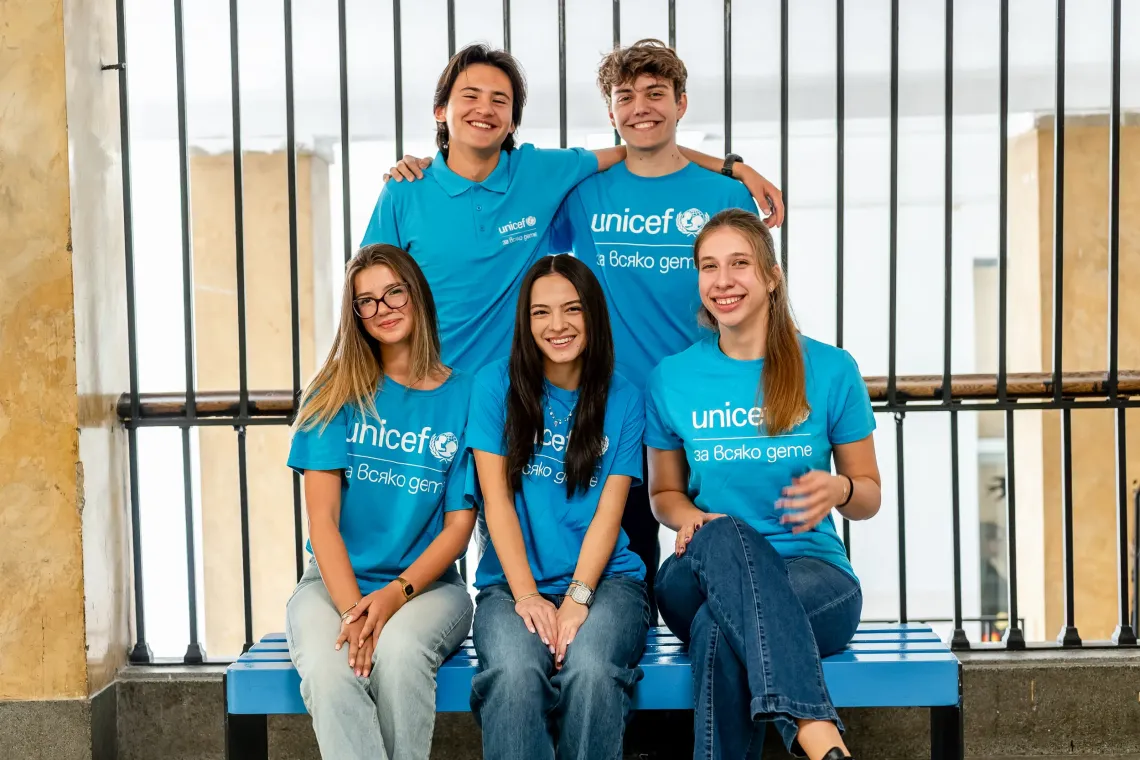
УНИЦЕФ/ Минков/ СУ“ СВ. Седмочисленици“, София, България Since 2021, the national programme “Steps Together” for preventing bullying and violence in schools supports school communities in Bulgaria in creating safer and more supportive environments, reaching over 20,000 children and adolescents. Implemented by UNICEF Bulgaria in partnership with the Ministry of Education and Science, the programme works with students, teachers, and parents to build children’s social emotional skills, support teachers, and actively involve parents. Through training, mentoring, and work with student “peacemakers,” the initiative promotes open dialogue, early identification of risky situations, and the building of a culture of mutual respect in schools. The peacekeepers from St. Seven Saints School in Sofia sit on their special blue bench—a place for any child who needs help or advice. The school is one of the first five pilot schools in the "Steps Together" programme, which, to date, has engaged more than 200 schools across the country.
УНИЦЕФ/ Спасов/ Работилница на UpShift, Перник, България, 2025 УНИЦЕФ/ Спасов/ Работилница на UpShift, Перник, България, 2025
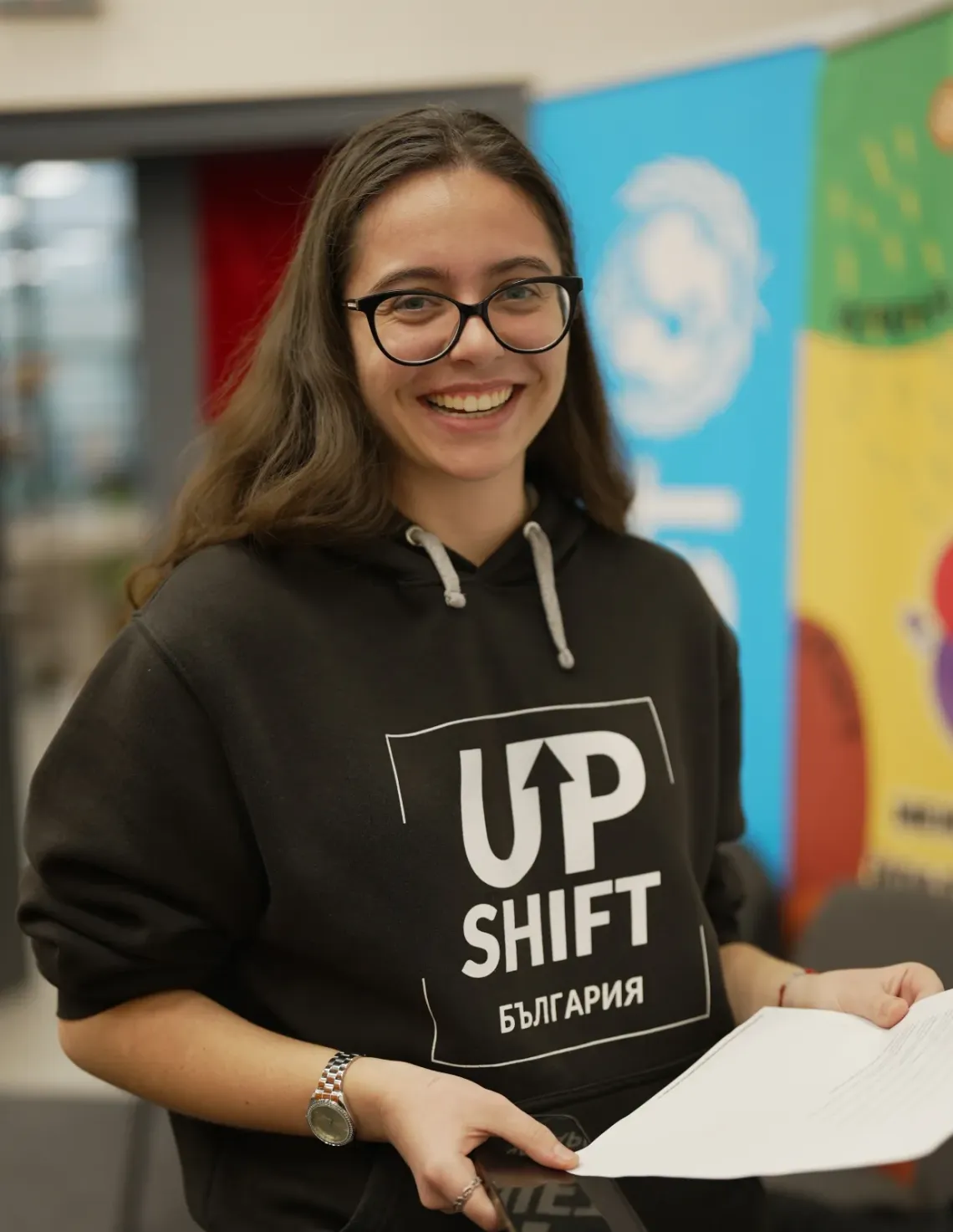
УНИЦЕФ/ Спасов/ Работилница на UpShift, Перник, България, 2025 UPSHIFT is a global UNICEF programme that empowers young people to drive change in their communities. Through a combination of training, mentorship, and seed funding, it helps transform youth ideas into impactful social projects. Since its launch in Bulgaria in 2024, the programme has engaged over 1,500 young people, delivered 16 workshops, and supported 50 youth led projects, reaching more than 50,000 individuals. “Upshift is a programme every young person should experience. The emotions and skills stay with you forever. I’m grateful that I had the chance to live this adventure twice—once as a participant and once as a mentor.”– Nikol Petrova, 17 years.
УНИЦЕФ/Минков/Варна, България, 2022 УНИЦЕФ/Минков/Варна, България, 2022
УНИЦЕФ/Минков/Варна, България, 2022 From conflict and climate change to natural disasters and political instability, today’s world confronts children with growing and overlapping crises. In partnership with governments, local authorities, civil society organizations and other UN agencies, UNICEF works to ensure that refugee and migrant children are protected, cared for and educated – so their rights are upheld and their unique needs are met, wherever they are. 7-year-old Vasilisa is in her room at a hotel, near Varna. Two months after the conflict began, she left Ukraine with her mother, Svetlana. Vasia says she dreams of having peace on earth forever. The war in Ukraine has shattered the lives of 7.5 million children. Fear, trauma and uncertainty have become part of everyday life, as millions of families are forced to flee. Nearly 90 per cent of those displaced are women and children. In Bulgaria, UNICEF, together with partners, works to ensure that displaced children and families from Ukraine can find safety, continue their education, and begin to rebuild their lives with dignity, hope and protection. Never in recent history have so many children around the world been forced to leave their homes simply to survive.
УНИЦЕФ/Минков/Харманли, България, 2024 УНИЦЕФ/Минков/Харманли, България, 2024
УНИЦЕФ/Минков/Харманли, България, 2024 Nauraz, eighteen-years-old, lives in the “Safe Zone for Unaccompanied Refugee Children,” established with UNICEF support at the largest Registration and Reception Centre, Harmanli, run by the State Agency for Refugees. He leaves Syria on his own at the age of 16, leaving behind his family, friends, and everyone he loves. After more than 11 years of war in his homeland, Nauraz hopes to find peace. His dream is to become a centre forward on a world class soccer team. Bulgaria is an external border of the European Union, at a key crossroads of migration routes. More than 50,000 refugees and migrants have arrived in the country – including over 13,000 children in the past several years. UNICEF works with national authorities and partners to ensure that these children – especially those arriving alone – are identified, protected and supported, with access to protection, care, education, legal assistance and safe alternatives for the future.
УНИЦЕФ/ Милкова/ Бургас, България, 2022 УНИЦЕФ/ Милкова/ Бургас, България, 2022
УНИЦЕФ/ Милкова/ Бургас, България, 2022 Bulgaria continues to have the highest share of child poverty in the European Union. Between 2021 and 2023, UNICEF, in partnership with the Government, piloted the “European Child Guarantee in Bulgaria,” funded by the European Union. The initiative introduces four service models across 10 municipalities, reaching more than 17,000 children and 10,500 parents over 24 months. In November 2022, the Government of Bulgaria adopts a National Action Plan for the European Child Guarantee, aiming to reduce the number of children at risk of poverty and social exclusion by 196,700 by the end of 2030. Born and raised in one of the poorest areas in the city of Burgas, Bulgaria, Sylvia is making her first steps after one and a half years of rehabilitation. The girl couldn’t walk or speak before the mobile team, set up under the European Child Guarantee pilot project, found her 2 years earlier. Today, Sylvia is six years old and receives consistent support and therapy at the Community Support Center in Burgas. Thanks to mobile teams, hundreds of children and families living in the most marginalized communities and remaining often invisible to institutions gained access to essential services.

Support UNICEF for every child

Every child has the right to a better life.
With your support, we can make it possible.


UNICEF works for every child — in Bulgaria and around the world. Our mission is to ensure that every child grows up in a safe and supportive environment, with access to healthcare, quality education, and protection. Thanks to your support, we reach the most vulnerable children and give them a chance for a better future.