Everyone is included
How Technology Supports Children with Disabilities in School and Who Facilitates Its Introduction in Belarus
- русский
- English
When Bohdan begins to lose focus during class, he goes to a special desk enclosed on three sides by tall panels that block distractions and help him concentrate. Thanks to specially designed accommodations—including the desk, a communication device, a tablet, a weighted vest, and other assistive equipment—Bohdan and other children with Autism Spectrum Disorders (ASD) at Minsk School No. 177 can learn alongside their peers. Such equipment is becoming available across the country in schools and kindergartens thanks to the support of the government, nonprofit organizations, and businesses. What exactly is this equipment, and why is it a vital element in building inclusive education?
Inclusive education is a concept that aims to create conditions enabling all children, including boys and girls with developmental differences, to learn alongside their peers. This requires preparing educators, teachers, school administrators, and parent communities to recognize and support the diversity of children in the classroom.
A current trend in inclusive education is the introduction of assistive technologies for children with individual developmental needs. These are special devices, software, and other tools that help expand the abilities of children with special educational needs to learn: to read, write, remember, walk, see, hear, and communicate more effectively.
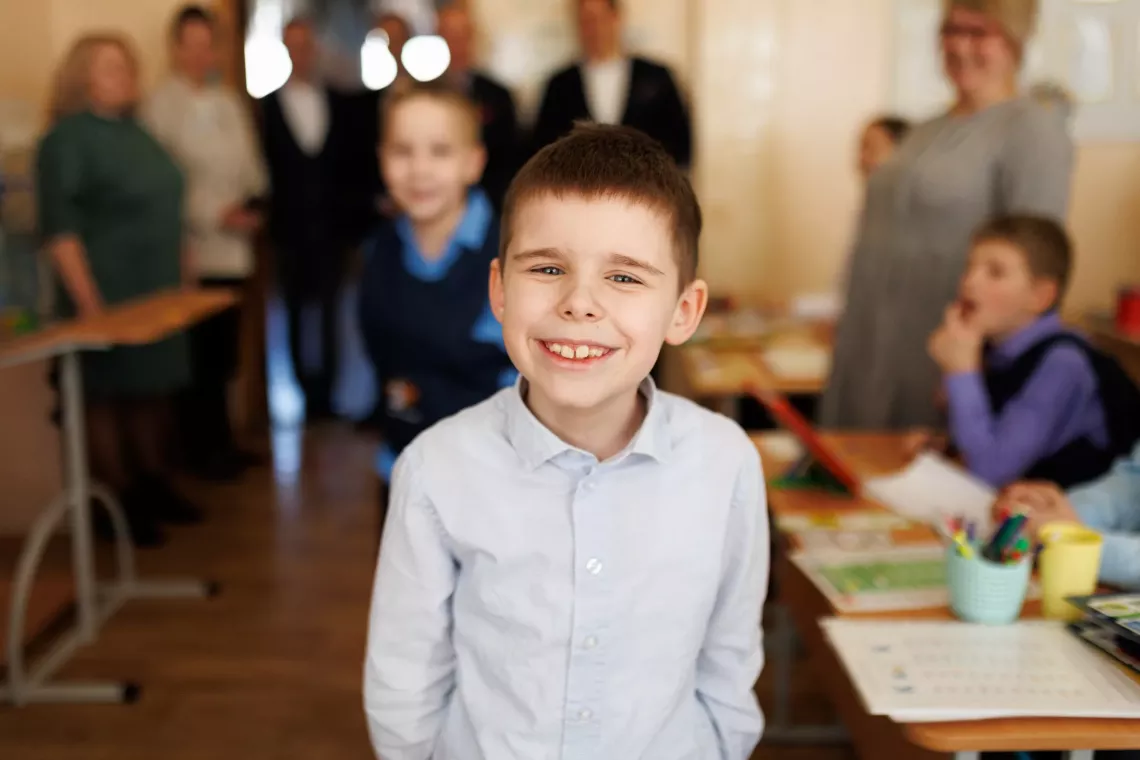
As part of a joint project with the Ministry of Education, in 2021 UNICEF in Belarus procured and distributed assistive equipment to 285 children with developmental disabilities. Additional purchases of such equipment for schools and kindergartens are currently underway. The BelVEB Bank supported the effort to increase the number of children receiving assistance. Thanks to their support, assistive equipment was purchased for five educational institutions in Minsk — three kindergartens and two schools. As a result, more than 50 children with developmental disabilities will have the opportunity to receive quality inclusive education.
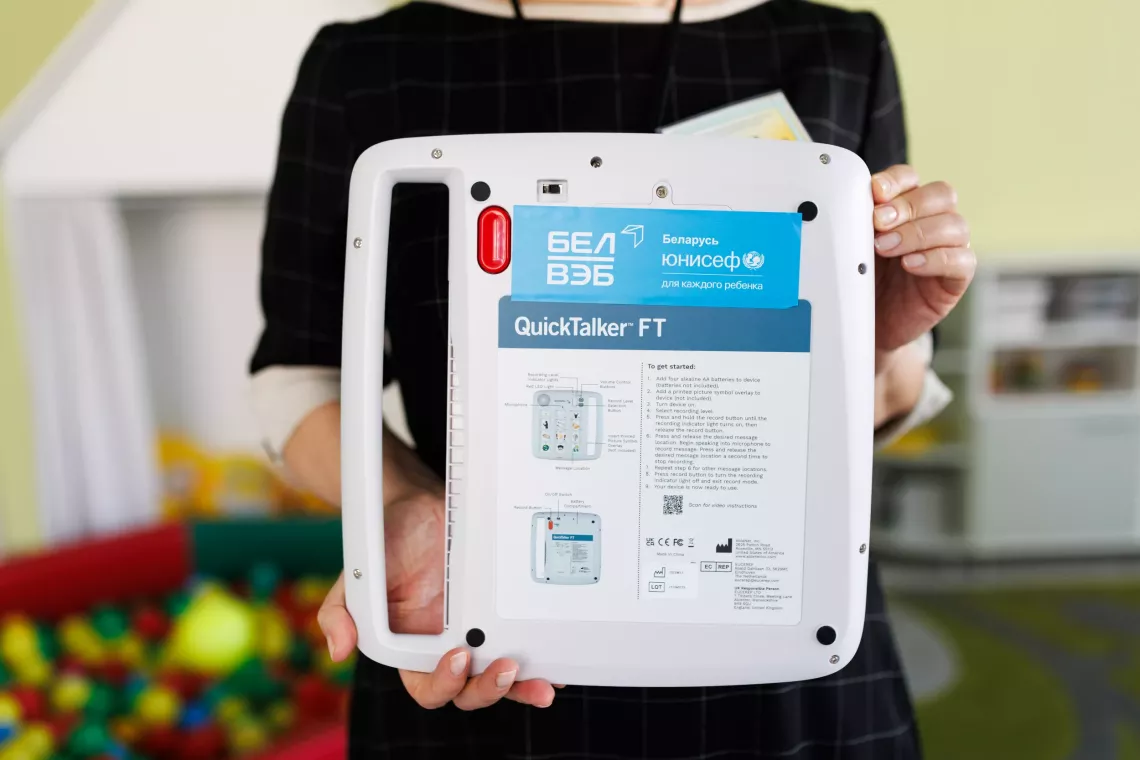
Assistive Equipment in Schools
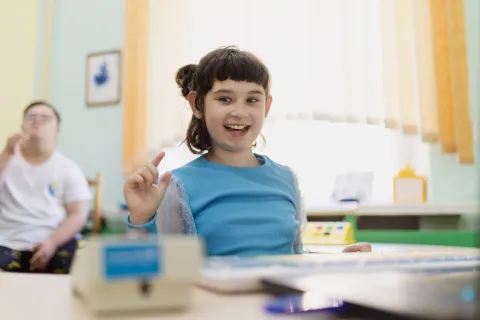
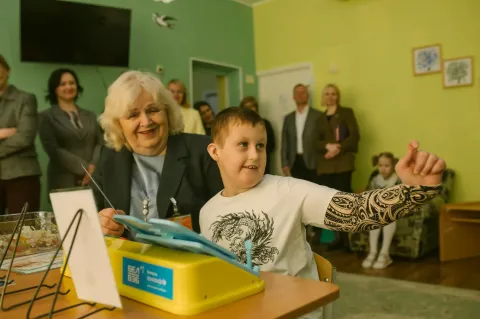
Next to the special desk used by Bogdan at Minsk School No. 177 lies a communication device. When a child is struggling or facing difficulties, they can press a button on the device, which says: “I need help.” Children with autism spectrum disorders (ASD), like Bogdan, often experience challenges with communication and expressing emotions. It is this inability to convey feelings and needs that can sometimes lead to behaviors that others may find unusual. Imagine, for example, that you don’t want to eat because your stomach hurts, but you are unable to tell those around you who keep offering you food. Alternative communication provided by assistive technology becomes a true solution in such cases.
In the school, besides Bogdan, there are 28 other students with autism spectrum disorders (ASD).
According to the World Health Organization, one in every 160 children worldwide is born with autism. In Belarus, the number of children with autism spectrum disorders (ASD) has increased 2.4 times over the past five years. Autism is not a disease but a developmental disorder that lasts throughout a person’s lifetime. While autism cannot be cured, with the right support, people with autism can successfully integrate into society and realize their potential.
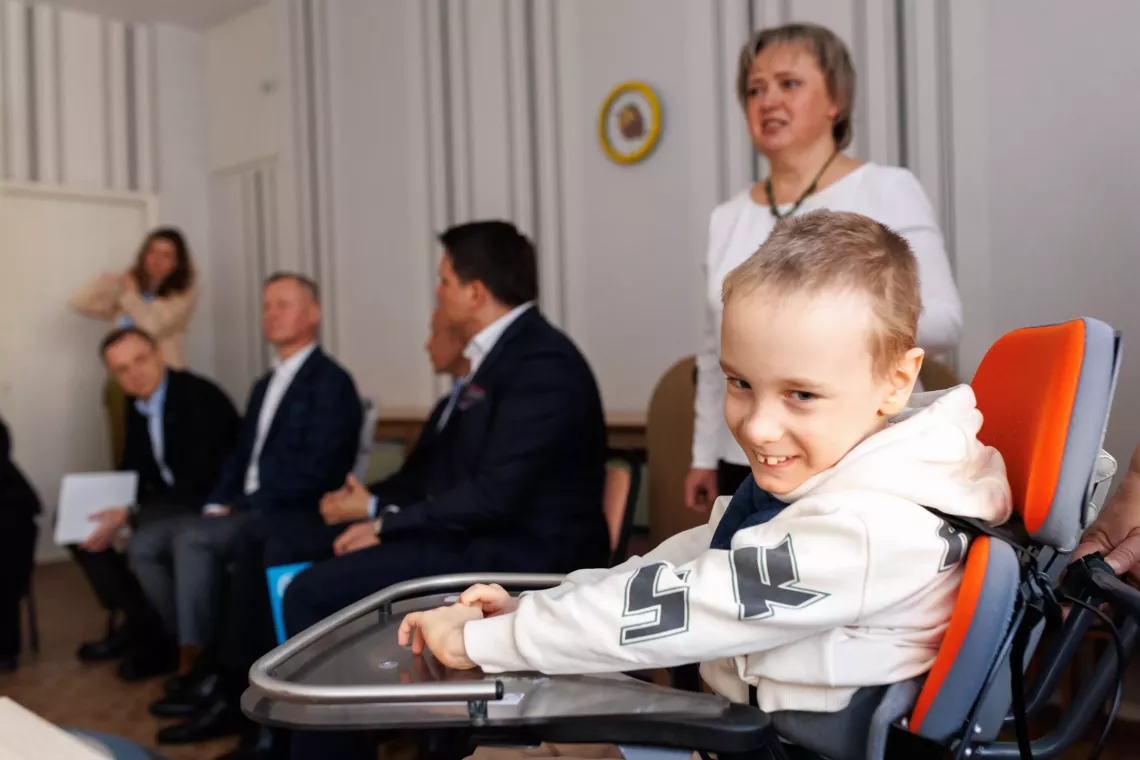
Children with autism spectrum disorders (ASD) now wear special weighted vests at School No. 177. These vests are very important for children with sensory integration disorders, as they often experience heightened arousal. The vests help them concentrate and better control their bodies.
Classrooms also have relaxation corners with weighted blankets. When feeling overwhelmed, children can cover themselves with these blankets to calm down and reset before returning to their lessons.
“Here are the special desks that serve as a quiet zone,” the school teacher explains. “Children with ASD experience intense emotional sensitivity and are easily distracted by everything around them. When a child sits at this desk, nothing disturbs them, and they can focus on individual tasks. Inside this enclosed space, there is a visual schedule on the walls and a mood reflection chart. And here in my hand is a pointing stick: it helps capture attention when we show something on the board—it’s more effective than a regular pointer. Working daily with children with ASD, we understand that without these tools, a proper educational process simply isn’t possible.”
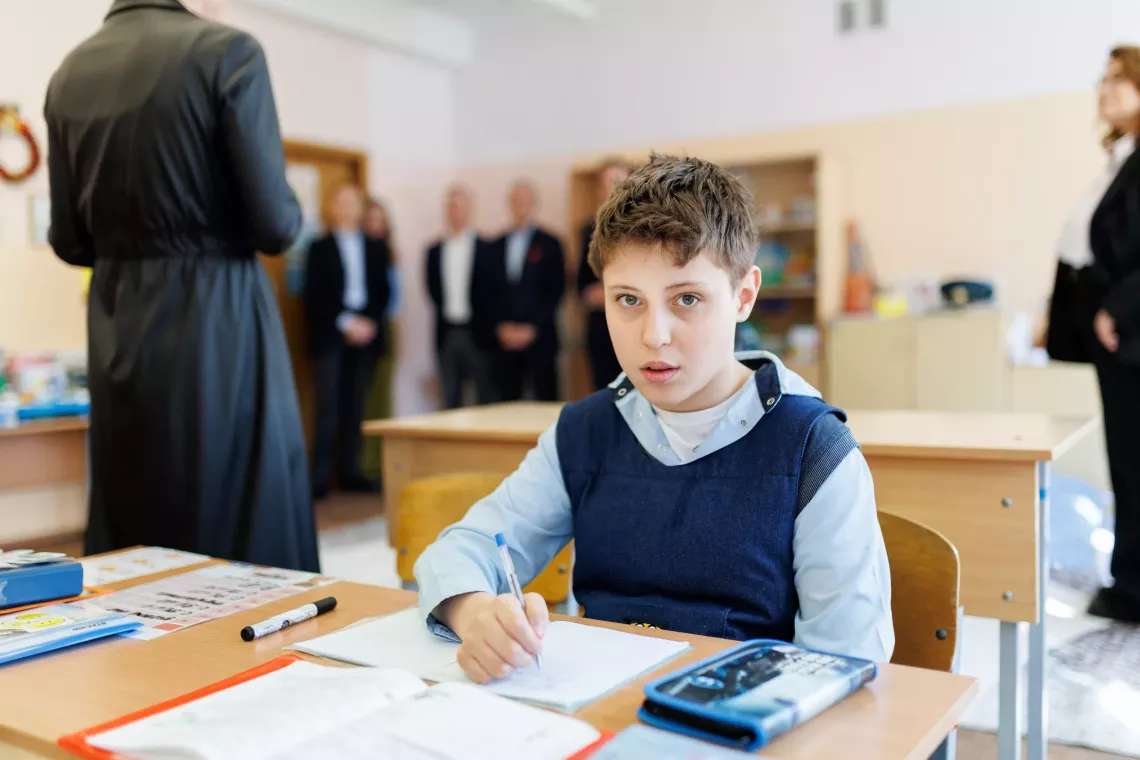
Assistive equipment in kindergarten
Inclusive education systems include not only schools but also kindergartens. The earlier children receive support and begin socializing, the greater their chances of unlocking their full potential.
Since 2006, more than 100 children with disabilities have attended Kindergarten No. 200 in Minsk. Currently, there are 13 children, including those with autism spectrum disorder (ASD) and children with motor impairments.
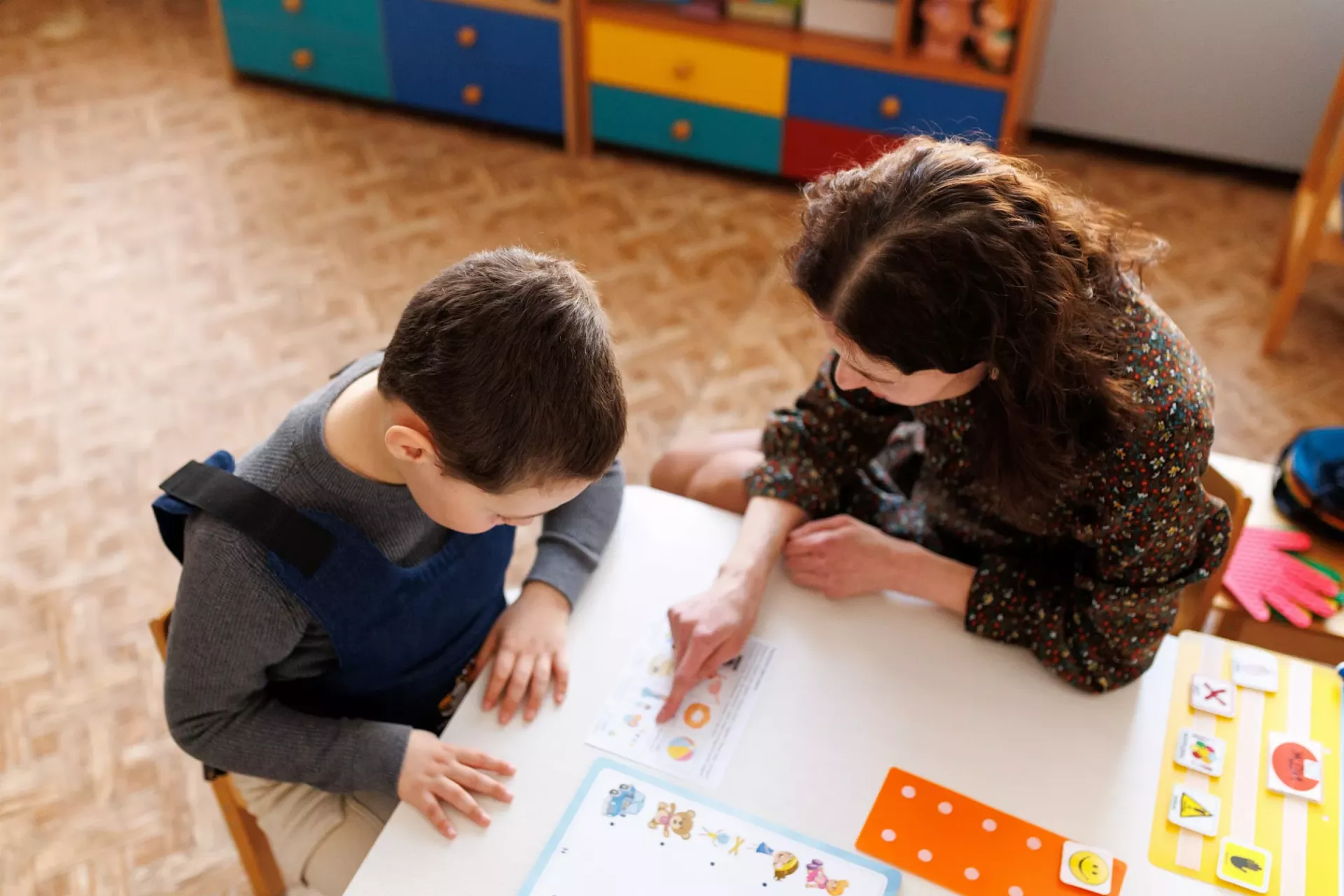
Communication difficulties and challenges expressing emotions are not limited to children with ASD. They can also be secondary symptoms in children with motor disabilities and other types of disabilities. Therefore, when procuring assistive equipment for the kindergarten, priority was given to alternative communication tools: tablet communicators, communication buttons, and PECS (Picture Exchange Communication System) cards. This system focuses on teaching basic communication skills—how to initiate contact, make requests, comment, and respond to simple questions. The program’s effectiveness is supported by numerous studies and is successfully implemented in various countries around the world.
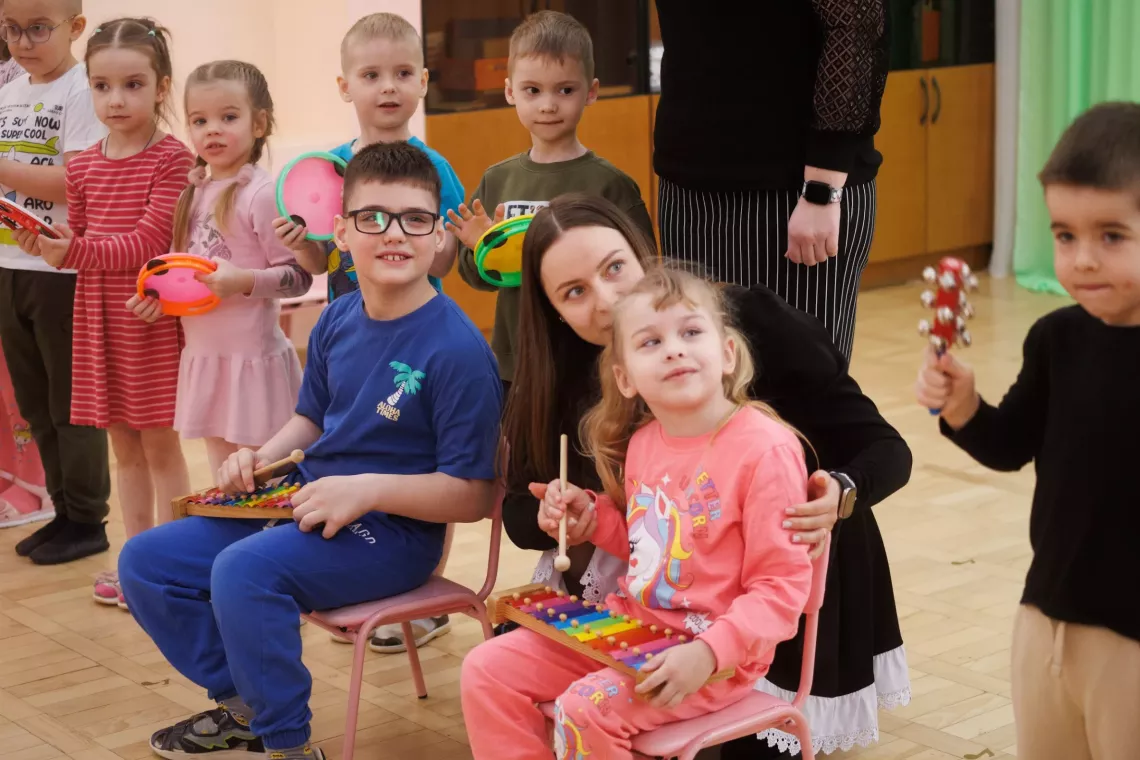
“To help a child socialize more easily, we need to support their communication with peers and teach them to ask adults for help in any way that works for them,” shares the head of the kindergarten. “While their peers can tug on a sleeve or take a hand, a child with autism or a child with a motor impairment often cannot do this themselves due to their physical limitations. Of course, the equipment that helps attract attention through sound signals or other means is invaluable. And the more we begin to implement these tools, the more we realize just how important what we have received truly is.”