Child-Friendly Room
Why Support Begins with a Safe Space
- русский
- English
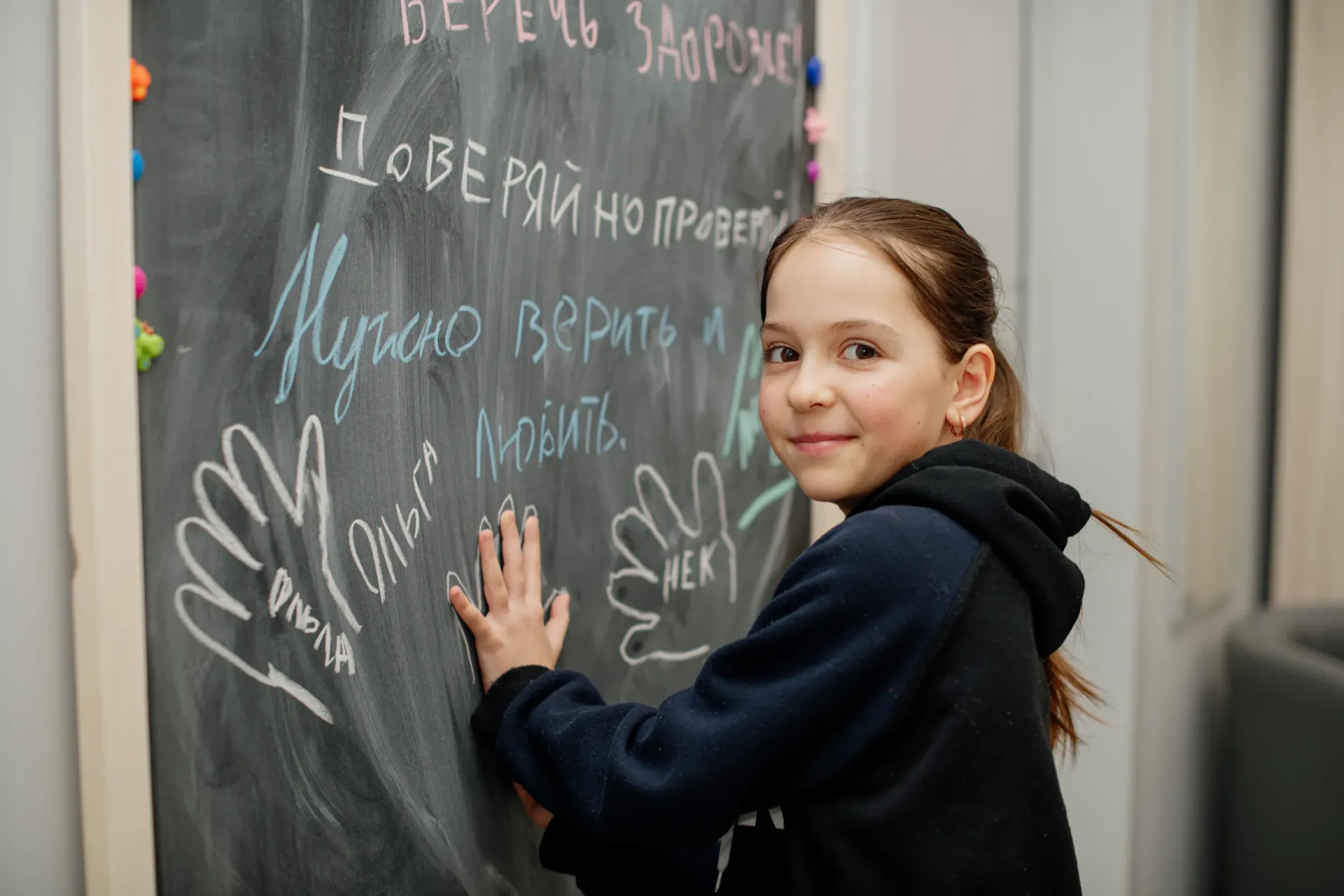
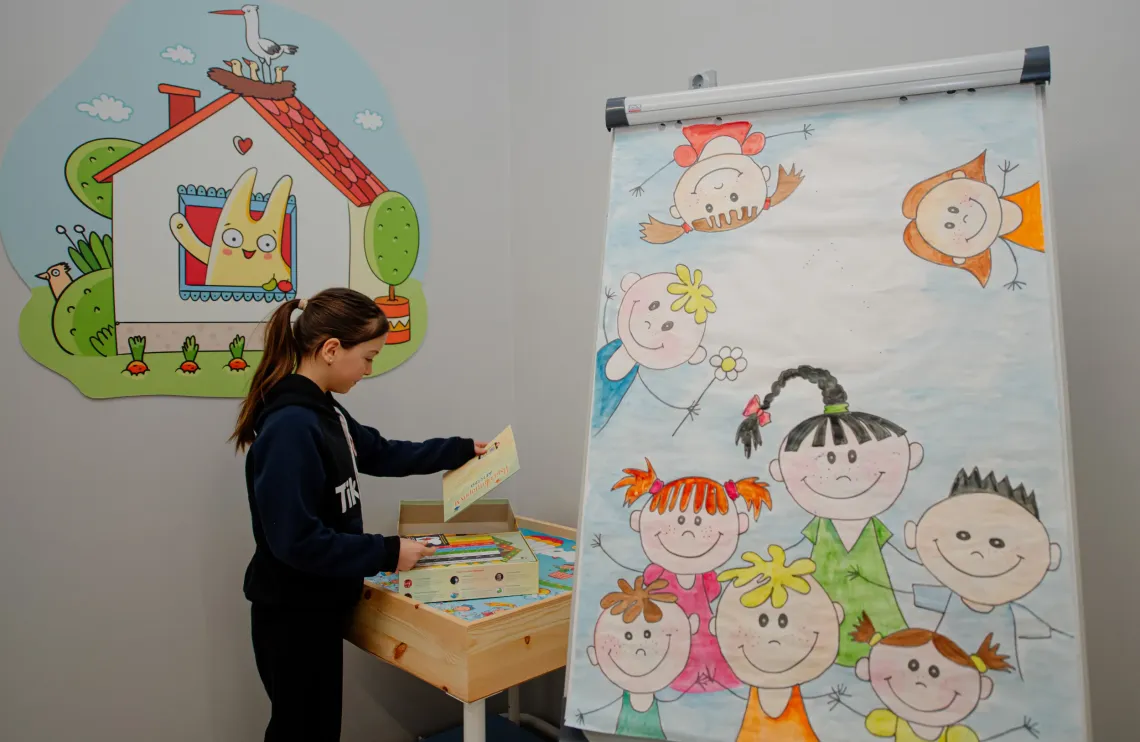
Vika carefully looks through the shelves filled with books and board games. A few weeks ago, she arrived in Belarus from Ukraine with her grandmother and grandfather. Now, she is gradually adjusting to her new surroundings. The room where she meets with a psychologist and social workers looks nothing like a consultation office. Here, children can draw, play and simply feel safe.
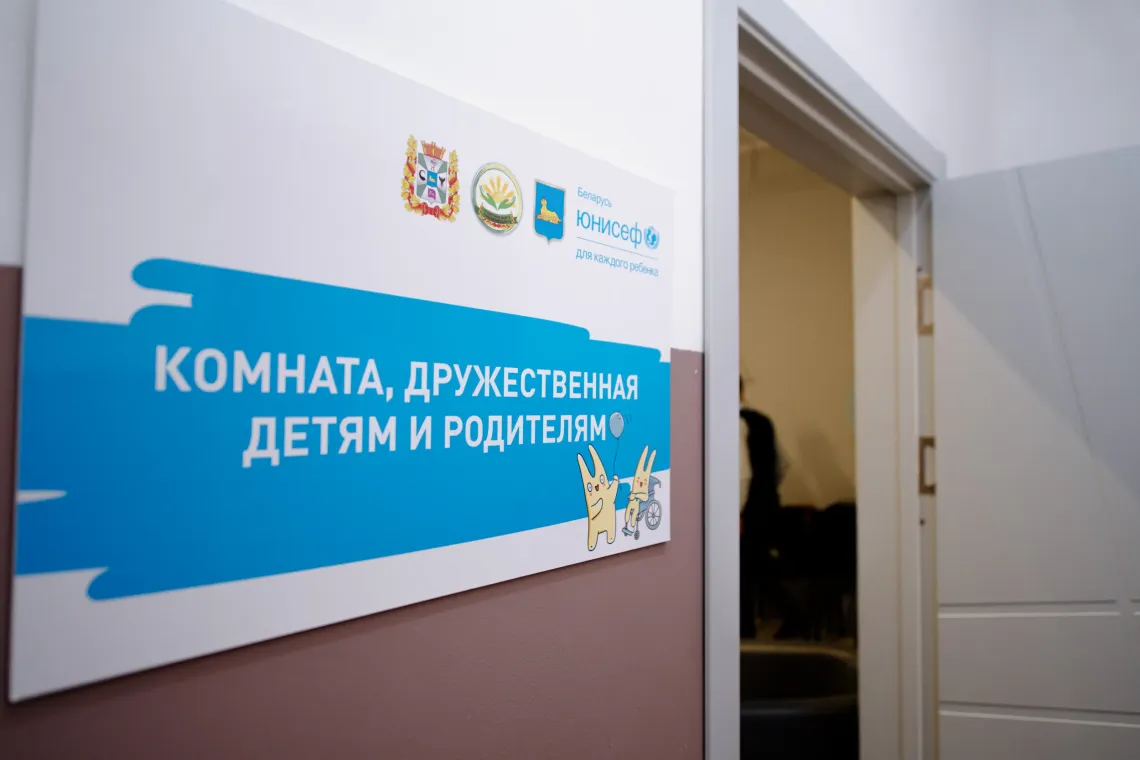
This is the Child- and Parent-Friendly Room, established with UNICEF support at the crisis unit of the Railway District Territorial Centre for Social Services in Gomel. Today, it serves not only Belarusian families experiencing crisis situations, but also refugee and migrant families with children who need support as they begin rebuilding their lives in a new country.
Just a few years ago, the crisis unit primarily assisted survivors of domestic violence. Today, it welcomes people facing a wide range of difficult life circumstances, including refugee and migrant families who need not only temporary accommodation, but also guidance in navigating an unfamiliar social support system.
Across the world, UNICEF works with partners to support children who have been forced to flee their homes because of conflict, crises or other emergencies. In Belarus, this work focuses on ensuring that refugee and migrant families with children can access timely social, psychological and legal support, while equipping professionals with the knowledge and tools needed to work with children adapting to a new and unfamiliar environment.
Supporting these families requires specialized skills and approaches. With UNICEF support, the Railway District Territorial Centre for Social Services in Gomel became one of the first institutions in Belarus to develop and pilot this model of assistance. Today, its experience is being shared with other social protection institutions that are increasingly working with families arriving from other countries.
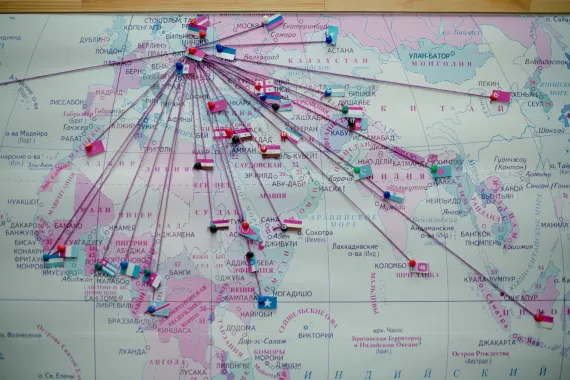
During our visit, eight people were staying at the crisis unit. Among them were Vika and her grandparents, who had recently arrived from Ukraine. Over the years, the Centre has provided temporary shelter and support to families and children from many countries, including Afghanistan, Pakistan, the Democratic Republic of the Congo, the Syrian Arab Republic, Cameroon and the Islamic Republic of Iran. For many, it becomes a safe place during their first weeks and months in Belarus.
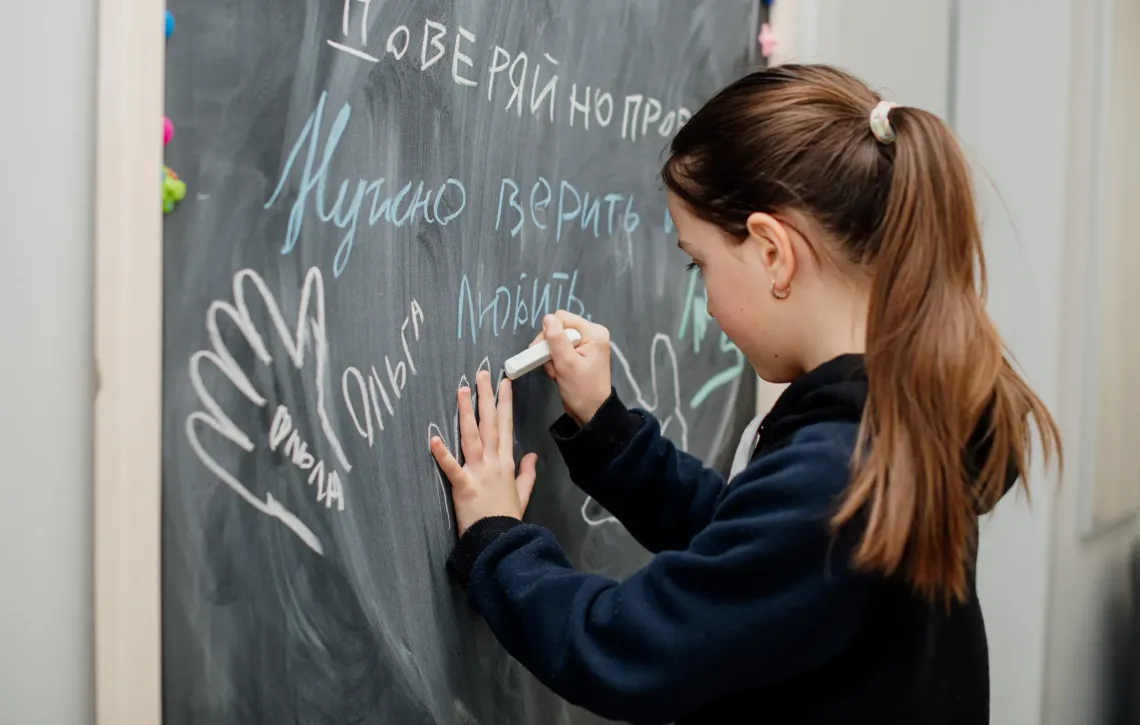
While the Centre's specialists explain how the services operate, Vika confidently picks up a box of coloured pencils and begins colouring a picture. In just a few weeks, this place has already become familiar to her.
The Centre offers emergency psychological and legal assistance, temporary safe accommodation and ongoing support from social workers. Families stay in private rooms and have access to a shared kitchen and everything they need for daily life. Yet as more families with children from other countries began seeking support, it became clear that children required dedicated spaces designed specifically for them.
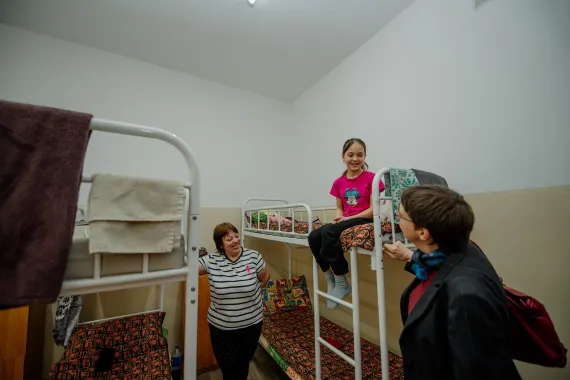
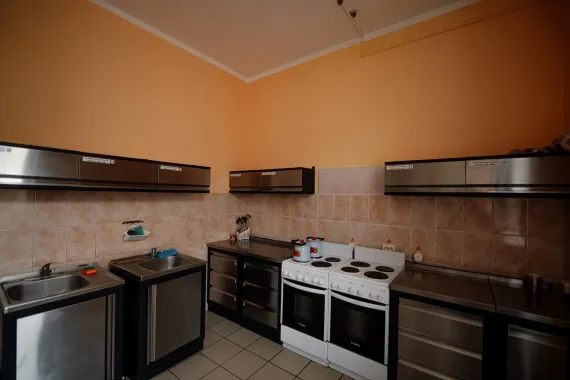
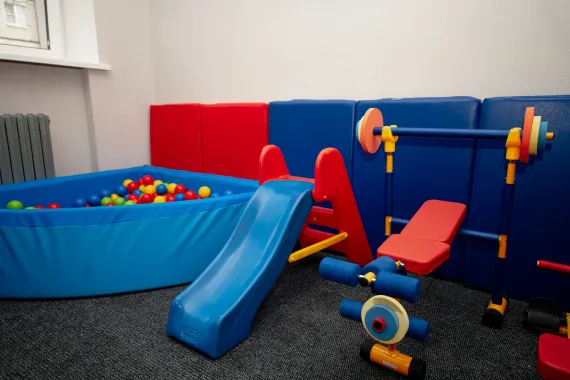
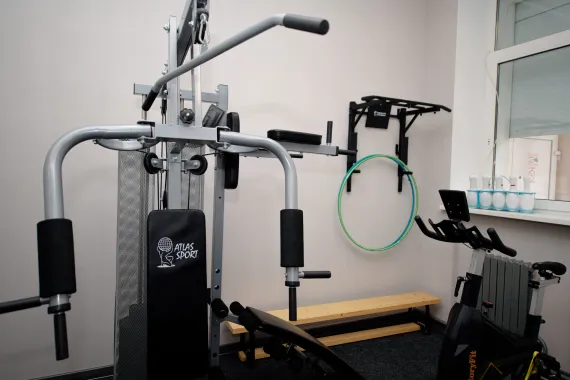
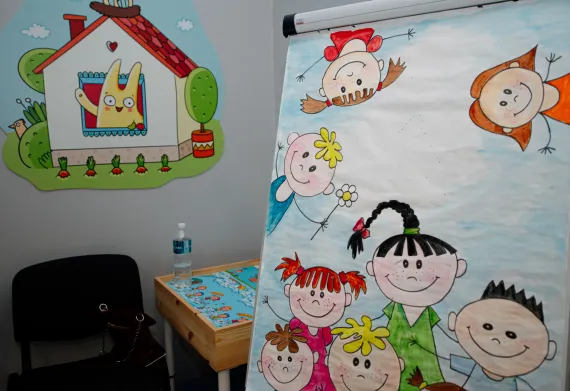
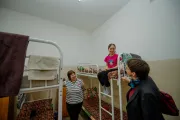
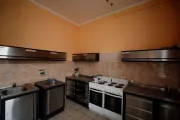
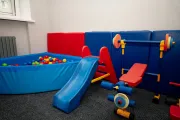
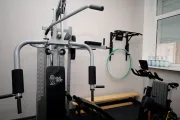
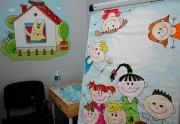
That is why, in 2024, UNICEF supported the establishment of the Child- and Parent-Friendly Room. The space was designed to help children feel comfortable during meetings with specialists. It is equipped with books, toys, creative materials and educational games that encourage children to express themselves through play and creativity. At the same time, UNICEF helped strengthen the overall capacity of the crisis unit by providing beds, mattresses, equipment and essential household items to improve living conditions for families.
Vika finds a board game on one of the shelves and calls her grandmother to join her. Here, children are never expected to talk immediately about what they have experienced. Sometimes, simply playing a game or drawing alongside a trusted adult is the first step toward recovery.
Creating a welcoming environment, however, is only one part of the response. Together with its national partner, the Belarusian Association of Medical Workers, UNICEF is helping strengthen a comprehensive support system for refugee and migrant families. Within the organization, the Refugee Counselling Service helps families navigate legal, social, medical and everyday issues after arriving in Belarus.
This comprehensive case management approach ensures that families receive continuous support throughout the adaptation process. Specialists help them obtain documents, access health services, arrange interpretation, enrol children in school or kindergarten and understand how different public services work. Rather than addressing isolated challenges, the system provides coordinated support tailored to each family's individual needs.
Elena, a staff member of the Belarusian Association of Medical Workers, recalls one teenage boy who recently stayed at the Centre. He had arrived in Belarus from Somalia without his parents. Everything was unfamiliar to him – the country, the language and the culture. He arrived with almost no belongings and suddenly found himself in a place where he could not understand the language spoken around him.
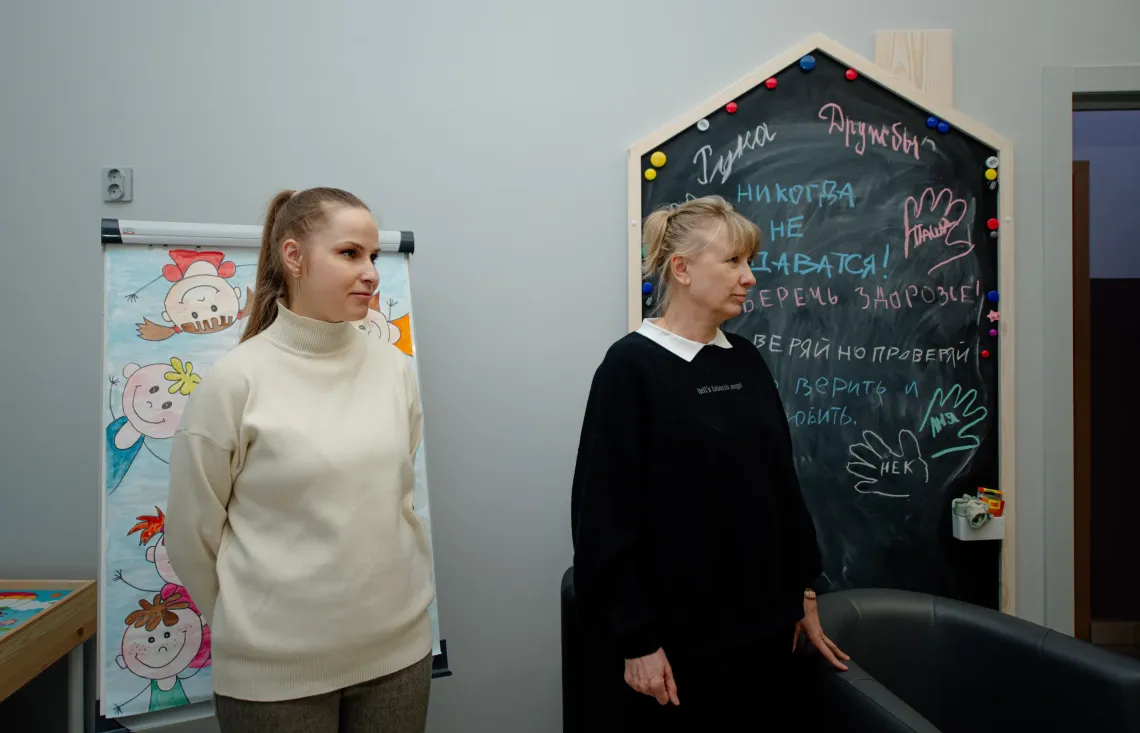
«We supported him literally every step of the way," Elena says. "We brought him to the crisis centre, helped him obtain documents, showed him where the nearest shop was and how to get to the health clinic, arranged medical and psychological support, and found an interpreter. Most importantly, we wanted him to know that there were adults around him who cared and were ready to help»
His story illustrates why a single consultation is rarely enough. When a child finds themselves alone in a completely unfamiliar country, support must continue day by day until they are able to navigate their new environment independently.
Supporting refugee and migrant children remains a relatively new area of work for many social protection institutions. One of UNICEF's priorities is therefore not only to help individual families, but also to ensure that every child who arrives in Belarus far from home can access the same high-quality support, regardless of where they are. To achieve this, interagency coordination mechanisms are being developed, professionals receive specialized training, and successful practices from individual institutions are used to strengthen the national system.
As the adults continue their conversation, Vika finishes her drawing and carefully places the coloured pencils back in the box. Soon, she will have a new daily routine, new friends and new experiences. But for now, this small room has become one of the first places where she can simply be a child again.
And it is precisely for moments like these, when a child begins to feel safe again, that UNICEF, together with its national partners, is helping build a stronger support system for refugee and migrant families in Belarus.