8 Lessons in Caring for Children
What Business Learned at UNICADEMY
- русский
- English
Business decisions do not only affect financial reports. They touch employees’ families, local communities — and, of course, children.
When companies overlook social risks, they may unintentionally deepen the challenges faced by children and parents. Yet children are not an abstract “social group.” They are real consumers, future colleagues, and part of the corporate world.
Ignoring their interests means risking reputation, talent, and the future itself. To help companies understand how to integrate children’s rights and interests into their operations and design meaningful social projects, UNICEF in Belarus launched the educational initiative UNICADEMY in September 2025.
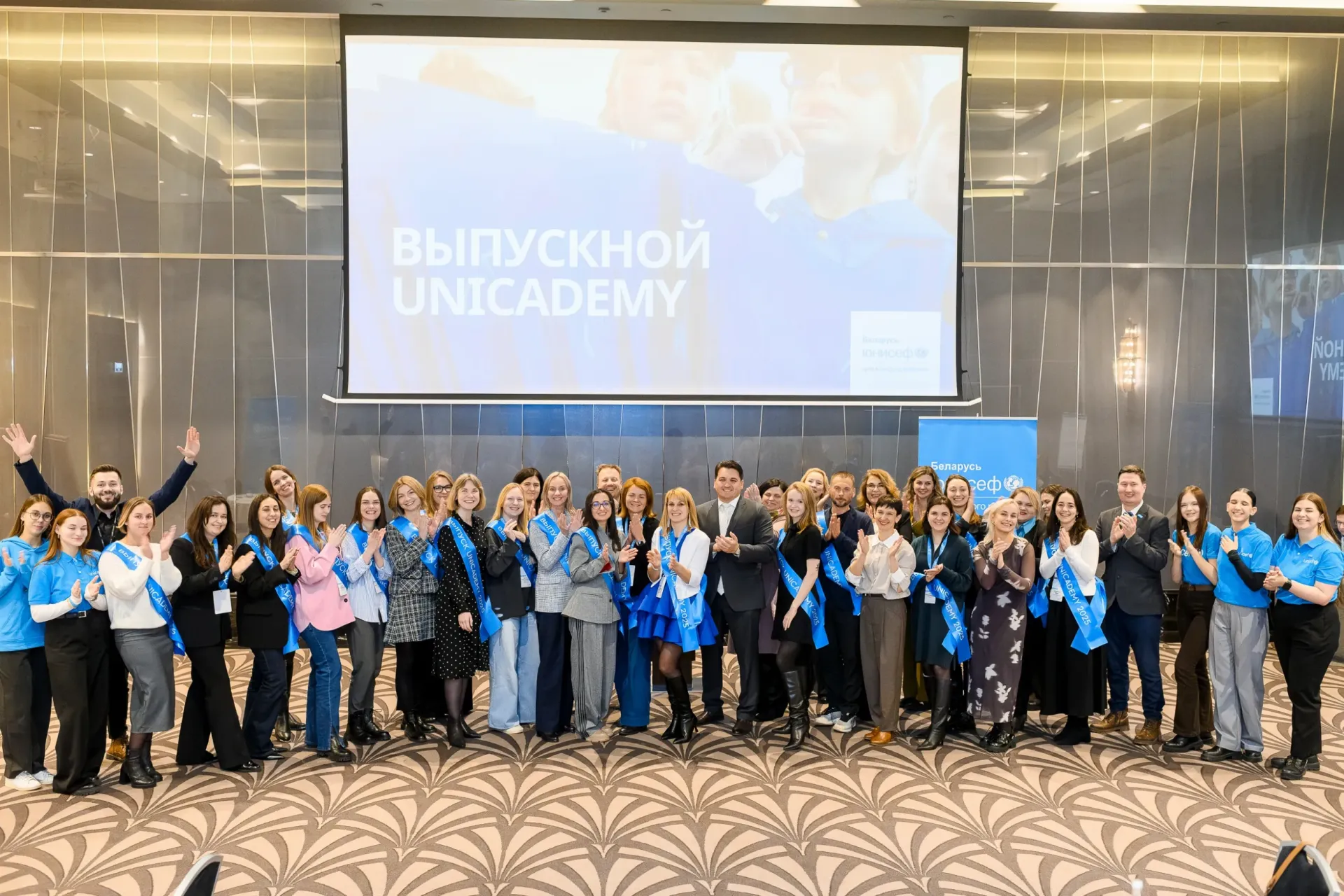
Over the course of two months, professionals from 20 companies — ranging from finance and telecommunications to development, consulting, and PR — completed the program.
In this article, we share eight key lessons business leaders took away from the program. These practical and actionable steps can help companies move from words to real impact.
Lesson 1: Children’s Rights Belong in Corporate Responsibility
This is not an extra burden. It is a sign of maturity — the ability to look ahead to a future shaped by today’s boys and girls.
When business cares about children, it invests in long-term sustainability — its own and society’s.
The UN Convention on the Rights of the Child established fundamental rights: to life, protection, education, and participation. In Belarus, these principles are reflected in national legislation.
For business, this means:
- ensuring products and services are safe for children
- supporting employees with families
- eliminating child labour in supply chains
- considering environmental impact in decision-making
Lesson 2: Corporate Social Responsibility Is About Action, Not Image
CSR is about seeing people behind the numbers, families behind the strategies, and children behind the products.
It starts with one question: How does our business affect those around us?
When companies view projects through the lens of child impact, they build trust.
Internally, this means:
- flexible working hours
- parental support programs
- attention to physical and mental health
Externally, it means aligning initiatives with what the company genuinely does:
- tech companies supporting digital education
- retailers promoting sustainable packaging
- service providers investing in culture and sports
CSR requires strategy — measuring impact, engaging leadership, building partnerships. When done right, it becomes part of a company’s DNA.
Through CSR, business says: We see people. We care about families, the environment, and the future.
And that builds loyalty, reduces risks, strengthens teams, and ensures resilience.
Lesson 3: An Environmental Strategy Is a Competitive Advantage
Climate change is no longer theoretical. Children feel its effects most acutely — physically and emotionally.
Green technologies are not just about protecting the planet. They are about staying relevant.
The new generation chooses differently.
Generation Z looks at packaging, ingredients, origin, and disposal. Millennials evaluate actions, not slogans.
According to a 2024 study by the Centre for Sustainable Development at the SKOLKOVO School of Management, 75% of Gen Z and 68% of Millennials would choose an employer with strong sustainability values — even with a lower salary.
If a product has no purpose, it is not chosen.
If a company has no position, it is not trusted.
If a business lacks an environmental strategy, it risks losing.
Lesson 4: Inclusion Is About Equal Opportunity
The problem is not people — it is barriers.
Inaccessible buildings.
Unfriendly digital interfaces.
Bias and exclusion.
When barriers disappear, diversity becomes strength.
For business, inclusion reflects internal culture. It means recognizing value in every person.
Many companies adopt DEI (Diversity, Equity, Inclusion) strategies — not as a trend, but as a way to create products and services that meet diverse needs.
To help companies integrate children’s rights into their work, UNICEF in Belarus launched UNICADEMY in September 2025. Over two months, professionals from 20 companies — from finance to telecom, development, consulting, and PR — completed the program.
This article shares the eight lessons they learned.

Lesson 5: The Digital World Must Be Safe for Children
The online world is as real to children as school or playgrounds.
Every third internet user is a child.
Businesses are responsible for the products they create. Technology offers opportunity — but also risks: cyberbullying, data breaches, harmful content, screen addiction.
Companies must design with children and parents in mind:
- protect privacy
- promote digital literacy
- ensure responsible marketing
- prevent online exploitation
- use AI ethically
Trust follows responsibility.
Lesson 6: Business Thrives When Employees Thrive
Psychological well-being is not a “personal issue.” It directly affects productivity.
Companies can:
- create supportive feedback cultures
- provide ergonomic workplaces
- offer stress-management programs
- implement family-friendly policies
Flexible schedules, remote work, parental support, healthcare coverage — these are not luxuries. They reduce turnover, strengthen employer branding, and improve performance.
When employees feel balanced, everyone wins.
Lesson 7: Social Projects Must Be Measurable and Honest
Social impact is not a presentation slide — it is real change in real lives.
There are two types of indicators:
- process indicators (number of trainings, participants)
- outcome indicators (behavior change, access gained, lives improved)
Listening to beneficiaries matters as much as counting numbers.
The Social and Behaviour Change (SBC) approach focuses on measurable actions — not abstract intentions, but concrete behaviour shifts.
Effective projects ensure people:
- know
- support
- act
When all three align, impact is sustainable.
Lesson 8: Partnerships Make Impact Stronger
Partnerships between business, NGOs, and government create scale and expertise.
For companies, this means:
- credibility
- access to social expertise
- deeper understanding of community needs
Collaboration can take many forms — co-created products, awareness campaigns, internal practice improvements, fundraising initiatives.
A Roadmap for Responsible Business
These eight lessons offer a practical roadmap for companies that want to be honest, sustainable, and meaningful.
Caring for children and society builds trust.
Trust strengthens brands.
And strong brands shape the future.
As one HR director who completed the course said:
"Now the most important thing is to apply what we’ve learned. It’s time to take real steps and create real change."