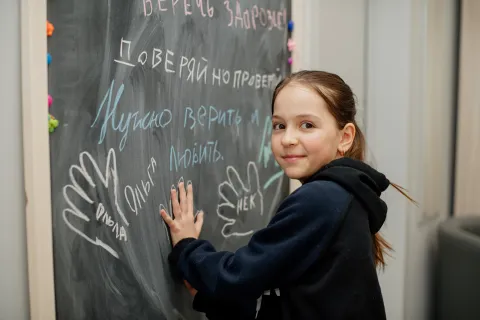
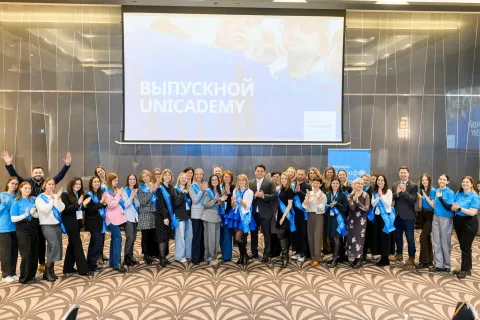
"1 ruble from the city budget affects children much more than 1 ruble from the republican budget"
What are children's budgets and how they can influence the lives of young people in Belarus

- русский
- English
UNICEF was established 75 years ago as the United Nations International Children's Emergency Fund. The main goal of the organization was to quickly respond to crises that affected children. Therefore, for a long time the main areas of UNICEF's work were humanitarian aid, vaccination, the fight against child poverty and malnutrition.
Helping children and their families in emergency situations is an integral part of the organization's work. In addition, UNICEF is helping countries improve system-level care for children. UNICEF is working with its partners to ensure that sufficient public resources are allocated for the needs and interests of children.
Sometimes public resources do not reach the children who need them the most. Or public budget management may not be effective enough, and as a result, the quality and accessibility of healthcare, education and other social services is reduced.
When countries invest in children, they invest in the future. Thanks to a healthier and more educated generation, the country's economy is growing more dynamically. For example, for every dollar you invest in early childhood development programs, the return can be as high as $13 over time. Likewise, every dollar you invest in your child's immunizations will generate at least $20 in future benefits.
UNICEF in Belarus and 190 other countries is helping to measure public spending on children, analyze this data and develop recommendations on how to spend money on children more effectively: to exercise children's rights. The project is implemented with the support of the UN Joint SDG Fund.
We discussed this issue with Andrey Zayats, social policy specialist at UNICEF Belarus.

What is a "children's budget"?
A children's budget is the funds that the state allocates for expenses related to children and their families. Though the state budget does not have a separate spending item called the "children's budget". The situation is similar in other countries, not only in Belarus.
UNICEF helps calculate and analyze the children's budget. Using a methodology developed for Belarus together with the national partners, we determine the expenditures for social protection, education, healthcare and other areas related to children. The working group that calculates the children's expenses includes representatives of the Social Protection Fund, Labor Research Institute, representatives of the child and adolescent friendly cities.

Why do we need children's budgets?
With their help, we can see which programs the state has prioritized and which lack support. And suggest measures to improve the situation.
Thus, we can monitor the financial commitment of the government to ensure the rights of children in accordance with Article 4 of the UN Convention on the Rights of the Child.
At UNICEF we are well aware of the fact that our financial assistance for children's projects will not be enough if such projects are not integrated into national programs and are not provided with sufficient public funding.
For example, UNICEF implemented a long-term project to develop Early Intervention Centers throughout the country. And now it must take its rightful place in the governmental programs with funding and efficiency control. Meaning the work should continue without UNICEF.
It is not an easy task. Therefore, we want to develop and provide national partners with tools to analyze spending on children. This way public authorities will be able to make decisions and manage public finances in the interests of children, especially in the interests of the most vulnerable groups.
We calculate the children's budget, analyze the gaps (how well the policy priorities and the budget spending on children are aligned) and make recommendations on how to close these gaps.
In Belarus the work on children's budgeting began in 2018. The Ministry of Finance has been actively participating in it. Since that time, the website of the Ministry of Finance has regularly published information on the financing of the social sphere, including items of the children's budget.
In a nutshell, during this time we have achieved the following:
- reports on spending on children have become public (they are published by the Ministry of Finance);
- the Parliament started discussing children's budgets (spending on children).
We do not think that this work will instantly change the state of affairs on a national scale. But it is possible to improve the situation in individual cities. In Belarus, cities and regions spend more than a third of their expenses on children. 1 ruble from the city budget affects children much more than 1 ruble from the republican budget. The budget of a city or a district is money that can be used to build or renovate schools, hospitals, playgrounds.

How is the work with budgets organized in cities?
We are currently running a project to measure spending on children in the entire Republic and separately in four child and adolescent friendly cities – Minsk, Novopolotsk, Borisov and Molodechno. We are discussing budgeting issues with local authorities. As I said, the city budget has a much greater impact on the life of a particular child than any other budget.
Our main ally in the cities is the Youth Parliaments. In many cities their opinion is listened to and taken into consideration. We want the young people from the parliaments to participate in budget discussions in their cities and regions.
We will soon conduct financial literacy lessons for the participants of the Youth Parliaments so that they understand how it all works and how it affects their lives. So it is the teenagers who raise all these questions, not us. We only want to educate them and moderate the work, but all ideas should come from young people. Their voice is important.
In the future, the work with budgets and public financial reporting will be a prerequisite for child and adolescent friendly cities to cooperate with UNICEF. Perhaps we will give some incentives to the cities that do a good job when it comes to children's budgeting.