The Children We Can Still Protect
Inside the measles ward at Mohakhali DNCC Hospital, families face the cost of delayed protection. Yet many more children can still be reached through vaccination, awareness, and care.

DHAKA, BANGLADESH – Dhaka did not slow down for illness. Like any other hectic day, its lanes stayed crowded, its rickshaws kept moving, and its market stalls remained open. But inside the wards of DNCC Hospital in Mohakhali, Dhaka, time had seemed to stand still for families whose children were receiving care during the measles outbreak.
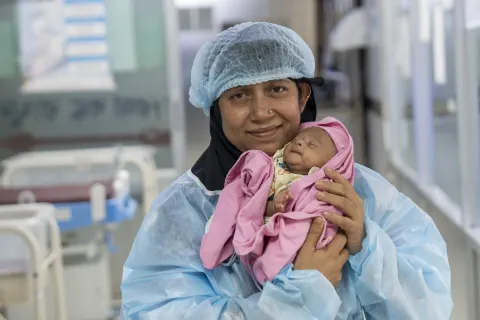
Parents sat beside hospital beds, their tired eyes fixed on the shallow rise and fall of their infants’ chests, counting each heavy breath. Many of the children brought there were only a few months old, some barely old enough to hold their own heads up.
Each story was different.
Yet each one carried the same weight.
“A mother cannot be tired.”
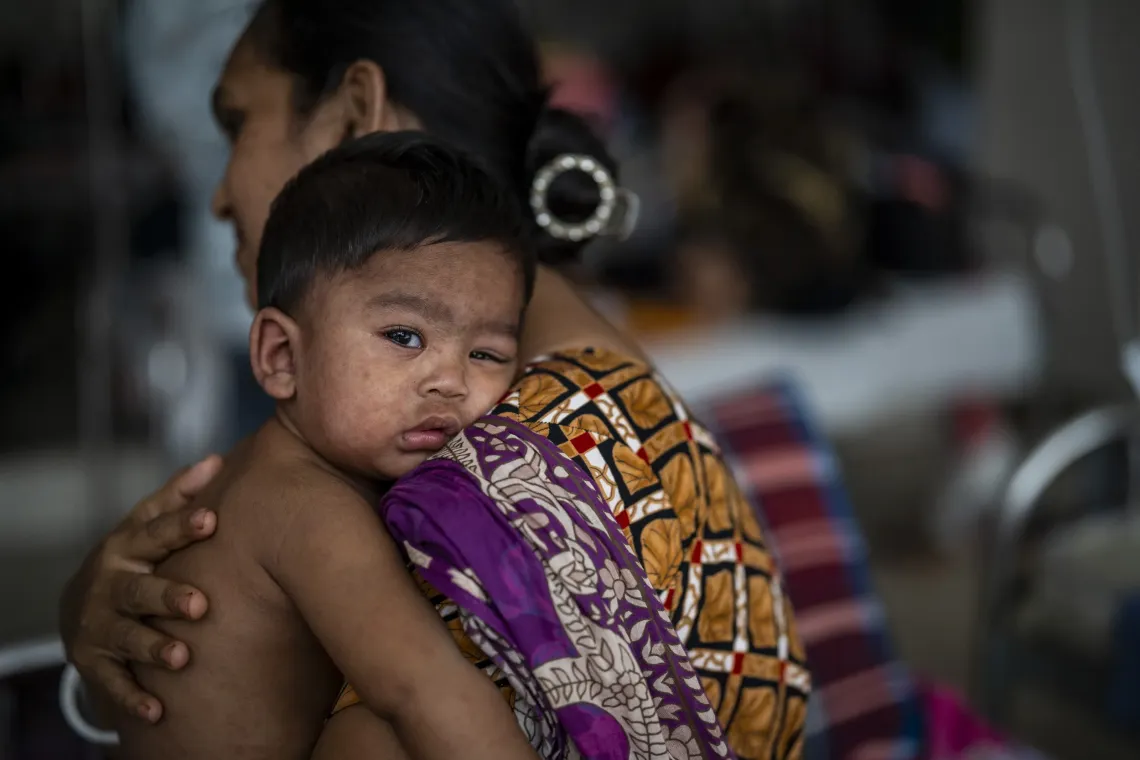
For six days, a rash had covered 10-month-old Riangshu’s body. He had been sick for seven. His mother had not left his side.
When asked what she would say to other parents, she did not hesitate. “Since this is an outbreak, do your best,” she says. “The important thing is to be safe, not sorry.”
She worried, too, about her older son at home. Her attention was split between the child in the hospital bed and the one she couldn’t be with. But she did not call it sacrifice. She called it what it was, and that was, simply, a mother’s patient and steadfast love.
“A mother cannot be tired,” she said. “You just do what you must.”
“The report said negative. But he was already sick.”
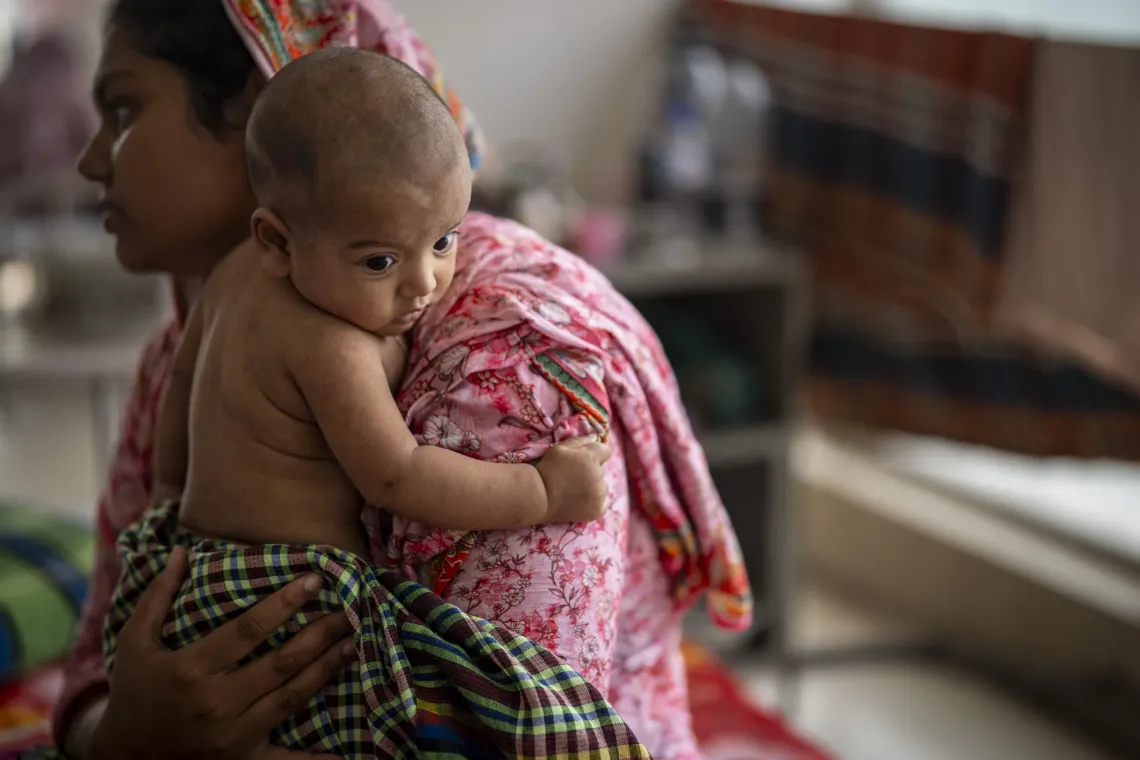
Safwan, 5 months, arrived at the ward with four days of illness and two days of diarrhea. His measles test had initially returned a negative result, which, his family later understood was misleading. And when Safwan was due for his vaccination, he had a cold. As a result, the vaccination was delayed. In the gap between that missed appointment and his recovery, the virus...found him.
He has an older brother, eighteen months old, who was also at risk.
Safwan’s case was not unusual. Across the ward, the same story surfaced in different forms. One would find a postponed vaccine, a report misread, lack of awareness, and a narrow window of vulnerability that became a doorway for disease.
“Here in the city, awareness is low.”
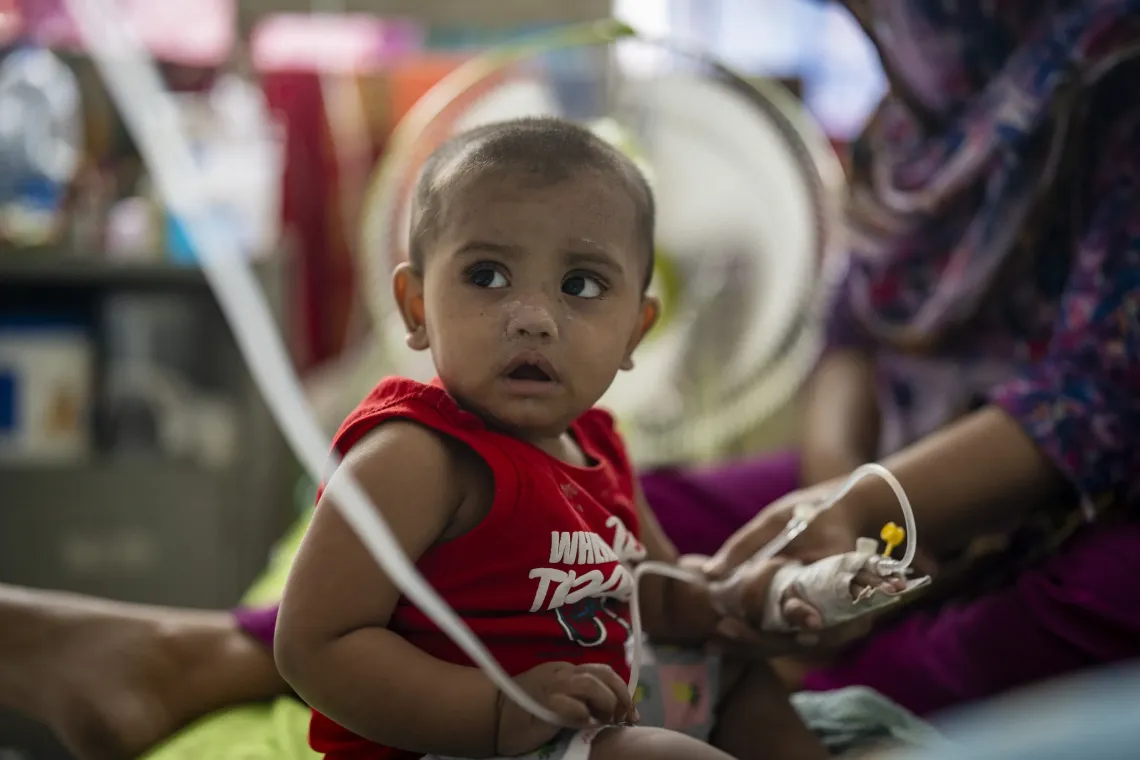
Ruqayyah, 10 months, had been sick for eleven days. Her fever had remained low-grade, but the diarrhea had persisted. Her mother knew that a clean, hygienic environment was one of the few defences a family could maintain while their child fought infection.
Although settled in Dhaka for eight years, the family stated that when they traveled to their hometown in Pirojpur, a district in Barisal Division in southern Bangladesh, for Eid ul-Fitr, they were surprised to notice that there, at least, awareness was being spread. “In Pirojpur, people at least know,” Ruqayyah’s mother said, “Here, in the city, they don't.”
It was a quiet indictment of an assumption many make. That urban life means better information, better health literacy, and better outcomes. For families living in Dhaka’s densely packed informal settlements, that assumption can prove dangerous.
“It is like a battle and...we are fighting it alone.”
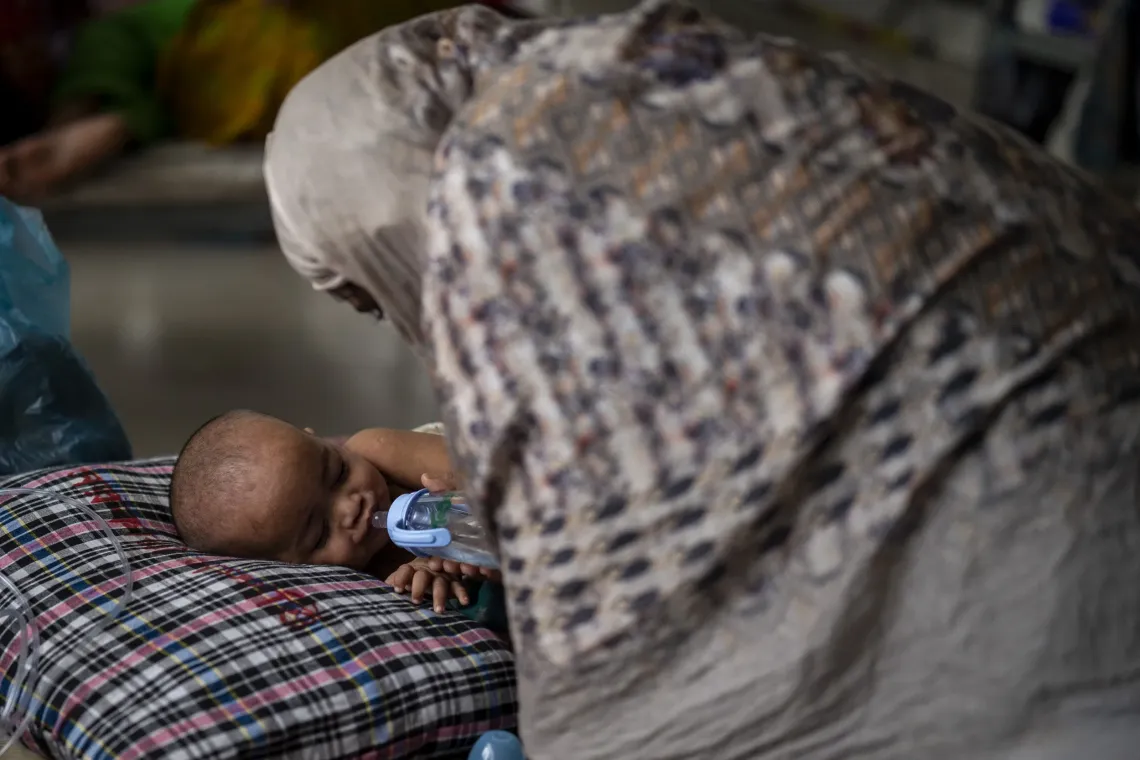
Ayatullah is one year old. His parents did not imagine parenthood would begin like this. A thin line of oxygen runs to him. There was a nebulizer just next to the bed. They were told to give him medicine on time, yet as first-time parents, they were left wondering what the right time truly meant.
“We are inexperienced,” his father said plainly. "We have never done this before."
Before arriving at DNCC, the family moved from hospital to hospital, searching for a bed, for a doctor, for someone who could help. The wards were completely full. The doctors were doing what they could, but there were not enough of them. Much of the monitoring, the timing of medications, the vigilance through the night, fell to the parents themselves.
Amid it all, fear took root within them. On their first night there, sometime after two in the morning, another parent’s cry tore through the ward. Their child had drawn their last breath soon after reaching the hospital. The echoes broke through the ward at 2 AM, in the stillness of the early morning.
“It is like a battle,” Ayatullah’s parents said. “And we are fighting it on our own.”
From that battle, Ayatullah’s father offered other parents one clear lesson: “If your child has a fever when their vaccination is due, do not wait indefinitely. As soon as the fever breaks, take them for the vaccine. Do not make the mistake that we made.”
“Pray not only for our child. Pray for all of them.”
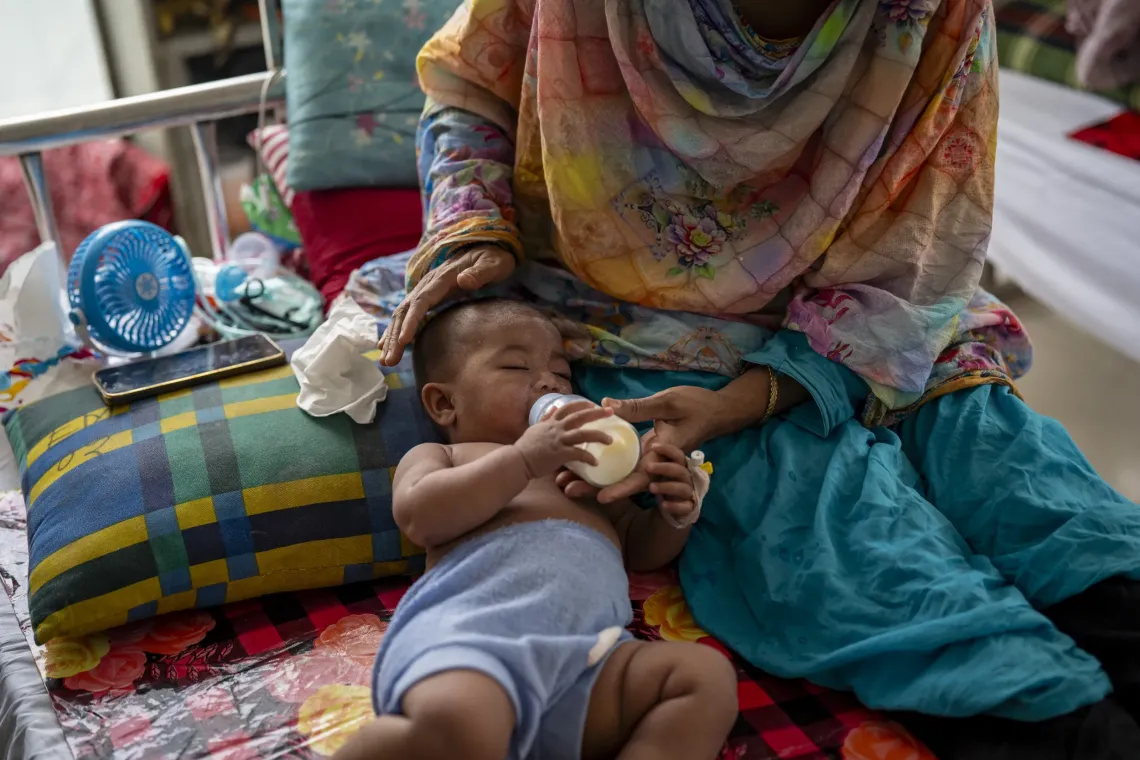
Amena, 8 months, came from Dhamrai, a sub-district located northwest of Dhaka. Her older brother Arafat, six years old, had been vaccinated while Amena had not been.
The family couldn’t say with certainty how the gap came to be. Perhaps it was an appointment overtaken by daily burdens; a visit delayed by circumstance, or maybe, a moment when urgency was not yet fully clear.
When asked if they had a message for other parents, Amena's mother and father spoke without hesitation: “Take care of your child. Don't be negligent.”
Then they added something else, “Please don't pray only for our daughter. Pray for all the children here.” In that moment, what belonged to them alone became something shared, passing softly from one family to another.
“I didn't know a child this young could get sick.”
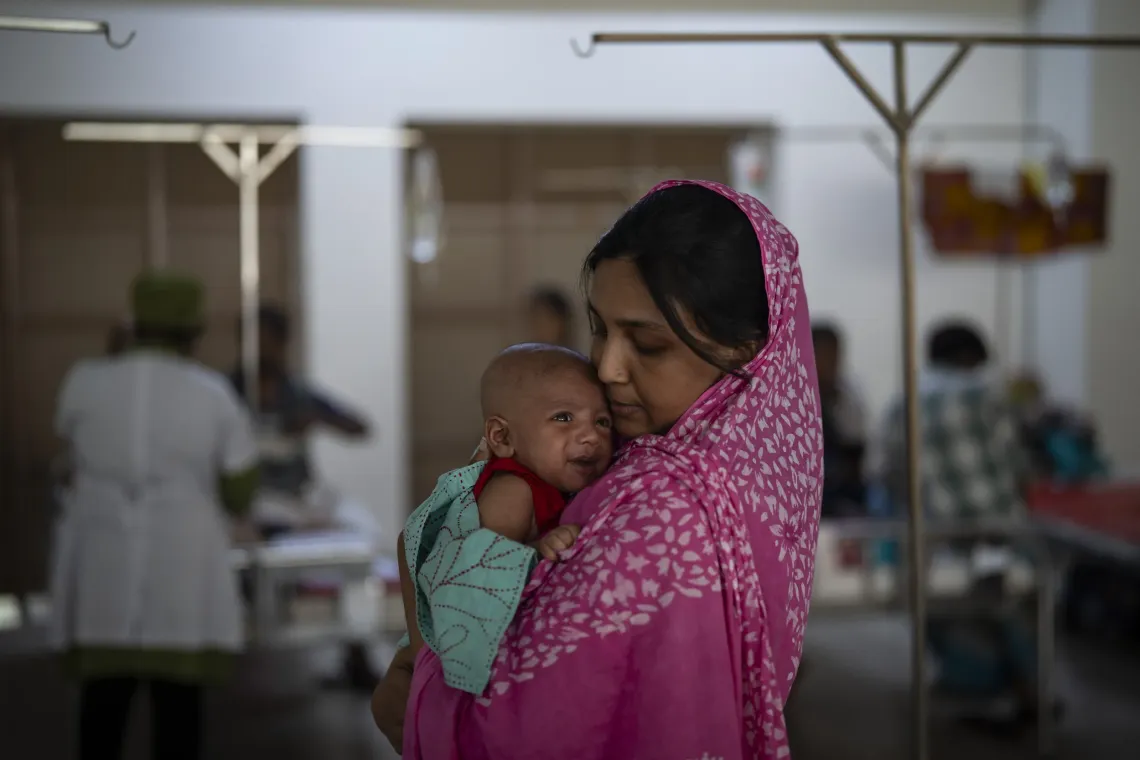
Ayan, three months old, had been brought to the ward with measles. His mother, Brishti, had not known the virus could reach a child so young.
“Have your child vaccinated,” she said. “Whatever happens, do not delay.”
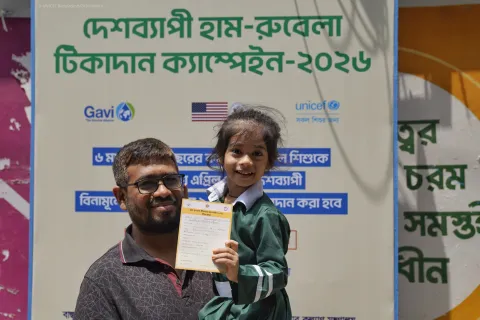
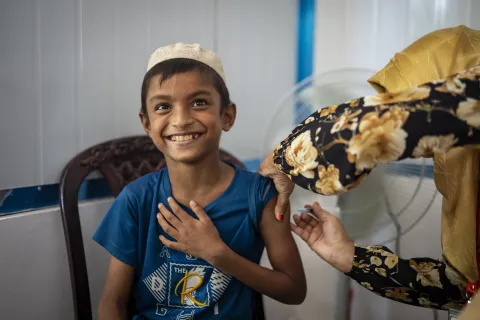
At just three months old, Ayan was not yet eligible for the emergency measles vaccination campaign that began on 5th April 2026. The 12-day drive focused on children aged 6 months to below 5 years, or 59 months.
Alongside the campaign, routine immunization activities under the Expanded Programme on Immunization (EPI) continued as scheduled. His vulnerability was not a failure of the immunization system, but the result of a virus spreading through a community where too many around him remain unprotected.
When vaccination coverage falls, it is often the youngest and most fragile who are left most exposed.
After the Rounds, Another Mother Waits...
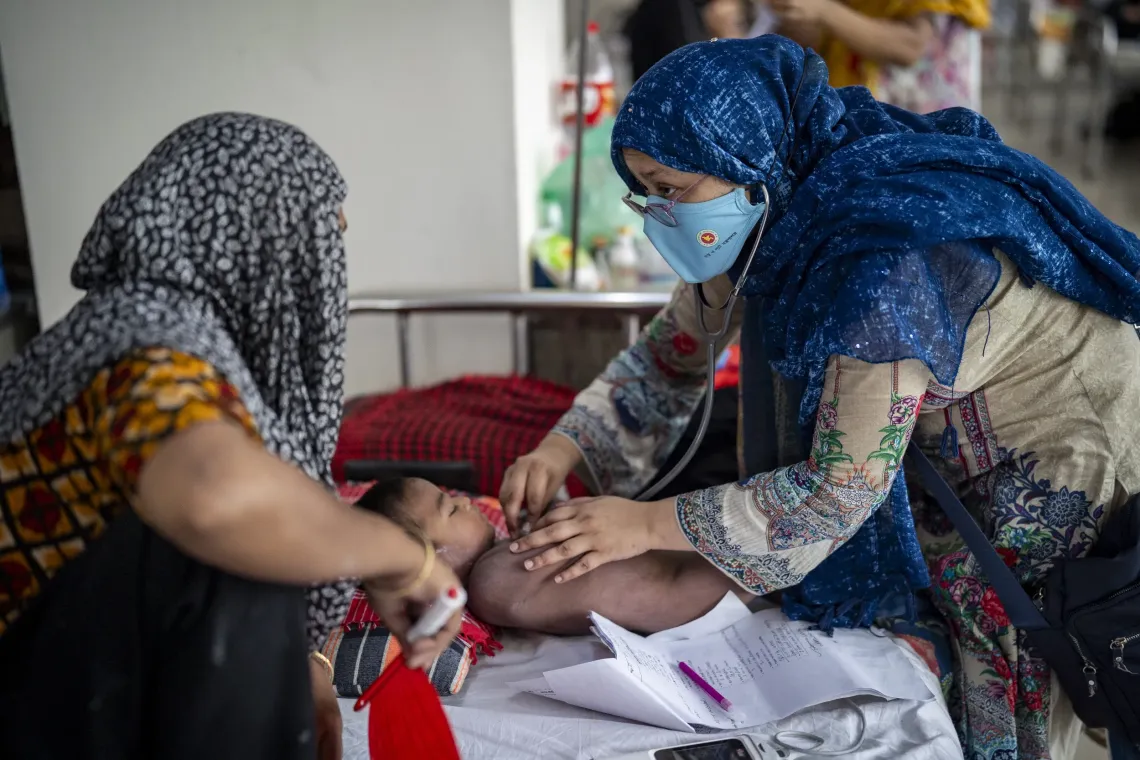
Dr. Ivey Akhter moved through the ward in steady rounds, caring for children in distress. The strain of long days and late nights showed on her face. Yet when her duty as a doctor ended, another began. She returned home to the care and caution required of a mother herself.
As cases continued to rise, the pressure inside the ward deepened.
Still, she spoke plainly to parents, urging them not to fall for propaganda or misinformation about vaccines, but to seek trusted guidance and protect their children in time.
She reminded them that healing often depended on simple, steadfast acts. Such as letting a child rest, keeping them hydrated with water or oral rehydration salts when illness drains the body, continuing breastfeeding where possible, offering nourishing food, and following prescribed medicines for pneumonia or eye infections.
Additional clinical guidance from World Health Organization recommends two doses of vitamin A, given 24 hours apart, for children with measles to reduce the risk of blindness, severe complications, and death, especially among children under two and those affected by malnutrition.
A Ward Full of Firsts
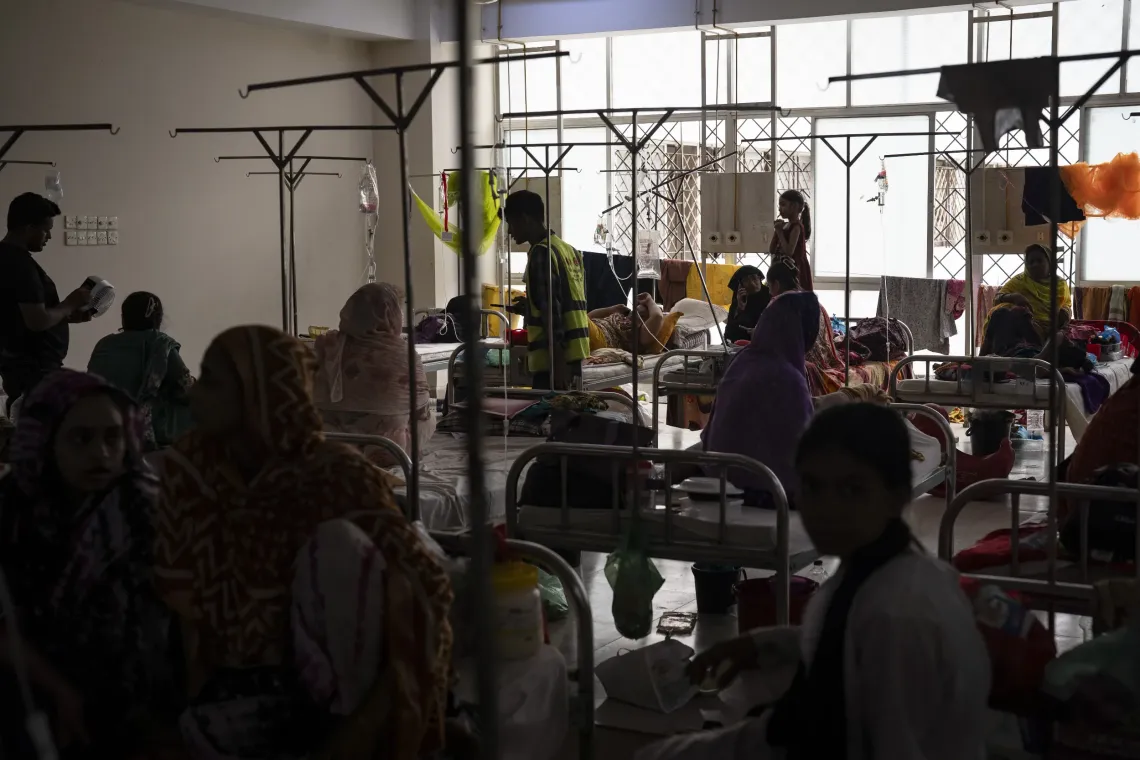
What united these six families was not poverty or carelessness, or ignorance. It was simply that life did not always move in straight lines. Children fell sick, plans changed, families travel, appointments slip. And sometimes the cost of those small disruptions is far greater than anyone imagined.
The parents in the ward were exhausted and frightened. And yet, almost without exception, they turned outward. They asked that their experience become a warning for others, so that more parents would vaccinate their children and the lessons paid for in long hospital nights could reach beyond these walls.
And the most effective strategy to prevent future measles outbreaks is to ensure that at least 95 per cent of children receive both MR1 and MR2 doses according to the national EPI schedule.
UNICEF, alongside the Government of Bangladesh and health partners, worked to strengthen immunization coverage across Dhaka and beyond, because the most powerful protection against an outbreak is the one that comes before the rash ever appears.
The children in this ward did not need to be there.
Nor do those who can still be vaccinated today.