Frequently asked questions about measles in Bangladesh
Health experts answer your questions about measles, measles outbreak, and the impact on children
- বাংলা
- English
Measles, also known as haam, hum or হাম in Bangladesh, is a highly contagious disease caused by a virus. It’s airborne, i.e. it spreads easily when an infected person breathes, coughs, or sneezes. But there are ways to protect children from getting sick with measles and from spreading it to others.
Recently, there has been a sharp rise in measles cases in Bangladesh. With 676 confirmed infections and over 38 reported child deaths as of March 2026, the situation is especially alarming for children under five years of age.
Dear parents and caregivers, our health experts have tried to answer some of your frequently asked questions on measles. We hope this is helpful.
“What is measles?”
Measles is one of the most contagious diseases in the world.
It is caused by a virus that infects the nose, throat, and lungs (respiratory tract) and then spreads throughout the body. Symptoms include a high fever, cough, runny nose and a spotty rash all over the body.
Measles also weakens the immune system, making it vulnerable to other infections. It can lead to severe disease like pneumonia, breathing and neurological complications, diarrhoea, deafness, blindness, and brain swelling (encephalitis), which can be fatal.
Measles can affect anyone but is most common in children under 5 years old.
“How does measles spread?”
Measles spreads easily when an infected person breathes, coughs, or sneezes. The measles virus can be spread through their mucus or saliva and can live for up to two hours in the air and on surfaces. Other people can become infected if they breathe the contaminated air or touch a contaminated surface — and then touch their eyes, nose or mouth.
Measles spreads incredibly quickly – twice as fast as COVID-19 and chickenpox. The virus is so contagious that if a child with measles walks into a classroom, every unvaccinated child will most certainly get it too.
Measles can be passed from an infected person to others even before the distinctive rash develops. This is one of the reasons that it spreads so quickly among children – it is transmitted before parents even realize that their child has it.
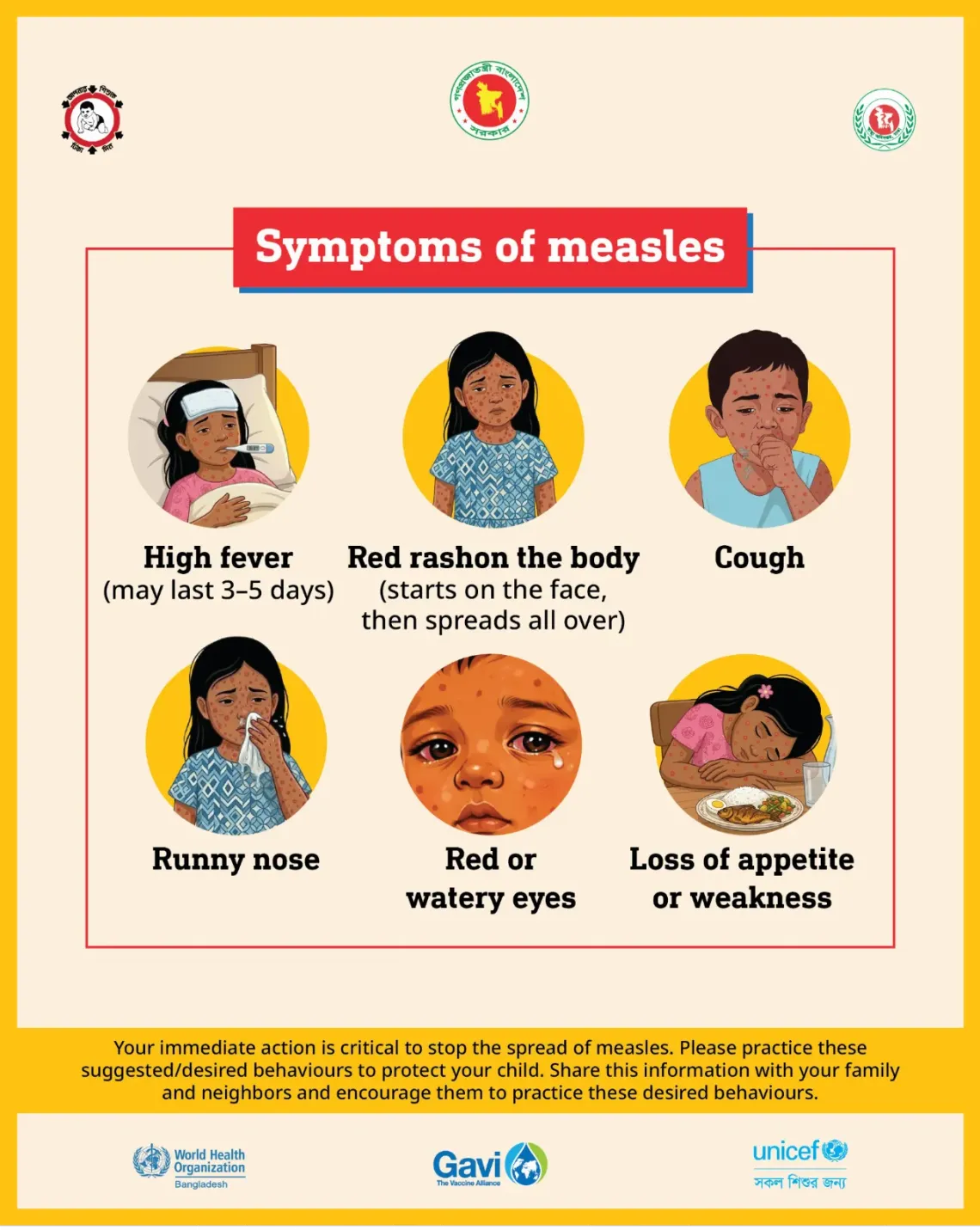
“What are the symptoms of measles in children? What does measles-infected skin look like?”
The symptoms usually appear 10 to 14 days after exposure to the virus. The prominent measles rash is the most visible symptom.
The early symptoms of measles are vague and can easily be mistaken for other illnesses. Early symptoms usually last 4-7 days. They include:
- High fever
- Cough
- Runny nose
- Red and watery eyes
- Red rash on the body
- Small white spots inside the cheeks (koplik spots)
The measles rash appears 7-18 days after exposure. It’s a red spotty rash that usually starts on the face and neck before spreading to the rest of the body. It spreads over about 3 days and usually lasts 5 to 6 days before fading.
The measles rash can appear as small, raised spots that may merge into larger, blotchy areas. It usually doesn’t itch. On lighter skin, the rash often looks red or brown. On darker skin, the rash might be harder to see.
“How dangerous is measles for children?”
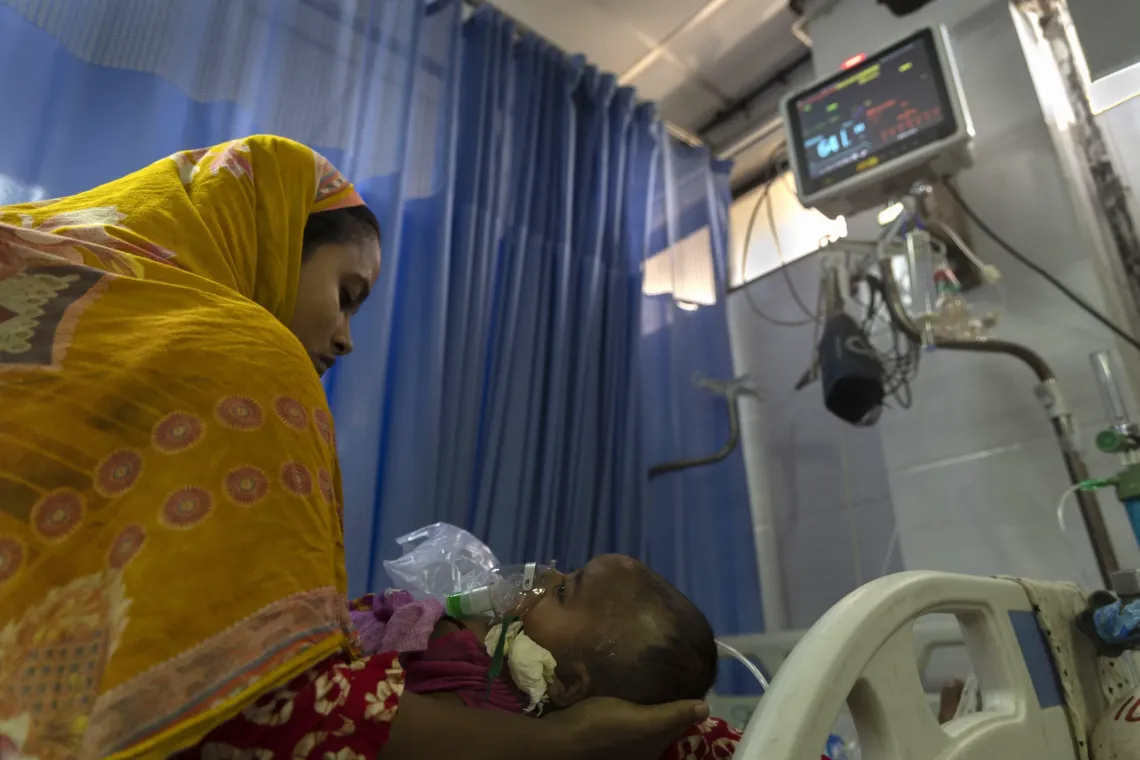
If your child gets measles, they can become seriously ill. Measles is more dangerous than many people realize. Most deaths from measles are from complications related to the disease.
Complications can include:
- Blindness
- Encephalitis (an infection causing brain swelling and potentially brain damage)
- Severe diarrhoea and related dehydration
- Ear infection or deafness
- Severe breathing problems including pneumonia.
The virus attacks the body and can cause deadly complications, especially in children under five years of age and adults over the age of 30, who are not vaccinated.
They are more likely in children who are malnourished, especially those without enough vitamin A or with a weak immune system from HIV or other diseases. Measles can also weaken a child’s immune system and can make the body “forget” how to protect itself against infections, leaving children extremely vulnerable to other infections.
Measles and the complications they can cause for children are really scary. But it’s completely preventable. The best way to protect children is to get them vaccinated against measles.
“How to protect my child from measles?”
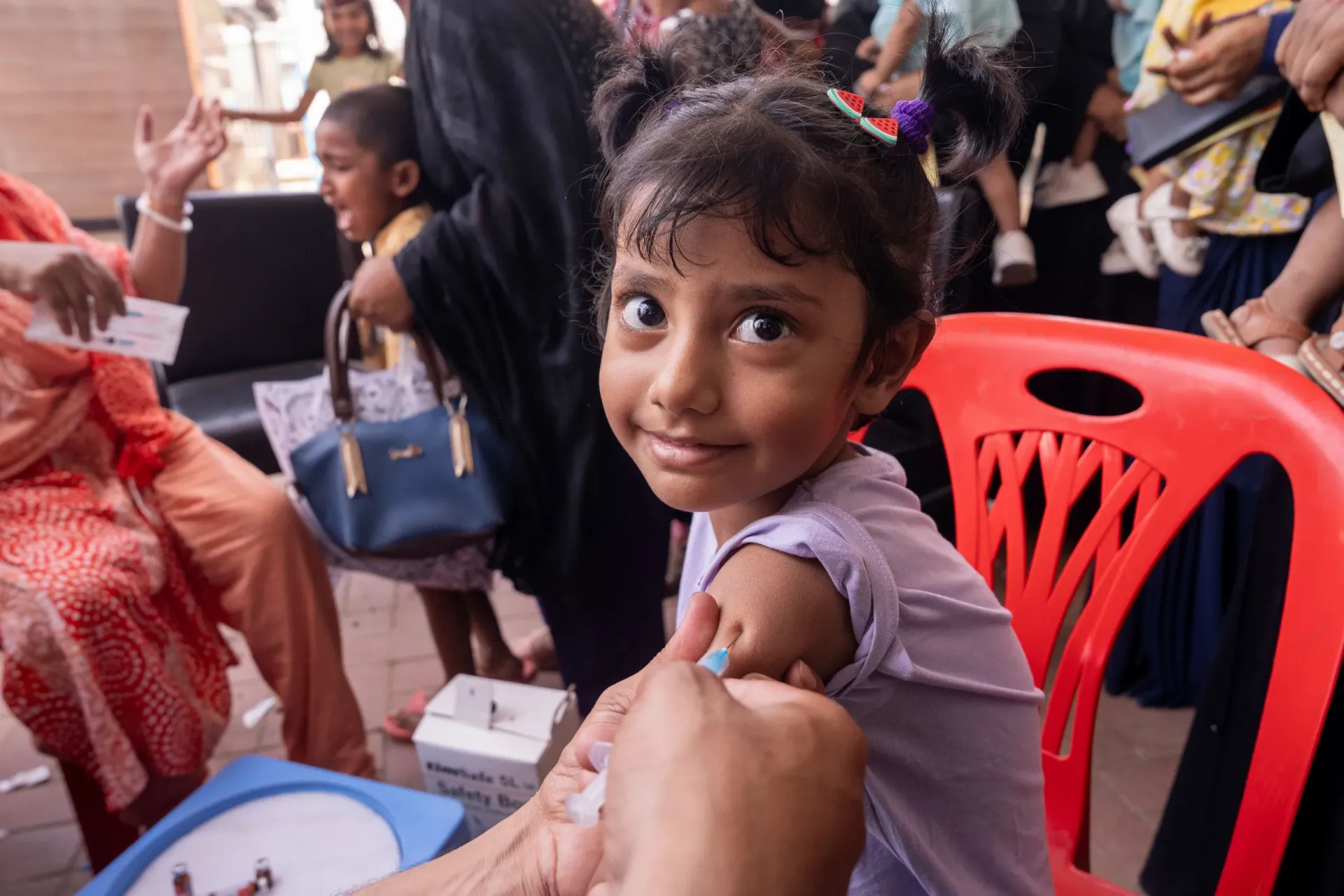
Getting your child vaccinated against measles is the best way to protect your child from getting infected and spreading it to others.
Measles vaccine is very safe and effective, and it is a part of
the routine immunization in Bangladesh.
The measles vaccine can be given alone or combined with vaccines for mumps and rubella, also known as Measles Rubella (MR) vaccine. Children need two doses of the vaccine to make sure they’re fully protected. For most people, this protection lasts for life.
The age that your child should receive their measles vaccines depends on the country.
The first dose of vaccine:
- In countries where measles is common, children are usually given the first vaccine dose at 9 months old, as they are more at risk.
- In countries where measles isn’t common, children will normally get their first vaccine dose between 12 and 15 months old.
The second dose of vaccine:
- Your child should get their second dose of vaccine later in childhood, usually when they are 15-24 months old.
To find out when your child should be getting their measles vaccines you can ask your doctor for the national immunization schedule or check for updates from the Ministry of Health and Family Welfare.
“What to do if I spot symptoms of measles on my child?” “What medicine to give?”
Measles usually starts with a fever, cough, runny nose, and red eyes, that lead to a rash. If your child is showing these symptoms, take them to the doctor right away.
Getting medical help quickly is important to treat the illness and avoid serious problems. It also helps stop the infection from spreading to others.
Keep your child at home and away from family members that are not sick until a doctor has checked them. Then follow the doctor’s advice for care and treatment.
Measles can’t be treated with medicine. Your child’s body has to fight it off naturally while receiving treatment for the symptoms.
“How do I look after a child with measles?
If your child has measles and the doctor has advised they recover at home, you can help them get better by:
- Helping them take enough rest: Make sure your child gets lots of sleep and takes it easy.
- Keeping them hydrated: Encourage your child to drink plenty of water or fluids to prevent dehydration. Treatments for dehydration, such as oral rehydration salts (ORS), can replace fluids lost to diarrhoea or vomiting.
- Following the doctor’s instructions if they have prescribed medicines to treat pneumonia and eye infections.
- Continuing to breastfeed, if you already are.
- Feeding them a healthy diet. Eating healthy food also helps the body recover.
If your child is malnourished, they should receive treatment from health professionals. If your child’s symptoms start getting worse, go to the hospital immediately.
The World Health Organization (WHO) recommends that all children with measles get two doses of vitamin A, 24 hours apart. This will be given to your child by the doctor. Vitamin A helps reduce the risk of eye damage, blindness and death – and boosts your child’s immunity. Vitamin A is especially important for children under 2 years old and in areas where malnutrition is common.
“Why are measles cases increasing in Bangladesh?”
Measles is spreading more in recent years because not enough children are getting vaccinated. As per the national Expanded Programme on Immunization (EPI), two doses of the measles-rubella (MR) vaccine are recommended at 9 months and 15 months of age to ensure full immunity against measles.
However, according to the Coverage Evaluation Survey 2023, MR1 (first dose of the vaccine) coverage declined slightly to 86% from 88.6% in 2019. More concerning is the drop in MR2 (second dose of the vaccine) coverage, which decreased from 89% in 2019 to 80.7% in 2023.
As a result, approximately 10 million children (for MR1) and 20 million children (for MR2) remain susceptible to measles infection. This widening immunity gap, accumulated over the past few years, has contributed to the recent surge in measles cases.
At the same time, misinformation about vaccines has made some parents more hesitant, which has caused vaccination rates to drop, making it easier for measles to spread.
Bangladesh has a history of high immunization coverage, but even small disruptions can create immunity gaps over time. Outbreaks like the current one are typically the result of these accumulated gaps rather than a single factor.
To stop measles from spreading and protect all children, at least 95% of children need to be vaccinated with two doses of the measles vaccine in Bangladesh. This is what is known as herd immunity.
“What is UNICEF doing to deal with the outbreak in Bangladesh?”
UNICEF is supporting the Government of Bangladesh in close collaboration with WHO and Gavi, the Vaccine Alliance, to roll out outbreak response immunization (ORI) from 5 April 2026.
The vaccination campaign will initially prioritize children in densely populated and high-risk areas, to protect more than 1.2 million children, and plans are underway to roll out a nationwide vaccination Measles-Rubella follow-up campaign targeting 20 million children aged 6 months to 59 months.
At the same time, UNICEF is supporting health facilities in high-burden areas by providing essential medical and nutrition supplies, medical equipment such as pulse oximeters, nebulizers, and nasal cannulas.
The emergency measles vaccination campaign starting 5 April 2026 will run for 12 days. The campaign will focus on children aged 6 months to below 5 years (59 months). Alongside the emergency campaign, routine immunization activities under the Expanded Programme on Immunization (EPI) will also be continued as scheduled.
>> Learn more about measles from the World Health Organization